Home Blog Page 45

Flower power!

group

This year’s Blackwell Summer Festival had a ‘Flower Power’ theme, which saw residents fully embracing the spirit of the event with a variety of bright costumes and inventive props.

The intermittent downpours didn’t stop children and families enjoying the usual games and contests, plus music and refreshments – and the sun came out for a BBQ at the social club in the evening.

Photo by Keith Woolford  

Patient care is our top priority

dipesh manoj

ADVERTISEMENT FEATURE

Dental practice in Barnt Green combines experience, excellence and expertise to ensure patients come first.

“There are no compromises – patient care is our number one priority,” says Dr Dipesh Parmar, one of the new owners of Acorn Dental in Barnt Green.

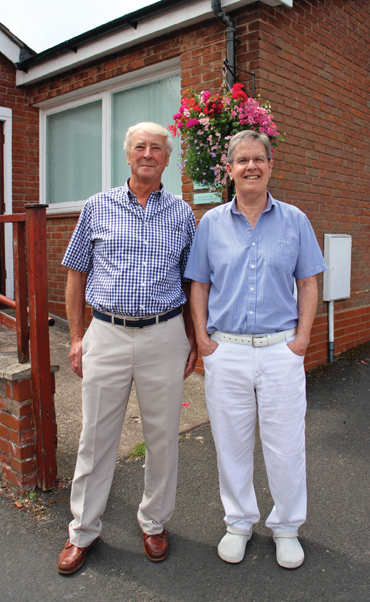
Formerly known as Barnt Green Dental Centre, the practice has been renamed by Dipesh (above left) and his brother, Dr Manoj Parmar (above right) – who are now adding their award-wining expertise to the well-established foundations built by the two previous owners.

The practice originally opened in 1991 by Dr Graham Boyles – ”It was a wooden shed in those days,” he recalls – and gradually expanded, with Graham joined by Dr Ian Osborn who became a partner. Graham retired in 2007 after a 40-year career, and Ian took over the running of the practice, along with Dr Thomas Faber.

graham ian
Dr Graham Boyles and Dr Ian Osborn

Meanwhile, Manoj and Dipesh launched Acorn Dental in Moseley in 2000 – taking over one of the longest-established practices in Birmingham. It was initially a two-surgery practice, which they have expanded to four as well as creating a centre of dental excellence and winning multiple awards.

“We took the decision to expand as our patients already travel from all over the Midlands, and we want to make our services even more accessible,” says Dipesh. “Barnt Green is our first satellite branch and we hope to establish more in the future.”

A new addition to the team at Acorn Dental is Dr Gilly Mackenzie, who is well known in the Solihull area. Each member of the team has a special interest in a particular aspect of dentistry, so between Barnt Green and Moseley patients can access all types of treatment.

Future plans at Barnt Green include expanding the premises to create four surgeries, developing the services already provided, and improving the facilities with the most up-to-date equipment and technology.

The team – who have more than 100 years’ combined experience – can treat advanced cases, and often take referrals from other practices. They are all registered and regulated by the General Dental Council, and continuously update their knowledge through extensive post-graduate training. Dipesh has an international profile and lectures globally on cosmetic dentistry.

The practice works closely with experienced laboratories to ensure it is at the forefront of technology – but general and family dentistry is just as important. Regular check-ups include screening not just of the teeth but of the whole mouth and jaw, checking for early signs of diseases such as oral cancer and gum disease.

The team seek to make every patient feel at ease, offering a calm approach and a full explanation of any treatment required, without any confusing jargon. This is particularly important for children.

“The relationship we have with our dentist is one of the most intimate outside of our family and friends,” says Manoj. “The trust we place in their hands is immense, and is a critical component of how confident we feel about the advice they offer and the treatment we receive. Patients of all ages can rest assured that their trust is in safe hands at Acorn Dental.”

Dipesh adds: “We don’t want to be ‘just another practice’ – we aim to continue the feeling of being part of a village community, and an asset that Barnt Green can be proud of.”

The practice is taking on new patients – if you would like to register or find out more, simply call and ask for an appointment. Acorn Dental offers a New Patient Consultation, which includes a full dental examination, advice and written estimate and plan for any treatment required, at a cost of for £60 for adults and £0 to £20 for children, dependent on age.

22A Hewell Road, Barnt Green B45 8NE
Tel: 0121 447 7300
https://www.acorndental.co.uk

Free parking for 3–4 vehicles
Access is via a private drive at the side of Savoir Faire boutique.

Reinvent your home

after
After

ADVERTISEMENT FEATURE

Summer is here and what better time to freshen up your home with Leila Loves Design?

The creation of or upgrade to an open plan kitchen, dining and lounge area is currently one of the Barnt Green firm’s most popular projects, but owner Sam Chorley’s passion is to take any space and transform it to meet clients’ needs.

“Like many of us, working to a budget is important – we can create beautiful interior design schemes that will increase the value and functionality of your property, without breaking the bank!” says Sam.

before
Before

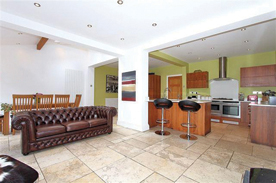
A recent Leila Loves Design project transformed a property in Barnt Green by remodelling a kitchen, lounge and diner into an attractive and truly functional living space.

The client said: “Sam has been a pleasure to work with. She took the time to understand our ways of living as a family, our thoughts and preferences as well as bringing fresh ideas and concepts for us to explore and consider. The result has been the creation of an amazing space where we love to live as a family.”

If you would like a taste of what Leila Loves Design could do for you – whether it’s just one room that needs transformation or your entire house – call 0121 413 3801 to discuss your project.

Duck house disappears

missing

Sarah Rees

Sarah Rees reports from the Oakalls and Parklands.

Work to clear foliage from around the estate’s balancing pond revealed a mystery – the disappearance of the floating duck house.

Earlier this year, district councillor Caroline Spencer had campaigned for more regular maintenance of the land immediately surrounding the pond, following requests from a number of residents who wanted the “viewing area” cleared, particularly for the enjoyment of younger children.

Previously the foliage and grass around the pond had been cut back annually, in October. However, the area was cleared in March this year and the task will be undertaken again in October.

From 2020 this will become a regular twice-yearly schedule of maintenance, undertaken by Bromsgrove District Council.

When the work was completed, it was discovered that the duck house was no longer there. It had been constructed in 2015 as part of an extra-curricular design technology project, undertaken by a group of Oakalls students who attended St Bede’s Catholic Middle School in Redditch.

The house was floated on the pond by Bromsgrove District Council’s Leisure and Cultural Services.

While it is highly unlikely that the duck house has been stolen, it may have sunk earlier this year. Coun Spencer is now exploring a number of opportunities for getting a new home built for the many ducks that reside on the pond.

group
Revd David Ford (centre) with the Venerable Nikki Groarke, Archdeacon of Dudley, and the Bishop of Worcester, the Rt Revd Dr John Inge.

NEW VICAR AT ST GODWALD’S

The Revd David Ford was instituted as the Rector of Bromsgrove and Vicar of Dodford by the Bishop of Worcester at a service in All Saints Church on June 15.

David has day-to-day responsibility for St Godwald’s, Finstall and All Saints, Bromsgrove, as well as overall responsibility for the Bromsgrove Team. St Godwald’s is popular with Oakalls residents as a place of regular worship and for special events such as baptisms.

Ordained in 2009, David has been in ministry in Leeds city centre, in Nottinghamshire and most recently in eight rural parishes in the North Cotswolds.

He said: “The church community continues to be an important part of our villages and towns, a sacred place to which we are drawn to celebrate family, community and national events, and a place of solace and support at times of need, whether personal or communal.

“All are welcome in all of our churches, whether you are a regular worshipper, dipping your toe into faith for the first time or simply curious about our buildings, their heritage and the faith to which they point.”

David may be contacted at revdavidford@googlemail.com or on 01527 873831.

Please contact me with your news, views and concerns about any
aspect of life on the estate. 
Email: oakalls@villageonline.co.uk


How much is enough?

pool

ADVERTISEMENT FEATURE

martin

Martin Pryor explains why it’s worth considering a bigger contribution to your pension.

Pension contributions have recently risen for many people, but the increase may still not be enough to fund a comfortable retirement.

The latest round of pre-planned increases to minimum contribution rates under automatic enrolment (AE) workplace pensions came into effect in April. If you are one of the 10 million people who have been automatically enrolled, then broadly speaking, provided your yearly earnings are at least £10,000:

* Your employer must now contribute a minimum of 3% of your ‘band earnings’ into a pension (band earnings in 2019/20 are between £6,136 and £50,000); and

* You must make up the balance to bring the total contribution to 8% of ‘band earnings’.

So, if your employer pays the minimum 3%, you have to contribute 5%. In most instances you will receive at least basic rate tax relief, which will bring your effective cost down to 4%.

The 8% total contribution figure is widely quoted, but a lot of people overlook the fact that it does not apply to all earnings. In fact, the true AE contribution is approximately 6.2% of total average pay – based on the Office for National Statistics’ latest (February) estimate of average pay of £528 a week (£27,508 a year).

There are similar effects across the pay scale, with the maximum true rate of contributions approximately 7% of total pay, which is at the  “band earnings” ceiling of £50,000.

CURRENT CONTRIBUTIONS ARE NOT ENOUGH

Despite the increases, the government accepts that the current level of AE contributions falls far short of funding requirements. In the foreword to a Department for Work and Pensions report on the future of AE pensions, published in December 2017, the then Secretary of State for Work and Pensions said: “…we recognise that contributions of 8% are unlikely to give all individuals the retirement to which they aspire”. His proposals included:

*  Removing the lower limit on ‘band earnings’, so that the 8% was based on full earnings (up to £50,000);

*  Reducing the minimum age for inclusion in AE from 22 to 18; and

*  Encouraging people to save more than the 8% level.

Eighteen months (and two new Secretaries of State) later, there have been no further developments. The fact that there have been AE contribution increases in both April 2018 and April 2019 may well have encouraged the government to pause, if only to see the reactions of employees.

WHAT IS THE SHORTFALL?

So how much should your pension contributions be? As far back as 2005, the Pensions Commission acknowledged that the state pension with additional AE contributions of 8% would only provide around half the level of savings needed for most people to enjoy an adequate retirement. The implication is that the contribution rate should more than double for the average employee.

More recent statistics on longevity and the number of people remaining in work beyond usual retirement age have made the picture even more complicated. But how much should your contribution levels increase? The amount will depend on several factors, including:

* When you plan to retire and whether that is before you reach your state pension age;

* Your existing level of pension savings, including state benefits;

* Other savings on which you can draw in retirement; and

* Any limits imposed on you by the pension annual and lifetime allowances.

The calculation can become complex very quickly, so why not ask us to carry out an assessment of what your personal contribution rate should be?

The value of your investments, and the income from them, can go down as well as up and you may not get back the full amount you invested.

Past performance is not a reliable indicator of future performance.

Investing in shares should be regarded as a long-term investment and should fit in with your overall attitude to risk and financial circumstances.

The value of tax reliefs depends on your individual circumstances. Tax laws can change. The Financial Conduct Authority does not regulate tax advice.

Contact Pryor Portfolio Management for more information:
Tel: 07961 162818
martinpryor@ppm-ifa.co.uk
https://www.ppm-ifa.co.uk

Summer improves

Virga clouds
Virga clouds

Phil

Alvechurch amateur weatherman Phil Thomas records the changes.

The first 18 days of July were extremely dry, with only 1.3mm of rainfall. Even when it did rain it hardly wet the ground, leaving plants and lawns short of water. However, the 19th then brought 13mm of rain in a 12-hour period.

Daytime temperatures were slightly above normal but some cold nights left the mean temperature just below normal.

July 2019 (to the 21st)
Mean Max  21.8C  0.2 above average
Mean Min   11.6C   0.6 below average
Mean        16.7C    0.2 below average
Rainfall   17.5mm    29% of average
Sunshine  107.5 hrs  69% of average

June was a month of extremes. Rainfall of 154.4mm was 259% of the local 30-year mean, with a large amount of it falling over just three days: 71.8mm over the 10th, 11th and 12th.

There were record high temperatures on the 29th, reaching 30.9C locally. But the average temperature was only 14.3C, just below the local 30-year mean.

June 2019
Mean Max  18.6C  0.4 below average
Mean Min   10.0C   0.2 above average
Mean       14.3C       0.1 above average
Rainfall     154.4mm  259% of average
Sunshine 117.6 hrs  87% of average

Outlook
Moving into August, confidence is low in the forecast with no one single weather pattern looking to dominate. This could well mean plenty of fine, dry weather, interspersed with thundery outbreaks, leading to marked local variations in rainfall. Temperatures are likely to be above average.

More information at https://www.alvechurchweather.metsite.com  
You can see an improved HD weather-cam, updated at one-minute intervals, at: https://www.alvechurchweather.metsite.com/webcam_alvechurch.php

Ready for challenge

action
Action from the defeat by West Bromwich Albion (Photo/ Ian Macvie)

Alvechurch FC warm up for new season with a trio of friendlies.

Alvechurch FC’s new manager Darren Byfield started his tenure with a win, as the new-look team put four goals past Littleton in a pre-season friendly.

Midfielder Mitch Botfield, who has played a large part in the club’s success in recent years, gave Church the lead with a superb half-volley just three minutes in. Littleton hit back, though, with Dean Fisher brought down by Taylor Morrison before getting up and calmly slotting the ball into the net.

But Alvechurch restored their lead within a minute as new signing Danico Johnson beat the Littleton keeper and two men to fire home. A fine run from Rahis Nabi saw him play the ball to Johnson who bagged his second before half-time.

In the second half Church fielded a near-enough different side and sealed the win via a Morrison goal. Littleton created a few chances of their own and did manage to pull one back, but the visitors were able to keep the final score at 2–4.

Unfortunately the boot was on the other foot in the next fixture, as Alvechurch were beaten 4–1 by a young and vibrant West Bromwich Albion under-23 side.

In an even first half, chances were restricted to strikes from distance. Then AFC’s keeper Bobby Biddle misplaced a pass to Albion striker Owen Windsor, who duly put the ball into the bottom corner.

Albion started the second half quickly. Nick Clayton-Phillips fired wide of goal while Biddle denied Sam Wilding, before Javia Roberts forced a save from Albion keeper Brad House.

Windsor then came inches away from grabbing his second with a low strike off the post, while Church substitute Fisher saw his shot deflected just wide after a good run.

As the game wore on, West Brom become ruthless. Their trialist got their second goal via the crossbar, before Clayton-Phillips won and converted a penalty. Proving himself as one to watch, he then scored a stunning long-distance strike to put some gloss on the scoreline.

Alvechurch did manage to respond through a brilliant Peter Till free-kick towards the end of the game.

Next up was a tricky trip to AFC Wulfrunians. With Church missing Josh Ezwele and Taylor Morrison, both on trial at Bradford City, as well as Mitch Botfield, the game provided the chance for others to impress the manager – and they did.

The hosts created a few early chances but their shots were off target; while Roberts saw his shot saved and Johnson curled wide of goal. Biddle then got down low to deny the Wulfrunians winger, who fired the rebound wide to end an entertaining first 45.

In the second half substitute Ant Smith made an instant impact for  Church, curling the ball into the top corner superbly. Biddle was then on hand to make another stunning save and prevent an own goal, but Wulfrunians equalised soon after via a deflection.

However, Kyle Morrison popped up to meet a Babacar Suane corner and headed in to secure the win.

League action begins with a visit to Royston Town on August 10, and September brings the first and second qualifying rounds of the FA Cup.

* Former manager Ian Long has signed another two Alvechurch players for his new club Stourbridge. Forward Aaron Lloyd and central midfielder Tom Tonks make it eight players that have followed Long.

* For more info or sponsorship enquiries, please contact Trevor Ball at saintsarehot2@btinternet.com or visit https://www.pitchero.com/clubs/alvechurch
Follow the club on Twitter @Alvechurch1st

FIXTURES (League unless stated)

Sat Aug 3   Evesham Utd (H)  3pm – friendly

Sat Aug 10  Royston Town (A) 3pm

Tues Aug 13  Barwell (H) 7.45pm

Sat Aug 17  Hitchin Town (H) 3pm

Sat Aug 24  Hednesford Town (A) 3pm

Mon Aug 26  Redditch Utd (H) 3pm

Sat Aug 31  Leiston (A) 3pm

Sat Sep 7  FA Cup 1st Qualifying Round

Sat Sep 14  Peterboro Sports (H) 3pm

Golf club’s charity day

cheque

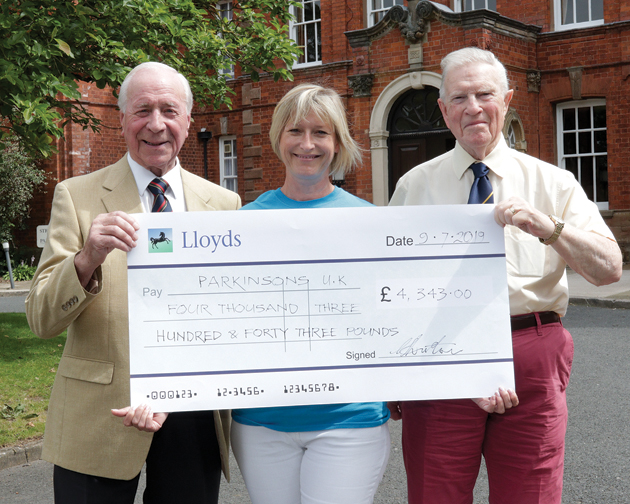
Kings Norton Golf Club members Gordon Dutton (left) and Barry Gibbs, a past president of the club, present a cheque for £4,343 to Sarah Wakeman, the Parkinson’s Foundation representative for the south Midlands.

The money was raised at a golf day organised by 90-year-old Gordon, of Lickey, whose wife, Cynthia, a past lady captain of the club, has Parkinson’s.

Golfers travelled to the Alvechurch-based club from far and wide, from Loch Lomond to Cornwall, while Spencer Edwards, a past assistant professional at Kings Norton, came all the way from Montego Bay, Jamaica, to take part.

There were 80 golfers on the day, who also supported a raffle and silent auction, while other donations swelled the final total.

Special visitor at tag rugby festival

bruce

Youngsters from 13 local schools took part in a tag rugby festival at Kings Norton Rugby Club’s Hopwood Park ground.

20 teams of pupils from Years 5 and 6 were involved in the annual event, held in honour of Kings Norton stalwart Chris Cooksey who passed away a year ago. This year the festival was based around the various countries contesting the Rugby World Cup, which begins next month in Japan.

The emphasis of the day was not on winning, but on the Rugby Union’s core values of teamwork, sportsmanship, respect, discipline and enjoyment. The Chris Cooksey Trophy was presented by Chris’s sons Gareth and Phil to the team who had best met these values during the tournament.

At the end of the tournament, all children who took part were awarded with commemorative medals. Prior to the event, each school had involved its pupils in projects about the country they were representing at the tournament and these were displayed in the clubhouse.

During the lunch break a surprise visit by a New Zealand Maori, Bruce Simpson, added to the excitement of the day. Bruce demonstrated the personal Haka of his Raukawa Ngati Toa tribe to the children, describing its Maori culture and history and teaching them how to do the Haka.

For more information about the club, visit https://www.pitchero.com/clubs/kingsnorton

Heart of stone

quarry wildflowers

Mary

Mary Green explores an island with a thriving ecosystem.

I recently spent a week on a magical island, with amazing wildlife, spectacular views, clean beaches, a thriving community and free artworks. The sun shone and we could roam free. This was not in the Mediterranean or even the Hebrides, but the Isle of Portland in Dorset.

Most people have vaguely heard of Portland Bill, or an area in the Shipping Forecast, a prison, or the stone from which much of London is built. You may even know it was the centre for maritime sport in the 2012 Olympics. But not many people I have spoken to have been there.

For me, the most impressive thing was that people there have a care for their environment, so that it has a thriving ecology – as we all could. It’s at the end of Chesil Bank, so the sea-shore is protected. It is basically a huge rock which has been quarried for centuries.

Now that only a couple of quarries are still working, the old ones have been looked after by the Dorset Wildlife Trust and the local authorities, turning them back into a natural landscape full of flowers and butterflies.

The road sides are allowed to flower freely and not mowed to death, and the vegetation is managed only to make sure some garden shrubs don’t get too well established in the wild. We even had a picnic in the prison governor’s garden, which includes a wildflower patch.

There is a nationally important bird observatory, which gets the migratory birds before anywhere else. You can walk pretty well everywhere but there is also the Coastal Path around the island – and a good bus service!

One reason why there is a thriving community is that some quarries are still working, and a small amount of fishing, so families still live and work there and it hasn’t become just a tourist or retirement enclave. It has its own town council even though it isn’t a town but a collection of villages, tumbling down to the sea or perched on the heights.

One of the most spectacular places is the disused Tout Quarry, which has become a sculpture park. There are dozens of sculptures carved out of the remaining rocks, many hidden away down little tracks so you have to find them.

The sculptors range from Antony Gormley to young local artists to international visitors. The carvings are surrounded by wildflowers, insects and birds – and all free.

Quarries and other old industrial sites are often a better environment for wildlife than farmland. Here I saw some varieties of flowers that are rare elsewhere but profuse here.

There are also some species of flowers and butterflies that are specific to the area, like the Portland spurge and the Lulworth skipper.

Flowers ranged from the huge and stunningly blue viper’s bugloss and the uncommon yellow-wort, to the tiny eyebrights and milkworts that carpet the cliffs. There are coastal flowers that you will know from other seaside areas, especially red and white valerian everywhere.

We saw well over a hundred kinds of wildflowers in bloom. We found two kinds of orchids: bee orchids and pyramidal orchids. There were a lot of plants in the pea/clover family.

As well as the familiar bird’s foot trefoil, we found horseshoe vetch and kidney vetch, all attractive yellow flowers. Alongside red and white clover were haresfoot clover and hop trefoil, small but beautiful.

These flowers are important as the food plants for many butterflies, especially the blue ones. People often forget that butterflies need not only nectar-rich flowers, but the right food plants for their caterpillars.

So, we saw the common blue, the rarer silver-studded blue, and the stunning Adonis blue which seemed to reflect the blue of the sky and the sea. And there were caterpillars everywhere: we got used to finding them crawling over us when we stopped for a picnic!

Another group of plants which attract insects well are the carrot family – the umbrella plants. Each head has dozens of tiny flowers, giving lots of accessible nectar.

Hogweed grew everywhere, and Alexanders which had flowered and set seed, but there was also abundant wild carrot. This has amazing shape-shifting flowers which move from convex to concave, and also change from pink to white, so a clump looks like a bunch of varied flowers.

The daisy family similarly have flower heads made up of tiny florets which attract bees and flies. There were moon daisies everywhere, as well as common daisies and sea asters, knapweed (the beautiful greater knapweed as well as the smaller one we get), Oxford ragwort, cats-ear and various hawkweeds and sowthistles.

One noticeable plant was yellow rattle, flowering everywhere, which some of you may know from places like Eades Meadow. It is parasitic on grass, so helps keep the balance and allow other flowers to flourish. There was another species of flower called broomrape, also parasitic, including the uncommon ivy broomrape.

Even on the shore itself there were flowers. Being almost entirely pebbly (no sand in your shoes!) they don’t have much seaweed, but above the tideline were rock samphire, ivy leaved toadflax (which also grew out of all the stone walls on the island, along with wallflowers which I haven’t seen actually on walls before!), restharrow, stonecrop, seablite, purslane, bindweed and sea wormwood.

Many of the plants we saw were old herbs, and two were much-used kitchen herbs – marjoram or oregano, which we picked from the roadsides, and thyme which we found on the cliffs – eaten in our evening meal!

There was a beautiful borage plant, those blue flowers that traditionally decorate Pimm’s cocktails. (Oddly enough I found one on a bank in Alvechurch recently, but it got mowed down.)

Add to this the sweet smells of honeysuckle and elder everywhere, and the roses (in the case the beautiful seaside burnet rose) and you have a great environment. You can’t see the careful hard work behind it, making sure everything thrives.

Birds were everywhere too, though not as many as you’d see in the winter and spring when the migrants come through. We walked several days with the sound of skylarks above all the time, and it made me remember how that used to be the case here until our farming methods drove them out.

There were stonechats, pipits and wheatears, buzzards, kestrels and a peregrine falcon. By the sea were black-backed and herring gulls, fulmars, cormorants, and in the Fleet lagoon by Chesil Bank were egrets as well as the famous swans.

The little museum on the island was founded by Dr Marie Stopes, the family planning pioneer, and includes accounts of how hard it was to get there before the bridge and causeway were built. It still has the feel of an island. It has a fascinating history.

You can walk on old railway lines and see the remarkable architecture of bridges and tunnels around the quarries. It’s such a good example of how care for wildlife can be built into a busy working community with some tourism – and the legacy of a little money from the 2012 Olympic Games!

Here we have finally had some fine warm weather and our Withybed Open Gardens had sunshine. Some people are a bit baffled by my garden, which has a lot of wild flowers that other people call weeds.

The garden is loosely based on Permaculture principles, including diverse plant layers, natural leaf mulching, minimal digging, composting, and no bare earth. As well as gardens, visitors could see species-rich grassland in the field they parked in and walked through, thanks to a local farmer with sustainable methods.

I have also been impressed by a relatively new orchard planted near Barnt Green which has hundreds of trees including local old apple varieties like Redditch Dobbin, and black Worcestershire pears.

It also has an emphasis on wildlife, with native plants growing freely around giving a habitat for insects, birds and mammals.

There are more and more people feeling their way towards improving the environment. If only our local authorities looked after our communal spaces better!

There have been lots of 50th anniversaries in Alvechurch lately, and it reminded me I had written this poem about ten years ago, when they were 40th anniversaries! You may recognise references to some Sixties songs.

Heavenly bodies

What happened to those heavenly bodies
Who sang I’ve got my hair, got my teeth
Who were stardust and golden, watching the moon
Did we get back to the garden?
The bombers didn’t turn to butterflies.
I am walking up the field, my feet wet
Buzzards calling and wheeling over me
Butterflies on the thistles
Sun warming my bare arms.
Many of those bodies lie far away now
Some under the grass. Still got my hair.
We’ve all got more on our bellies
Love life and laughter have lined our faces
We have warmed ourselves
On each others’ heavenly bodies
Sometimes we bruised each other
Sometimes we made more bodies
Shooting stars across the skies.
Some of us were falling stars, and hit the earth.
I still believe that the touch of love
Will stop you ever wanting to make war.
When will they ever learn?