Home Blog Page 54

Blowing hot and cold

shower

Phil

Alvechurch amateur weatherman Phil Thomas records the changes.

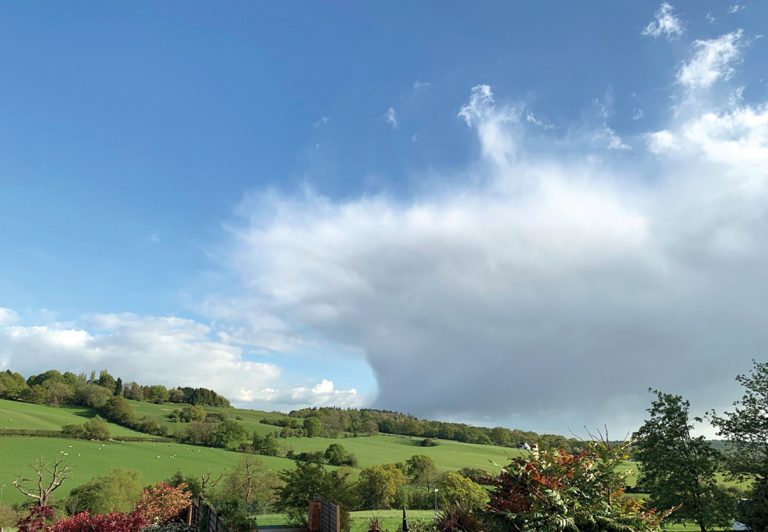
May, at least up until the 19th, was quite a cold month, with the average temperature at 10.2C – that’s 1.3C below the expected level. There were some warm sunny days in the middle of the month but we still only reached 62% of the expected sunshine.

The colder weather seems to be caused by high pressure near us, resulting in a south-easterly or easterly airstream which can be quite cold at this time of year.

May 2019 (to the 19th)
Mean Max  14.9C  1.4 below average
Mean Min   5.5C   1.2 below average
Mean        10.2C    1.3 below average
Rainfall   41mm     74% of average
Sunshine  91.9 hrs  62% of average

April started quite cold and chilly, turning milder and warmer in the second half. The mean temperature of 8.9C was 0.7C above the local average. Rainfall was below average with only 41.9mm; that’s 63% of the local amount.

April 2019
Mean Max  13.6C  0.8 above average
Mean Min   4.2C   0.6 above average
Mean       8.9C       0.7 above average
Rainfall     41.9mm  63% of average
Sunshine 151.2 hrs  128% of average

Outlook
The weather as we go into June is likely to include dry and bright periods, perhaps punctuated by occasional wetter and windier spells. It could be rather cool in these unsettled periods. However, more prolonged settled and warm conditions in the north of the UK are expected to spread further south at times.

More information at https://www.alvechurchweather.metsite.com  
You can see an improved HD weather-cam, updated at one-minute intervals, at: https://www.alvechurchweather.metsite.com/webcam_alvechurch.php

AFC are still smiling

action
Action from the play-off win against Stourbridge (Photo/ Ian Macvie)

Alvechurch just miss out on promotion after a thrilling season.

Alvechurch can count their 2018–19 season as a huge success despite just missing out on promotion this time.

Having secured fourth place in the league with an impressive string of results in April – including a Good Friday classic away at Stourbridge where an injury-time equaliser secured a vital point – ’Church went into the play-offs where they would face local rivals Stourbridge once again.

The semi-final matches (Stourbridge vs Alvechurch and King’s Lynn vs Stratford) were originally scheduled for May 1, with the two winners due to meet each other on May 6 for a place in the “super final” against the winner of the Northern League on May 11.

However, the scheduling descended into farce when it was alleged that Stratford had fielded an ineligible player and a points deduction may be incurred. As this could have affected the play-off positions, both semi-finals were moved to May 3 – but Stourbridge Cricket Club, which ground-shares with the football club, had a match that day, so the AFC game was moved to May 2.

This brought complaints from King’s Lynn, saying the winners would have the advantage of an extra 24 hours to prepare for their next match, so the fixture was switched to May 4, before the clubs were told both matches were to be played on May 5.

But on that date there was a road race in King’s Lynn involving road closures, so their match was brought forward to May 4 and the Stourbridge vs Alvechurch match moved back to May 6.

The saga continued when Stourbridge’s chairman, wanting both semi-finals to be played at the same time for fairness, decided to forego home advantage and switch their match to Lye Meadow – so eventually both matches were played at 3pm on May 4. (Stratford were deducted 3 points, but this didn’t affect the league table so both fixtures could have been played on the original date!)

Playing in front of 900 home fans gave ’Church an extra boost and they came from behind to beat Stourbridge 2–1, but sadly they couldn’t repeat the magic two days later at King’s Lynn. There was plenty of support, with two coaches laid on for fans to enjoy free travel to north Norfolk where they created an electric atmosphere outside a local pub, singing and chatting with the King’s Lynn crowd.

The game itself was disappointing with King’s Lynn running out worthy 3–0 winners, but it has still been a fantastic season overall. Alvechurch finished with 73 points, having won 21 of their 42 league matches and scored 66 goals during their first year of competition at this level.

*  Congratulations to centre forward James Roberts who won both the Player and Goal of the Month awards for April. James, on loan from Hereford FC, has impressed the Alvechurch faithful with his tenacity and eye for goal since his arrival earlier in the season.

He created and scored vital goals in the final push for the playoffs and his 25-yard curling shot across the goalkeeper against Banbury – in a draw that guaranteed a playoff place– was the worthy winner of the monthly award.

*  On Friday September 6, Lye Meadow hosts a luncheon with former Arsenal, Middlesbrough and England footballer Ray Parlour as guest speaker. Comedian Jed Stone will also entertain the audience. Tickets, priced £65 per head or £600 for a table of 10 (to include a three-course Indian meal), are available via chairman Richard Thorndike and directors Simon Redhead and Paul Weaver.

*  For more info or sponsorship enquiries, please contact Trevor Ball at saintsarehot2@btinternet.com or visit https://www.pitchero.com/clubs/alvechurch
Follow the club on Twitter @Alvechurch1st

Cup joy for Rhinos

action

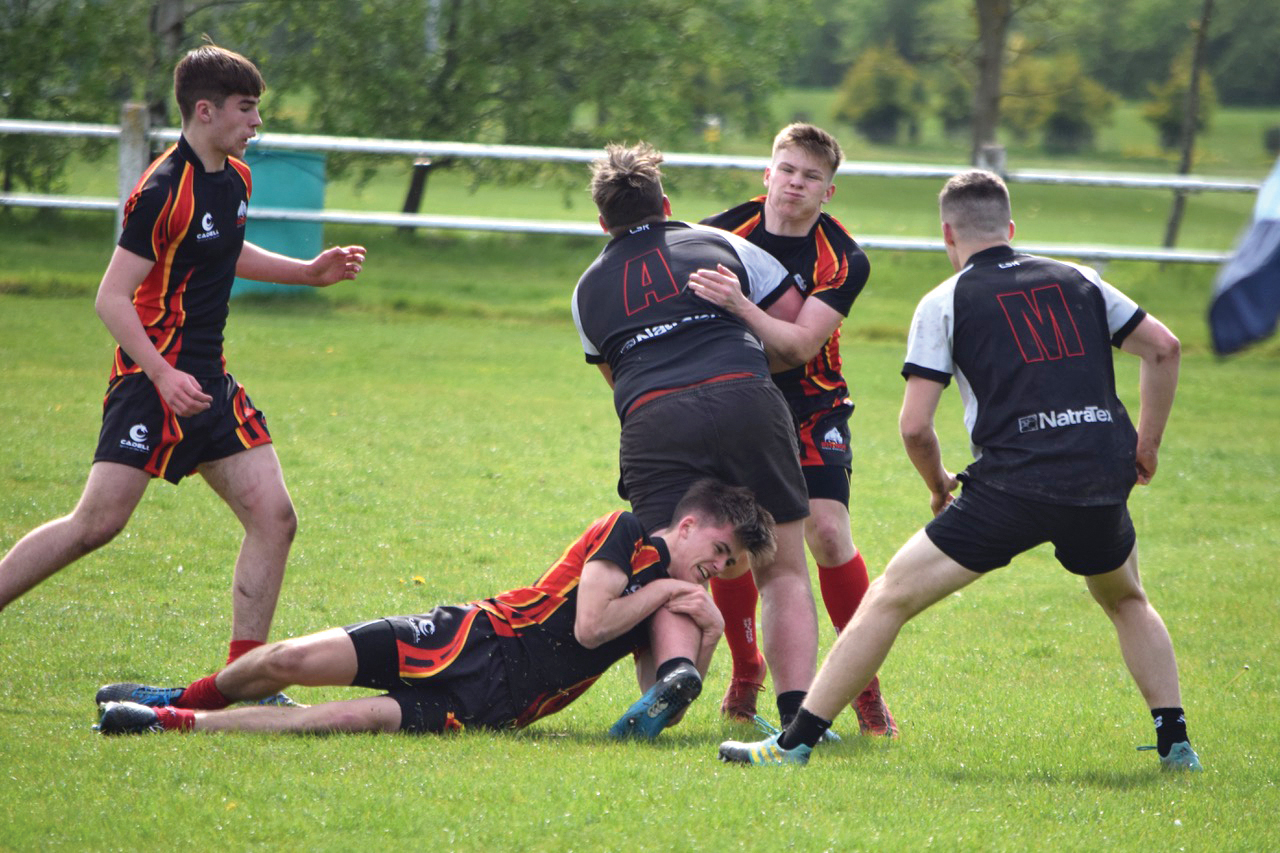
Kings Norton Rugby Football Club Rhinos Under 16s are celebrating winning the North Midlands Cup in their age group – for the first time in the club’s history.

In a tense final against Herefordshire team Luctonians, the Hopwood-based side won 34–19 to lift the trophy.

After a strong journey to the final, beating Newport in the quarter finals 71–22 and Evesham 57–10 in the semi finals, the Rhinos met Luctonians at Dudley Kingswinford RFC and secured the victory in front of a big crowd of spectators. The crowd included KNRFC President Ron Bunce and other distinguished club members.

The Rhinos started the match convincingly with sustained pressure, scoring two tries within the first 20 minutes. But a determined Luctonians side fought back, going into half time with a 12–10 lead.

The second half seemed to move up a gear, as the Rhinos started to look more and more dangerous. It took just minutes for them to score their third try and their confidence returned. Another converted Rhinos try followed 10 minutes later, but again, Luctonians fought back to bring the score to 22–19.

In a really tense last 20 minutes the Rhinos’ ball handling and tenacity in both defense and attack paid off as they took the ball over the try line another two times to make the final score 34–19.

Club President Ron Bunce said: “I can’t begin to tell you what a momentous occasion this is for our small rugby club! The last time we won a North Mids Cup Final was when I was captain of the Colts back in 1967. I am so very proud of these boys.”

For any further information contact U16s team manager Matthew Daines on 07896 704079. Kings Norton RFC is based at Ash Lane, Hopwood, Birmingham and has a thriving mini and juniors section.

10-mile hill walk raises heart funds

walkers

Two Parklands residents and their family and friends have raised more than £1,000 for charity by completing a 10-mile walk.

Alex Mansfield and her partner Andrew Poole decided to raise funds and awareness for the British Heart Foundation after Alex’s father died suddenly from a heart attack in February 2018.

They and 10 others set out to walk 10 miles of the Malvern Hills, from Herefordshire Beacon to Worcestershire Beacon and back, and completed the trek in four hours and 45 minutes.

“None of us are experienced walkers really, so as you can imagine it wasn’t easy going,” says Alex. “But as it was for charity and we were asking people for sponsorship, we had to make it a challenge.”

The group have currently raised more than £1,000 from social medial donations and sponsorship, with more cash donations still to come.

“It’s such a great sense of achievement and we have received lovely feedback from the British Heart Foundation, asking us to do more charity events within the Bromsgrove area – so we are thinking of different ideas,” adds Alex.

If you’d like to make a donation, you can do so by visiting https://www.justgiving.com/fundraising/walking-in-memory-of

The name of the rose

burnet rose

Mary

Mary Green explores why we call our flowers by so many names.

I was unhappy to see that the railway people have mowed down all the wildflowers just coming up on the station bank in Alvechurch. They had promised to only mow this after the flowering season but have ruined it for this year. In the little bit they hadn’t reached, there were moon daisies and wild strawberries flowering and tansy leaves coming up.

I don’t know why the people whom we pay to look after our open spaces are so keen to destroy our habitats. So many people these days watch David Attenborough and bemoan the loss of species across the planet, then go out and mow the grass to a green desert and clip the hedge so it might as well be a wall.

I am writing this in May, at the time when the may blossom is all around me. It has made me think once more about the names we give our plants and how they show how much plants are woven into our history and language.

May, of course, is the name of the month and the tree. It comes from the Latin Maia, another version of the name Mary, and many people think that the month of May is named for the Virgin Mary. There is a poem by the 19th century priest-poet Hopkins that wonders why “May is Mary’s month.” In many Catholic countries, may is the flower of the Virgin Mary and is brought into churches to celebrate her.

However, may has another old name: hawthorn, whitethorn or just thorn. (Hawthorn means the thorn used for enclosures). Thorn is such an old name that it appears in Anglo-Saxon not only as the name of the tree but as one of the letters of the alphabet. The sound of “th” in “thorn” was represented by the letter “þ”.

Names like this show how long trees have been part of our world and our culture. Most of the trees I have written about over the last few years have Anglo-Saxon names still in use. Ash gave its name to a letter too – the letter now written as ae and pronounced “ash”.

All the trees in the ancient Celtic calendar gave their name to letters in their Ogham alphabet. But our English names for these trees are Anglo Saxon – we didn’t inherit many names from our earlier Celtic ancestors. The only tree that has a similar name in Anglo Saxon and old Celtic is yew.

We also have an old alternative name for willow – sallow or sally – which comes from the Celtic name. There’s an old song called “Down by the sally gardens”. But only ash and thorn had English letters named after them. Oak was “ac” in Anglo Saxon and the fruit of the oak is an “acorn”.

Another sign of old tree knowledge is that we have separate old names for their fruit. The fruit of the thorn is the haw, the ash has keys, roses hips, beech mast, and blackthorn has sloes. Apples, of course, have apples!

Apple is treated as the name for any fruit, so we call the tree in the Garden of Eden an apple (which it isn’t in the original) and other fruits are named after it (thorn-apple, or love-apple as a name for tomato, or pineapple). It can be the apple of your eye. All these fruit names are Anglo-Saxon.

The oaks came out into leaf so early this year that the old saying about “oak before ash” should point to a good summer. However, the oak and ash were out in leaf together last year, when we really did have a good summer.

In reality the oak comes out earlier in a warm spring because it reacts to temperature, whereas the ash comes at more or less the same time every year because it reacts most to light. The early oaks this year just mean the spring has been warm and sunny.

Hawthorn came into blossom early this year, in late April, for the same reason. By the time you read this it will be over and the haws forming.

The flower for June is of course the rose. This plant is unusual because the name, though Anglo Saxon, is similar in all the Indo-European languages. It is the name of a whole family of plants and of a colour. The rose family includes hawthorn, apple, all the wild plums, blackberries, cherries, strawberries and a host of other edible plants.

No wonder rose is sometimes used to mean just flower, as if it is the flower of flowers. For example, primroses are the “prime roses”, in other words the first flowers. Incidentally, the foremost expert on wild plants in England, Richard Mabey, says that primroses did really well this year and have spread into new places. This is surprising as they like undisturbed land but is maybe to do with the warming climate.

A lovely plant of old meadow land and cliffs and gorges is the rock rose – not a rose but shaped a bit like a small rose. You don’t see it much around here, as it likes chalk soils, but there is some in meadows near Abberley.

The large St John’s Wort is also known as Rose of Sharon, a biblical reference. There are several St John’s Worts, all flowering in June. Wort (which is pronounced wert, not wart) just means a herb. St John’s Day is midsummer, when the flower is in bloom.

There is a Christmas Rose too – again not a rose but a cultivated hellebore with a rose-like flower in January or sometimes December. (There are wild hellebores in England, but they have smaller greenish flowers. The name is Greek.)

There is a common and very beautiful shrub called Guelder Rose, not related to the roses but flowering in June with open heads of small white flowers followed by lovely red berries and scarlet foliage in autumn. Guelder is probably a place-name.

The Virgin Mary is sometimes called Rosa Mundi (the flower of the world) and of course you can pray with rosary beads (a rosarium is a rose garden). Roses were one of the first flowers to be much cultivated and brought in from other countries, so that by the Middle Ages the wealthy had cultivated rose gardens.

The two warring royal houses here, York and Lancaster, each adopted a rose, white or red, as their symbol. When the Tudor dynasty was established it took on the Tudor rose as its symbol – an impossible rose with white and red petals. It became the national flower of England, though not in its wild natural form. The Labour Party adopted the red rose.

The white rose of York, Rosa Alba, originally came from our wild white rose crossed with a damask rose. Our white rose is called field rose (Rosa Arvensis) and is very common around here. The name reflects its obvious association with field hedges.

The other common one is the pink dog rose, Rosa Canina. This hasn’t really got much to do with dogs. The name dog is often given to a more common, less-scented and less-regarded plant, and can also be found in dog violet and dog’s mercury.

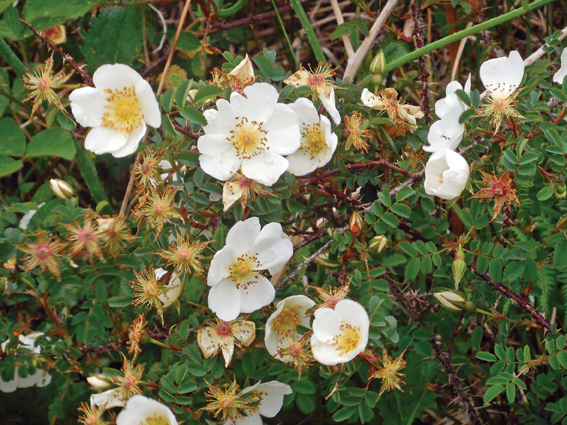
There are other varieties of rose elsewhere in Britain. In the north you can find the downy rose, a much darker pink than the dog rose. Near the sea grows the burnet rose (pictured above), a lovely small white flower followed by striking black hips.

In areas with chalky soils you will see, and probably smell, the sweet briar, a most beautiful mid-pink rose whose leaves are scented as well as the flowers. Briar is another old name for a thorny bush and was often given to roses generally. Apart from this, roses don’t have many of the old local common names that other flowers have – they are always roses.

Flower names range from the obvious to the complex. Bluebells are blue bells, though in Scotland they may be harebells! They were wonderful this spring in the woods and banks around here. You can see how much this area was once all woodland. No one quite knows why forget-me-nots are called that, but they have the same name in most European languages.

Anything called Robin or Robert or Jack is named after the ancient spirit of the wild, called Robin Goodfellow or Jack in the Green. Red flowers like Herb Robert and Ragged Robin pick up on this, as does Jack-by-the-hedge or garlic mustard.

Ragged Robin, a great June flower, has a lovely Latin name too – Flos-cuculi, the cuckoo flower. It grows in wet marshy meadows. The name cuckoo flower is also given to a different pale pink flower also called lady’s smock or milkmaids, growing in wet meadows too, both at the time the cuckoo used to be here.

Coming back to trees, the most prominent tree flower in June is the elderflower. Its scented flower heads are everywhere now in the hedges. Elder is another old Anglo-Saxon name. So is elm. You may not notice elm trees since Dutch elm disease took most of them in the 1960s. But they grow through suckers and are common in our hedges in small bush form. Occasionally they grow to full sized trees and flower, but they usually succumb to the disease again eventually.

In April and May I found them flowering in several places around here. There are three along the canal towards Hopwood. There’s one by the canal near Alvechurch marina, which I haven’t seen flower before, and another beside the footpath through Shortwood above the canal tunnel. I hope they survive.

I wrote this poem on one of my walks to check on local wildlife this year.

Thorn
Easter: thorns cast aside and blossoms arising.
I walk to visit flowers I did not see last year
And some that blossomed even in those thorny days
The canalside is waves of blackthorn, cherry, apple
Even the first may, shining under the sun
I walk gently, listening to blackbirds
Wanting to tell the people who sweat past me
You can’t escape the race by running faster.
And then the elms. Above me, three of them, in fruit
Their papery seed-heads lime green, a child’s decoration
Surviving all these years when all the rest were killed
Stoical, fragile in their scarce-seen beauty.
My eyes are in the branches and I trip over roots
Thinking of Chaucer’s astrologer, looking at the stars
To see the future, and falling into a marl pit.
He saw not that, says Chaucer. I didn’t see the thorns
Until they caught me and held me last year.
Next I find an old verge, often mowed to nothing
But this year neglected, and here they are again
Few-flowered garlic, a strange uneven half-blossom
Not seen for years, but somehow in the ditch-side
It hid under the ground and waited for this day.
Then as expected the goldilocks, first buttercup
Flawed flowers, always imperfect, just like us
But gold and bold against their delicate leaves.
So everywhere renewed this year, all blossoming
With nothing more to do than celebrate
To stand and touch and smell should be enough.
And yet that thorn is in my belly, still pricking
Knowing how fragile all this is, how easily
We can destroy it all: blossoms, bees, blackbirds
So that I can’t just stop and rest among the petals
But have to keep on walking, talking, writing
Sharpening the thorns that lie behind the flowers.
So little time before the blossoms fall.
Gardens open for charity

garden

The bi-annual Withybed Open Gardens event takes place this year on Sunday June 30, from 1 until 6pm. Eight gardens are taking part, including two brand new entries, with money going to charities supported by the National Garden Scheme.

Entry is £5 (kids go free) and refreshments are available. There’s parking nearby, and the post code is B48 7RJ.

Another popular event is Penny’s Open Garden, based at The Piggery, Weights Lane, Redditch B97 6RQ. This year Penny is opening her colourful gardens on June 28, 29 and 30, from 2–6pm.

Entry is £12 and there will be delicious cream teas to buy, all in support of Cancer Research, Dementia UK and Parkinsons.

Eco, green and growing

braskets

hannah

Hannah Genders reports on her latest feature at the Malvern Show.

We’ve just finished another fantastic weekend at the RHS Malvern Spring Festival. This is my third year of doing a feature for the show under the title “EGG”, which stands for Eco, Green and Growing. The area is like a mini festival within the festival and we promote any individuals or groups who are involved with community projects or working in a way that promotes all things Eco, Green or Growing.

This year we had the farming sisters with us again, Amy Bates and Sophie Hamilton, who have gone back to run their family farm near Alcester. They were both teachers and are now running the farm as a forest school farm, so the children get to experience a working farm and learn where their food comes from.

It is also a Higher Stewardship farm so is all about creating wildlife habitats, sowing crops with birds and bees in mind and enhancing native woodlands and hedgerows. They created a fabulous display at the front of our stand with a vintage tractor and trailer to promote Sophie’s other business, which is flowers from the farm, using only British-grown, seasonal flowers.

New this year we had the Malvern Repair Café. I was so impressed with this idea and how it is executed; basically you take anything you need repairing to the café they have set up and sit and have a coffee while this wonderful bunch of retired people with an amazing set of skills repair whatever you have brought in.

They tell us they can repair 80 percent of all the things that are brought into them, from sewing repairs to sharpening tools to iPads and mobile phones. It was just such a joy to have them at the EGG telling people about what they are doing and encouraging all of us not to throw things away but get them repaired.

The other main feature we had at the front of our EGG tepee was Allens Cross eco project, which is based in Northfield, Birmingham. This urban garden project means a lot to the people who use it. They recycle everything, and this year created a display made from old pallets that looked great planted up with herbs.

Jackie Careless, who runs the project, always likes to have fun with what she brings to the show and this time was no exception, from her “hanging braskets” (second-hand bras on a washing line planted with flowers), which I understand made it on to Gardeners’ World, to stuffed and planted old jeans. It had lots of people coming and looking, taking photos and at the same time learning all about the work that Jackie and her team do.

Their theme this year was planting to promote pollinators and they had a natural bee hive at the show with lots of knitted bees around the stand too. All our exhibitors had the chance to come on the stage in the tepee and tell the audience about their project – while Jackie was talking, two of her service users spoke about what this garden means to them in their daily life and I was choked up listening at the back of the tent; these small urban gardens are vital to the people who use them.

I know I haven’t spoken much about plants yet – all the speakers on our stage were gardeners, but talking about gardens from an ecological, green or environmental point of view. We had a climate change scientist too and for all the talks the tent was packed; there seems to be a real hunger in people to know more on these subjects.

I have to say our plot felt like a haven after the busyness of the retail areas and the show gardens. We also had, between the talks, lots of music, provided by my husband Mike, Ally Craigan who is an excellent fiddle player and lots of people they know. The Sunday afternoon was just a full-on music session for several hours.

At the front of our feature on either side of the path were planted vegetable beds, grown for Chelsea by Jon Wheatley. These are all being redistributed to Jackie and her project and a new Incredible Edibles project starting up in Alvechurch, which I hope to tell you more about in future articles.

So let me give you some feedback from the ecologist. A question was asked: “What is the one thing I can do to help wildlife in my garden?”. The answer was to plant a tree – even a small garden can take a small tree and if you can plant a semi-native tree so much the better, something like Crataegus laevigata ‘Paul’s Scarlet’ which is a hawthorn, grown as a tree but with gorgeous deep pink double flowers (good for bees) and autumn hips (good for the birds).

The other questions that came up time and again were about flowers that were good for wildlife – and as we were promoting plants for pollinators, we could send them outside to have a look. One of my favourites that the farming sisters had brought along was Phacelia tanacetifolia, sometimes called Lacy Phacelia.

It is grown as an annual and has these amazing curled flowers almost like a fern. It likes sun and is loved by bees and all pollinators; easy to grow from seed, it is definitely one for your garden this summer.

Thank you to all the EGG volunteers and helpers.

More information: 

Contact Jackie Careless on 0121 448 0119 or jackie@ecobirmingham.com

The Farming Sisters are based at Oversley Hill Farm & Forest – search for them on Facebook

https://www.malvernhillsrepaircafe.co.uk

Chaos in the heavens

debris
NASA depiction of space debris

Brian

Amateur astronomer Brian Watkiss peers into the Village night sky.

June: a month when, to an astronomer, it never really gets dark. But, there are still things to see in the twilight. After 60 years of launching items into space, the heavens above us are starting to get overcrowded. The USA is tracking almost eighteen thousand objects in orbit round the planet, of which only about fifteen hundred are operational satellites.

Last year alone, nearly four hundred objects were launched into space and there are, literally, millions of tiny bits of debris up there too, waiting to cause chaos in the heavens (is that the name of song by a heavy metal band?).

Fortunately, for us stargazers here, a lot of this space hardware can provide a little distraction on a warm (?) summer evening. All that is required is a comfy seat, some pleasant company and, perhaps, a little light refreshment.

As the sky darkens, from about ten o’clock, you will soon start spotting “stars” drifting across the sky, at about the speed of an aeroplane but with no flashing lights. These are satellites and as it gets darker, more and more become visible. It can soon get competitive, with everyone striving to be first to spot the next one (or is that just me?).

The most spectacular of all is, of course, the International Space Station. Its brightness can be quite astonishing and everyone should make an effort to see it. You can find out when it’s due on https://www.heavens-above.com and, incidentally, identify other objects too.

If you have a really good view of the north-western horizon and it’s really clear, you may get one last glimpse of Mars. A thin crescent Moon is close by on the 5th to give you a clue. Then as the month progresses, Mercury starts to appear, in the same direction but you might need binoculars to pin it down. The two planets make a very close approach on the 18th and Mercury reaches its highest point in the sky on the 23rd.

Over on the opposite side of the sky, in the south east, we start to see Jupiter rising, from about ten thirty onwards. This will be easier to spot as the largest planet is bigger and brighter and is on the other side of the sky to the Sun. In fact, on the 10th it is exactly opposite and is said to be in opposition. It will, however never get very high in the sky at this time of year.

The new Moon in June (!) is on the 3rd, so after this date will appear as a thin crescent, getting thicker and rising earlier each day until the 17th. This is when it is full and this month it is known as a Strawberry Moon. Just as with Jupiter, the Moon never gets very high above the horizon and so always looks much bigger. This is a well-known effect and is called “The Moon Illusion“, so have a look at the rising Moon for yourself and see if you can work out what’s going on.

Try something new!

art

Richard

Bromsgrove artist Richard McIlwraith looks ahead to a festival of the arts.

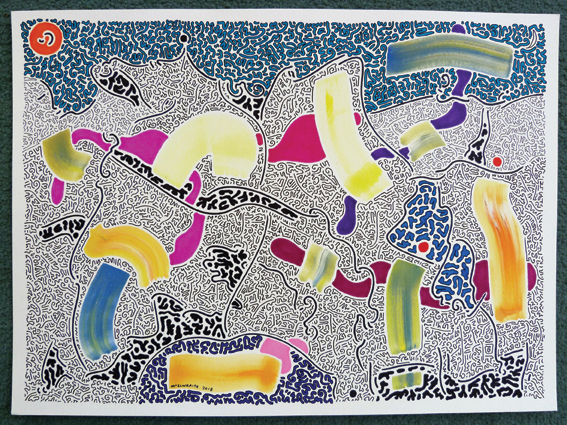
Thirty-plus years ago, I tried something new and branched out of figurative art into something more abstract and, to me, more compelling. The image (above) is titled Twilight walk in Bromsgrove, 2018 and gives a flavour of where I presently find myself on my own art journey.

This year’s Bromsgrove Festival (its 59th) brings you a plethora of events to experience, including the following art and craft celebrations.

If you are enthralled by the wildlife of Africa, make a free visit to the exhibition walls at Artrix between June 4 and July 15 to engage with Lyn Sharp’s exquisite animal portraits. Lyn works in a range of media from pastels to acrylics to textiles and attempts to capture the majesty of Africa – its wildlife and its commanding landscape. Artrix is situated at Slideslow Drive, Bromsgrove, B60 1GN. Try something new: animal portraits.

If silk painting is more your thing, check out the free display at Rubery Library from June 21 to July 6 by the South Birmingham Guild of Silk Painters. Monthly meetings provide opportunities to try various techniques and fresh ideas. Contact Kay Morris on kaymo@talktalk.net if you would like to take your interest further. Rubery Library is on Library Way, Rubery, B45 9JS. Try something new: silk painting.

What about textiles? Head to Avoncroft Arts Centre on June 22 or June 23 (Redditch Road, Stoke Heath, Bromsgrove B60 4JR) to see the fascinating textile art by students of Edwina Mackinnon and Littleheath Barn Studio. £4 entry with free tea, coffee and cake – accompanied children free. For more information, contact 07891 079080. Try something new: textile art.

Would you like to learn to handcraft enamelled jewellery? Meet Christine Harmer on Bromsgrove High Street on June 22 to find out about taster sessions and learning the beautiful craft. Christine’s work will be on show and for sale, including new designs and unusual gifts. More information at https://www.enamelledjewellery.co.uk or 07759 122984. Try something new: enamelled jewellery. 

Or you could harness the vitality exuding from any of the fantastic Bromsgrove Festival events (music, dance, drama, opera, literature, comedy, walks, talks and community fun) to take your art in a unique direction – to find your personal artistic voice.

Full details of all the Bromsgrove Festival events can be found at https://www.
bromsgrovefestival.co.uk

For a deeper reflection on abstract art (if I have piqued your curiosity) try https://www.galleryart61.com and click “Thoughts on art 2019”.

Please get in touch if you’d like me to write about an art event near you:
richard@galleryart61.com
https://www.galleryart61.com

Ready to rock for charity

band

An up-and-coming band formed by Alvechurch Middle School pupils is preparing to headline a charity gig at Artrix in Bromsgrove.

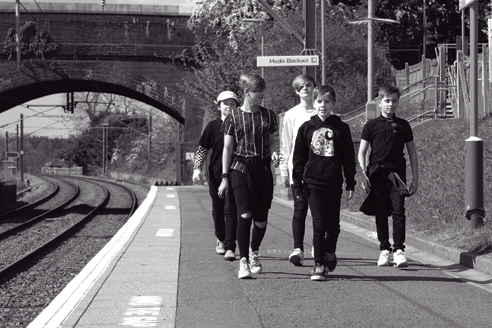
Media Blackout, made up of Year 7 quintet Toby Kavanagh, Louiz Jephcott, Sam Parsons, Ezra Lynall and Joe Meads, have already developed quite a following around the school and the local area, with a stage presence and skill beyond their years.

The band will perform a high-energy set of recent grunge, rock and indie classics as part of the Exhale event on Wednesday June 26, raising money for the lung transplant unit at the Queen Elizabeth Hospital.

The unit is close to the band’s hearts as Toby’s dad, Paul, had a double lung transplant there in 2017.

Media Blackout’s previous headline show, at Hopwood Village Hall in February, raised more than £1,500 for lung transplant research, and they’re hoping to top that this time.

Exhale will also feature Bromsgrove performance academy SJP Media Arts, showcasing a mix of dance groups, solo singers, and signature moments of musical theatre.

Tickets cost £9, with all proceeds going to the QE, and are available from https://www.artrix.co.uk or the Artrix box office on 01527 577330.