Julie Ward, a qualified counsellor and coach who specialises in alcohol-related issues, offers one-to-one support to those who would like to learn how to reduce their alcohol intake or to stop altogether.
Julie says, “Many people say to me that they have lost their ‘stop button’. It’s very common that someone might be able to have days off drinking, or even have a couple of drinks, but far too often they go over the top and can’t seem to stop. This has nasty consequences and affects other people around them.
“The good news is that there are ways to rediscover your stop button and know when to say no. You can still enjoy a drink and indulge a little without the nasty after-effects.”
Julie’s service, ACT Alcohol, can teach you your own personal formula to social drinking, and it only takes one hour a week for four weeks.
“It’s a short amount of time to invest when you can achieve such benefit to your health, finances and relationships,” says Julie. “Everyone should learn what works for them, and it really is that easy.
“All you have to do is turn up, relax and listen to one of our personal alcohol coaches who will take you through the process. Most people find it interesting and therapeutic.”
“Many of us struggle to keep our alcohol levels down. . . because, after all, it is a drug and that’s the nature of the beast! It’s all too easy to put it off for another time, when life will surely be easier,” adds Julie.
“When you understand your own personal formula then long-term control is achievable. The key is to learn simple rules and strategies for yourself that when applied guarantee immediate results. It’s not difficult to learn, doesn’t take very long and will be the best thing you ever did!”
Text “short course” to 07434 286826 and one of the team will respond immediately, or call 01527 878162 to book an appointment.
Find more information by visiting https://www.actalcohol.co.uk or searching ‘ACT Alcohol’ on Facebook
Alvechurch Village Society, which celebrates its 50th anniversary this year, is inviting residents from the village and beyond to mark the occasion with a party at Alvechurch Village Hall.
On Wednesday June 26, from 6.30 to 9.30pm, everyone is welcome to enjoy a fun family evening including Morris dancing, storytelling, music from Alvechurch Community Choir, children’s games, indoor curling, a mini quiz and a display of Dellow vintage cars. Light refreshments will be available – and the whole event is free of charge.
* The 2019 Blackwell Summer Festival takes place on Saturday June 15, from 12noon until 5pm on the field Roff St Catherine’s Road. This year’s theme is Flower Power, so expect to see villagers fully embracing the spirit of the event with costumes and decorated gazebos.
Residents of Blackwell and beyond are invited to bring a picnic and enjoy fun for all ages, music from Blackwell Concert Band and refreshments from Village Vineyards and the WI (there is a charge for these but the rest of the event is completely free).
If you’d like to enter the cake competition, entries based on the Flower Power theme need to be at the tent by 2pm.
* Blackwell is also hosting its popular Music Festival once again, this year on Saturday September 7 from 12noon to 9pm in the Hunters Hill School grounds. Full details are yet to be announced but there will be plenty of local live acts, food and drink.
* Glastonbeoley, a charity music festival held in the parish field and village hall at Beoley, is happening again this year and takes place on Saturday June 8 from 12noon to 10pm. As well as live music across two stages, there will be a licensed bar and food outlets.
Tickets cost £8 in advance/£10 on day (over 16s) or £4/£5 (ages 10–15); under-10s go free. Purchase at Courtyard Music, The Village Inn or Vintage Trax. You can see the full programme at https://www.glastonbeoley.co.uk
Anniversary celebrations for society that keeps a watchful eye on our waterways.
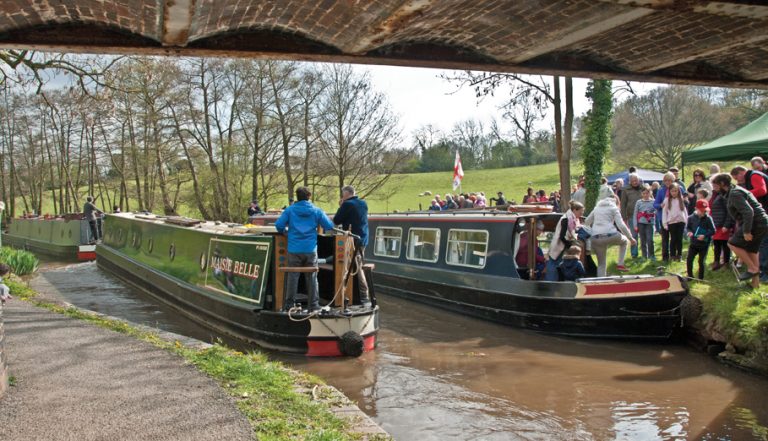
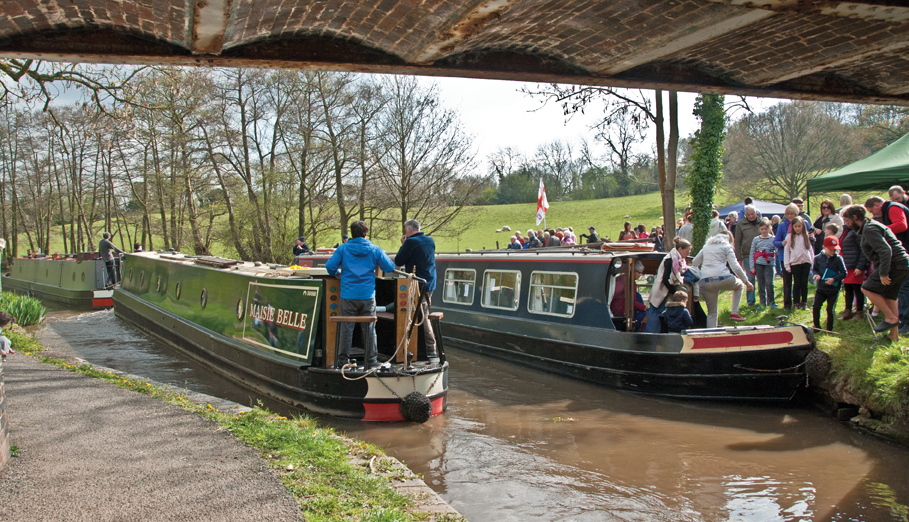
The Worcester-Birmingham & Droitwich Canals Society marked its 50th birthday with an afternoon of fun for all at The Crown pub, Withybed Green, Alvechurch – the venue where the idea for the society was originally formed.
As well as food and drink, there was live music, poetry and storytelling from local performers, plus canal boat rides, birds of prey from GCB Falconry, and an exhibition by the Little Radford Model Boat Club.
A look back at what was happening around here in June 2009.
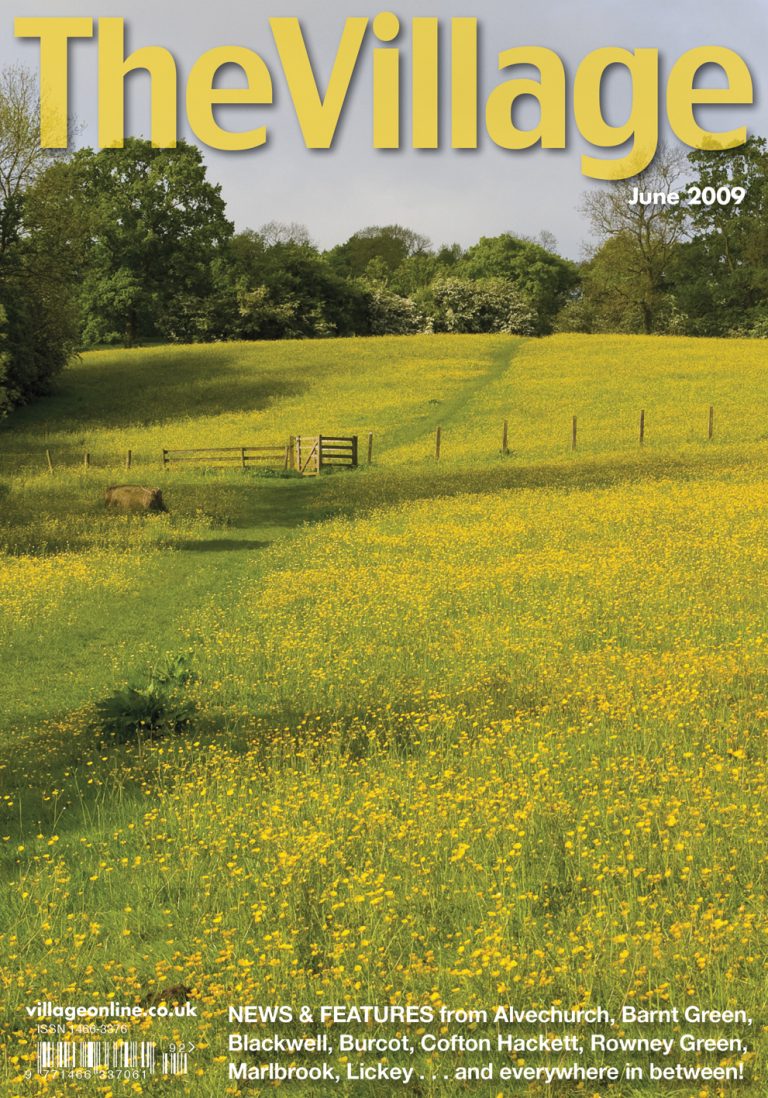
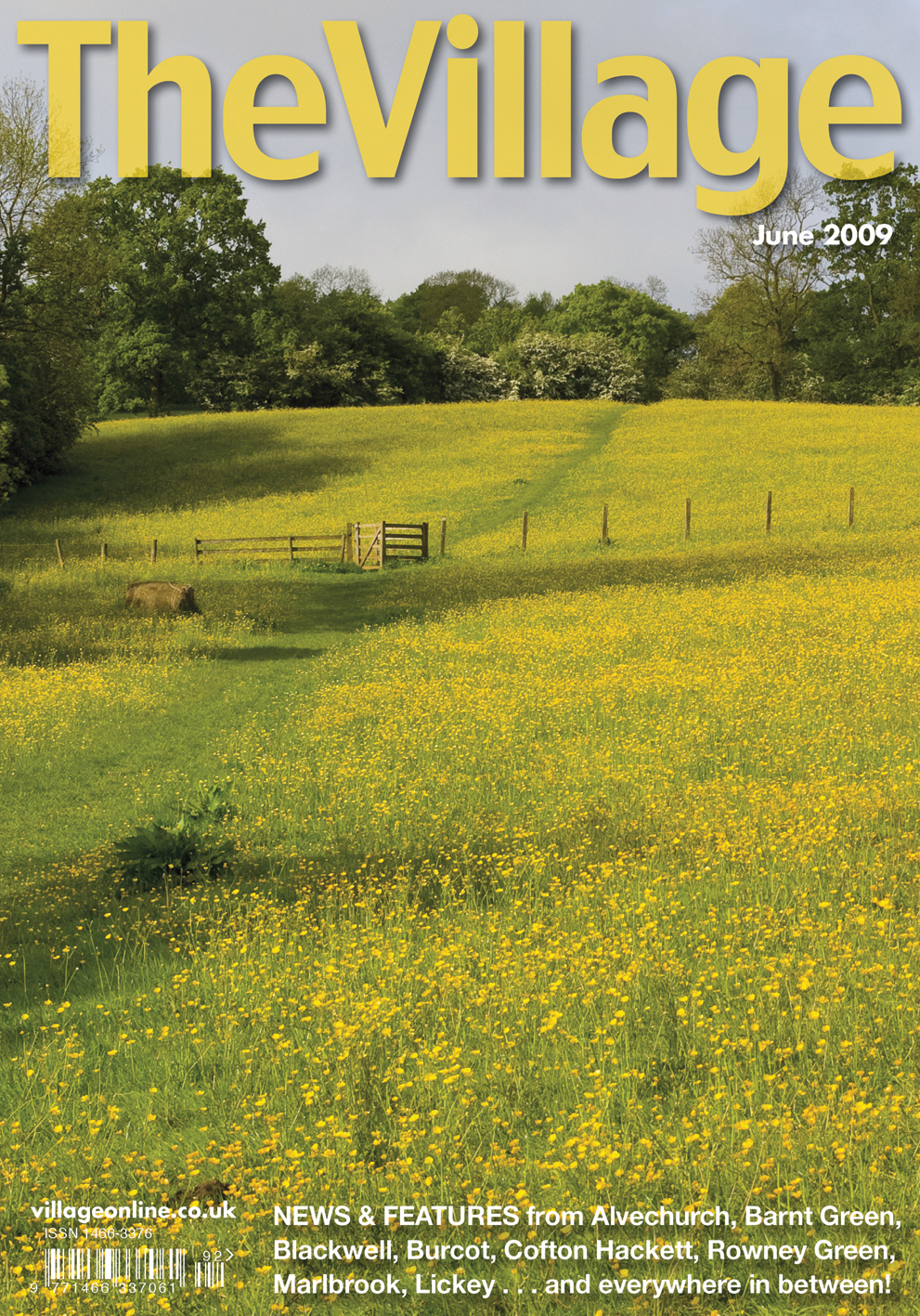
An array of golden buttercups in the fields running up to Foxhill at Withybed Green made the cover of our June 2009 issue, which also featured open gardens in the Village area.
IN THE NEWS:
In Alvechurch there had been major celebrations for the 80th birthdays of both the village hall and the Women’s Institute, while Alvechurch Village Society marked its 40th anniversary.
Elsewhere, we looked ahead to the forthcoming council and European elections.
Barnt Green pupils Sadie Fitzgerald, Josh Carter and Florrie Jenkins proudly wore underpants on the outside during a superheroes day at St Andrew’s First School to raise funds for children’s bereavement charity Noah’s Ark.
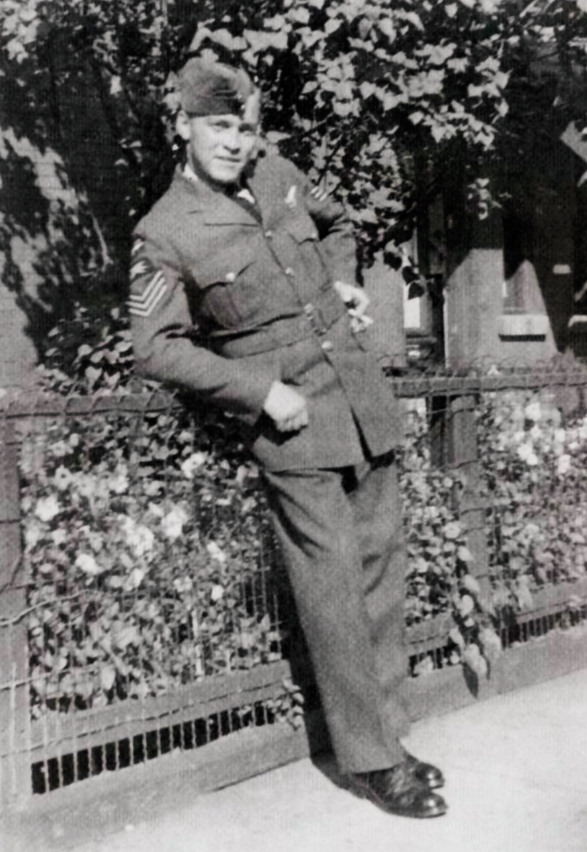
A picture had been found of Canadian airman Sgt Alton James O’Neil, who died in the 1943 bomber crash at Rowney Green.
When we featured the crash in 2008, no one had been able to find a photo, but now a relative of the plane’s pilot had supplied one, along
with information on his life.
A look back at what was happening around here in June 1999.
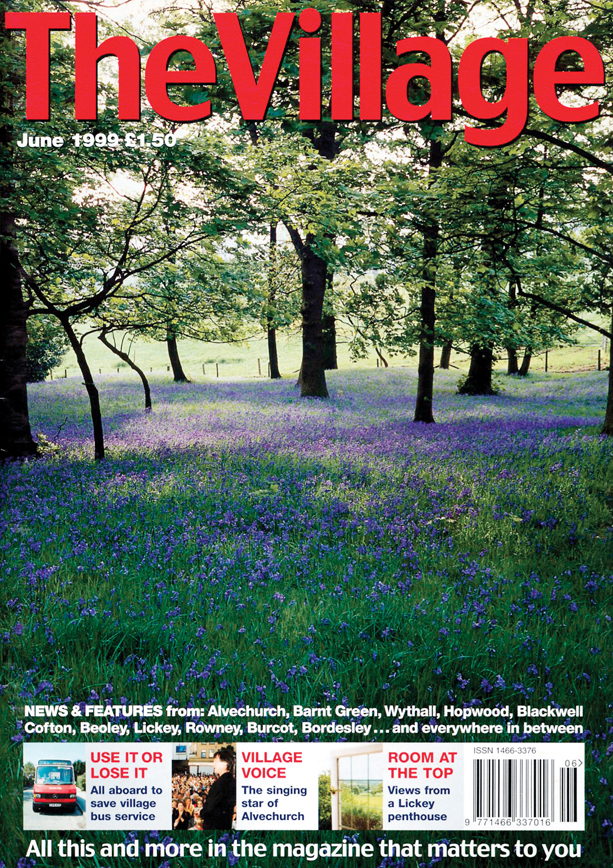
Our June 1999 cover showed a Les Ladbury image of bluebells in the Lickeys. Inside, we had a chat with Alvechurch opera star John Cashmore and there were features on the village railway and canal.
IN THE NEWS: Barnt Green was making plans to install both traffic calming and CCTV, while there were protests against the skate park in Alvechurch and concerns over pollution from the M42. Meanwhile, the 82 and 83 bus services between Redditch and Bromsgrove were under threat.
Five-year-old pig farmer Rhys Wilson and sister Hannah, eight, cuddled two of the 14 piglets born to Rhys’s pedigree sow Nellie – bought for him by his parents and kept at a Hopwood farm, where the family made daily visits from Alvechurch.
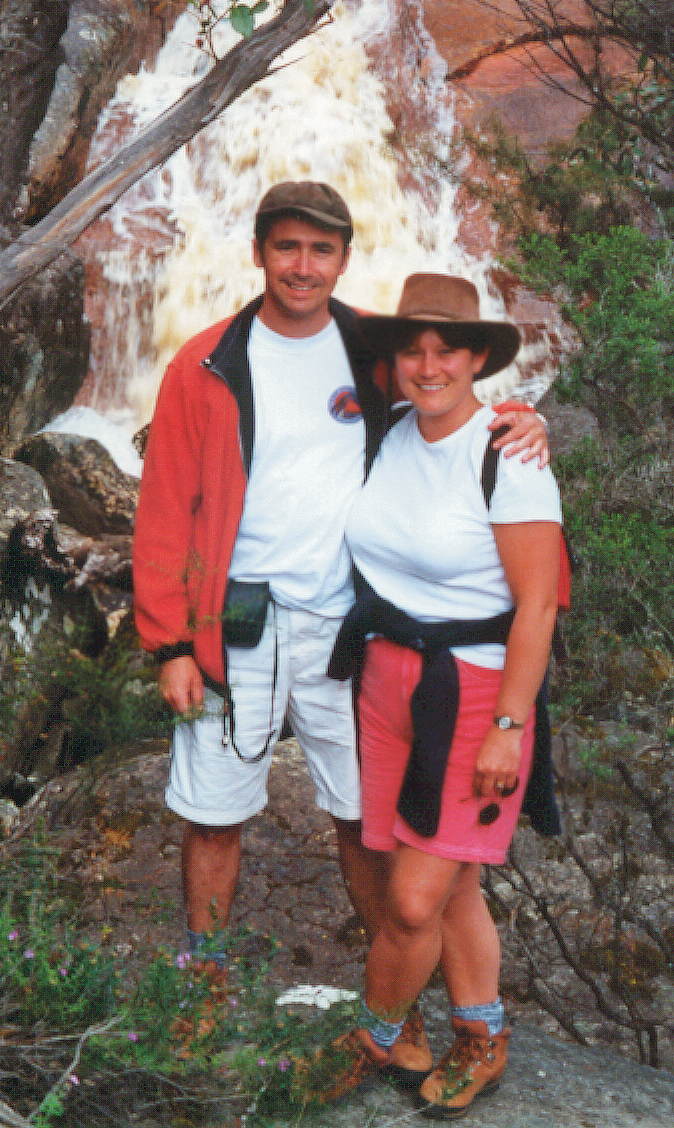
The Village was being read far and wide, including by Kev and Sue Wightman (right) who had moved to Melbourne, Australia.
We also received letters from former village residents in Sydney, Florida, and Spain, who were still enjoying the magazine.
Lickey Wills specialist Sue Jenden explains why it’s best to take expert legal advice.
In short, yes; it’s possible for a homemade, handwritten Will to be legal in England and Wales, provided that it has been properly drafted and meets the legal requirements.
According to a past YouGov survey, an astounding 96% of people who prepare their own Will say they do not need professional advice, with 21% stating that it was the fear of the cost which prompted them to do it themselves. One of the main reasons people prepared their own Will is because they saw the need for legal advice as superfluous. Around one in ten people write their own Wills.
Homemade Wills offer a cheaper alternative, usually costing around £20. It’s even possible to pick up a kit from high street stationers and still cheaper options are available online. While an off-the-shelf Will may seem very attractive at this price, it can be a very risky approach.
If errors are made, or if the strict witnessing rules are not followed correctly, the document could be invalid with often serious implications. Not only do you risk leaving your family with a financial and emotional mess, but also your legacy could be crowded by legal bills or unnecessary tax fees.
Leaving a digital legacy
In as little as two years (from 2012 to 2014), the public has produced more data than in all of human civilisation before that, and it is still increasing at an exponential rate. While digital assets can take many forms, such as online photos, subscriptions, music libraries, social network profiles, savings accounts or email accounts, the majority of us do not have physical records of them.
It is therefore not clear what people’s digital presences will look like in years to come, but we can be certain that an ever-increasing number of people will be creating and accumulating more and more data until they pass away.
A YouGov survey published in November 2018 revealed that 67% of respondents wanted their social media accounts taken offline after their death and only 7% wanted them to remain online.
Recently, Gerald Cotten died unexpectedly at the age of 30. Gerald was the Chief Executive Officer of QuadrigaCX; a Canadian cryptocurrency exchange platform. According to court documents, he had sole access to the digital wallets containing more than 180 million Canadian dollars (£105 million) belonging to the company’s 115,000 customers. His death has resulted in QuadrigaCX being unable to pay their customers.
This case highlights the extreme consequences of not leaving suitable arrangements for the recovery of cryptocurrency. We recommend our clients complete and maintain a Digital Asset Memorandum – the log includes a record of your digital assets to assist your executors and where the passwords can be located. Writing a Will and keeping it updated can ensure that your estate, including any digital assets are distributed as per your wishes.
Don’t hesitate to get in touch for more information on digital assets. Whatever your situation, speak to us for expert advice on 0121 445 5874 or info@suejendenassociates.co.uk
Sue Jenden is a solicitor and an affiliate member of the Society of Trust and Estate Practitioners. The firm is a member of and regulated by the Institute of Professional Will writers. Based at Lickey, they deal with a broad range of work including Wills, inheritance tax planning, Trusts, and administration of estates.
In addition, they advise clients about powers of attorney and Court of Protection issues.
Sue says, “We visit clients in their own homes, which is preferred particularly by our elderly clients as making a Will can be a daunting prospect. It seems a morbid subject and this tends to put people off.
”But the fact is that you have worked hard to build up your assets and it is sensible to have a say in where they are to go. We offer fixed fees for our services.”
Society is changing. We’re living longer than ever before and the age profile of our society is changing rapidly. According to the ‘State of Ageing in 2019 Report’ published by the Centre for Ageing Better (CAB), the number of people aged 65 and over will increase by more than 40% within 20 years.
For many of us there is much to look forward to in later life. People in their early to mid-70s are reported to be more satisfied with life than any other age group. However, whilst advances in public health, nutrition and medical science have given us the gift of longevity, millions of people are at risk of missing out on a good later life due to pressure on health and care services, government and local authority funding.
The challenges faced by increasing numbers of older people will have significant consequences for the NHS, care services and for public spending. Acting now will help pave the way so those approaching later life, and the generations that follow them, are able to enjoy a long and happy life. People in their 50s and 60s should consider putting plans in place to save enough to support themselves in later life.
The Society of Later Life Advisers (SOLLA) was established in 2008 and is dedicated to higher standards and accessibility to regulated financial advice specifically aimed at older people and their families. SOLLA qualified advisers provide practical help and guidance through the many complex issues that many older people face, such as estate planning and care funding.
Do you or one of your family need help and guidance with long-term care funding? Careful and considered advice will help you make clear and informed decisions at the right time, giving you and your loved ones the reassurance you need. Please contact Simon Cartmell, our SOLLA qualified Financial Adviser, at Provest Wealth Management on 0121 445 0079 for further advice and support.
Provest Wealth Management has just received BS 8577 (Framework for the provision of financial advice and planning services) by Standards International for the fifth consecutive year, so you can trust you’re in safe hands.
Provest Wealth Management is an Appointed Representative of and represents only St. James’s Place Wealth Management plc (which is authorised and regulated by the Financial Conduct Authority) for the purpose of advising solely on the Group’s wealth management products and services, more details of which are set out on the Group’s website https://www.sjp.co.uk/products.
Provest Wealth Management is a trading name of Provest Financial Solutions LLP.
North East Worcestershire Beekeepers gather at their apiary at Avoncroft Museum, Bromsgrove.
Dr Alan Woollhead and Chris Tomlin, of the North East Worcestershire Beekeepers’ Association, explain how to identify different ‘buzzy’ insects and what to do if you have a honeybee swarm.
A swarm in May is worth a load of hay, a swarm in June is worth a silver spoon, but a swarm in July is not worth a fly – so the saying goes. But what is a bee swarm?
In the UK there are many social bees living in colonies headed by a single queen bee and attended to by worker bees. The honeybee has the largest colonies amongst the social bees, with numbers of worker bees reaching around 50,000 during the summer months.
As part of the natural annual cycle honeybees create new colonies by producing new queen bees and dividing the original colony’s workforce. This is most dramatically observed as a swarm of bees, numbering several thousand worker bees plus a queen. May is the most common time of year for swarming to occur, but it can happen in any summer month.
This group of bees will be looking for a new place to build a nest, but the decision will not yet have been made on where to go, so they land and cluster around the queen while scout bees go off to look for a new nest site.The cluster may be large, around the size of a watermelon and of similar shape, if hanging from a branch or fence.
When the decision has been made on where the new site will be, the cluster departs en masse; streaming impressively as they head to their new home.
For the honeybee colony this has been a valuable exercise as they have increased their number of colonies and spread their genetics further afield, as well as creating a new, young and vigorous queen to head a colony. For the householder whose garden the swarm has chosen to cluster in it may be a less rewarding experience and can cause some consternation, so every year beekeepers will receive calls from people requesting their services to remove swarms.
Local beekeepers’ associations have lists of members who are willing to provide their time and expertise to collect swarms and provide them with a hive to live in. Unfortunately, every year a proportion of the calls received are about other flying “buzzy” insects, which are not honeybees and about which beekeepers can do very little to help.
Being able to correctly identify the offending insects would aid those beekeepers who are volunteering their time to help. On occasion wasps may be mistaken for honeybees, but wasps have yellow and black banding on their abdomens whilst honeybees have orange/dark brown and black banding. In addition, honeybees are hairy while wasps aren’t.
Another insect frequently mistaken for the honeybee is the “bumblebee”, which comes in different varieties. Over recent years the Tree Bumblebee has become a common sight and they seem to have a preference for empty bird boxes as nest sites.
There are never great numbers of worker bees seen, with around a dozen or so passing in and out of the box at a time. Providing they are not disturbed they are largely harmless and will totally disappear at the end of the summer, so if they are not causing a problem then the best advice is to enjoy their company rather than seek to eradicate them.
Larger bumblebees might build their nests in compost bins and there are also bees that build their nests in the walls of houses, hollowing out tunnels in the mortar between bricks. These are the masonry bees and are delightful creatures, completely harmless as they have no sting, and cause no real damage to the structure of the wall.
Like the Tree Bumblebee, their numbers are never very high, maybe no more than a hundred or so at the most, and the bees will totally disappear at the end of the summer. It is only the honeybee that has colonies that overwinter. With all the other bees and wasps, only the mated queens survive the winter.
If you are still in doubt about whether or not you really do have a honeybee swarm, there is a wealth of information and pictures on the British Bee Keepers’ Association (BBKA) website at www.bbka.org.uk/swarm
So, what should you do if you really do have a swarm of honeybees? North East Worcestershire Bee Keepers’ Association (NEWBKA) keeps a list of those beekeepers who are willing to collect swarms and you can contact their swarm co-ordinator, Steven Wall, on 07800 568429.
They also provide courses in bee keeping and have members from all across this area. Find more information at https://www.newbka.blogspot.co.uk
Mark and Tina Treverton of Shooting 4 Fun with Amy Flemming from Primrose Hospice (centre).
ADVERTISEMENT FEATURE
Shooting 4 Fun Ltd is offering a rare opportunity to enjoy 90 minutes of outdoor shooting activities for just £20 per person, at a special fundraising day.
The event takes place at Shooting 4 Fun’s 4.5-acre Oaklands Outdoor Pursuits Centre in Hanbury, on Sunday June 23. Participants will experience three 20-minute sessions of archery, laser clay shooting and axe throwing; followed by 30 minutes of laser tag in the forest. £15 from every booking will be donated to Primrose Hospice in Bromsgrove.
Pre-booking is essential, choosing an hourly start time between 12pm and 3pm. Places are limited so everyone has plenty of time to try each of the activities. Professional instruction will be available for those new to any of the shooting disciplines.
Mark Treverton has been delivering his Shooting 4 Fun experiences for 25 years and is a member of the Grand National Archery Society and a registered Clay Pigeon Shooting Association safety officer. He has earned a reputation for providing first-class shooting pursuits, with fun firmly on the agenda.
He says: “This event is a great opportunity to try different shooting activities at a very special price. There will be a tremendous buzz as we rotate groups of people across the activities. It will be pretty ‘full-on’ for the organising team and lots of fun for those taking part.”
Drinks will be available to purchase and there will be a charity raffle. Shooting 4 Fun is hoping to raise more than £2,000 from the event.
Amy Flemming, a Primrose Hospice fundraiser, said: “We are delighted that Shooting 4 Fun is holding this event for us. We support patients and their families at some of the most difficult times and rely on donations from the local community. We must raise £1.75million annually to keep our services free for people with life-limiting conditions and their families living in north-east Worcestershire. We hope the event is well supported.”
To book a place (ages 18+ only), or if you would like to donate a raffle prize, call Mark on 01527 575141 or email mark@marksmanleisure.co.uk
Martin Pryor advises on how our own biases can affect financial decisions.
Understanding your personal biases can help you form investment strategies that work for you across the good times and when the going gets tougher.
Traditional finance theory starts from the principle that markets and their investors are perfectly rational. A quick look around will convince you that such an idea is optimistic to say the least.
Rational markets would not fluctuate without any apparent reason, nor would rational investors feel the pain of a loss more than twice as much as they enjoy the feel of equivalent gains.
The field of behavioural finance, which studies the impact of investor psychology on financial decisions, has developed in response to the inconsistencies between rational theory and irrational, human, reality.
Behavioural finance can offer lessons to all investors. People can act in surprising ways in all sorts of circumstances. For instance, you might ask yourself if you recognise any of these behavioural finance biases in yourself or others:
Overconfidence
Many people, when asked, identify themselves as “above average”, whether in terms of driving ability, intelligence or looks. By definition that cannot be true – no more than 50% can be above average. Overconfident investors can pay a high price to learn this truth.
Hindsight bias How many times have you heard someone say “I always knew that was going to happen”, after the event has happened? Yet the same person probably never warned you beforehand. People like to imagine their predictive powers are good – and some can convince themselves their hindsight was once foresight.
Herding
“Everybody is investing in technology/emerging markets/commercial property, so I will too.” It seems the easy option, not least because human beings are inherently fearful of going against the crowd. However, the crowd’s judgement is not always right. Also, if and when the crowd changes its mind, the reversal can become a dangerous stampede, especially in investment markets.
Confirmation bias Which do you pay more attention to, the information and comments that reinforce your views or those that contradict them? The natural response is the former, something that some people on social media have learned to exploit. However, when it comes to investment, hearing only what you want to hear could mean ignoring important if uncomfortable truths.
Self-attribution
You choose to invest in X and its value rises – that is proof of your skill. Then you choose to invest in Y and its value halves – that’s just bad luck. Such a view of expertise makes us feel better about both outcomes, but it could be pure self-deception. It is also possible that the choice of X was down to luck and Y to lack of skill.
By developing an understanding of behavioural finance ideas, you can identify your own investment behaviours. The nearer you come to acting like a rational investor, the more you may be able to benefit from the irrationality of others.
A sensible starting point is to identify your innate biases and take advantage of the professional, objective advice we can offer when making decisions.
The value of your investments, and the income from them, can go down as well as up and you may not get back the full amount you invested.
This article is for general information purposes only.
Contact Pryor Portfolio Management for more information: Tel: 07961 162818 martinpryor@ppm-ifa.co.uk https://www.ppm-ifa.co.uk