The Local Plan for Bromsgrove district has to wait for the outcome of the Government’s radical planning proposals before it can move ahead with major strategic decisions.
The proposed changes call into question the thinking behind the “Barntchurch” idea for a “garden village” of 10,000 to 15,000 new homes in The Village area.
The Planning for the Future White Paper looks to simplify and speed up the planning process by categorizing areas into zones – “growth”, “renewal” and “protected” – which, once set, could remove much of the current discretion local people have, via their planning committee, over housing and other developments.
It would also introduce “top down” housing numbers imposed from Westminster which, it is believed, would end the “duty to co-operate” with nearby local authorities. This currently entails allowing houses to be built, for example, on Bromsgrove Green Belt land to meet the needs of Birmingham.
This is a core element of the Barntchurch idea that has hung over this area since early 2018.
Mike Dunphy, Bromsgrove’s strategic planning manager, told The Village: “We’re still able to make progress on some elements of the Local Plan, which we are doing, and we’ll await the outcomes of the proposed reforms before making any key decisions.”
Planning reforms put key decisions on ice

FARMING WITH NATURE

Hannah Genders visits a village farmer whose philosophy is to ‘give something back’ and to enhance the land.
During lockdown earlier this year, many of us explored and discovered footpaths and fields locally that we did not know before. If, like me, you have been walking around the village of Alvechurch, and in particular through the small hamlet of Withybed Green, you will have noticed something different about the fields. One of the footpaths runs from Withybed Green up the hill towards Foxhill Lane, and from May onwards these fields were covered with wildflowers; nestled in the long grass there were even some purple orchids, a variety called green winged orchid, recognisable because they have no spots on the leaves. In June, the fields were carpeted yellow with buttercups.
Now please do not call them weeds, these are wildflowers and the fields are farmed and cared for by the Bytom family. Asking Adrian Bytom how he describes this type of farming, he said: ”Well its farming with nature; it’s farming the way it used to be done, sustainably and without chemicals.”
Unlike many fields we walk through nowadays, often a monoculture of rye grass, bright green in colour due to the chemical fertilizers put on them, these fields had a matrix of wildflowers and they were alive with butterflies, moths, and bees during summer.
The commitment to this type of farming has a philosophy that I would like to think I follow in gardening, it’s about “giving something back” to nature and enhancing the land you have by increasing biodiversity and helping wildlife as much as you can.
Adrian and Alison started farming in Withybed Green in 1991. They have never used chemicals on the land and have over time increased the land they own to around 100 acres. The fields are grazed by their herd of Longhorn cattle, which are also rented out to graze other meadows in the Worcestershire area.
The Longhorns are particularly well suited to this because they command respect from the public walking through the fields with their dogs; they look fierce with their large, curved horns, but are surprisingly gentle. The Longhorn breed traces its ancestry back to the oxen used for pulling carts in the 16th century, and they are listed as a rare breed.
In Isabella Tree’s wonderful book Wilding, where she and her husband introduce Longhorn cattle to their newly rewilded farm, she notices the cattle choose to browse trees and hedges, and pond margins as well as the meadows. There is even an account of them “self-medicating” after they have gorged on a field of rye grass, left over from when their farm was run intensively.
Along with the grazing cattle, the Withybed fields are cut for hay in late July. This allows time for all the wildflowers to seed down for next year. Even in haymaking, there is a giving back. The cut is not taken right to the hedge margin, but a back swath is left as an area of long grass for wildlife and there were certainly crickets and grasshoppers around in the summer. This back swath is then eaten off later in the year by the cattle.
One field that sits towards the top of the farm, called Foxhill House Meadow, is set aside for nature. It has two streams running through it and is never cut, only grazed.
The Worcestershire Wildlife Trust has now listed this field as a Local Wildlife site, recognising its value to nature conservation.
In the summer there are some fabulous wildflowers growing in the stream margins; I spotted one of my favourites, Ragged Robin (Lychnis flos-cuculi) and a blue speedwell (Veronica beccabunga) both loving the damp conditions and attracting lots of moths and butterflies when the sun came out.
If your philosophy is to increase biodiversity and encourage nature, this applies to everything you do. So, when in 2004 the Bytom family had the chance to introduce a farm diversification project on their land, it needed to be guided by the same ethos.
After a long consultation, they were finally granted permission for a new marina on the canal in Withybed in 2008. Work began to dig out an area large enough to moor 54 narrowboats.
The design is simple, and it sits very well in its landscape being completely hidden by the surrounding fields, but just glimpsed off the canal towpath. The earthworks took 26 weeks to complete and 200,000 tonnes of soil were moved to reform the landscape. The whole marina basin is lined with clay, which was extracted from the farmland and the fields reinstated. Once all the groundworks were done, the idea was to surround the boats with wildflowers.
The story goes that they ran out of topsoil and scattered the wildflower seed straight onto the clay subsoil. It worked beautifully because wildflowers will often grow best with extraordinarily little nutrient.
The effect is a stunning array of wildflowers that surround the boats all summer. There is purple Lucerne, a pink Vetch with a flower like a sweet pea and one of my favourites, purple Loosestrife. The moorings here are non-residential, with people storing boats during the winter or calling in whilst on holiday to stay for a few days. But of course, during lockdown, things were different because people were stuck, but what a place to be stuck. It is quiet and beautiful.
The butterflies were also here in abundance. So, in August I asked Adrian if I could do the Big Butterfly Count at the site. I turned up with my notebook and camera, and the rule is you only have 15 minutes to count. The first four butterflies I counted were cabbage white, which was a little disappointing, but I went on to see small tortoiseshells, gatekeepers and the little common blue. I counted 22 butterflies in total within the time and sent in the results to the count.
This is the sort of farming we want to see in our countryside: a return to a sustainable landscape, that encourages and enjoys nature, increases biodiversity, and gives something back. Long may it continue.
See: www.coopersfarmshop.co.uk open every Saturday if you want to buy some Longhorn, organic grass-fed beef.
www.withybedmoorings.com

Wildflowers and boats at Wityhbed moorings. 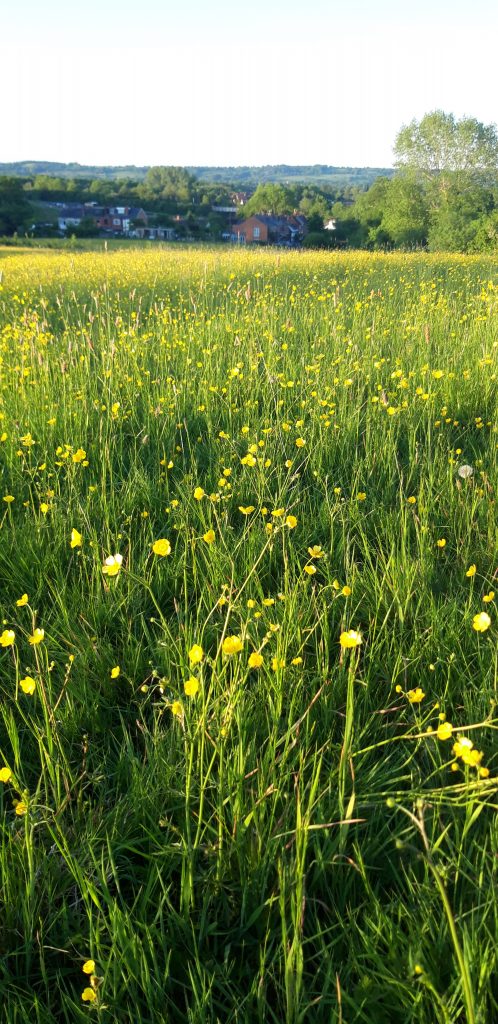
A field of buttercups fill the filed above the hamlet of Withybed in the parish of Alvechurch. 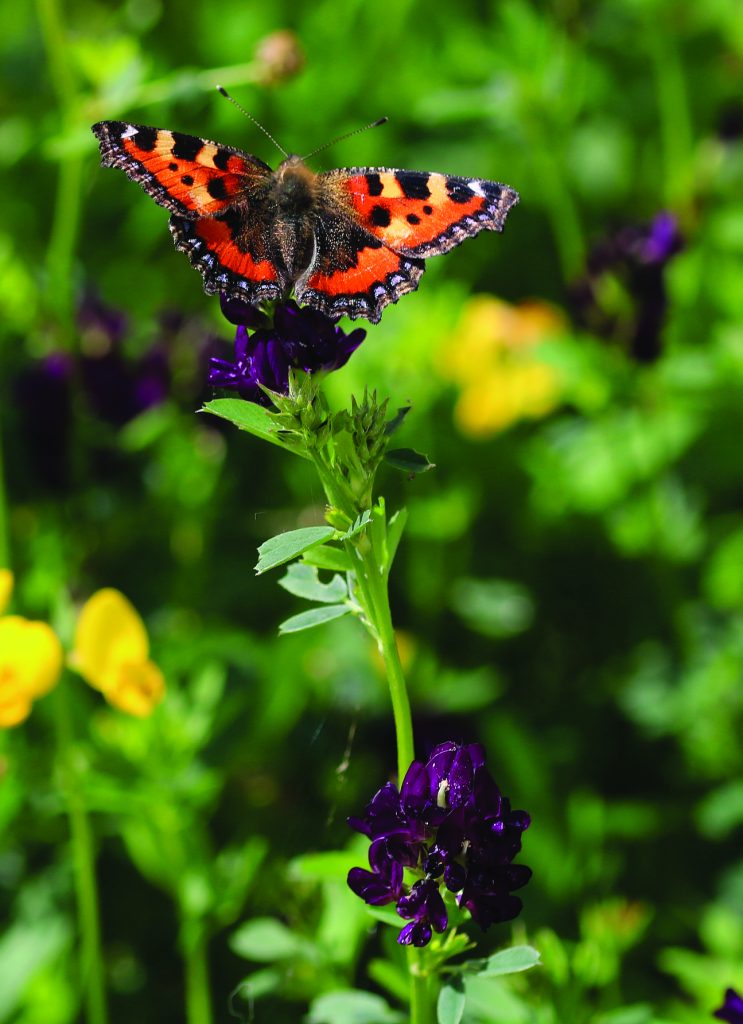
Small tortoiseshell butterfly on lucerne. 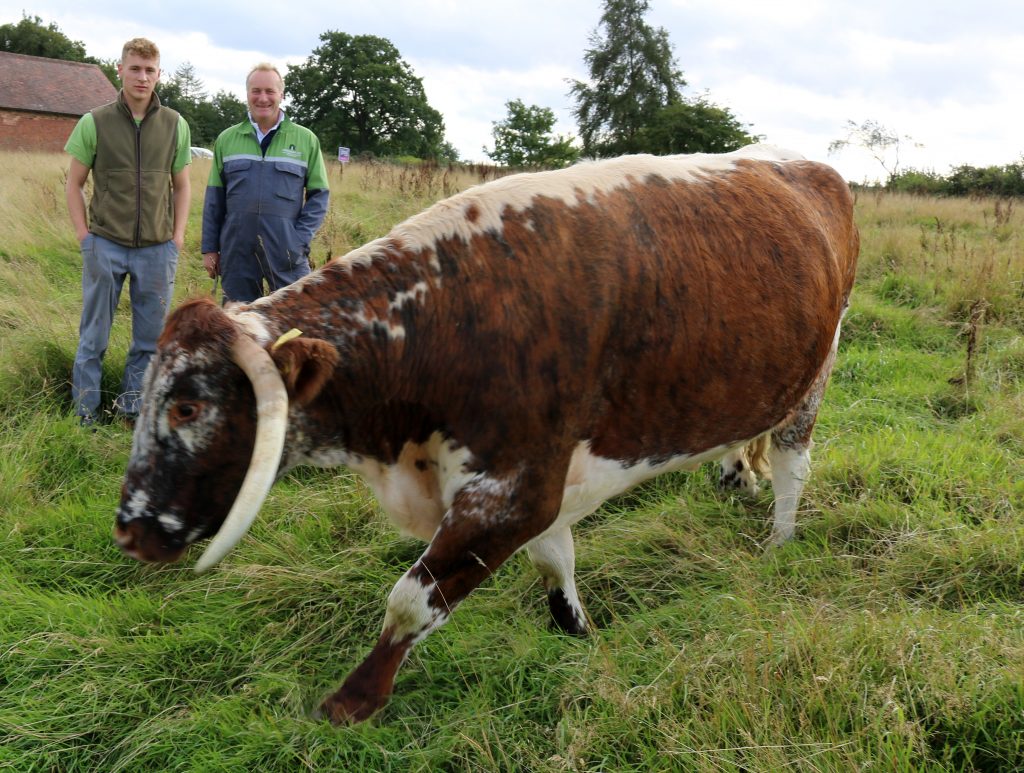
Oliver and Adrian Bytom watch one of the Longhorn herd walk by.
WARM, WET AND NOISY
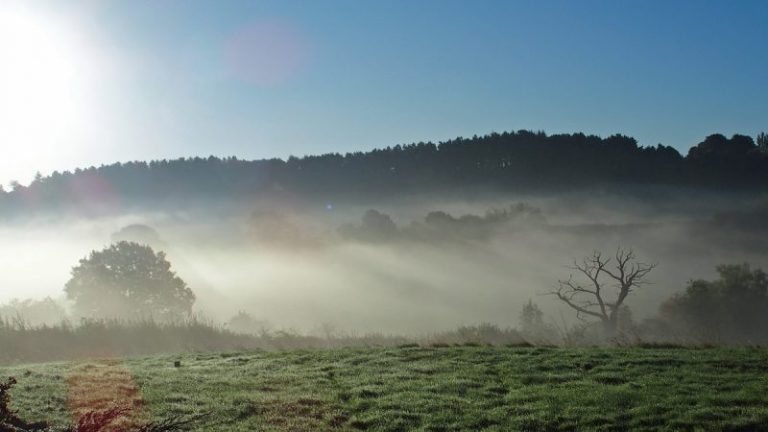
Village weatherman Phil Thomas records the changes
August was a warmer than average month in The Village area, with a mean temperature of 17.7C – 1.2C higher than the local 30-year average. But rainfall was also a lot more than would be expected, with almost two and a half times the “normal” level. There was 127.7mm of rain in August around here – 245% of the 30-year mean.
It was also stormy, with two main spells of heavy rain and thunder, with thunder actually being heard on five days of the month; on the 10-12th and 16-17th. This added up to more thunderstorms than would be expected throughout the entire year locally.
September, by contrast, had less than half the rainfall that might be expected and well above average sunshine – but the first week of October more than made up for that with getting on for a full month of rain in seven days.
August 2020
Mean Max 22.2C 0.9 above average
Mean Min 3.2C 1.5 above average
Mean 17.7C 1.2 above average
Rainfall 127.7mm 245% of average
Sunshine 119.6hrs 80% of average
September 2020
Mean Max 18.7C 0.5 above average
Mean Min 9.2C 0.5 below average
Mean 13.9C = average
Rainfall 24.4mm 45% of average
Sunshine 169.2hrs 134% of average
October 2020 (Up to 7th)
Mean Max 13.9C = average
Mean Min 8.1C 1.8 above average
Mean 11.0C 0.9 above average
Rainfall 77.6mm 86% of average
Sunshine 13.3hrs 14% of average
Outlook for October and November
Settled conditions are likely across much of the UK early in this period. Some spells of wind and rain may occur, but these are expected to only be short interruptions to the predominantly fine and dry conditions. However, confidence drops by the time we move into early November. Unsettled weather looks set to return around this time, bringing rain and wind to most places, with northern and western areas likely to see the worst of these conditions.
More information at www.alvechurchweather.metsite.com You can see an improved HD weather-cam, updated at one-minute intervals, at: www.alvechurchweather.metsite.com/webcam_alvechurch.php

Horse chestnuts, ready for stringing and for battle to commence. 
Sunset over Newbourne Hill, Alvechurch. 
Sunrise over Newbourne Hill, Alvechurch. Picture?Phil Thomas
How did Mop fair go ahead?

THE ANNUAL MOP fair went ahead in Alvechurch despite last-minute efforts to stop it over coronavirus fears.
Local councillors, district and parish, tried to halt it after hearing that the fair event that takes over the village centre on the first Wednesday in October had been given the go-ahead by officers at Bromsgrove District Council.
They are now urging a review of what happened and why there was no prior consultation with local representatives or the community.

News that the Mop was still coming to Alvechurch even as cases of coronavirus were rising at an alarming rate and despite it not being allowed in other areas, such as Kings Norton, prompted days of outspoken views on social media.
In exchanges that were at times unseemly, villagers from opposing sides of the debate failed to reach any consensus over “getting on with life” versus “preventing the country becoming swamped by coronavirus infections”.
The latter group feared the Mop fair would find it difficult to remain safe.
In the event, the fair appeared to be following national guidelines closely, with restricted numbers on rides to enable social distancing, staff wiping down equipment between uses, controls on numbers in the fair area and a large number of stewards, police and council officers on hand to ensure compliance.
Numbers at the fair looked to be at most half of the usual attendees, with groups of young people sticking to the “Rule of Six” guidelines and still managing to have a good time.
The constant rain that fell for much of the evening after dusk could have affected attendance as much as fears over coronavirus.
Alvechurch parish vice-chairman Andy Humphries said afterwards: “I feel the only way for lessons to be learnt and public confidence restored, is a formal review of the Mop saga, led by someone independent of Bromsgrove, including district and parish council representatives, and with recommendations made public.”
District councillor Charlie Hotham said he would propose that Bromsgrove’s Overview and Scrutiny Committee should carry out an investigation.
‘Selfies’ in space

Village astronomer Brian Watkiss peers into the night sky . . . .
Here we are in the middle of October already and the nights are really drawing in with sunset occurring at quarter to seven at the start of the month and as early as four in the afternoon at the end of November.
Of course this is in large part due to the clocks going back on the 25th but even so, dark? Just after your afternoon cup of tea? Still, it does mean we can start planet-spotting nice and early.
So it is that as soon as the Sun has gone from the sky, there in the south is the giant planet Jupiter. As it gets darker, it will continue to dominate this part of the sky, as, indeed, it has done for a couple of months now.
Again, once it is sufficiently dark, you should be able to spot Saturn just to the left, closer now than it has been and getting closer each day.
Another fascinating world has been visible later in the evening for a while now. It is of course the most studied of planets, Mars and you can find it over in the south east at about the same height as Jupiter.
It already has several orbiting satellites from various nations and, of course, the incredibly successful but alien looking Curiosity rover roaming the surface, even taking pictures of itself (although it’s hard to tell if it’s smiling!) Now there is a new rover on its way to join in named Perseverance and it is due to land in February.
If you are up and about early in the morning, perhaps on a bleary-eyed deer-spotting walk, you should easily spot that other super-bright planet, Venus. It’s quite high in the southeast and stays at a similar height till towards the end of November.
The miniscule Mercury swoops up from the horizon for a few days around November 11. Reaching about half the height of Venus, it can be tricky to see but try with binoculars first.
Venus has been in the news recently as there may be signs of alien life in the atmosphere. Well, some scientists may have spotted the spectral line of Phosphine in the atmosphere and it is thought that it could only be produced by bacteria, but there may be weird chemistry going on under those high pressures.
A probe to collect samples would seem to be the only way, but do we need any more strange microbes here right now?
October 20 is the peak of the Orionid meteor shower. This is one of the major showers of the year so it is always worth taking some time to observe. You can look a day or two either side of the 20th at the darkest part of the sky you can find and they will usually be at the edge of your vision.
It is helped this year by the fact that the Moon is just a few days old, having been full on October 1. It will be full again on the 31st but unfortunately, just because its orbital period doesn’t line up with our weird and wacky calendar doesn’t mean it will turn blue.
Also, look out for the scheduled launch of the second manned Crew Dragon by SpacEx on this date. It worked so well last time, let’s hope for another successful mission this time.
BACK TO THE ROOTS

Mary Green visits the farm where she grew up to see the benefits of organic methods.
What an odd year it has been. It was a very mild wet winter and early spring, a warm dry late spring and early summer (the “lockdown summer”) then a mild and changeable late summer and early autumn. By my expectations, this should have led to plants blooming and fruiting early, with birds and insects appearing in good numbers and fairly early too.
But it didn’t. Many plants have flowered relatively late, though generally in profusion and setting seeds and fruit well. However, young birds came quite late, and there has been a distinct shortage of insects despite all the blossom and fruit. Where are the wasps? The trees kept their green leaves well into the autumn and the mallard drakes were quite late getting their colours back.
Human crops have of course fared even worse. Barley was sown later than I ever remember around here, because of the flooded land. Then it was dried and scorched by late spring sun and grew very thin and short. In September I walked all round Alvechurch and none had yet been harvested. There is hardly any oilseed rape and only a few maize fields. Some arable fields were never sown at all. Even without Coronavirus, the year has been a trying one. One midland grain farmer said it was the worst harvest for 40 years.
I managed to go in late August back to the farm where I grew up (I was transplanted from Birmingham to Devon at an early age and took root there!) It has very little arable land so has not suffered too badly this year. It has been an organic farm for nearly 40 years, and has now become a major supplier of organic veggies to one of the big veg box schemes. It was fascinating to see the effects on wildlife of this kind of farming. I have written before about the benefits of pasture-fed animal grazing, but it’s the first time I’d seen large-scale organic vegetable growing. He had just planted another million cauliflowers and there were plenty more caulis, cabbages and leeks in the fields being harvested.
Most commercial vegetable growing depends on artificial fertilisers, herbicides (weedkillers) and pesticides, but of course organic farmers don’t use these. When the plants are very young, they grow in cleared ground, but once they become established the native plants (“weeds”) are allowed to grow between the rows.
The fields we saw had a wild flower called fat hen as the main companion to the cabbages and caulis, but there were others like camomile and persicaria as well.
Fat hen, as its name suggests, is a food-rich plant once fed to poultry. It attracts insects that might otherwise feed on the crop and helps to stabilise the soil. This kind of farming is good for insects and birds, enhancing rather than depleting the environment.
The only negative is that the ground has to be worked to start every new crop, which releases carbon into the atmosphere. There are few vegetables that can be planted directly into existing vegetation, although people are working on it. Perennial vegetables would be the ideal – asparagus is about the only one we have at present.
The farm even had a small amount of oilseed rape growing. This is notoriously difficult without a punishing regime of pesticides – not to mention the weather problems – and any crop will be snapped up by specialist buyers. It’s almost impossible to buy organic rapeseed oil.
Everything on the farm depends on the soil. It’s shale here, alkaline and stony. It’s good for the wild flowers, which grow in long-term undisturbed ground and the organic farming keeps it healthy. The weather matters as well: mild and windy and often wet. It’s bad for trees of any size, but wonderful for cauliflowers all the year round!
Like most farmers these days, they have to diversify to support this kind of farming, and in this case, they have a campsite and holiday lets. The good thing about this is it introduces a lot of people to organic farming (and to the caulis and leeks being sold at the farm gate “for whatever you want to pay”). They have sheep as well so there is pasture, providing another good environment for wildlife.
Being a typical Devon farm, it had quite small fields, with thick hedge-banks between. Some of these have wilding and wild apples as well as sloes and other fruits. It was amazing to see them still in the same place I remember from my childhood. The hedges are full of flowers and birds. There is even a rare bird called the cirl bunting, which only occurs in this small region now, with the farm being recognised as a habitat for them. In one of the fields we found a flower called autumn lady’s tresses, small and white but a type of orchid, which I haven’t seen for decades. We also picked and ate field mushrooms, a sign of good untreated pasture.
In late summer the flowers are fewer and the birds quiet, but there was plenty to see. I was amazed to find plants flowering in exactly the same places as they did 70 years ago. We found wild clematis flowering abundantly on a lovely piece of sandy open land near the beach called the “Ham”. It also has milkwort and burnet rose, which I remember of old. There’s another plant called soapwort, which was an old herb used of course for soap making.
We also found scabious and fleabane, both full of bees and other insects. On the beach itself was sea holly, a gorgeous blue-grey plant which people often try to grow in the gardens but it doesn’t really like that habitat! On the rocks was rock samphire, some of which we foraged and took back to cook with salmon.
In the hedges the most noticeable flower was toadflax, a pretty yellow plant, common there but not round here. There was also tansy, another old herb, in a particular lane where I remember it being.
Tansy grows here in Alvechurch, near the station, though most of it has been cut down. It doesn’t take well to cutting. Oddly enough there is a lovely area of toadflax here too, near the railway line. It reminds me that many plants grow near railways, roads and canals which are not normally in the locality. They are brought in accidentally by travellers and sometimes thrive on patches of unusual soils where roads and railways have been made.
We found a herb called calamint, not common now but fond of growing in gateways. We found ploughman’s spikenard – what a lovely old name! And on the old stone walls there is another toadflax, the ivy-leaved one, a small purple climber.
The fact that so many plants were still there is a sign that the area has been managed favourably for wildlife. The open ground is not cut back (grazing by rabbits helps to keep it short) and the hedges, or rather earth-covered walls or banks covered with vegetation which make a Devon Hedge, are only cut out of season, the minimum needed to allow traffic down the lanes. I know they will be covered in primroses and bluebells in spring.
In the waters of the estuary we found abundant sea vegetables (“seaweeds” doesn’t seem an appropriate name as most of them are edible). I am not familiar with all the names but know that the variety here is a good sign of healthy waters.
Even at a nearby very popular surfing beach there is an area of open scrubland with public paths through, owned by the National Trust. They have quite a few stretches of coastal cliffs around the country, and always maintain them for wildlife. Exposed to the bleak sea winds, very little in the way of trees or even bigger bushes grow here, but there is a lovely network of lower growing plants.
As well as all this natural abundance, we discovered that for the last few years there has been a big archaeological dig on the farm. There is an important iron-age site there, spanning a couple of centuries before and after the birth of Christ. It stretches across the ridge at the top of the farm (just above the campsite!) where there are glorious views out to sea and inland. No wonder people wanted to settle there. There is even a special kind of iron age pottery named after the farm, and artefacts from many countries, reminding us that people travelled in those days.
It has always been a lived-in place, but can be a place where people live in harmony with all the other creatures and plants.
Of course, it does change, but natural change is slow and developmental, taking centuries or millennia. Only where we intervene does wildlife change as dramatically as it has during my lifetime in the general loss of species and imbalance of flowering times.

Hawthorn sculpted by the prevailing wind. 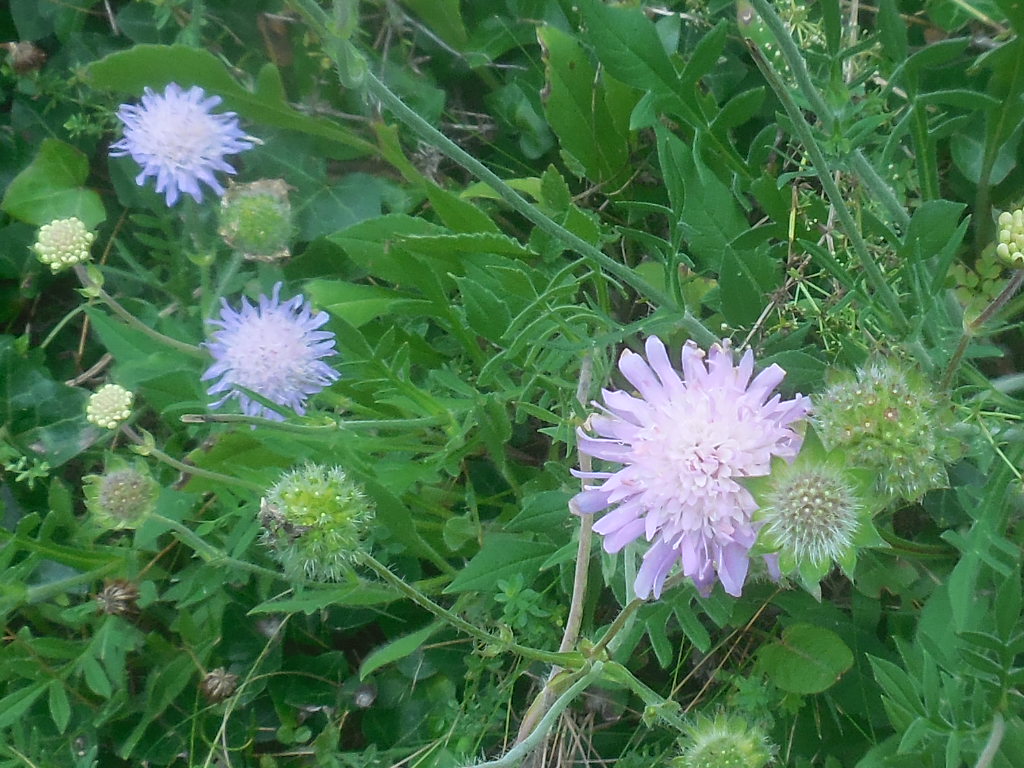
Field scabious. 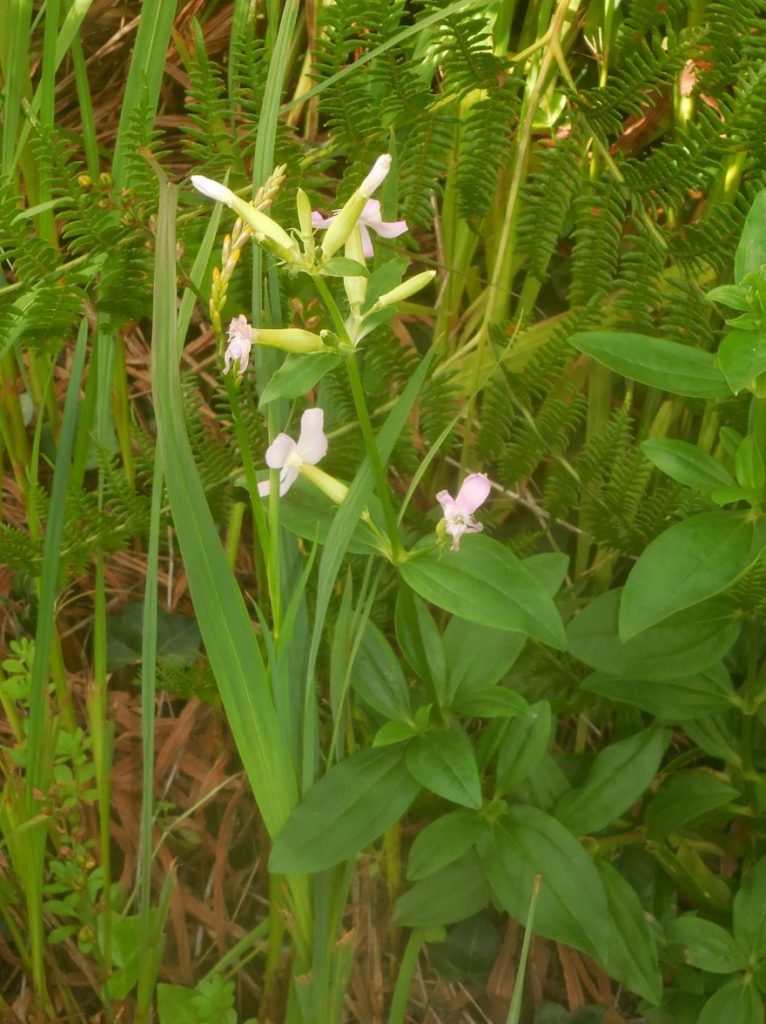
Soapwort. 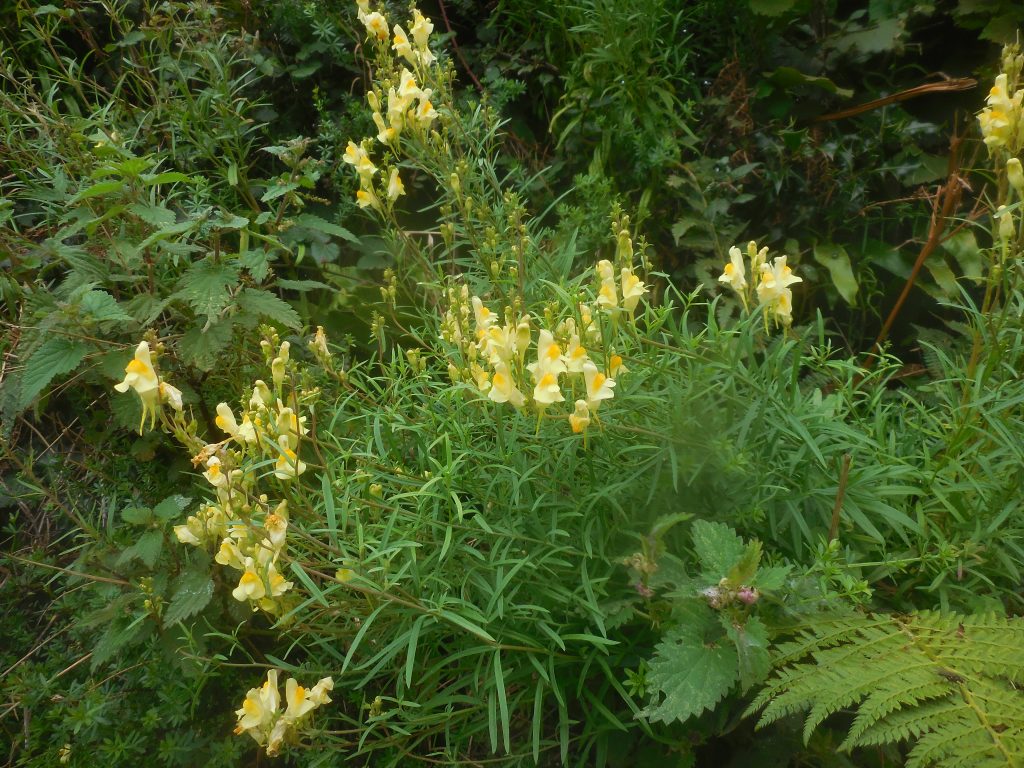
Toadflax. 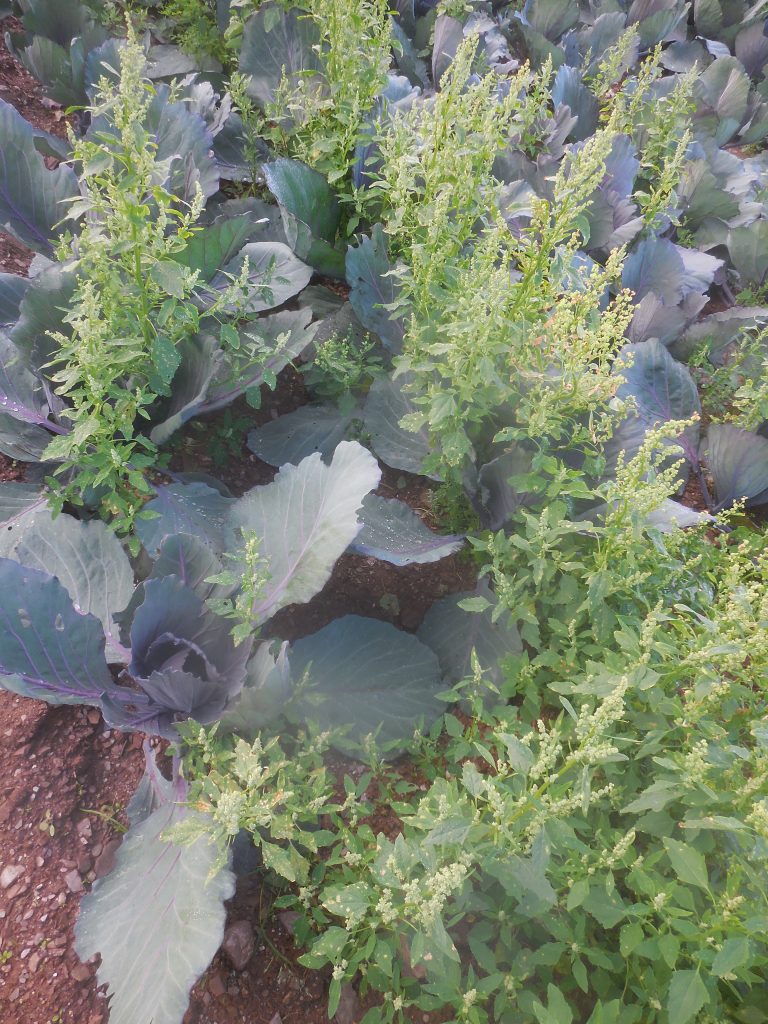
Cabbage growing with Fat Hen on the organic farm.
GARDENING AT LE MANOIR

Hannah Genders visits the source of Raymond Blanc’s famous seasonal produce and meets the gardening brains behind it.
As a saying from the 1940s goes: “Behind every great man is a great woman”, or perhaps we should say, “behind every great chef is a great gardener”?
This saying was in my head as I went to meet Anne Marie, the head gardener at Le Manoir. Le Manoir is the flagship of the chef Raymond Blanc, who has pioneered home-grown, seasonal produce picked fresh from the garden, straight to the kitchen. I first met Anne Marie with Raymond at the Malvern Spring Festival in 2019 and have been keen to interview her ever since.
As we sat together in the gardens of Le Manoir, near Oxford, I wanted to hear more about Anne Marie’s background. I quickly realised she is not the woman behind Raymond Blanc, but an intrinsic part of their team.
She speaks with great affection for Raymond and the way he runs Le Manoir; his enthusiasm, his passion for the place and its food and his involvement in every decision.
During lockdown he phoned in everyday to check Anne Marie and the team were OK. Actually, she said she enjoyed the period of lockdown and realised she would never get a time like this again. She came into work every day and had the freedom of being able to garden again, without the usual distractions of emails and restaurant lists – she got back to gardening, sometimes for eight hours a day.
She ached in muscles she didn’t know she had and said the strangest feeling of all was being able to leave her tools and wheelbarrow out in the garden, come in the next day and find them still there. This is something she has not been able to do in the 35 years she has been working here.
During the quieter months of lockdown, Anne Marie was one of three gardeners, where usually there would be ten. She says she noticed the spring seemed brighter and more beautiful this year, the birds were singing loudly and with less traffic noise and fewer aeroplanes overhead. There was even a wisteria tendril that managed to grow in through an open window and wrap itself around a chair leg before it was removed.
For Anne Marie, this love of nature and being outdoors goes back to childhood. She was born just a few miles from Le Manoir; her father was a builder and her mother a florist. She spent all her summer holidays helping on a local farm and loved it. She left school for agricultural college but was unable to get a grant to study straight agriculture or horticulture unless it had a secretarial element to the course. Because she was a girl, the secretarial part was deemed necessary then.
It was during her summer holiday from college, she applied for and got a summer gardening job at the newly opened Le Manoir aux Quat’Saisons. She has never left and that was 35 years ago, and she never went back to the college course. Her knowledge is of this garden and every aspect of it, from the sandy soil at the top of the vegetable garden to the heavier clay at the bottom end.
There is a unique micro-climate here. For example, one night in May this year they had the temperature drop to minus-seven. Although everyone rushed around to fleece plants, unfortunately they still lost some blossom from the apple trees.
Alongside this gardening knowledge she understands what the chefs like to use in the kitchen and admits she has learned so much about cooking and putting flavours together in her time here, although she always remains happiest outside.
Any decisions on what to grow for the coming seasons, she and Raymond make together. They have a fabulous heritage orchard at Le Manoir and in their dedication to find the right varieties they spent five years taste testing apples before they planted a single tree. Anne Marie told me there are five ways they taste test apples; raw, baked, stewed, or pureed and Tarte Tatin. “We now include juicing,” she added.
One thing I found really interesting is they weren’t looking at storage qualities – of course not, because this garden is all about ways of cooking that are fresh and local. No transport, no storage. This gives you scope to consider apples with a much thinner skin. Local here means a short walk to the garden to see what is looking good today.
The vegetable gardens are accessed from the lawn at the back of the main building, through an ivy clad archway. Walking through here with Anne Marie she was apologetic that some of the beds were not looking their best, but I loved it.
This is a working vegetable garden; it has a central path and long rows of vegetables spanning out on either side. The area for vegetables and herbs is around an acre and a half, the whole garden is seven and a half acres.
This year is a little different: with lockdown, Anne Marie has concentrated on summer and autumn produce in the garden. There are long rows of celeriac, chard in several stages of growth and French beans, planted to crop as late as October.
There was a whole bed of squash with sunflowers popping up through and climbing beans growing on tripods along the edge. The sunflowers ranged from a dark red to a wonderful yellow with a full frilly centre, called Goldy Double .
This is an organic garden and has been leading the way in growing and trialling heritage varieties of fruit and vegetables. These heritage varieties are so important on so many levels, they increase the DNA available for future breeding, they can have superb flavour and help maintain local diversity. Many of the heritage cultivars have been lost over the years and so to keep them alive, cropping and seeding for the future is particularly important. In pioneering this she and Raymond will always choose taste over beauty in produce. In a normal year, the garden will hold 150 different varieties of vegetables and herbs, with everything clearly labelled as guests now show a real interest in the garden and want to know what is growing.
One plant I had not seen before was the Buckler leaf sorrel, I tasted some, it had a sharp, lemony flavour and an unusual leaf. Anne Marie told me: “The chefs love this plant and so we grow loads of it, acidity is something they are keen to add to dishes in the kitchen.”
And Raymond Blanc’s signature dish? Those courgette flowers stuffed with the freshest of garden ingredients.
“Our courgettes are all grown undercover,” Anne Marie tells me, “we grow them mainly for the flowers, which are delicate and we can require 90 flowers a day for the restaurant and so they must all be perfect’
I understand Raymond has named this dish Assiette Anne-Marie in honour of her and her gardening skills.
A fitting tribute.
www.belmond.com/lemanoir
The gardens are exclusive to hotel and restaurant guests, although non-residents can book a garden tour.


A Goldy Double sunflower. 
Anne Marie working among the sunflowers at Le Manoir. 
Chard growing in the vegetable garden at Le Manoir. 
The heritage orchard. 
The vegetable garden with Le Manoir in the background.
LOVING THE UNLOVED
Mary Green surveys the natural wonders we have turned against . . .
I hope people have kept up the closer link with the natural world that many said they felt during lockdown. To me, the real benefit comes when you try to observe and understand the way plants and trees all grow together, and how the different insects, birds and other creatures live among them. That way you begin to make sense of the world and see how it is all connected. It’s not enough just to be “in nature” as a sort of background.
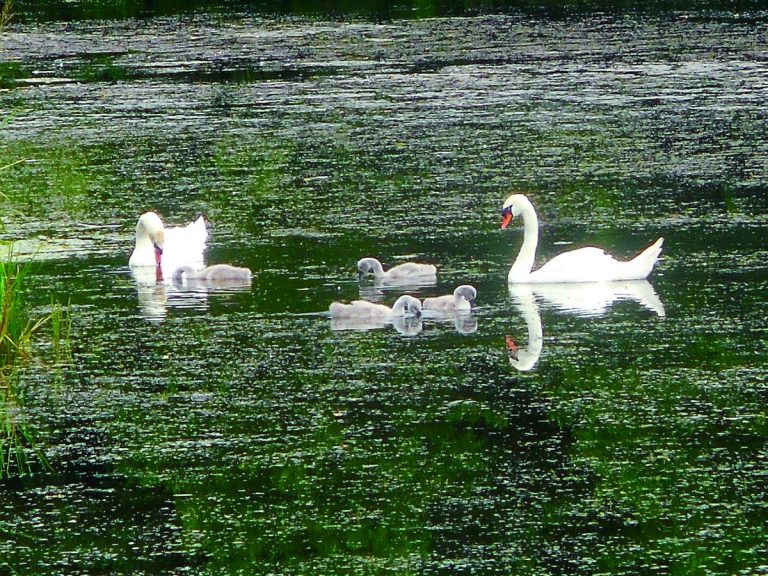
I was delighted recently to see our two swans which nested near Bittell appear with four cygnets. They lost their first brood, probably because of hugely increased footfall around their nest (mentioned by others in the last Village), but they had another go, and now they and their young are happily in an inaccessible place. I’ve seen a tiny moorhen chick too, another second chance.
I want to write this month about some of our wildlife that is not generally loved and encouraged but is a vital part of our lives. First of all, a habitat no one seems to want. It’s usually called “scrub”, a sort of insult, and described as “overgrown”, the plants in it being called “invasive”. I would call it naturally regenerated open woodland. In a natural wildlife environment, nothing is overgrown and nothing is invasive (unless introduced by gardeners).
We would do much better encouraging this habitat to form naturally than planting lots of trees that don’t necessarily fit into the local ecology. But even conservation groups often see the need to remove natural woodland as it develops.
Among the herbal growth – grasses and flowers – you will first get brambles and quick growing common small trees like rose, elder and hawthorn, or alder and willow near water. Ash and birch colonise quickly, too, and bigger trees like oak come along more slowly. The bigger trees grow in the protection of the small ones and longer herbal growth. They don’t naturally grow in cleared ground. You can see a splendid example of this in the piece between the dead arm and main canal near Alvechurch.
This kind of habitat has far more species of insects, mammals and birds than farmland, as well as a complex of plants and trees. It even hosts rare species of butterflies and increasingly uncommon birds like turtle doves and nightingales. Willow warblers especially like birch saplings, which grow readily in scrub, and I’ve heard them in the dead arm wood and in Robins’ Wood when it was young.
In truly wild conditions natural woodland would be kept open by grazing animals – our ancient forest was always more open than people think. Nowadays this would have to be done by introducing domesticated grazing animals, or by a careful vegetation management regimen.
One of the individual plants that people dislike is hogweed, a great contributor to our wildlife. I think it’s partly through confusion with giant hogweed, an alien garden escape from the 19th century onwards, which can cause skin damage, but that’s a recognisably different plant and not common round here.
It may also be its unappealing name, though that just means it was good food for pigs. And it is actually good food for us too, as well as for all manner of insects and birds.
The young shoots are edible stir-fried and a good early vegetable. The seeds can be dried and ground to make a nice pungent spice – or left for the birds. In between, the huge flowers are really heads of lots of tiny flowers, each carrying nectar, so they will be buzzing and crawling with bees, butterflies and other insects.
They have a long flowering season, even sometimes coming out in winter, although their main season is June-July. You will see their beautiful sculptured heads of seeds in September.
It grows in hedges, fields and by rivers and canals – often there when nothing else is flowering, keeping life going. The stalks are thick and hollow when dried, and we used to use them as pea-shooters as kids – apparently you can make water-pistols out of them, too.
Hogweed is often above my head-height but giant hogweed can be 12-15 feet high. Its presence overshadows our native hogweed so much that in the key book about wild plants, Flora Britannica, there are nearly three pages on giant hogweed and only half a page on hogweed. Our native hogweed is welcome and shouldn’t be cut down, as it so often is.
Among the insects buzzing around flowers like this will be wasps. No one loves wasps: everyone loves bees. But wasps are a far bigger contributor to our biodiversity. Somehow bees and butterflies have escaped our general dislike of insects – “creepy-crawlies” or “bugs”, as we call them – but wasps haven’t.
There are thousands of different kinds of wasps but our common wasp is mostly known for stinging us. However, wasps are crucial pollinators, and plants owe their survival to pollination by wasps and other maligned insects just as much as to bees.
Their nests are a beautiful structure – I have had them in my attic and decided to leave them there. They didn’t really cause me problems. Only a few wasps survive the winter in them to start again the next year.
Common wasps are social animals, like bees. The young eat other insects or spiders, which the adults catch and feed them on. The main contribution wasps make to our ecosystem is to keep the populations of other insects and spiders under control – if we didn’t have wasps, we would be over-run by other insects and nature would be out of balance.
The adults feed on sugar, from nectar, honeydew or fruit – or your wine-glass or ice-cream! They don’t live long as adults and have to consume as much sugar as possible. Wasps succeed in adapting to our less-than-perfect world much better than bees. Being a top-level predator in the insect world, wasps are a good indicator of how healthy our environment is. If wasps start to disappear, beware – it means we are running short of all insects and will soon have no pollinated crops.
Even other insects get a bad press for looking like wasps. Last year there was a “plague” of hoverflies while I was on holiday in North Yorkshire. They are quite harmless but people were panicking as they settled around us at a seaside pub. Hoverflies benefit from wasps: by mimicking their bold black-and-yellow strip they scare off predators who expect them to carry a sting.
All insects are vital to our survival. Many of them sting to defend themselves from harm, but we can’t do without them, so had better learn to live with them.
Going back to plants, the other much hated common plant, still flowering in September, is ragwort. (By the way, the “wort” in plant names is pronounced “wert” not “wart”. It simply means a herb. Just think how uncomfortable the common flower, nipplewort, would be if mispronounced!)
Ragwort is poisonous to animals, but as with all herbs, poisonous just means that it contains a drug. All our medicinal drugs were originally extracted from plants: in excess any drug is a poison. Ragwort is now being investigated as a possible cancer treatment. It is harmless if left to grow naturally as animals will avoid it like most poisonous plants. It only becomes dangerous when cut and dried, when it loses its signals and animals will eat it with possibly fatal results.
A late flowering, common composite plant like this is vital for insects and then for birds. Like hogweed, it is usually crawling with insects of all kinds. One particular moth, the striking red-and black cinnabar moth, has it as its food plant. You may see the striped yellow and black caterpillars on it.
Unsurprisingly, it loves growing in scrubland. When Isabella Tree carried out her huge rewilding programme (described in her great book Wilding) the thing the neighbouring landowners complained about most was not the strange animals grazing it but the fact that she had let ragwort grow all over her land!
I haven’t even got round to brambles, another key species of scrubland, perhaps the best butterfly host we have and a food and drink source for humans. The key thing is the mix of plants which grow naturally in harmony with each other until we interfere with them. A micro-landscape like a small piece of scrub will change imperceptibly year on year as the plants grow around each other. Watching it is one of the pleasures of life.

Hogweed. 
Natural scrubland. 
Ragwort flower. 
Cygnets set out to explore.


LOCKDOWN SUNSHINE
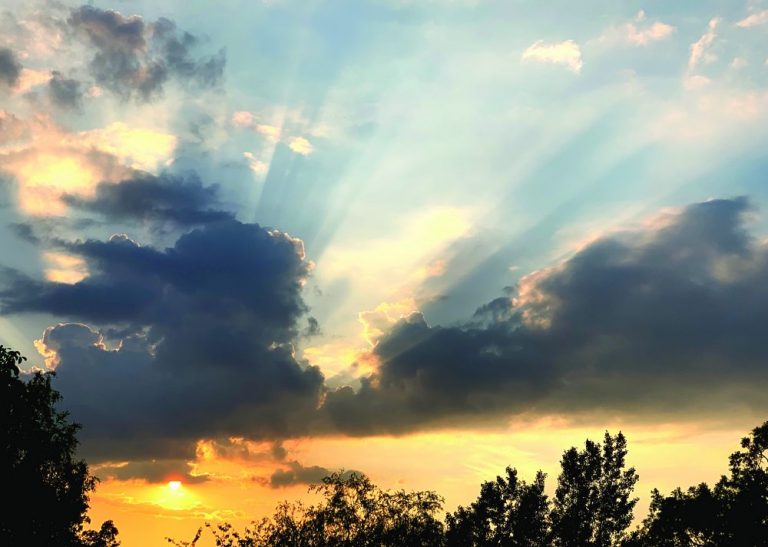
If there was one thing that made the early months of lockdown bearable for many people, it was the weather.
As Villagers found themselves with the time to explore their local area, on foot or on bicycle, we were blessed with a very dry and sunny April followed by an even drier May, with more than 250 hours of sunshine to bask in.
The last four months followed the trend of warmer than average months.
April was one of the warmest in my 30-year records, with a mean temperature of 10.5C (2.3C above the expected value) and May was one of the driest and sunniest months in all my local records, taken from 1990-2020.
Sunshine was measured at 254 hours. Only July 2006 with 279 hours was sunnier. Rainfall was only 5.6mm, one of the driest months over the same 30-year period. There had been only two drier months: July 2011, with 4.0mm of rainfall, and June 2018, with 5.5mm.
Rainfall was below normal for March, April and May, although the rainfall in June soon made up for this, with 95.9mm.
The reason for the spring anomalies was a high pressure area blocking the Atlantic low pressure areas, bringing, warmer and drier conditions from the south and south east.
This returned to a more normal westerly flow from early June.
The month started with a couple of warm days followed by cooler wet conditions from the 3rd to the 20th.Temperatures increased from the 21st to the end of the month with a max of 29.3C on the 28th, the mean temperature of 15.3C was 0.9C above the local 30-year mean.
But the month overall was very wet, with 95.9mm of rainfall – 162% of the local mean – and three thunder days, on the 13th 16th and 17th.
Lockdown Weather Stats
March 2020
Mean Max 10.3C 0.3 above average
Mean Min 2.6C 0.2 above average
Mean 6.5C 0.3 above average
Rainfall 40.4mm 90% of average
Sunshine 121.3hrs 128% of average
April 2020
Mean Max 16.1C 3.3 above average
Mean Min 5.0C 1.4 above average
Mean 10.5C 2.3 above average
Rainfall 36.6mm 55% of average
Sunshine 204.1hrs 173% of average
May 2020
Mean Max 18.8C 2.5 above average
Mean Min 6.9C 0.2 above average
Mean 12.9C 1.4 above average
Rainfall 5.6mm 10% of average
Sunshine 253.9hrs 168% of average
June 2020
Mean Max 19.9C 0.9 above average
Mean Min 10.7C 0.9 above average
Mean 15.3C 0.9 above average
Rainfall 95.9mm 161% of average
Sunshine 154.4hrs 114% of average
Spring Averages 2020
The figures for the average temperature and rainfall over March, April and May show that it was indeed very dry and sunny, with half as much sunshine again than would be expected and less than half the rainfall:
Mean Max 18.8C 2.1 above average
Mean Min 4.8C 0.6 above average
Mean 10.0C 1.4 above average
Rainfall 83.1mm 48% of average
Sunshine 579.2hrs 159% of average
More information at www.alvechurchweather.metsite.com You can see an improved HD weather-cam, updated at one-minute intervals, at: www.alvechurchweather.metsite.com/webcam_alvechurch.php
BIG BEASTS LINE UP

Well, what an exciting spring we had! The first launch of Americans into space from US soil for nine years.
The Crew Dragon spacecraft worked perfectly, docking itself with the International Space Station and it was visible from Alvechurch on its way there, too.
Look up www.heavens-above.com to find when the ISS can be seen again and to see if the next launch of a supply vessel, a Russian Progress, on July 23, is viewable.

In the rest of our skies, that odd little thing Corvus has finally gone away. A tiny little constellation, it never rises very high and largely disappears come summer. The really big news of this month is, of course, the opposition of the two largest planets you will ever set eyes on, Jupiter and Saturn.
Opposition just means that the planet is exactly opposite the Sun and for Jupiter this is on July 14 and for Saturn it’s July 20. At this time these giants are at their highest and exactly south at solar midnight, which is one in the morning on our clocks because we made them an hour fast back in March.
As we drift into August and the sky wanders westwards, they reach this point earlier in the evening and you won’t have to stay up late to see them. Jupiter, especially, is so big and bright you will be able to see it as soon as the Sun sets, before the sky gets dark, a bit after 9pm.
Look to the horizon a little to the east of south. It will not get very high in the sky because being (sort of) summer, the ecliptic is very low but as August progresses, it will get higher.
Saturn follows on, not far behind but being not quite as bright, you will have to wait for the skies to darken a little. Look for it just to the left of Jupiter.
The Moon visits on the 1st and the 2nd but, of course, it will also be nearly opposite the Sun and practically full and very bright.
August also brings us possibly the best meteor shower of the year, the Perseids. I say the best because, although other meteor showers may have a greater hourly rate and the night is shorter right now, this is the best time of year to be outside watching.
Although the official peak is on the 12th, meteors will be visible a good few days either side. Now, I’m often asked “Where is the best place to look for meteors?” The obvious answer is “The sky . . .”
This is not as facetious as it sounds (Me? Never). They really can appear anywhere in the sky. It’s just that if you trace their paths back to where they seem to have come from, it will be somewhere in Perseus.
You just need to look up at the largest and darkest patch of sky you can find, So, if you find yourself forced to sit outside in the evenings for some reason, get meteor spotting.

