Home Blog Page 805

Inside story

0

Fabric

ADVERTISEMENT FEATURE

Interior designer Mary Barber Fray reveals what the best-dressed homes are wearing this spring.

Take a look at any of the new fabric and wallpaper collections launched this spring, and you will find colour and pattern everywhere.

Bold, stylised flower prints and weaves, sumptuously coloured cut velvets, beautifully embroidered silks, large-scale damasks and printed and woven voiles appear in abundance. 

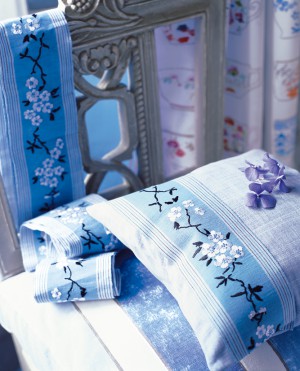
The designs take their influences from sources as varied as Oriental ceramics and motifs, 19th century French decorative table linens, porcelain, and fin de siècle Art Nouveau and Japanese imagery.

Larger than life cherry blossom, stylised peonies, striking pictorials and florals combine with unusual colour combinations, meaning that these themes are not necessarily for the faint hearted.

Chocolates, fuchsia pinks, raspberry, blues of every hue and lime greens predominate. 

Faux suedes, which have been so popular over the last few seasons – not least because they wear and wash well – now include embellished, printed and textured versions in a vast array of colours.

Metallics are also now being incorporated in silks or satins.

All this pattern means that furniture is increasingly taking on simpler and more elegant lines, stylised in its own way, with darker woods such as walnut and ebony continuing to dominate the new ranges.

Big, overblown pieces or heavy “brown” pieces are definitely on their way out.

Short of completely redecorating, an easy way to incorporate some of the latest trends is to choose a bold wallpaper and use it for just one feature wall in a room; or perhaps to invest in a dramatic fabric and make a couple of new cushion covers for your sofa.

So there you have it! You can see all the new spring collections from major design houses now.

How to get un-wired

Router

Terry Williams gets up to speed with the fast-changing world of wireless.

A wireless connection is simply the ability to connect two or more devices together without the use of physical cables.

This is commonly associated with infra red, Bluetooth and wi-fi – with the growth of portable computing devices, including notebooks, PDA and mobile phones fuelling demand for an easy way to connect pieces of equipment together.

The continued integration of technologies has led to the TV in your lounge now also being the family PC, surround sound centre, Internet and email gateway.

With the inclusion of wi-fi into this package it means that the user can connect to the PC in the bedroom and access MP3 tracks, pictures and documents as well as security cameras located around the house or in the business premises, from the other side of the world – all without cables.

Special wireless devices are available, such as wireless game adapters. These allow you to connect a gaming console to another console by wi-fi or over the local area network (LAN) or Internet.

Also a digital wireless music player can be connected to the Hi-Fi system. This links MP3 and media files from the LAN into the hi-fi.

For the business user the raft of new devices hitting the market is relentless. Many of these are based around mobile phone technology as the cost of data transfer is still expensive – not to be confused with wireless connection.

Many hotels, airports and corporate meeting places now offer customers Internet access using standard wi-fi devices as part of the experience. Some companies connect buildings and remote sites using wireless technology with special directional aerials.

To set up a home or business wireless environment that allows computers to network with each other as well as compatible entertainment devices and provide shared broad­band, you need a wireless router with combined ADSL modem.

If you are in a cable area the ADSL modem is not necessary. This router acts as the gateway and links all the other devices together. The other equipment needs to have wireless network cards installed.

Printers can also be joined to the LAN with a wireless connection.

If you are linking up several computers for the first time, buy wireless equipment from one manufacturer, eg Netgear, D-Link or Belkin – it’s easier to connect it all up.

The wireless range of the equip­ment depends on location. Most are rated at 100m outside with line of sight. Indoors, this can drop dramatically depending on the type of building.

There is now a new range of routers on the market with multiple internal aerials that are supposed to improve indoor range. The speed of wi-fi transmission is increasing all the time, the typical speed now being the Super G 108Mbps.

Security is a big issue with wireless setups. Wire­less routers are all sold with the same default settings and passwords. Therefore it is vital that you personalise your router password and set up an authorised user list allowing access only to chosen devices.

There are further measures you can take depending on device. All routers are different but if configured correctly will give protection against hackers.

While wireless connection is great when it works, it is no replacement for a hard wire system. If you are building a house, refurbishing or having a rewire it is a good idea to lay data cables to each room.

This will give the opportunity to network computers or entertainment systems in the future by cable as well as through wireless access points in each room.

Wireless devices such as PDA, Bluetooth mobile phones, keyboards and mice, and notebooks, are brilliant uses for wireless technology – however for building-wide coverage and security, a cable backbone integrated with Wi-Fi access points is the best option.

Terry Williams is Managing Director of Lickey End-based Shepley Computers & CCTV.

If you have any computer-related questions you would like him to answer in future columns, please email them to: .(JavaScript must be enabled to view this email address)

For more information on CCTV and PCs and links to related sites, see: https://www.shepleydirect.co.uk

Anna gets to the point

Anna

ADVERTISEMENT FEATURE

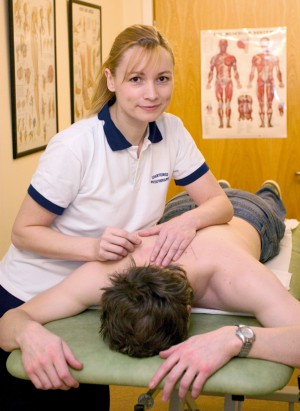
A Blackwell physiotherapist is using acupuncture to help repair muscles at her new clinic at Greens fitness centre in Rubery.

Whether you have had a sporting injury, or postural problems while sitting at the computer for long periods, or shoulder pain is preventing you from playing a round of golf… physiotherapy may be what you need.

The increasing popularity of regular exercise can be attributed to public awareness of its beneficial effects on physical and emotional wellbeing.

Exercise has been shown to be good for respiratory and cardiovascular disorders, and in some people to enhance mood, lower blood pressure, and decrease sensitivity to pain.

However, injuries or aches and pains may prevent you from exercising, being active, or achieving optimal health. This is why a physiotherapy venture within a health and fitness centre is a good idea. P

hysiotherapists are trained to keep people exercising safely and encourage wellness. 

Greens Health and Fitness Centre in Rubery is the location for a new physiotherapy practice offering rehabilitation. Anna Cawthorne, a highly qualified physiotherapist, has established a consulting area within the centre.

The new clinic is open to all – including members and non-members of Greens.

Greens offers individuals undergoing treatment the chance to use the gym facilities, including a swimming pool and spa area, following therapy sessions. The idea is that it will help people to achieve their maximum rehabilitation potential and fitness goals while attending for physiotherapy.

Anna qualified as a graduate physiotherapist from Bradford University in 1995 and practised in Bradford and Australia before gaining a postgraduate Masters degree in Manipulative Therapy in Perth, Western Australia.

On returning to the UK Anna has settled back into her local area and the cooler climate of Blackwell.

In addition to starting a private practice she also works as a clinical physiotherapy specialist within the NHS and has a particular interest in spinal problems.

As a specialist manual therapist she is able to treat a large range of disorders. Problems that can be helped include back and neck pain, headaches, muscle and joint problems, repetitive strain injuries, arthritis and sports injuries.

“At times natural recovery from a disorder does not happen or is very slow,” Anna points out. “In these cases manual therapy can help to restore homeostasis in the injured area, facilitating the normal repair processes and reducing pain.”

Manual therapy includes treatment techniques for joints, muscles and peripheral nerve tissue. Natural treatment methods include mobilisation, soft tissue work, manipulation, and exercise.

Self management and preventative measures from soft tissue stretches to specific and general exercise, lifestyle advice and posture or ergonomics is an essential part of the practice.

As a chartered physiotherapist Anna performs a detailed examination and evaluation and plans a management programme with her patients after formulating a clinical diagnosis.

Her job is to help patients discover how to resolve their existing injuries and prevent similar problems in the future. 

Back, neck and shoulder pain are the three most common conditions requiring a GP consultation.

Whiplash – a soft tissue strain to the neck – is characterised by a collection of symptoms following a sudden extension or flexion injury (most commonly in a vehicle accident).

Injuries to the muscles and ligaments can lead to neck, back and arm pain, headaches, dizziness, tingling and numbness.

Cognitive or psychological complaints such as concentration difficulties, sleep disturbances, fatigue or mild depression can also be present.

Early advice and physiotherapy is recommended, to assist recovery and prevent long-term problems.

Lower back pain affects over 80 per cent of the population, and although most recover within a short time, recurrence is high. As many as 50 per cent of women suffer back or pelvic pain during pregnancy, some with continuing problems postnatally.

There is now strong evidence that exercise is beneficial for the management of lower back pain.

“Many patients with lower back pain demonstrate significant improvements with a progressive exercise programme of spinal stabilisation exercises tailored to individual problems,” says Anna. 

Anna is also an experienced acupuncture practitioner, having trained in a Traditional Chinese Medicine approach. One of the oldest forms of medicine, acupuncture has been used for over 3,000 years in China.

“It is a very safe technique and can be used to treat a wide variety of conditions,” Anna explains. “People are increasingly using alternative therapies and there is substantial scientific evidence to support the effects of acupuncture.”

The traditional Chinese view is that Qi (energy) flows freely round the body when in a healthy state. If the energy is deficient or excessive, acupuncture stimulation can be used to achieve harmony.

Research has indicated that acupuncture works by blocking pain signals in the spinal cord, and also stimulates the brain to produce natural pain-relieving chemicals which assist the body to heal itself. It is estimated that 70 per cent of people gain pain relief from acupuncture. 

Recently Anna has become one of only 30 practitioners in the UK to be trained in Intramuscular Stimulation.

IMS is an acupuncture needling technique used to treat chronic pain in the musculoskeletal system where there is no obvious injury or inflammation.

Unfortunately some people suffer ongoing pain and have almost given up on finding relief. This type of pain results from dysfunction of the nervous system.

If nerves start to malfunction following minor irritation, nerves and nerve endings can become supersensitive and will behave erratically.

A result of this is muscle shortening which is an important source of pain, and can be felt as tight ropey bands within the muscle. Increased muscle shortening can stress joints and cause conditions such as tennis elbow, sciatica, headaches, disc disease and osteoarthritis.

IMS combines traditional acupuncture needles with western medical knowledge to treat these shortened muscles. Relief can be rapid. However, some people require multiple treatments, with a build up of effects as treatment progresses. 

As an experienced chartered physiotherapist, Anna is in a enviable position to combine acupuncture with other natural treatment methods such as manual therapy and exercise.

Anna is registered with BUPA and all major health insurance companies. To organise an appointment, contact Greens Health and Fitness on 0121 453 0000 or Anna on 07730 524513.

For further information on IMS acupuncture visit https://www.istop.org, or https://www.physiofirst.org.uk 


So, you want to stop traffic . . .

Map

Village reader David Barton outlines a radical traffic calming scheme for Alvechurch.

I read with cynical amusement your feature Stop The Traffic – and I refer you to The John Gedge Appraisal of Alvechurch for Bromsgrove District Council, dated 1969, which identified traffic problems 36 years ago and recommended urgent action to prevent the destruction of the village.

The only part of the recommendation implemented has been the bypass, 25 years after it was urgently required!

In the certainty of no positive action being taken in the future, I would present a simple but radical remedy. Close Swan Street/Red Lion Street to through traffic.

Current traffic control measures are largely ineffectual and typically nibbling tentatively at the edges, rather than targeting the root cause. The motor vehicle controls us, not the reverse – the tail wags the dog.

Speed limits are ignored and not enforced. (Weatheroak remains a race track in spite of 30mph imposition and the police will not take action until the annual death toll reaches specific targets).

Speed bumps are now universally recognised as creating more problems than they cure – speed cameras are revenue collectors, not road safety devices.

Vehicles must be ruthlessly controlled. They are nearly always propelled by selfish drivers who attempt to get as close to the counter as possible, choke roads and pavements to the detriment and frustration of human beings while an adequate desert, known as a car park, is provided in an excellent unobtrusive location with pedestrian accesses to the village centre.

I do not pretend that the proposal does not have problems but I contend that it could provide the basis for professional discussion, assuming that politicians, bureaucrats and ‘anoraks’ are excluded from the debate.

In my opinion, the following action should ensue:

1) Commission a traffic survey by qualified traffic strategists which will determine numbers, destinations etc.

2) Close Swan Street/Red Lion Street except for public transport.

3) Vary the width of the existing carriageways reducing the previously widened scar of tarmac, visually bringing the buildings into closer proximity to improve the spatial quality of the street scene.

4) Implement for a trial period and monitor results.

Your telling photograph of a traffic-free village centre could be a reality. History dictates, however, that the cold hand of death by Whitehall and its local authority servants will prohibit action.

The decision will be inevitably not to decide and so The John Gedge Appraisal gathers dust while our village environment continues its inexorable decline.

What do you think of David’s idea? Have you got a better one? Write to the usual address on page 3.

Map

Pulling power

Outside clinic

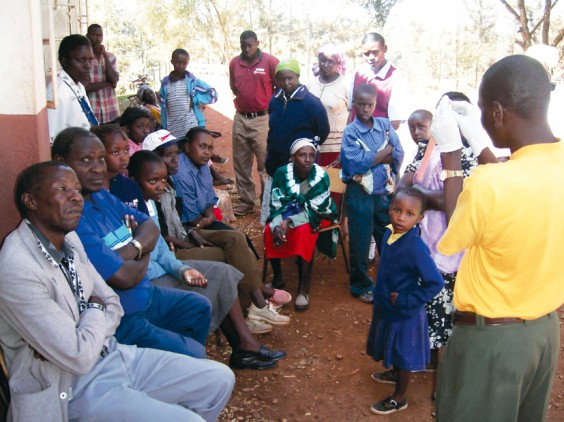
Jan Denning explains why she and dentist husband Pat devote their time to helping people in rural Kenya – and urges Village readers to support a Rowney Green event raising funds for African children orphaned by AIDS.

“Why are you going back to Kenya?” our friends and family ask. Well, Rotary Volunteer dentistry at a small African mission hospital has lots of attractions – it’s a great way to escape an English winter and get out of our family’s hair!

Over the past five years, my husband Pat and I have spent time in dental clinics overseas helping the local people to receive much-needed dental care that is usually not available or affordable to them.

Each year, we complete two volunteer stints in northern India or Kenya.

We work under the auspices of Rotary International and there are dozens of programmes desperate for volunteers for health-related projects, building, teaching, administration – the opportunities are limitless.

The great thing about the short programmes requiring four to six weeks’ work is that, however good or bad the project might be, it is not too long to become dispirited, or too short to be of value.

Rotary pays our air fares and gives a small daily subsistence allowance. Patrick is the dentist and I’m there as the fixer! We truly look forward to returning on every occasion to be part of an efficient team.

In Kenya we live and work in Thika, about 80kms northeast from Nairobi. We stay in a village called Kilimambogo, or Buffalo Mountain, at the Immaculate Heart of Mary Hospital.

We have a convenient and comfortable house, located in the hospital compound.

The hospital is in a semi-arid area, at times with very poor rainfall. When we first went in 2002, there had been no rain for over two years and the whole area was brown, dusty, dry and unproductive.

This year, there has again been poor rainfall and the maize crops are failing, so there is little money to spare.

The village is at a height of over 4,000 feet on the edge of the Great Rift Valley, so there is stunning scenery, with a climate that makes it feel like an English summer day, every day.

Adapting to life over there is relatively easy as soon as we relax to the slower pace of life and recognise that “manyana” is a statement of urgency.

The people are small-scale farmers with the majority working as casual labourers in the Del-Monte pineapple farms, others as coffee pickers – except recently, the crops have not been picked as the farmers are unable to sell the beans at a realistic cost.

Most people we treat are warm, friendly and appreciative of the work that is being done for them. Patients pay a small amount of money for their treatment.

Because we are the only muzungus – white-skinned people – in the area, we are easily recognised and the locals call us the “yellow bananas” as we are usually seen in our bright yellow clinic uniforms.

Two assistants work alongside us in the clinics. They are terrific young men and are the glue holding this project together. They adapt to the regularly changing needs of dentists who replace one another every five to six weeks.

The dentists come from all over the globe and so Michael and Bernard have learned five languages in which they can converse. Our limited Swahili is really not good enough!

We work in the base clinic of the Mission Hospital on Mondays and Fridays. For the rest of the week, we drive to rural outpost clinics, transporting the equipment in our four-wheel drive Toyota.

Sometimes, we are driven for two or three hours on poorly-maintained roads. In the rainy season, driving is a nightmare and we are spent before work even begins.

The equipment is sound and last year Pat was given a fantastic portable drilling, scaling and suction machine. This will work in the bush from batteries; in the clinics where we have electricity, it can be plugged in.

The machine has hugely improved the quality of work offered and, slowly, our patients are understanding the value of saving teeth. Much of the work is extracting neglected teeth that are beyond repair.

Regularly, we arrive at an outpost clinic to find 60 to 80 people waiting. We do not go home until the work is finished.

Our regular visits to Kilimambogo mean that we have become involved with other issues – especially now we are known in the area.

As in the the rest of Africa, the number of orphans is increasing at an alarming rate because of HIV/AIDS. The stigma has tended to break ties that existed in African culture of extended family responsibility.

Orphans are expected to work at menial tasks, but the money they receive goes to their guardians. Many orphans have lived with ailing parents and have witnessed agonising deaths.

Most face discrimination and rejection from society, with many dropping out of school.

Horrendous problems exist all around us in our village. For the last three years, Sisters in the Mission Hospital have been providing for 123 local orphans with staple food to help reduce malnutrition.

Education is a long-term need for the orphans, especially uniforms and fees for those who have completed primary school. Most have little clothing and walk around in rags. The Sisters are desperate for money to continue with this project.

Because we have seen a very real need and a worthwhile use of resources, a fundraising event has been organised in aid of these children.

On June 12 at 6.30pm, an open-air performance of A Midsummer Night’s Dream will be staged by the Festival Players Theatre Company on the Rowney Green playing fields, behind the Peace Hall.

Tickets are available in advance (adults £12.50; children £6; family ticket: 2 adults+ children: £30) or on the night (£15/£8.50/£35). Call 01527 882416 (Jan Denning) or 01527 585227 (Maggie Moore).

We are returning to Kilimambogo in October and look forward to donating the proceeds of this event to the Sisters to improve these children’s lives. Please help to make this a successful venture.

Basket ideas to help village hall funds

A hanging basket demonstration organised by Alvechurch Village Hall fundraising committee will be held at the hall on Tuesday May 10 at 7.30pm.

There will be plants for sale. Admission £2. For information, call 0121 445 1810.

Village businesses add more than £3,000 to club’s coffers

John and Andrew

From fingernails to flowers; from wines to wavy hair; from picture frames to fashion or simply in the form of money, village businesses have generously supported Barnt Green Cricket Club’s sponsorship campaign.

More than £3,000 in goods, services and cash has been donated to the club for its Junior and Girls sections as well as the general fund.

“These, and similar donations, are very important to the club if we are to maintain our national status as a high profile club and to continue to provide cricket for so many of our community,” said John Ward, who campaigned for the sponsorship.

“At present, we have a junior section of 185 or so youngsters from six to 16 and we are bursting at the seams,” he added.

Andrew Oulsnam, of Robert Oulsnam and Company Estate Agents, who are this season’s main sponsors, says: “We are very pleased to support our local club that offers so much opportunity and fruitful activity to so many members of our community, young and not so young. 

“Its successes in regional and national competitions over the last few years have brought Barnt Green into the national focus and we should all be proud of their achievements,” he added.

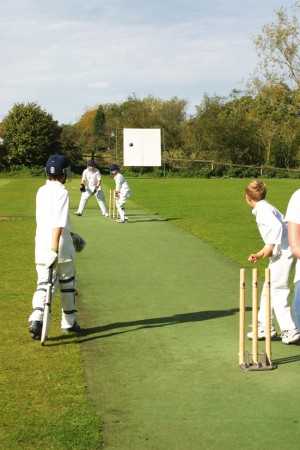
Above: Andrew Oulsnam (right), of Oulsnam estate agents in Barnt Green, confirms their sponsorship deal with John Ward of BGCC.

A hidden gem loved by batsmen

Juniors

After winning promotion again, Alvechurch & Hopwood Cricket Club plans to make its mark in the county’s First Division.

Nestled behind a row of elegant, established houses on the Birmingham Road, it’s easy to miss Alvechurch & Hopwood Cricket Club.

But the club, which merged in 1990, has much to be proud of and, in its own small way, is starting to make a few ripples in Worcestershire’s cricketing waters.

Under the guidance of the late Jack Smith, Alvechurch Cricket Club for years boasted a trophy-winning youth set up and coaching regime that was the envy of many a club. This in turn fed the senior teams with their up-and-coming talent.

Alvechurch’s first team ground is a very pretty scene, flanked as it is by well-kept gardens and mature, towering deciduous trees.

The clubhouse offers a warm if unpretentious welcome and the club rightly prides itself on a very sociable, all-embracing culture.

The ground itself is notoriously the domain of batsmen – short boundaries and true wickets make high-scoring games at the Birmingham Road ground commonplace, but there’s often enough in the wicket at the start and end of seasons to give bowlers cause for hope.

The huge totals frequently amassed at Alvechurch are in marked contrast to the situation at the club’s second ground two miles up the road at Hopwood.

Hopwood, with its large bowl-like setting, huge boundaries and bowler-friendly uneven wickets, is less loved by batsmen and the willow-wielders regularly have to tread the long, ignominious walk to and from the wicket, having barely troubled the scorers.

Despite being a village club, Alvechurch runs four teams on a Saturday and three on a Sunday.

2004 was a momentous season for the club as – for the first time since cricket was played by the village in 1866 – they took on the services of a professional cricketer (Australian Ryan Stewart) to bolster the first team and help with the coaching of younger players.

The experiment seemed to work as Alvechurch were crowned champions of Worcestershire County League Division Two, the club’s second promotion in three years.

The club is presently in negotiations with an overseas all-rounder to help Alvechurch’s debut in the First Division this season.

There are many challenges ahead for the club, not least the need to continue to attract youngsters, who are faced with a multitude of competing leisure activities.

Already, young cricketers come down to the ground for training on Sunday mornings in their dozens under the guidance of Joe Evans and Alan Beards.

Fun games – designed to develop basic cricketing skills – are run to encourage a real affection for the inherent pleasure of the game.

The plan is also to cement a close relationship with the new Middle School, which is to be constructed on land adjoining the first team ground over the next couple of years, and ensure new young talent is brought into the club to enure its long-term viability.

It is equally important to bring more mature cricketers into Alvechurch’s fold, not only to be mentors to the more junior players but also to add to the essential vitality of the after-match drinking post-mortems.

The club feels that it can offer a lot to those wishing to take part in cricket across a wide range of abilities and ages. It can’t afford to be complacent, but at its heart the foundations are strong.

Volunteers are always required to assist in the running of the club and its future development so if you are interested in becoming involved in AHCC as a player, social affiliate, committee member or sponsor, please contact the club’s Social Secretary, Nick Jones, on 07779 267609.

The ground and clubhouse are also available for hire for social functions at very reasonable rates, and the club welcomes anyone who drops in to see them and make use of this hidden sporting gem.

Right: Juniors in action

Eco-friendly week

Parade

Youngsters at Tardebigge First School learned how recycling can be fun in their Eco Arts Week, with special activities taking place throughout the school.

For the whole week the curriculum was devoted to the exploration of ecology issues, with particular reference to recycling.

The children worked on art projects with an “Under the Sea” theme, using materials that would normally go into the bin.

Pupils of all ages considered the amount of waste people generate and how they might recycle their waste in the future.

The week was launched with an eco-fashion parade when all the children came to school in outfits made from recycled materials. There were robots, brides and knights – even an Egyptian Pharaoh.

One of the week’s highlights was a visit from Bob Green of the Bishops Wood Centre, who came to spend a day working on outdoor projects.

Bob and the children created an undersea world, using unwanted logs, branches, twigs and sawdust to create fish, an octopus, turtles and sea horses.

Standing for the people

0

Your hard-hitting editorial in the March Village magazine has brought into focus the many concerns voiced to me in Barnt Green and to my fellow Independent Bromsgrove district councillor for Alvechurch, Mrs Jean Luck.

I believe we are all tired of “pie crust promises” given as “solutions” in so many areas, plus the dead hand of party politics and block voting, so I am answering your call and intend to stand as an independent in the forthcoming Worcestershire County Council elections.

If elected my priority will be to bring a new perspective and momentum by working to resolve so many of the problems plaguing our area.

I have been a district councillor for more than 14 years so I do have a good insight into how the county council operates.

I pledge that, if elected, I will wholeheartedly support the hard working organisations such as HARM and the parish councils by working with residents, actively seeking solutions to the many long-standing and very real threats to our local communities.

Ann Doyle, Barnt Green