
ADVERTISEMENT FEATURE
A Blackwell physiotherapist is using acupuncture to help repair muscles at her new clinic at Greens fitness centre in Rubery.
Whether you have had a sporting injury, or postural problems while sitting at the computer for long periods, or shoulder pain is preventing you from playing a round of golf… physiotherapy may be what you need.
The increasing popularity of regular exercise can be attributed to public awareness of its beneficial effects on physical and emotional wellbeing.
Exercise has been shown to be good for respiratory and cardiovascular disorders, and in some people to enhance mood, lower blood pressure, and decrease sensitivity to pain.
However, injuries or aches and pains may prevent you from exercising, being active, or achieving optimal health. This is why a physiotherapy venture within a health and fitness centre is a good idea. P
hysiotherapists are trained to keep people exercising safely and encourage wellness.
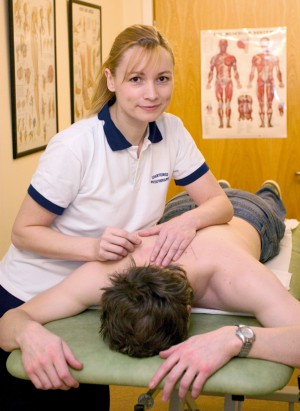
Greens Health and Fitness Centre in Rubery is the location for a new physiotherapy practice offering rehabilitation. Anna Cawthorne, a highly qualified physiotherapist, has established a consulting area within the centre.
The new clinic is open to all – including members and non-members of Greens.
Greens offers individuals undergoing treatment the chance to use the gym facilities, including a swimming pool and spa area, following therapy sessions. The idea is that it will help people to achieve their maximum rehabilitation potential and fitness goals while attending for physiotherapy.
Anna qualified as a graduate physiotherapist from Bradford University in 1995 and practised in Bradford and Australia before gaining a postgraduate Masters degree in Manipulative Therapy in Perth, Western Australia.
On returning to the UK Anna has settled back into her local area and the cooler climate of Blackwell.
In addition to starting a private practice she also works as a clinical physiotherapy specialist within the NHS and has a particular interest in spinal problems.
As a specialist manual therapist she is able to treat a large range of disorders. Problems that can be helped include back and neck pain, headaches, muscle and joint problems, repetitive strain injuries, arthritis and sports injuries.
“At times natural recovery from a disorder does not happen or is very slow,” Anna points out. “In these cases manual therapy can help to restore homeostasis in the injured area, facilitating the normal repair processes and reducing pain.”
Manual therapy includes treatment techniques for joints, muscles and peripheral nerve tissue. Natural treatment methods include mobilisation, soft tissue work, manipulation, and exercise.
Self management and preventative measures from soft tissue stretches to specific and general exercise, lifestyle advice and posture or ergonomics is an essential part of the practice.
As a chartered physiotherapist Anna performs a detailed examination and evaluation and plans a management programme with her patients after formulating a clinical diagnosis.
Her job is to help patients discover how to resolve their existing injuries and prevent similar problems in the future.
Back, neck and shoulder pain are the three most common conditions requiring a GP consultation.
Whiplash – a soft tissue strain to the neck – is characterised by a collection of symptoms following a sudden extension or flexion injury (most commonly in a vehicle accident).
Injuries to the muscles and ligaments can lead to neck, back and arm pain, headaches, dizziness, tingling and numbness.
Cognitive or psychological complaints such as concentration difficulties, sleep disturbances, fatigue or mild depression can also be present.
Early advice and physiotherapy is recommended, to assist recovery and prevent long-term problems.
Lower back pain affects over 80 per cent of the population, and although most recover within a short time, recurrence is high. As many as 50 per cent of women suffer back or pelvic pain during pregnancy, some with continuing problems postnatally.
There is now strong evidence that exercise is beneficial for the management of lower back pain.
“Many patients with lower back pain demonstrate significant improvements with a progressive exercise programme of spinal stabilisation exercises tailored to individual problems,” says Anna.
Anna is also an experienced acupuncture practitioner, having trained in a Traditional Chinese Medicine approach. One of the oldest forms of medicine, acupuncture has been used for over 3,000 years in China.
“It is a very safe technique and can be used to treat a wide variety of conditions,” Anna explains. “People are increasingly using alternative therapies and there is substantial scientific evidence to support the effects of acupuncture.”
The traditional Chinese view is that Qi (energy) flows freely round the body when in a healthy state. If the energy is deficient or excessive, acupuncture stimulation can be used to achieve harmony.
Research has indicated that acupuncture works by blocking pain signals in the spinal cord, and also stimulates the brain to produce natural pain-relieving chemicals which assist the body to heal itself. It is estimated that 70 per cent of people gain pain relief from acupuncture.
Recently Anna has become one of only 30 practitioners in the UK to be trained in Intramuscular Stimulation.
IMS is an acupuncture needling technique used to treat chronic pain in the musculoskeletal system where there is no obvious injury or inflammation.
Unfortunately some people suffer ongoing pain and have almost given up on finding relief. This type of pain results from dysfunction of the nervous system.
If nerves start to malfunction following minor irritation, nerves and nerve endings can become supersensitive and will behave erratically.
A result of this is muscle shortening which is an important source of pain, and can be felt as tight ropey bands within the muscle. Increased muscle shortening can stress joints and cause conditions such as tennis elbow, sciatica, headaches, disc disease and osteoarthritis.
IMS combines traditional acupuncture needles with western medical knowledge to treat these shortened muscles. Relief can be rapid. However, some people require multiple treatments, with a build up of effects as treatment progresses.
As an experienced chartered physiotherapist, Anna is in a enviable position to combine acupuncture with other natural treatment methods such as manual therapy and exercise.
Anna is registered with BUPA and all major health insurance companies. To organise an appointment, contact Greens Health and Fitness on 0121 453 0000 or Anna on 07730 524513.
For further information on IMS acupuncture visit https://www.istop.org, or https://www.physiofirst.org.uk
