Alvechurch amateur weatherman Phil Thomas records the changes.
September started off changeable, with a little rain and some sunshine. The middle of the month was pleasantly warm with a mean maximum temperature of 19.1C – that’s 0.9C above the local mean. But the nights were quite chilly with an average minimum temperature of 8.9C; 0.7C below average.
Rainfall to the 20th was very low, only 10.6mm or 18% of the mean. The weather looked set to change as October begins, becoming much cooler and more unsettled.
September 2019 (to the 20th)
Mean Max 19.1C 0.9 above average
Mean Min 8.9C 0.7 above average
Mean 14.0C 0.1 above average
Rainfall 14.0mm 18% of average
Sunshine 116.1 hrs 93% of average
Temperatures were slightly above normal in August. The mean of 17.3C was 0.8C above the local mean. There was one very hot day on the 25th with a screen maximum of 29.9C.
Rainfall was again above normal for Alvechurch with 91.2mm, 175% of the 30-year mean. Above-average temperatures and rainfall fit in with the trend for a milder and wetter summer period locally.
August 2019 Mean Max 22.0C 0.7 above average
Mean Min 12.6C 0.9 above average
Mean 17.3C 0.8 above average
Rainfall 91.2mm 175% of average
Sunshine 160.2 hrs 107% of average
Summer Averages 2019 (June, July, August) Mean Max 21.0C 0.4 above average
Mean Min 11.8C 0.6 above average
Mean 16.5C 0.5 above average
Rainfall 320.9mm 186% of average
Sunshine 434.6 hrs 98% of average
Outlook Confidence in the forecast remains low into October. However, early in the month there may be some fine and settled weather with bright days, but mist, fog and increasingly some frost overnight. Wind and rain may spread across the Midlands as we go through the month. Temperatures are likely to be close to the average. Pretty much what should be expected at this time of year.
More information at https://www.alvechurchweather.metsite.com You can see an improved HD weather-cam, updated at one-minute intervals, at: https://www.alvechurchweather.metsite.com/webcam_alvechurch.php
Private school fees are rising faster than the rate of inflation, creating financial challenges for parents, says Martin Pryor.
Private school fees rose by 3.7% from 2018 to 2019, according to the latest figures from the Independent Schools Council (ISC). This isn’t a one-off hike. School fees have risen by an average of 3.9% a year since 2010. This is a much faster rate than the rate of inflation as measured by the consumer price index, which was only 2.1% for April 2019.
The average independent day school charged £14,289 a year in 2018, according to the ICS. Of course, fees vary according to location and facilities. However, escalating fees do not appear to be putting parents off, with a record number of pupils now attending independent schools.
The question for parents is how to fund these rising fees. Some families may be able to meet the costs out of earnings, but many parents will need to build up reserves. When planning to accumulate a school fees fund:
1. Plan ahead The sooner you start, the better chance you have of building a decent nest egg by whatever age you wish your children to enter the private system. Last-minute decisions may restrict your choices.
2. Make the most of tax-breaks
The ISA allowance enables each parent to save up to £20,000 a year, in a fund that is free of UK tax on investment income and capital gains. ISAs can be used to build both cash savings and equity investments.
3. Look at the range of investment options
If you have a savings horizon of 10 years or more, you might want to consider equity investments. But remember you will have to pay the fees, regardless of stock market fluctuations. To maximise returns and reduce risk, aim for a diversified portfolio of equities and bonds and keep charges to a minimum.
4. Get the rest of the family involved
Grandparents – and other relatives – might be willing to contribute. Regular payments towards school fees (or a savings fund) might qualify for exempt treatment and reduce their eventual inheritance tax liability. Any one-off lump sum payments would normally be disregarded, providing the donor survives for a further seven years.
5. Ask about bursaries and scholarships
Financial assistance with fees might be available. The ISC says the number of pupils being helped by these schemes has risen by 3% over the past year.
6. Remember to factor in insurance
If you were too ill to work, for example, how would you continue paying school fees? An income protection insurance policy may help ensure your child has continuity of education.
FACTOR IN OTHER COSTS When building a savings fund, factor in future fee increases and don’t forget to include ‘extras’ such as music lessons, school trips and sport activities.
Of course, parents whose children attend state schools may still want to consider these savings tips to help meet future higher education costs, which could include living costs as well as tuition fees.
The value of your investments, and the income from them, can go down as well as up and you may not get back the full amount you invested.
Past performance is not a reliable indicator of future performance. Investing in shares should be regarded as a long-term investment and should fit in with your overall attitude to risk and financial circumstances.
The FCA does not regulate tax advice.
Levels and bases of taxation and tax reliefs are subject to change and their value depends on individual circumstances. Tax laws can change.
Contact Pryor Portfolio Management for more information: Tel: 07961 162818 martinpryor@ppm-ifa.co.uk https://www.ppm-ifa.co.uk
Amateur astronomer Brian Watkiss peers into the Village night sky.
October, and we know winter is on the way as the nights start earlier and the temperatures tend to drop. We still just about have Jupiter in our skies, probably being the first object you can see as soon as the Sun is gone.
Look for it just to the left of the glow of the sunset from just after 7pm; it’s not very high but should be obvious, being so bright. It will be gone by about half past eight. A very thin crescent Moon is close by on the 3rd, making quite a spectacle.
Saturn is with us too, although being nearly twice as far away as the giant planet, is not so bright but still quite clear. Look for it from about 7:30, to the left of Jupiter, practically in the south. It sets much later and you should be able to see it till about ten. The Moon is just below it on the 5th and being at first quarter (when we see half a Moon), should again make a splendid sight.
When the sky is properly dark, about eight o’clock or so, above Saturn and a bit more than twice as high you should find quite a bright star, Altair. This is one of the nearest stars in the sky although its light has still taken more than sixteen years to get here.
It sits at the top of a faint triangle of stars making up the constellation of Aquila, the Eagle. This isn’t very distinct so you may have to allow a little time to pick it out.
Now, looking in the same direction, find a really bright star high in the sky, nearly overhead. This is the famous Vega, one of the brightest stars in the sky. It too, is relatively close, being a mere twenty-five light years away.
It is a very hot, young star, thought to be one tenth the age of our Sun. It is also spinning round very quickly, so quickly in fact that if it were to spin even slightly faster it would tear itself apart. Let’s hope it calms down with age!
Left from Vega, at a similar height, is a third bright star, Deneb. This star is one of the most distant you can see at around two and a half thousand light years away, so it must be very big indeed – and indeed, it has been calculated to be about a hundred times the size of our Sun. It sits at the top of a cross of stars making up Cygnus, the Swan. This is easier to spot than Aquila.
At this point you need to find the dark heart of Alvechurch – no, not the pub at the boatyard but somewhere with as little light pollution as possible. This should enable you to see a misty patch running down the sky through Cygnus.
This is the light from the billions of stars that make up our own galaxy and you can see how it got the name, the Milky Way, with its very centre just below Cygnus.
Look for it next time you’re out in the dark and don’t forget to keep an eye out for the Orionids. No, not there – it’s a meteor shower that peaks on the 22nd. Happy sky-watching.
Mary Green gives a guide to different types of grain.
On a recent walk, someone asked me if I could write about different types of corn as they weren’t sure what was what. So, here goes!
“Arable” crops include any plants grown from seed in fields, but the ones we notice most are the cereals or corn crops. The ground is worked and ploughed each year, the seed sown, and the crop harvested when ripe. This is distinct from “pastoral” farming, which involves permanent vegetation (grass and flowers) as grazed pasture or hay meadows or a combination of both.
Around here cereal growing is not a big feature: most of our land is pastoral. But there are significant patches, especially on the higher plateau above Alvechurch towards Tardebigge and some of the low-lying fields around Alvechurch. Most crops are wheat, barley or oilseed rape, with occasional oats. Many farmers rotate their crops, so fields are different each year.
It’s been a difficult year for arable farmers: the wet and windy August weather delayed harvest but at least the late August dry and hot spell meant they could get most in.
Wheat is a solid-looking plant with upright ears of grain and no “awns” or hairs on them. The young leaves and stems are slightly bluish-green, then they turn golden. It needs fertile soil and a good climate. It is the main grain used in bread-making, and many other foods.
It is bred to be high in gluten and carbohydrate to make modern light bread. Older types of wheat, like spelt or einkorn, have lower levels of gluten and have more fibre. They grow well in our climate, are healthier to eat, and make a more solid bread.
Before the Second World War we imported much of our bread-making flour from America and Canada because they could produce high-gluten flour. The war was a wake-up call and manufacturers developed a new process that enabled them to make all that lovely post-war white sliced bread out of British grown wheat, so since then we have had big commercial wheat farms in England, especially in the east.
In more recent times people have realised that high-carbohydrate, high-gluten bread is not that good for us and have gone back to using the whole grain, mixed grains and older types of wheat, especially spelt.
Barley is much used for cattle feed, though in past centuries poorer people used it for bread. It was used in soups and broths and to make the original “barley water” which was thought good for invalids. It is also the grain for beer and whisky. Nowadays it is being used in bread again, usually mixed with wheat or rye.
It has less gluten and is quite high in fibre. It is a more silky-looking plant with long awns on the ears of grain, often called a beard, which wave in the wind as it ripens. It is a pale sharp green which becomes pale gold. The ears droop when ripe.
It grows in more inhospitable ground than wheat, so you find it in stonier and hillier areas. As you would expect, it is especially grown around brewing and distilling areas. The Hebridean island of Islay, which has nine whisky distilleries, is covered with waving barley fields.
They say the best whisky is made from barley grown on the island and one distillery uses barley only from its own farms, though many import it. This shows how seriously the crop is taken there, as it used to be here.
A barleycorn – an individual grain of barley – was used as an ancient measurement. There is an old song and old stories about “John Barleycorn”, the personification of barley, describing how he grows up and grows a beard and then is cruelly cut down and beaten, but later cheers us up in a “nut brown bowl.” The words beer, barley and beard have similar roots in old English.
Oats are even more able to grow in poor soil, on hills and in colder climates, so are traditionally associated with Scotland where is it the most common cereal. Oats are the ones with clusters of individual seeds hanging in loose bunches on the stalks, rather than the tightly packed “ears” that wheat and barley have. It has been a traditional food for horses and is the usual grain to make porridge.
Oats have low gluten, so aren’t suitable for bread, but oatcakes were a traditional staple food. Modern Scottish oatcakes are like a biscuit, but the older ones were thicker and cooked on a griddle. Staffordshire oatcakes are a batter cooked like pancakes. The biggest use, though, is in porridge, which is properly made from oatmeal, not oat flakes.
Oats are now thought to be a healthier grain to eat so have become popular again, especially as porridge but also mixed into wheat bread and as oatcakes. So they are being grown more, having begun to decline when we stopped using horses for transport. The dictionary of Dr Johnson, in the 18th century, defined oats as a food for horses in England but for men in Scotland.
Rye, which is a bit like a darker version of barley, is not much grown in this country. It is lower in gluten and produces a dark, close-textured bread with a nutty flavour. Maize, or sweet corn, is grown around here and is mostly used as cattle food. It is also grown for human use as a vegetable, corn on the cob.
In some countries maize flour (including polenta and cornflour) is used much more. It needs long hot summers. Our climate is not reliably good enough for it, but global warming may mean it becomes more common. It is unmistakable, very tall and with big leaves and the familiar cobs of corn in a sheath with a tassel at the end.
The grain is very high in carbohydrates but not gluten, so is more used for porridges and tortillas than for bread. It has been introduced all over the world but unfortunately at the expense of other crops. It fills people up but is not very nutritious.
All these grains, wheat, oats, barley, maize and rye, and others little used here, are descended from wild grasses. The grains from grasses were part of our food when we were hunter-gatherers, along with other seeds, pulses, roots and fruits making up a very varied diet. Over the centuries and millennia, the grasses were developed to have bigger and more carbohydrate-rich grains, and farming them changed the nature of human life.
The wild varieties are still around. Wild barley is quite common, even growing on city streets and waste ground. There was a lot along Station Road in Alvechurch till it was cut down recently. Wild oats are well known to grow among cultivated corn crops: you can often see them around the edge of a wheat field.
“Sowing your wild oats” is a traditional phrase for young men being promiscuous and providing unexpected babies, like wild oats providing rogue grains among the wheat. All grasses and cultivated grains are wind-pollinated, which is why they don’t have to have bright-coloured flowers to attract insects.
In past centuries, our arable fields had their own wildlife. There are flowers that like to grow in soil that is ploughed up each year, so they are called arable wildflowers. They include poppies, cornflowers, corncockle, corn marigold, camomile, wild radish, heartsease and scarlet pimpernel. Poppies grow in the body of the corn, camomile typically round the edges, heartsease often in the stubble after harvest.
Nowadays almost all corn fields are heavily weed-killed and these flowers have gone. Pesticides are also used so there are no insects. If you see corn grown in the old-fashioned way, as on some organic or environmental stewardship farms, it is stunningly different. There are flowers, insects and birds.
Birds that love arable land include lapwings, skylarks and yellow-hammers. Unfortunately the way the crops are grown nowadays has made them inhospitable to birds. They need over-winter stubble, insects or other plant seeds to feed on, and to be able to nest.
Most arable land now is empty of these birds, though some wildlife-friendly corn fields are now being planted with swathes of wild flowers around the edges or in patches. I notice when I go to other places where fields are more wildlife friendly that I can hear the familiar skylarks again.
After harvest the straw is used. It has little food value, not to be confused with hay which is very nutritious for animals. It’s used for animal bedding mostly, but it used to be a thatching material, either as long-straw or the shorter wheat-reed. It can even be used to build houses! The fields are left empty and you can see how little else has grown there.
Nationally 30 per cent of our farmland is arable. Annual cultivation releases carbon into the atmosphere, contributing to global warming, and gradually depletes the soil. Pesticides and herbicides are used and artificial fertilisers compensate for loss of soil nutrition but in the long run make it worse. Some agriculturalists are experimenting with deep-rooted perennial types of grains which would help lock in carbon and maintain soil health.
Organic cultivation is possible. There are also other seeds and pulses which may be more sustainable. But the harvest of grain and the idea of bread being the staff of life has become so locked into our culture and even our religion (see the stained glass windows on the front of last month’s Village!) that it is very difficult to make changes to this aspect of our farming.
I wrote this poem after my recent holiday. I lived near the sea for most of my childhood and love to get back to it.
The sea I am standing in the sea, up to my knees
Sun hot on my sunhat, toes sinking in sand
Trousers rolled up like a seaside postcard
Away from home but feeling this is home.
Eliot said the river is within us, the sea is all around us
But I think it’s the sea that’s within us
Like the moon her sister who circles us
From the womb-pool through the first cry
To the salt of love and the tears of death.
Her names are songs: the ocean, the deep
The briny, the whale’s length, Davy Jones’ locker
The great grey widow-maker.
In the stories, seals become men and women,
Mermaids hold up their fishy babies,
People live in the belly of whales or Neptune’s kingdom
Rediscovering the gills they had lost, breathing water.
We have gone to her for magic, for healing,
For food for the brain, to make ourselves clean.
She has embraced us but the sting in her salty tail
Is that she can drown us with too much love.
What have we given her as offerings?
Thick oil to clog her beaches, poisons in her fish
Millions of millions of tiny gifts of plastic
Which are now also in us and will not wash away.
Steve and Maggie Busfield contacted me about their garden in Hanbury – they had done all the work on the house but didn’t like the garden and couldn’t envisage how to change it. Their style in the house was very modern and the garden needed to be an extension of this, and they were particularly keen on having an area to cook and eat outside.
The garden forms an L-shape around the house. The modern kitchen was an extension on the back of the house and, as often happens, the extension had eaten into the garden, so the garden wall was very close to the back door and made the patio area outside the door very tight and small. There was also an issue with the walls as they did not have proper drainage behind them and so were swelling and cracking.
Steve and Maggie also wanted a summerhouse so they could enjoy the garden space all year. In a smaller garden like this, it is important that the summerhouse structure does not impose itself on the garden, so a corner one seemed the ideal solution.
I started the design as I always do, with hand-sketching the areas to see what feels right, and straight away the back-door area needed pushing out to create space outside the kitchen and widen the steps up to the main area of the garden. This also allowed the planted borders to be viewed from the kitchen table instead of just looking out at a garden wall.
The main patio area was then transferred to the higher area of the garden, which is the sunniest part. The summerhouse was designed in the corner, as I mentioned earlier, and went in while the hard landscape work went on. The outdoor kitchen is to the right of the summerhouse, complete with pizza oven, cooking area and a high table to sit at.
There was only one area where this garden was overlooked and we sorted this with some lovely pleached hornbeams, but during the build we had to move them as the neighbours were not happy with the shade they created.
We moved two of them and they now create a divide between the summerhouse and where the greenhouse will eventually go, and do the same job as the archway would have done in the design. In fact, the summerhouse creates perfect privacy in this area of the garden now, so I needn’t have worried.
Although the design is very modern with clean, sharp lines, I was very keen to get plenty of soft, exuberant planting in as well, using grasses and perennials to create a modern effect but still make it a garden which is good for wildlife.
I used the ornamental grass Panicum virgatum ‘Rehbraun’ – with its soft panicles and autumn colour it is an excellent grass for this, and looks wonderful with Vebena bonariensis and Aster × frikartii ‘Mönch’ with its bright purple daisy flowers which go on well into the autumn. The planting fills the beds and spills onto the modern paving, giving a softening effect.
Steve was very keen to have a go at growing some vegetables in the beds to the left of the summerhouse. He has done really well at this and enjoyed it so much he wants to put in a small greenhouse next spring.
This summer he’s grown the San Marzano tomato outdoors; this Italian tomato is said to be the best for pizza sauces and passata as it has few seeds and excellent flavour. Steve and Maggie have also, at my suggestion, grown the yellow courgettes and are just now harvesting a white-flowered runner bean.
We created a herb bed at the top of the low wall and the thyme is growing particularly well. This autumn we are planting some soft fruit; raspberries, both autumn and summer, which should fruit continuously from June to late October, and a few currants grown as cordons as the space is tight, but the area where we are planting these has plenty of sun.
Looking from the house, the right-hand side of the garden beyond the lawn was the perfect place to introduce a few small trees and some shrubs for more colour and interest throughout the year. The rowan tree Sorbus ‘Cashmiriana’ is a small tree, only reaching three to four metres in about 20 years, and has pearl-like creamy white berries throughout the autumn.
We also planted the shrub Cornus alternifolia ‘Argentea’, a plant which crosses over between a small tree and large shrub. It reaches a height of two and a half metres, but looks delicate with its long, variegated leaves, and its growth habit is spreading.
This bed is shadier than the rest of the garden, and to give it a “woodland” feel we planted up with perennials like white foxgloves, Anemone x hybrida ‘Honorine Jobert’ and English bluebell bulbs to naturalise underneath.
All these projects are created and built as part of a team, and here I must say a massive thank you to Jeff Annand and his guys for doing such a superb job on the hard landscaping – it was pretty much perfect.
Maggie and Steve were great clients too, and we still see each other as I’m planting a few more bulbs and soft fruit this autumn. To finish I thought I would quote what the garden means to them: “We love our garden now, especially the outdoor cooking area which is great for friends and family parties. The garden room means we are outside all year enjoying time together and the tranquillity.”
Action from the 2–2 draw against Peterborough Sports (Photo/ Ian Macvie)
Alvechurch FC bounce back with unexpected league victory at faraway Leiston.
Alvechurch are dusting themselves off after being knocked out of two cup competitions in a week. The first defeat was against lower-ranked Wolverhampton Sports SC in the JW Hunt Cup, and came via the agony of a penalty shootout.
A competitive Wolverhampton side opened the scoring, but a spectacular 30-yard effort from Rahis Nabib followed by a mazy run and finish from Javia Roberts gave ‘Church the lead. However, an equaliser from the last kick of the match ensured the tie went to penalties, which Alvechurch lost 5–4.
A few days later the team travelled to Derbyshire to face Belper in the first qualifying round of the FA Cup. In a game of few chances, a nil-nil draw and a replay at Lye Meadow looked the most likely outcome, but a rare Belper attack in the 87th minute saw the home side take the lead and left the visitors too little time to find an equaliser.
AFC are still in the running for three other cup competitions: in the Southern League Challenge Cup, they have been drawn away to local rivals Redditch United on October 1, then they entertain AFC Wulfrunians in the Birmingham Senior Cup on October 8.
Meanwhile in the league, after a couple of losses to Hednesford and Redditch, ‘Church proved their credentials in adversity by bagging all three points in a tricky away fixture to Leiston.
The club is based on the east Suffolk coast, 178 miles and a 3.5-hour drive from Alvechurch.The coach was scheduled to leave at 9am for a 3pm kick off, but did not set off until 9.20.
On the A14 there were major road works and detours, and having got through the tailbacks the coach driver by law had to have a 30-minute break – so the coach arrived at Leiston at 3.20, for the players to get changed and have the shortest of warm-ups before the game kicked off, having been on the coach for six hours.
Such a journey made the 2–1 win even more remarkable.
* Manager Darren Byfield is certainly prepared to give youth a chance. Following an injury to regular goal keeper Lloyd Ransome, he signed 17-year-old Josh Bradley-Hurst from Birmingham City Under-18s – he has played a couple of games for ‘Church and produced two fine performances with a couple of excellent saves, proving why Birmingham City rate him so highly.
Another teenager to make his first team debut is full time student George Clarke. The 16-year-old produced a man of the match performance away at Wolverhampton Sports SC in the JW Hunt Cup. George had played for the Alvechurch U18s the previous night and proved himself ready to step up to the first team if required.
* The management and supporters are delighted to see the return of Zack Foster to Lye Meadow. Having played an integral part in the club’s success over the past four seasons, he followed previous manager Ian Long to Stourbridge – but has decided to return and play under new manager Darren Byfield.
Also joining the club is left-sided midfielder Rhys Mason. The sharp, pacey direct player had a spell at Solihull Moors but has more recently been playing abroad.
* For more info or sponsorship enquiries, please contact Trevor Ball at saintsarehot2@btinternet.com or visit https://www.pitchero.com/clubs/alvechurch
Follow the club on Twitter @Alvechurch1st
Fixtures (League unless stated)
Tues Oct 1 Redditch United (A) 7.45pmSouthern League Challenge Cup
Sat Oct 5 Tamworth (A) 3pm
Tues Oct 8 AFC Wulfrunians (H) 7.45pmBirmingham Senior Cup
Bromsgrove artist Richard McIlwraith hopes to inspire readers with his travel pictures.
If they are strong enough pieces of art, the images within this article will snag your attention and make you ask, “where is that?”
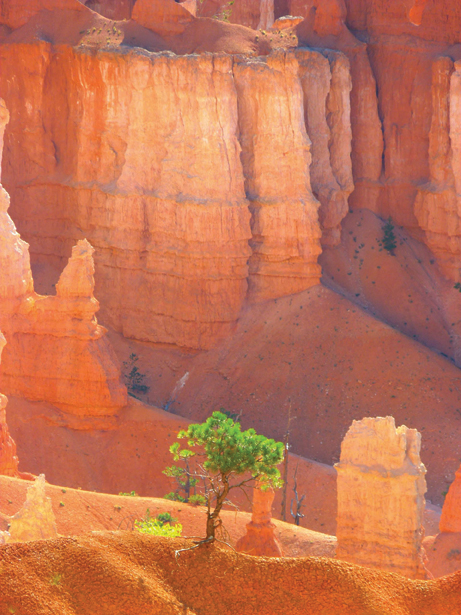
The photographs were taken this summer on an off-the-beaten-track driving adventure through the south-west USA. If you are considering a trip across the pond and would like to witness some of the less well-known scenery of the geologically diverse landscape of the States, please contact my wife and me through richard@galleryart61.com
No charge; just, hopefully, some wise advice from a couple who visit North America’s National and State Parks as frequently as possible. My wife is busy planning trip 34 as I write!
There’s plenty of guidance available out there in books and on the internet for travellers to Grand Canyon, Yosemite, Yellowstone and so on but, for value-for-money glamping in Kanab, for discovering dinosaur bones fused into Utah rock and for descending 800 feet into King’s Palace in North America’s most extensive cavern system, information is harder to find. Do get in touch – we are happy to help our fellow villagers.
So, is this art? Or just a series of holiday snaps? I’d say that the power of the image gives the answer to that question. If you’ve found yourself glued to the pictures and only skim-read the text then the image has functioned, perhaps, as art.
As ever, I hope you are finding your creative outlet and allowing it to expand your outlook and horizons. Perhaps photography may be that outlet. . .
Please get in touch if you’d like me to write about an art event near you:
richard@galleryart61.com https://www.galleryart61.com
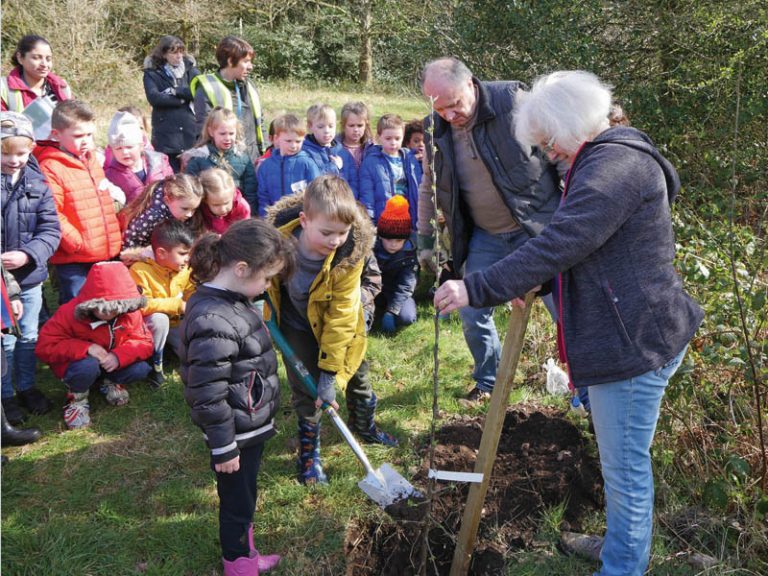
Lickey Hills Primary School pupils Sienna Anderson (aged five) and Joshua Dowling-Dutton (aged six) help Keith Woolford and Coun Jill Harvey to plant a tree in High House Wood in April 2019 (Photo/ Keith Woolford)
The volunteers who look after High House Wood in the Lickey Hills have expressed surprise and concern on learning that the land has been put up for sale.
The woodland, which is around eight and a half acres and borders the Lickey Hills Country Park and Old Birmingham Road, is privately owned but has been cared for since 2005 by a management team consisting of the owners’ agent, Lickey & Blackwell Parish Council and a local residents’ association.
The sale listing with Cottons of Edgbaston describes “a rare opportunity to purchase a parcel of woodland. . . in a highly desirable location . . .[with] development potential” and an asking price of £224,900.
Keith Woolford, of Friends of High House Wood, told The Village: “Much public money has been spent on this conservation land over the years, partly through the Open Spaces scheme and also the parish precept.
“We would like to continue managing the land to the benefit of its present inhabitants and to the enjoyment of us humans.
“The asking price seems on the high side bearing in mind its questionable development potential – being smack in the middle of the Green Belt, with Rights of Way and a blanket Tree Preservation Order covering the whole site.”
Mr Woolford, who received a “Wildlife Hero” award from Worcestershire Wildlife Trust in January for work at High House Wood, points out that many parents walk their children safely to school via the wood, and that Lickey Hills Primary School uses it for educational purposes.
Meanwhile, the graffiti-ist who spray-painted “Save Our Fields” on roads and street furniture around the Lickeys earlier this year seems to have struck again, this time at High House Wood.
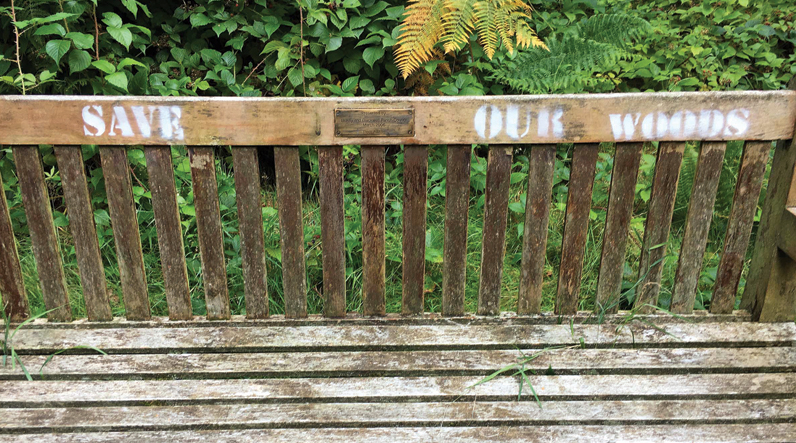
The slogan “Save Our Woods” has appeared on a bench and two notice boards, presumably in response to the land being put on the market.
Village councillors want to stop vandalism by encouraging adults to talk to young people about the costs to the community.
The plan was agreed by Alvechurch Parish Council after it heard it needed to spend more public money repairing vandalised property in the village.
After more graffiti in The Meadows, where the council recently had to repair vandalised play equipment, there was also a bill this month for £300 to replace a vandalised bus stop window on the main road.
Council chairman Marc Worrall asked: “Is this something we can ask parents to have a word with their youngsters about?
“This is a recurring theme and people start to inherit the feeling that if it has been graffitied, it encourages others to join in.”
Worzel Gummidge was the guest of honour as St Leonard’s Church in Beoley held its annual summer fete, this year with a scarecrow theme.
Scarecrows of all shapes and sizes filled the churchyard, with a competition for the best-dressed scarecrow, and an old open-topped Land Rover delivered Worzel and Aunt Sally (played by Michael Morris, proprietor of The Nursery Shop at Crabbs Cross, and his niece) to the crowd of several hundred visitors.
There was entertainment from Beoley First School and the Worcestershire Players Group, plus displays by Beoley Village Hall, Beoley Stitchcraft and Beoley Mothers Union, and the event raised more than £5,500. Organisers thanked all participants for their generosity.