Home Blog Page 786

Natural timing

0

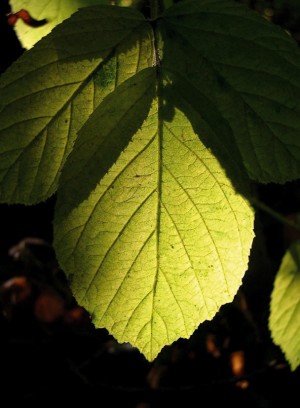
Leaf

Peter and Liz Holmes explain why they volunteered to record images of the changing seasons around Alvechurch for the United Kingdom Phenology Network.

We first became aware of the United Kingdom Phenology Network in 2002 and became volunteer “recorders” in the spring of 2003.

We have a mad springer spaniel who needs at least two hours’ exercise each day, so it is easy for us to collect the data while out walking him.

The “recordings” are under the headings; Trees, Flowers, Grasses, Birds, Insects and Amphibians so there is something to interest everyone.

What surprised us was the amount of pleasure that it gave us. We were “seeing” things completely differently! We were aware of the changing seasons but we were now watching the process on a daily basis. It seemed that for years we had been looking but not seeing.

We have always enjoyed the North Worcestershire countryside and were already familiar with many of the species we were recording. (We make our own “country wines” from ingredients gathered mostly from the hedgerows; sloes, hawthorn, elder, blackberries etc. We currently have 86 gallons of it – over 500 bottles!)

Our recording coincided with a growing interest in digital photography and we soon began recording images to supplement our weekly data records.

There are many oak trees around Alvechurch so we began to photograph four of them and one field maple three times a week from the same position, at the same time of day.

We started this in October 2004 and now have a photographic record of the complete annual cycle.

We were correct in thinking that our photographs would not be good enough but, with some very diplomatic guidance and advice from Amanda Sharp at UKPN, we soon began taking photographs that could be used on the website and in the Woodland Trust‘s picture library.

Amanda’s advice must have been good because we have just won the UKPN Volunteer Photographers of the Year award for this year. We did not even know there was such a thing! And our images are regularly used by the BBC.

Recording is easy to do online or by post, and the UKPN want as many people involved as possible. The more people who record, the more accurate the records will be and the better the predictions of the future impact on wildlife of climate change.

If you wish to join the growing army of recorders you will need either your postcode or a grid reference for the approximate area of the country where you will be recording.

Full details can be found at: https://www.phenology.org.uk or https://www.naturedetectives.org.uk for young people and those who teach and lead them.

The BBC have also become involved through their Springwatch programme presented by Bill Oddie, and are running both Spring and Autumn Watch surveys in partnership with the UKPN.

Log on to https://www.bbc.co.uk/springwatch for more, including recordings by mobile phone.

* PHENOLOGY is the study of the timing of natural seasonal events, especially in relation to climate. It is recording when you heard the first cuckoo or saw the blackthorn blossom. This can then be compared with other records.

As temperature is a key trigger for spring and autumn activity, phenology is a very sensitive indicator of the impact of climate change (changing temperatures and extreme weather events) on our plants and wildlife.

In Japan and China the time of blossoming of cherry and peach trees is associated with ancient festivals and some of these dates can be traced back to the eighth century.

Robert Marsham was Britain’s first phenologist and started recording his ‘Indications of Spring’ as early as 1736. The first individual records that have been found so far are from a Weather Diary from Rothamstead from March 1684.

In 1875 British phenology took a major leap forward when the Royal Meteorological Society established a national recorder network. Annual reports were published up until 1948.

Aware of the vital importance of continuous records, Tim Sparks, research biologist at the Centre for Ecology & Hydrology in Cambridge, started a pilot scheme in 1998 to revive a phenology network in the UK that would be both compatible with historic records and current international schemes.

In autumn 2000 the Woodland Trust joined forces with the Centre for Ecology & Hydrology to promote phenology to a far wider and larger audience.

Over 24,000 people across the UK are now actively involved with UKPN, around half of them online, including thousands of children through Nature Detectives, the junior arm of the UKPN (https://www.naturedetectives.org.uk)
Village of the Year

Entries are being invited for the 2006 Worcestershire Village of the year (sponsored by LPG company Calor).

It is open to all villages with a population under 5,000. Judges are looking for communities that work hard to make life as good as possible for villagers.

The winning village will represent Worcestershire in the Calor Village of the Year for England.

Further information from Nina Owen on 01684 573334, email .(JavaScript must be enabled to view this email address)

Council launches website

0

Lickey & Blackwell Parish Council has launched its website, including details of local events, bus timetables and progress with the Parish Plan.

See https://www.lickeyandblackwellpc.org

175 years of service

0

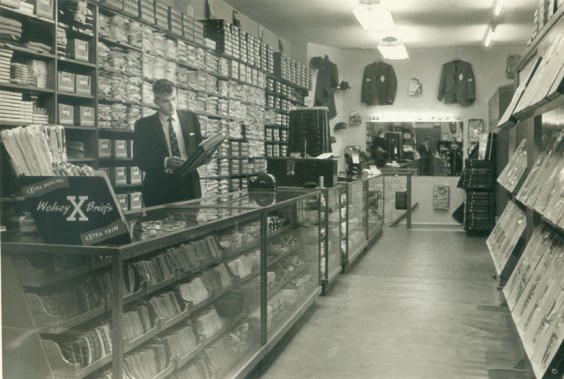
Heaphys 1962

We look back at the long and successful history of men’s fashion retailer Heaphys.

One hundred and seventy five years ago, the people of Redditch witnessed the foundation of a business that is still firmly rooted in the town.

Heaphys, the well-regarded gentlemen’s outfitters which also has branches in Warwick and Rugby, was established in Redditch following an unfortunate accident in 1831.

The company’s forebears emigrated to England from the Waterford area of Ireland over 200 years ago to escape the ravages of the potato famine and settled in Plymtree, Devon where Thomas Heaphy was born in 1797.

The family worked as “packmen”, selling lace and associated materials to the clergy on their travels northward to Worcestershire and buying needles to trade on the homeward journey.

Thomas Heaphy died in 1829, leaving the family business to his two sons, Thomas and George, who continued to trade, following the pattern established by their father. In 1830, the brothers set out on the journey to the Midlands with their stock loaded on pack horses.

Following their established business pattern, the brothers bought needles and associated goods from the thriving manufacturing industry that had grown up in Redditch and the surrounding districts and prepared for the homeward journey.

Sadly, just as the trip home had started, one of the horses got stuck in a ford and had a heart attack struggling to get free.

Unable to make the journey home together, the brothers divided their merchandise, with Thomas returning to Devon while George stayed in Redditch trading in the town and surrounding countryside.

Having established a northern base for the family business, George Heaphy set up his first stall in 1831, in an area of Redditch town centre that was to eventually become the site of the Kingfisher Shopping Centre.

He returned to Devon to marry and then moved permanently to Redditch whilst maintaining links with the family business which continued to make lace primarily for the ecclesiastical community.

As Redditch grew, so did the demands of the local community and Heaphys became a general textile business. In addition to workwear for industry, the firm supplied the needs of people working on the land, clothing for countrymen (and women), the landed gentry, the church and school wear.

Fabrics for home furnishings and floor coverings were also sold.

Throughout the 1850s, 60s and 70s, local mill owners and the Earl of Plymouth gave out clothing vouchers to church-goers at Michaelmas.

The vouchers were redeemable at Heaphys for overcoats and other winter clothing and were seen as an early example of employers taking an active interest in the well-being of their workforce.

Successive generations of the Heaphy family oversaw the steady growth of the business; moving first from the original stall in an area of Redditch once known as The Shambles, to a converted farmhouse on the corner of Walford Street and New Street (now the site of Redditch’s Kingfisher Centre).

The last member of the family to head the business was Fritz Heaphy, a bachelor who took the reigns in 1899.

Although the journey from Devon to Redditch was now a thing of the past, it is said that Fritz Heaphy still had a clear understanding of the “journey trade” and he became a familiar figure in Redditch and the surrounding districts, using the family game cart and latterly a bicycle to visit out-of-town customer.

Helped by his sisters, Fritz Heaphy continued to run the business until he was joined by Cyril Nash (grandfather of the current MD Tim Nash) in the 1930s, a working relationship that continued successfully until Fritz’s death in 1952.

During the time that Fritz Heaphy and Cyril Nash worked together the business expanded and the New Street premises were enlarged – ledgers show that 13,000 price tags were hand-sewn into garments each year and that the shop was the official clothing supplier to 37 local schools.

In 1963 the business moved to new premises in Redditch’s Church Green, a property it still occupies today, and is used as both a retail showroom and also the base for the company’s accounts and administration departments.

When the first phase of development of the Redditch Kingfisher Centre took place, Heaphys was one of the first companies to open for business, coincidentally on a site very close to the original spot where George Heaphy had his first stall in 1831.

The past 20 years have seen the retail clothing business change at a great pace; the seemingly endless expansion of the multiples, catalogue and internet-based retailing and even supermarkets offering menswear – but despite this, Heaphys has continued to grow and prosper.

1985 saw the opening of a new shop in Westgate House in Warwick, which was followed in 1988 by a shop in Sheep Street, Rugby.

Despite the changes in the retail environment, Tim Nash is excited about the challenges and opportunities that the future will bring: “The business was established on the principles of George Heaphy – an honest, hard-working non-conformist with a belief in fair trading.”

Heaphys has customer service and strict attention to detail at its core, but this should not be confused with the business being “old fashioned” in its approach.

In addition to ongoing investment in training for staff, the company has invested heavily in computer technology to keep in touch with suppliers and customers, has developed an e-business site for clients who wish to shop online, and refreshes window displays as a matter of course.

Marketing well-designed, well-made men’s clothing remains at the heart of the Heaphys proposition and this is complemented by niche services not necessarily offered by competitors.

In addition to off-the-peg menswear, Heaphys offers a bespoke “made to measure” tailoring service for both men and women, both for formal and business wear.

Also, and almost uniquely, Heaphys supplies bespoke clothing for country sports and is one of the most reputable suppliers of clothing for riding, dressage, falconry and hunting.

Tim Nash continues: “Heaphys has come a long way in the past 175 years and I believe that we can look forward to the next 175 with confidence. There have been many changes to the scope and nature of our business all of which I regard as an ongoing, evolutionary process.

“I am sure that we will embrace future developments, and maybe even drive some of our own in the same spirit as our founder.”

Heaphys
Church Green West, Redditch, B97 4DY
Tel: 01527 62097

Pictured: Heaphys, circa 1962

Curry night raises £3,000

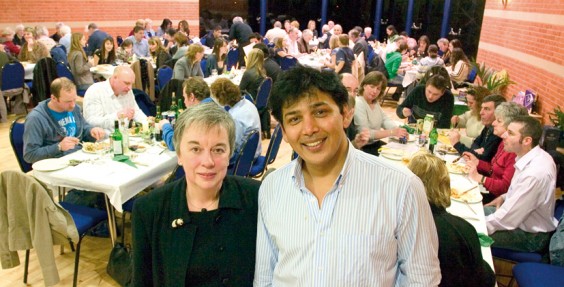
Joyce and Sunil

A curry night with charity auction organised by Joyce Colledge, of Alvechurch, saw more than 100 people tucking into great food at The Ark and raised more than £3,000 for Andy’s Fund.

Joyce was given great support in the last-minute organisation of the event by her friend, Gill Cure, of Alvechurch, who helped to sell tickets and brough in more than half the auction prizes.

Joyce’s boss, Sunil Poduval, provided and cooked the food for the evening, helped by his wife Kay and daughters Sophie and Amy, while his friend, Dave Pope, provided starters and puddings and made a great Master of Ceremonies for the auction. One prize – a sailing weekend – went for £575.

Joyce, who lives close to Andy and his family, said organising the event was the least she could do to help after hearing about Andy’s road accident.

* Dave Hodgins and Andy Cramp raised £300 for Andy’s Fund by completing the Tough Guy Challenge.

Above: Joyce and Sunil

Inclined to agree

0

Bertha

The article “Rail history for sale” (The Village, February 2006) is like the curate’s egg – good in parts.

In the 1930s, I and my family often travelled to Worcester and back via the Lickey Incline. During the War I visited friends in Blackwell and both had houses adjoining the station, one each side of station road, so I have personal experience!

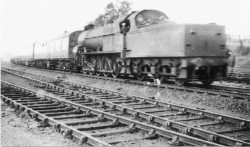
It was not just the incline that brought people to watch, but a really huge banker, Big Bertha, famous all over the country for both size and power.

There was no change of engines. Your train stopped at the bottom of the incline at Bromsgrove and a banker came up behind it.

The slight bump as it touched the last carriage – normally the guard’s van – coincided with the train’s own engine starting, and up you went.

On very long, heavy trains, usually two ordinary bankers were used: one behind the other to push the train up the incline. Big Bertha normally did it alone.

At Blackwell (a passenger station then much used by commuters to Birmingham) it stopped to allow passengers to get on or off, then continued to Birmingham.

The bankers then moved via the points to the loop line taking them back to the bottom of the incline, Bromsgrove, ready to change lines and push the next train up.

The long drive at the side of Blackwell station led to what was once the convalescent hospital for patients from Birmingham hospitals who needed time to recover, but not nursing care.

Their visitors came by train; no regular bus service in the area then.

In wartime, wounded soldiers were sent there, via hospital trains, to recover, too.

Goods trains, which also needed bankers, stopped to deliver coal and possibly other goods to a coal merchant who also handled hay, corn and wine. He had a yard right against the rail lines.

In wartime, tremendously long heavy ammunication of weapons trains needed extra help as even Big Bertha could not always manage alone. So in addition to the bankers which pushed, one might be linked in front of the train’s own engine.

To allow this one to return on the loop line, the train had to stop just before the points, then the front banker left, the train moved on again and the other bankers peeled off as usual.

Whether the loop line still exists, I don’t know. It may have gone the same way as the cattle sidings at Barnt Green when the markets finished.

But if, as the article says, Saltley sends 66 locomotives for heavy trains, presumably it may? Or would they send one engine to Bromsgrove to push the train up and then follow it back to Birmingham?

V Greaves
Barnt Green

Do you remember Big Bertha or, better still, have any memorabilia related to her? Read more here.

Pictured: Big Bertha at work on the Lickey Incline – snapped by Geoff Chandler in the summer of 1955.

Artrix: Bromsgrove’s best-kept secret?

Artrix

Sally Oldaker discovers that there’s plenty going on at the town’s flagship arts centre.

If you were not aware that Bromsgrove has a new arts centre showcasing theatre, cinema and a wide variety of interactive events, you’re probably not alone.

When it first opened, Artrix seemed to have difficulties in advertising itself to the general public, and with a lack of information – particularly in the way of signposting – much of the target audience remained in the dark as to the facility’s whereabouts, let alone its attractions.

An Open Day in September 2005 went some way towards remedying this, and Artrix now claim that the majority of people, at least in Bromsgrove, do know that Artrix exists and how to find it.

“This second opening was a great success – we had Darth Vader, stormtroopers, a clown for the children, and a pig roast!” says the centre’s administrator, Vicky Cieciora.

“A full programme then began in September, and the live shows with Pam Ayres and Jeremy Hardy were both sell-outs.”

Local groups such as Bromsgrove Operatic Society and All & Sundry have also performed at Artrix, and pupils from Bromsgrove School staged a sell-out production of Les Miserables in November, attracting many members of the public with no particular links to the school.

“The aim is to provide something for everyone,” Vicky explains. “We want to bring to Bromsgrove shows and films that people might not otherwise get the chance to see, such as the programme of foreign films – even if Artrix makes a loss on certain events, it’s important to offer a range of experiences.”

As you might be able to tell from its ethos, Artrix is not just a commercial organisation, but a registered charity with educational and community values.

Workshops for children and a forthcoming educational outreach programme encourage youngsters to express themselves through drama and language, and an especially interesting feature is the Language in Action classes, where children aged four to 11 learn French, Spanish and German through role play and music.

Workshops for adults are also proving popular, for example the one-off Tango and Flamenco workshops and Guitar for Beginners. Performing arts students from the next-door NEW College also use Artrix on weekdays – the facility is a joint venture between the college and the council, although fully independent.

The building features not only a theatre but also a separate studio with portable low-level staging for small productions, plus several meeting rooms and a dedicated theatrical hair and makeup room equipped by NEW College.

The wide corridors provide an ideal space for art exhibitions; currently on display are local scenes from the Tennyson Collection, and the venue also lends itself to larger installations.

The theatre has a large video wall, and there are plans for this to be linked to another screen in the spacious foyer, so that live music performances can be beamed through to a second audience.

“There are safety restrictions on how many people can sit in the theatre, so the video link would allow more people to see a performance,” says Vicky.

It may come as a surprise to learn that the theatre – originally designed as a recital hall – boasts acoustics designed by the same person who created Symphony Hall’s state-of-the-art system.

“People coming here for the first time are pleasantly surprised that Bromsgrove has a facility of this standard,” Vicky adds.

The theatre seats an audience of 301 in tiered and balcony seating, and can be adapted for different events: during my visit, the first three rows of seats had been removed to make way for an extended orchestra pit.

“The seats can also be moved if a flat floor is required for a live band, or for an ‘in the round’ performance,” Vicky points out. “It’s a very versatile space, but we really need a hydraulic system to move the seats – it’s a hell of a job to do it manually!”

The equipment would cost an estimated £60,000, money that Artrix simply doesn’t have at present. Funded through operating grants from Bromsgrove District Council and Worcestershire County Council, the centre is looking for extra sponsorship, and the directors have applied to the national Arts Council.

Artrix is largely staffed by volunteers to save costs: “There is a small core of staff, but the volunteers play a big part – we couldn’t afford to run the centre without them,” Vicky says.

The last couple of months have included a programme of shows likely to attract large audiences, such as the immensely popular Sing-a-long-a-Sound of Music and recent hit films like Pride & Prejudice and Chronicles of Narnia.

Workshops ranging from breakdance and tap to samba and stage fighting show the diversity of events on offer.

Upcoming performances include alternative comedy from Mark Steel on March 10, plus three tribute bands – Counterfeit Stones on April 7, U2UK on April 20, and Whole Lotta Led on May 20.

Ralph McTell is in concert on April 15, while workshops for jazz dance, street dance and adult drama continue into March and April – see the website for full details.

Artrix Centre
School Drive, Bromsgrove
01527 577330
https://www.artrix.co.uk

Artrix can be reached by car via the Brewsters roundabout on the A38 Bromsgrove Eastern bypass, with ample parking available adjacent to NEW College. The venue can be reached on foot from the town centre via School Drive.

Young Village Photographer!

Capture the essence of Mother’s Day to win a digital camera for your school and a professional, framed family portrait.

To celebrate Mother’s Day we are looking for budding young village photographers to show us your creativity and have a chance to win great prizes for both your family and your school.

All you have to do is take a photo of something that sums up Mother’s Day for you and send it in by email or by post.

It could be as simple as a picture of your Mum . . . or anything you like that makes you think of her.

The two winners will each receive a sitting for a family portrait courtesy of Michael Stuart Photography, of Bromsgrove, and this portrait will be beautifully framed by Picture This and the Art Café, of Barnt Green.

PLUS each winner will also receive a Fuji FinePix A350 5.2 megapixel digital camera (subject to availability) for their school, courtesy of Michael Stuart Photography – and we’ll also take and publish a picture in The Village magazine of the winners handing the cameras over to their schools.

The winning entries and a selection of all of the entries will also be published in The Village magazine.

The judges will be Craig Arnold, of Michael Stuart Photography; Gary Parker, of Picture This and the Art Café; and Richard Peach of The Village.

We need your entries by April 7 2006 in two categories, one is for 11 years and under and the second for 12-16 year olds.

Email your entries to: .(JavaScript must be enabled to view this email address)

or post them to:
Young Photographer
The Village
16 The Square
Alvechurch
Birmingham B48 7LA

Please include your age, address and contact telephone number.
Closing date for entries: April 7 2006
(Usual Village rules apply and the Editor’s decision is final)

Chronicles of the Cut

0

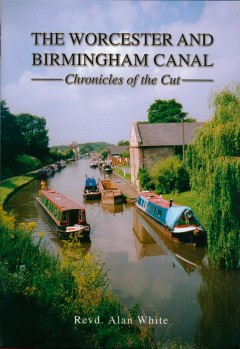
Book cover

The latest book by the Rev Alan White will appeal both to canal enthusiasts and to those with an interest in local history.

The Worcestershire and Birmingham Canal: Chronicles of the Cut is a comprehensive history of the 30-mile canal, built between 1791 and 1815, stretching from Gas Street Basin, Birmingham, to the suburbs of Worcester.

Rev White, who is the Historian of the Worcestershire and Birmingham Canal Society and also served as Priest-in-Charge of Tardebigge Parish through which the canal runs, has researched its history over the past 30 years as time has allowed.

This incredibly detailed book includes insights into the construction, management, administration and various uses of the canal, as well as its impact on the people who lived and worked alongside it.

Chronicles of the Cut is available from Ottakars on Bromsgrove High Street, from https://www.brewinbooks.co.uk, or from Rev White – call 01527 877955.

* In our April issue we’ll be featuring some of the stories and images from the book.

Story of the drawbridge

0

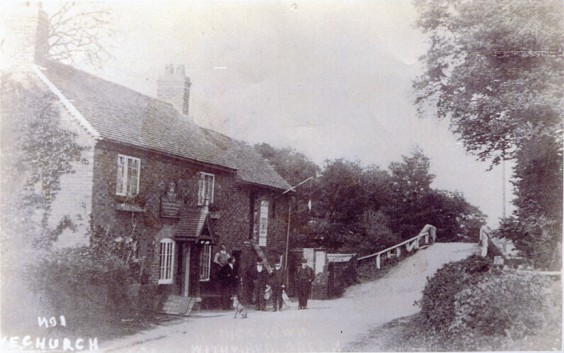
Crown Inn

Ian Hayes traces the history of the Crown Inn at Withybed Green, and the canal drawbridge that gave it its unofficial name.

Before the coming of the Worcester & Birmingham Canal in about 1806, Withybed Green, Alvechurch, consisted of three cottages along Birches Lane and on the edge of a green. A stream was dammed to form a pool and at various times this small area was described as a “withy bed”.

To accommodate the obviously limited traffic to this small community, the canal company constructed a drawbridge on the lane leading to the green.

This was much cheaper than a brick bridge and consisted of a deck, at bank level, which could be lifted vertically by gears up four posts, using a windlass. When raised there was sufficient headroom for boats to pass beneath.

Rev Alan White, in his recently published book Chronicles of the Cut, says it was sometimes the practice for boaters heading for Tardebigge, and having passed the bridge, to release the deck, bringing it crashing down so as to delay the boats behind.

Not unnaturally the bridge was in a ruinous condition by 1816 and in 1839 the canal company was considering replacing it with a cast iron bridge with brick abutments.

However, the drawbridge, sometimes known as the “Heave-Up”, was not finally replaced until 1880, giving the original contraption a life of nearly 75 years.

Meanwhile, the hamlet of Withybed Green had grown. By 1840 the block, now known as Forward Cottages, housed six families, most of them canal folk.

Moses Perks, shoemaker, built a cottage on the green (now called New Smithy) and next to him was established the Crown Inn, with landlord John Wolfindale, who was also a member of a canal family.

The Crown served as a refreshment stop for boatmen and there was a stable for horses. Although the pub was officially called The Crown, it became known amongst the canal fraternity as “the Drawbridge” after the adjoining structure across the canal.

With the decline in traffic along the canal The Crown could well have hit hard times, but the provisions of the 1830 Beer Act, whereby sellers of beer were exempted from applying for a licence, no doubt eased the situation.

The repeal of the Act in 1869 caused many beer houses to close, but The Crown happily survived, and in 1873 the landlady was listed as Mrs Beckinsale.

Some time after this the pub was acquired by Edwin Smallwood, a prosperous needlemaker and co-founder of the Smallwood Hospital at Redditch. On his death the pub was bought by William Townsend and the valuation of the mortgage in 1893 makes interesting reading:

“All that freehold Beerhouse known as the Drawbridge Inn, with outbuildings and garden situated near the Canal at Withybed in the Parish of Alvechurch in the County of Worcester, in the occupation of Mr W Townsend the owner. The property is in fair repair and without the licence would be worth about £300.”

There is, therefore, at least one document which refers to the establishment by its alternative name. However, by 1905, when the Whitby family took over, the pub had regained its former name.

As to the bridge, Withybed’s only link with the outside world, apart from the canal, it was extensively strengthened a few years ago and has now survived 126 years. However, one wonders how the old drawbridge would have coped.

We are indebted to Alvechurch Historical Society for information, and would thoroughly recommend Alan White’s book, which is a mine of information on all aspects of the canal.