
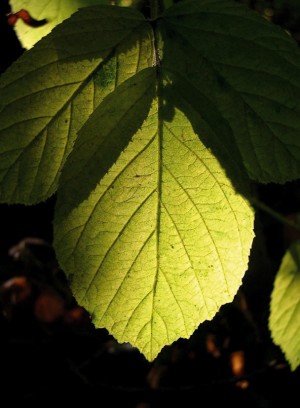
Peter and Liz Holmes explain why they volunteered to record images of the changing seasons around Alvechurch for the United Kingdom Phenology Network.
We first became aware of the United Kingdom Phenology Network in 2002 and became volunteer “recorders” in the spring of 2003.
We have a mad springer spaniel who needs at least two hours’ exercise each day, so it is easy for us to collect the data while out walking him.
The “recordings” are under the headings; Trees, Flowers, Grasses, Birds, Insects and Amphibians so there is something to interest everyone.
What surprised us was the amount of pleasure that it gave us. We were “seeing” things completely differently! We were aware of the changing seasons but we were now watching the process on a daily basis. It seemed that for years we had been looking but not seeing.
We have always enjoyed the North Worcestershire countryside and were already familiar with many of the species we were recording. (We make our own “country wines” from ingredients gathered mostly from the hedgerows; sloes, hawthorn, elder, blackberries etc. We currently have 86 gallons of it – over 500 bottles!)
Our recording coincided with a growing interest in digital photography and we soon began recording images to supplement our weekly data records.
There are many oak trees around Alvechurch so we began to photograph four of them and one field maple three times a week from the same position, at the same time of day.
We started this in October 2004 and now have a photographic record of the complete annual cycle.
We were correct in thinking that our photographs would not be good enough but, with some very diplomatic guidance and advice from Amanda Sharp at UKPN, we soon began taking photographs that could be used on the website and in the Woodland Trust‘s picture library.
Amanda’s advice must have been good because we have just won the UKPN Volunteer Photographers of the Year award for this year. We did not even know there was such a thing! And our images are regularly used by the BBC.
Recording is easy to do online or by post, and the UKPN want as many people involved as possible. The more people who record, the more accurate the records will be and the better the predictions of the future impact on wildlife of climate change.
If you wish to join the growing army of recorders you will need either your postcode or a grid reference for the approximate area of the country where you will be recording.
Full details can be found at: https://www.phenology.org.uk or https://www.naturedetectives.org.uk for young people and those who teach and lead them.
The BBC have also become involved through their Springwatch programme presented by Bill Oddie, and are running both Spring and Autumn Watch surveys in partnership with the UKPN.
Log on to https://www.bbc.co.uk/springwatch for more, including recordings by mobile phone.
* PHENOLOGY is the study of the timing of natural seasonal events, especially in relation to climate. It is recording when you heard the first cuckoo or saw the blackthorn blossom. This can then be compared with other records.
As temperature is a key trigger for spring and autumn activity, phenology is a very sensitive indicator of the impact of climate change (changing temperatures and extreme weather events) on our plants and wildlife.
In Japan and China the time of blossoming of cherry and peach trees is associated with ancient festivals and some of these dates can be traced back to the eighth century.
Robert Marsham was Britain’s first phenologist and started recording his ‘Indications of Spring’ as early as 1736. The first individual records that have been found so far are from a Weather Diary from Rothamstead from March 1684.
In 1875 British phenology took a major leap forward when the Royal Meteorological Society established a national recorder network. Annual reports were published up until 1948.
Aware of the vital importance of continuous records, Tim Sparks, research biologist at the Centre for Ecology & Hydrology in Cambridge, started a pilot scheme in 1998 to revive a phenology network in the UK that would be both compatible with historic records and current international schemes.
In autumn 2000 the Woodland Trust joined forces with the Centre for Ecology & Hydrology to promote phenology to a far wider and larger audience.
Over 24,000 people across the UK are now actively involved with UKPN, around half of them online, including thousands of children through Nature Detectives, the junior arm of the UKPN (https://www.naturedetectives.org.uk)
