Home Blog Page 771

Churchyard is beautiful

0

Re: overgrown graveyard (Village Views, July/August): Once again, we have relatives from the suburbs complaining about what, after all, is a beautiful country churchyard.

Possibly the lady from Coventry doesn’t appreciate the wonderful wildlife we have at St Laurence?

I have lived here all my life and walk through the churchyard every day to go to the village shops and I have never seen it looking so cared for. Well done to our team of volunteers.

Finally, to talk about hurt and devastation when referring to long grass – well, I’m speechless! For me, that’s really something.

Janet Hosking, Alvechurch

Sort parking or village will die

0

Further to the article “Balancing Act for Barnt Green”: I was horrified by the remark: “we will only know the actual story if closing down signs appear in the shop windows”.

Surely it is the writer’s duty, as well as the shopkeepers’ themselves, to see that this does not happen? We in Barnt Green are fortunate in the type of shops that we have, and it would be the death of the village if closures were allowed to happen.

Being over 65 I have been privileged in the past to receive free parking in Bromsgrove. This privilege has now been withdrawn.

I can see the difference in Bromsgrove already. Previously it had been very difficult to park in the Asda area car park. No longer: there are plenty of spaces.

We have decided to boycott Bromsgrove. Park free in another supermarket once a fortnight, and visit Barnt Green for most everything else. Many of our friends are doing the same.

Bromsgrove will suffer. Already many shops are empty. Does the Parish Council wish the same for its village?

Be proactive and do something about the parking problem – don’t wait until no one bothers to visit the village.

Anne Eagle, Blackwell

Erratum

0

In the last issue, we gave an incorrect phone number for contacting Roy Yardley, chairman of Alvechurch FC, about his book on the club.

The correct number is 01527 62418.

Lawns anniversary

The Lawns Residential Home is celebrating the 150th anniversary of its landmark building in Alvechurch with the official opening of its new conservatory.

The opening, on September 8, will be performed by Bromsgrove MP Julie Kirkbride.

Vandals destroy Lickey memorial benches

Vandals have damaged or destroyed at least five memorial benches placed by families in the Lickeys to remember loved ones.

Police say the damage, only recently reported, was believed to have taken place around the first week of the school holiday.

All the benches had brass plates and were at various points around the Lickey Hills Country Park.

A police spokesperson said: “These memorial benches will cost several hundred pounds each to replace but this is not really the issue here.

“Families have carefully placed the seats in the park to remember their loved ones, often scattering their ashes nearby.

“This type of incident causes them further distress and we would urge anyone with any information at all to help our enquiries to give us a call.”

Call Rubery police on 08457 444 888 or Crimestoppers anonymously on 0800 555 111.

Currant affairs

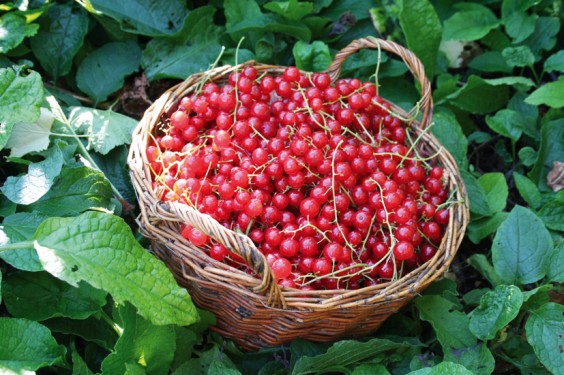
Redcurrants

Growing your own soft fruit is a berry good idea, explains Hannah Genders.

As you know, I am a keen vegetable gardener and often sing the praises of home-grown produce in these articles.

I am also a keen fruit grower, particularly of soft fruits, and thought I would encourage you to have a go at this if you have never tried growing fruit before. Autumn is the ideal time to plan and plant your fruit garden.

I have an odd-shaped garden at the front of my house with a corner plot that most sensible people would turn into a garage, but I decided to make into a fruit garden.

It is an ideal plot as it gets full sun and is sheltered from severe winds by privet hedging – these are the first factors to consider if you want to start a fruit area.

I built raised beds and laid membrane and gravel paths between. If you want to try growing raspberries you will also need to add support for the bushes, and this is best done with strong upright poles into the ground (a four-inch rustic round looks good) and wire pulled tight between them.

The reason for this is that with raspberries, the fruit grows on this year’s growth and the new growth holding the fruit needs to be tied in each season.

Once you have your bed marked out and the poles in place, buy your raspberry plants from a good nursery either in pots or bare root from October onwards. Do try some of the older varieties and put in some autumn fruiting ones to extend the season – about half a dozen bushes will give you plenty of fruit.

Apart from choosing a sunny, sheltered site, make sure the plants have a good feed each year with well-rotted manure or compost and cut the old stems to the ground each autumn, then tie in the new growth that will produce your crop.

Raspberries are one of the easiest soft fruits to grow and are always expensive in the shops and local markets.

You can’t go too far wrong with a few currant bushes either – choose from redcurrants, whitecurrants or blackcurrants.

I have two redcurrant bushes and one blackcurrant and these produce pounds of fruit each year; their needs are the same as raspberries apart from the pruning.

White and redcurrants are the same with a winter pruning involving shortening the side stems, but blackcurrants are the odd ones out as they require a hard prune – one third of the stems need removing to ground level. Most good gardening books will show you diagrams on this procedure.

I use my redcurrants for making redcurrant and mint jelly which is excellent with chicken dishes and quiches. The blackcurrants I use in jam, and a trick learnt from my mum is to add a little brown sugar when making the jam, which gives it a lovely caramel flavour.

Some people cage their fruit to stop the birds helping themselves – I don’t, because my garden always seems to produce enough for us, the birds and a few friends to share.

The other important ingredient in a fruit garden is the insect life. You can encourage this, as I do, by allowing flowers like honeysuckle and foxgloves to grow in the borders and putting in a home for solitary bees.

It provides a habitat for the Red Mason bee which is becoming increasingly rare.

I have already made about ten pounds of redcurrant jelly and this year we had our first crop of gooseberries from plants put in last autumn.

My husband Mike made an excellent gooseberry and ginger jam with those – he really is a “new man”! I was very impressed.

* Nurseries supplying fruit bushes:
https://www.keepers-nursery.co.uk
https://www.trees-for-life.com

* Pruning information: 
https://www.bbc.co.uk/gardening/basics/pruning
https://www.rhs.org

Extra security for your home

Cameras

CCTV cameras can protect your property – and they don’t cost a fortune, says Terry Williams.

There is a general perception that the use of CCTV cameras has no place in a domestic situation. Most people seem to think that by putting up cameras around their house they are advertising that they have goods worth stealing.

Others, having seen CCTV footage on the television, think the quality of the recordings is too poor. There can also be concerns about what the neighbours may think of cameras being installed next door.

However, most of these issues are due to ignorance of modern technology and the equipment presently available.

If a householder is concerned that cameras may increase the chance of being burgled, both external and internal miniature cameras can be used. This type of product, when correctly installed, is invisible but still gives excellent picture quality.

Most houses offer rich pickings to the thief – TVs, DVD players, microwaves, cameras etc. What CCTV does very well is act as a deterrent and direct the thief to look for an easier target.

The subtle use of small visible cameras plus security lighting usually does the trick. Criminals do not want to get caught and, far from advertising your goods, you are really saying: “We take security seriously!”

With digital CCTV the quality of the recordings is excellent. Switch the recorder on and it keeps recording until its drive is full, then it starts again with no interference from the owner.

Picture quality is affected by poor cameras and positioning – you definitely get what you pay for, so get the best you can afford from a good dealer.

If the camera is positioned too high, all you get is an overall view and the tops of heads. If you want facial detail the camera needs to see the face.

Poor quality footage usually comes from worn out tape systems, not digital equipment.

Discuss the project with your neighbours, show them where the cameras will be located and explain that their privacy will not be invaded (this would be against the law anyway – you can only monitor your own property).

Most neighbours usually warm to the idea as it increases the security of the whole area. 

Some householders use CCTV to ensure that outside helpers correctly look after elders or youngsters. It can be used to gather evidence in cases of harassment, intimidation or vandalism, to protect specific areas or to show you who is at the door.

Bogus and nuisance callers do not like being recorded, and cameras can reassure old people living on their own. Parents often like to be able to monitor children playing in the garden. We have installed systems that also monitor the local wildlife, with interactive pan, tilt and zoom cameras.

CCTV systems come in various forms and are usually connected via the existing aerial system to all the TVs in the house. This allows access to the pictures by changing channels.

Another benefit is the ability to view the footage over the internet (broadband preferred) on suitable phones or computers when you are away from home. You can arrange for a monitoring station to alert you via email, including camera footage, if someone enters the house or the burglar alarm goes off.

There are several different types of DVR (Digital Video Recorder) ranging from stand-alone units to PC-based units. Customers can purchase software to convert their own computers if they wish.

A four-port stand-alone DVR with remote control and 250G hard drive will cost from £350.

Good quality external Sony CCD cameras that are colour in the day but switch to mono at night start at £120. Ordinary colour CCD cameras start at £49.

Avoid cheaper CMOS cameras (usually around £20 each) as the picture quality tends to be poor, especially in low light.

Wireless cameras are also available but performance can be disappointing unless line of sight is provided – useful in garden sheds and for cameras at the gates of a long drive.

DIY installation is straightforward and most suppliers offer telephone support. However, most companies offer a professional installation service.

Domestic CCTV need not cost a fortune – a bit of extra security is sensible and may even reduce insurance charges.

Terry Williams is Managing Director of Lickey End-based Shepley Computers & CCTV.
If you have any computer-related questions you would like him to answer in future columns, please email them to: .(JavaScript must be enabled to view this email address)
For more information on CCTV and PCs and links to related sites, see: https://www.shepleydirect.co.uk
Pub’s award brings cash for charities

Crown team

The Crown at Alvechurch was able to benefit three local charities after finishing as runner-up in a prestigious national competition.

The pub was one of 16 finalists from across the UK in the Punch Taverns Shine Awards, which recognise excellence in community spirit and customer care as well as the quality of drinks and food on offer.

Customers voted for their favourite venue via phone or text message, and those votes were later translated into pounds, giving licencees Tricia and Dave Fisher a total of £4,632 to donate to the charities of their choice.

Andy’s Fund, the Where Next? Association and the Acorns Children’s Hospice each received one third of the total figure.

Above: Tricia Fisher, Nigel Evans (Acorns), Dawn Dearden (Andy’s Fund), Graham Clark (Where Next?) and Dave Fisher, outside the Crown at Withybed Green.

Make the most of retirement

0

ADVERTISEMENT FEATURE

Terry Reed explains the benefits of using ‘drawdown’ to make the most of pension income.

When retirement comes, the traditional route is to use an accrued pension fund to buy an annuity, but I think it is fair to say that this is also one of the most frequently criticised aspects of pension planning.

The advantage is that the annuity provider will guarantee the income throughout your retirement, and so future investment returns do not matter. This is safe, but there can be problems. 

You must decide whether to add in additional benefits, and these come with a cost – namely, a lower income for you! It might help to give some examples, based on a married couple, both aged 65, based on a pension fund of £100,000.

The following are examples of some of the annuities available to them now:

* No spouse pension and no annual increases: £7,100 pa
* 50 per cent spouse pension included but no annual increases: £6,520 pa
* 50 per cent spouse pension and three per cent annual increases in payment: £4,640 pa

From the examples given you can see that adding additional benefits means a lower pension, at least in the early days. Annuity rates tend to follow interest rates, so they are low at the moment, but will they improve? 

One established alternative to buying an annuity is commonly known as “drawdown”. Here, there is no need to buy an annuity because you continue to have your accrued fund invested and draw income from it.

There are a number of advantages, particularly that the whole fund is available for your spouse in the event that you die first and there is no reduction in income for you to provide them with this benefit. Secondly, it is possible to pass on the fund (less tax) to your children after both you and your spouse have finished with the money. 

Income could be higher from drawdown, and can certainly be taken in a more flexible way, in that you can reduce it or take none at all (to age 75) if this suits you.

The maximum income you can take is restricted, but will generally be higher because the limit is based on an annuity rate for a single person. The real question is, what is a sensible amount to take?

The answer is based on realistic expectations of future growth; for example, you might take seven per cent (£7,000) income but if investment returns are, say, five per cent, then the balance fund value will fall, and in the long run pension income will reduce.

Drawdown plans have annual charges that also need to be covered. This would mean that someone requiring seven per cent income would actually need their plan to produce more growth than this if the balance fund was to stay level.

Most of our clients take between five per cent (£5,000) and six per cent (£6,000) per annum, but the best way is to take a reasonable income and review this from time to time, perhaps taking additional amounts out when investment returns are strong. The maximum allowed is reviewed every five years. 

The danger with drawdown is that there is no guaranteed income, unlike an annuity. If investment returns are poor the fund value will fall and so, consequently, will your income. 

Those who require a higher income may need to take a higher level of risk with their investment portfolio. This means that if this is the option for you then you must have a properly invested portfolio, and this will need regular reviews and updates.

In general, the drawdown option is for those with larger funds, perhaps with other investments allowing them to afford the risk. There are lots of traps and pitfalls – the best way to explore all the options is to speak to a financial adviser.

Terry Reed is Technical Director at AFH Independent Financial Services Ltd in Bromsgrove. You can contact AFH on 01527 577775 for advice on a range of investment matters – initial consultation without charge or obligation.

If you go down to the wood today…

0

Grand opening

…you’ll see how a small area of the Lickey Hills has been vastly improved for visitors, explains Keith Woolford.

The Lickey Hills, a magnet for the tram and charabanc of yesteryear, still remain a draw for the visitor throughout each season, offering much diversity of flora and fauna.

A small, privately-owned area hidden away near the Monument had been left relatively untouched for many years and has recently been given a sympathetic spring clean.

The make-up of distinctly wood and field has changed over the last 80 or so years, with many local memories even recalling a football pitch on the field complete with water tap.

Others remember an orchard, but certainly much more open space than this time nine months ago.

The owners of High House Field and Lyn Wood, now formally known as “High House Wood”, had decided initially to employ a management company to ensure that visitors were as safe as possible from potentially hazardous trees.

The site borders Lickey Hills Country Park on the northern boundary, Old Birmingham Road on the east side and High House Drive to the south and west.

High House Drive, an unadopted road with an established residents’ association, has always been active in maintaining the bordering hedge and helping to keep paths open.

Lickey and Blackwell Parish Council also played its part, benefiting everyone who ventured to this neck of the woods.

A steering committee of local interested parties, representing residents, the parish council and the owners, was formed to assist in a management plan.

There followed a successful grant application to the Office of the Deputy Prime Minister under the “Open Spaces” initiative and we started work to improve the site sympathetically.

I make no bones in having used this word again in describing the care taken over its enhancement. The area now allows a feeling of space, with the thick vegetation and dense foliage cut back to encourage new growth, butterflies and wildlife.

One of the principal conditions of the grant was that the work must be completed by February this year and, under the guidance of Andrew Woods from Abbey Forestry, this was accomplished whilst contending with winter making its annual appearance.

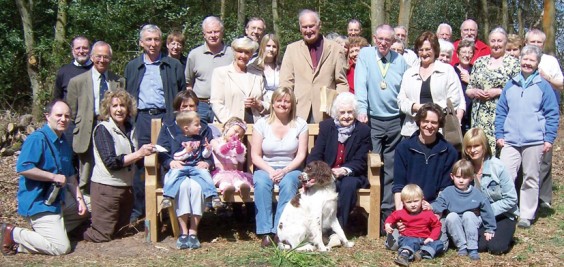
The formal opening of High House Wood, with the sun breaking through a canopy of new leaf, was very well attended. Ron Brown, parish council chairman, kindly did the honours by cutting the ribbon on the bench donated by the council in the “glade” area of the woods.

Special guests included Judy Sleet on behalf of the owners, plus local residents Mary Aldred and young Ellie Cashmore representing the established and the new growth of High House Wood.

There are tree tags to help identify an oak from a holly and information posts offering the inquisitive visitor an insight into this rejuvenated area. We have already organised a party from Lickey Hills Primary School with the pupils able to discover more about their local environment.

The future will be an interesting one for this small but delightful part of the Lickey Hills. We hope it will now be even more secure against the advances of brink and slate.

Above: Steering committee members, councillors and residents at the opening.