Home Blog Page 748

Veterans remember VE Day

Veterans

Arthur Pearsall, Chairman of the Alvechurch Ex-Services Association, writes:

Veterans gathered at the Memorial Green on Bear Hill, Alvechurch, on Tuesday May 8 – the 62nd anniversary of VE Day (Victory in Europe Day).

Very sadly this day is largely forgotten, but it was a day which those of us who celebrated in 1945 will never forget, as it marked the first stage in the ending of WW2.

Members of the Association are very proud of our WW2 veterans and were privileged to stand with them as they recalled the many dark times they experienced before the guns fell silent on the European Front.

Comrades who did not see VE Day were particularly remembered as it was their sacrifice which enabled us all to celebrate that memorable day so long ago – and as we should now.

The gathering spent a few minutes in silent reflection of our need to remember, before the playing of the Last Post, the Silence Exhortation and a minute’s silence with the Kohima Epigram rounding off proceedings.

Veterans finished the day by retiring to the Weighbridge pub for well-earned refreshments and to swap a few yarns!

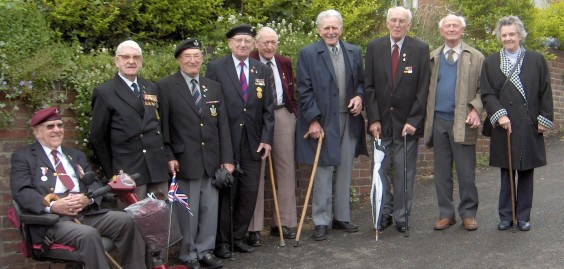
Above: WW2 veterans Harry Houghton, Bob Jones, Ron Jones, Ted Hobson, Horace King, Fred Bradford, Len Taylor, Charles Drinkwater and Beth Hopton.

Inspired by a noble history

Kyteless building and Memorial Chapel

Bromsgrove town centre hides a big surprise – all 100 acres of Bromsgrove School, discovers Richard Peach.

For a visitor walking around Bromsgrove, it can sometimes feel like a large chunk of the town centre has disappeared into another dimension . . . the place really should be much bigger than it is.

Head south from the high street and suddenly there’s just one road where you might expect many. What’s happened to all that land between Worcester Road and the bypass to the east?

And while you don’t need the services of Dr Who’s Tardis to find the answer, it is still quite an eye-opener to discover Bromsgrove’s “hidden world”.

Climb the steps into the grounds of Bromsgrove School, past the Thomas Cookes building overlooking Worcester Road, and you really are entering another place; a whole dimension of the town opens out and spreads before your eyes for nigh on 100 tranquil acres.

The building you have just passed was the first on this site, albeit a storey shorter, in 1695 and was the original schoolhouse of the “New School” of Bromsgrove, re-founded by Sir Thomas Cookes in 1693 (see below for an unlikely tale as to his motives for saving the school).

Before this, the school had existed for around 200 years in a number of locations around the town, but from this firm base, the school grounds expanded to become the tree-lined vista they are today.

As it grew in area, the school also grew physically with the addition of buildings, from the traditional Kyteless – with an Elizabethan feel (although it was begun in 1913) – through to the very modern buildings of the past decade, such as the Humanities building.

In fact, £20 million has been spent on the school in the past 10 years.

On one side of the enormous quadrangle, next to the Kyteless building, is the Memorial Chapel (both pictured above), the inspiration of one of Bromsgrove School’s most inspirational headmasters, RG Routh.

Opened in 1931 as a memorial to those pupils who had fallen in the First World War, it was designed by architect Sir Giles Gilbert Scott, who also designed Battersea Power Station and the Anglican cathedral in Liverpool.

Bromsgrove School has also grown significantly in numbers from the original 12 foundation boys paid for by Sir Thomas Cookes’ endowment, particularly since the end of the Second World War.

Even war and the commandeering of the school buildings by the Tank Board, India Office and Ministry of Supply for four years could not stifle the school which, on September 7 1939, set about moving to Llanwrtyd Wells – with everything in place in a variety of buildings ready for the boys’ arrival three weeks later.

About 240 boys arrived, although the figure had dwindled to 200 by September 1941, but by September 1943, the school was home again after a four-year exile.

The numbers have risen ever since to their current total of around 1,300 in the Bromsgrove “system” , around 200 of whom are from 27 countries other than Britain.

Of the 1,300 pupils, about 750 are in the Senior School and about 450 in the Preparatory School, with 210-220 in the Pre-Preparatory and Nursery School.

John Rogers, Foundation Director at the school, says: “We are probably the largest employer in Bromsgrove, with about 420 people.”

He believes this is a mantle that has come to the school since the closure of Garringtons and the contracting out of various services by the district council.

Sir Thomas Cookes would be surprised indeed if he could have foreseen the school he saved growing to have such an influence over Bromsgrove and carrying the town’s name around the world.

As the current Headmaster, Chris Edwards, says: “We are inspired, not overwhelmed, by a noble history.”

Cookes memorial

Ripping yarn behind act of generosity
The saviour of Bromsgrove School, Sir Thomas Cookes, was a baronet from Tardebigge, whose generosity towards the end of the 17th century laid the foundations for the school we see today.

Sir Thomas was married to Lady Mary, the only daughter of Lord Windsor of Hewell Grange – the “stately home” of this area, now a prison.

No one knows what inspired Sir Thomas to come to the rescue of the school, but there is a tale which, while far-fetched, continues to be retold because of a very unusual carving that is still displayed prominently in St Bartholomew’s Church, Tardebigge.

The story, very briefly, tells how Sir Thomas bet a dinner guest that he would not enjoy finer service anywhere else. Unfortunately, his butler forgot to set out the mustard and so Sir Thomas hurled his carving knife at him, felling the poor man and killing him.

For this, he was sentenced to Trial by Ordeal; in his case starvation was fitting to the crime. Yet, so the story goes, he survived because his wife fed him from her breast during frequent visits to his cell.

He was eventually released thanks to a deal with the Bishop of Worcester in which Sir Thomas agreed to endow handsomely the failing little grammar school at Bromsgrove.

Such tall tales were common in those times, but this one has survived for so long because of a memorial carving to Sir Thomas and Lady Mary in Tardebigge church.

Not only does the monument (pictured left) have a small carving-knife-like blade on its top, it also portrays Lady Mary with her bodice undone and her breast exposed.

The question sometimes asked is why would Sir Thomas have sanctioned such a monument if there were not some truth to it? Then again, perhaps he just had a great sense of humour?

* Bromsgrove School has a remarkable claim to fame for the bravery of its former pupils – five of whom have been recipients of the Victoria Cross.

This figure is even more impressive when compared with the tally of the Coldstream Guards, which stands at 13 VCs.

The school possesses the medal of one of its old boys, Capt Eustace Jotham, who shone on the cricket field at Bromsgrove and died in a blaze of glory on the North West Frontier of India in 1915.

The other Bromsgrovian VCs are Lieut Commander Percy Dean, Sgt NG Leakey, 2nd Lieut FB Wearne and Field Marshall Sir George White.

* The list of famous names to have attended the school is topped by AE Housman, whose best known poetry is contained within A Shropshire Lad.
Recent well-known celebrity names are the actors Ian Carmichael – famous for such roles as Lord Peter Wimsey and Bertie Wooster – and Trevor Eve, who starred on TV as Eddie Shoestring and is currently in Waking the Dead.

And then, of course, there is Alve­church lad and old Bromsgrovian Sir Digby Jones, the past Director-General of the CBI.
How about ‘New Meadow’?

After reading your article asking for ideas of names for the new schools site in Alvechurch, I would like to suggest “New Meadow”.

I guess it could not retain the existing name of Crown Meadow but it is adjacent to The Meadows. Another name could be “Green Fields”, as it was once!

Meanwhile, could you also pass on the fact that I think the road system is not very well designed immediately outside the new site.

The other day I was travelling  out of the village approaching the white painted roundabout, when a little old lady came at me head on, round it the wrong way. I guess she was not sure which way round it she was supposed to be going.

A small traffic island would have been much better and I feel would have calmed traffic even more. It will be interesting to see how it works on completion.

Penny Walker, Alvechurch

Cofton couple off to Ryder Cup

Barry, Mavis, Edward

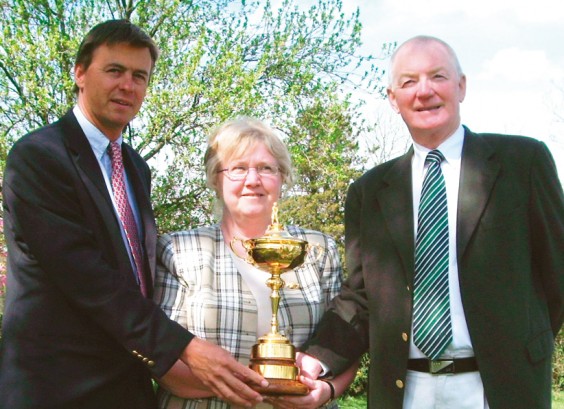
Barry Drew, of Cofton Hackett, has been appointed Chief Marshal for golf’s 2010 Ryder Cup in Wales and his wife, Mavis, will be the Marshals Administration Manager.

They are pictured with Edward Kitson, Ryder Cup Staging Director.

Relaxed dining in a traditional setting

Bramblings Restaurant

Sally Oldaker enjoys an evening of fine food and friendly service at the Abbey Hotel.

When choosing places to go for a meal out, I have to admit that the Abbey Hotel’s Bramblings Restaurant had never featured highly on my list of potential destinations – not that I’d heard any negative comments, but it’s just that hotel restaurants are not generally frequented by non-residents.

However, this particular example is just as welcoming to “outside” diners as it is to hotel guests, and the evening menu certainly deserves to be discovered by a wider audience.

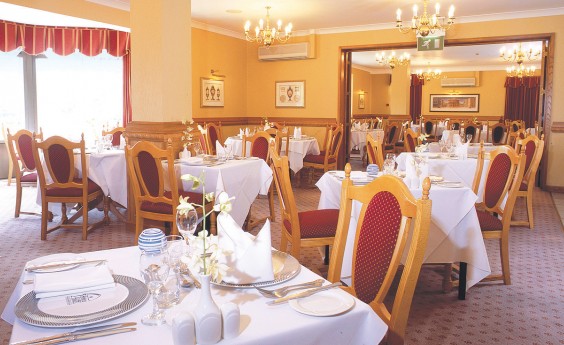
The Bramblings is very much a traditional-style restaurant, all white tablecloths, linen napkins and high-quality service – it’s formal but not off-puttingly so, and there’s no need to worry about dress code (our fellow diners were a mixture of smart and casual).

I did feel a tad out of place drinking a bottle of Newcastle Brown, but on the whole there’s a relaxed and friendly ambience, with the competent staff happy to share a joke and chat.

We were able to browse the menu in the bar area before being shown to our table, which is always a plus point, and were given ample time to make our choices over a drink.

The impressive list features some unusual flavours and ideas, and arguments developed over who would get to order what.

Eventually I settled on rosette of pineapple with ginger syrup and rum sorbet, with the proviso that I would donate the sorbet to my run-obsessed companion, in exchange for the lemon variety that accompanied her duo of watermelon and Galia melon in passion fruit syrup.

The other two chose cracked black pepper gravadlax with potato and rocket salad and Parmesan shavings, and smoked trout with potato in wholegrain mustard – these examples alone give some idea of the creativity of the dishes.

Once seated at our table, with a fantastic view over the hotel’s golf course, we enjoyed the seeded bread rolls provided (a welcome surprise, since the idea of bread rolls before a meal appears to be a dying trend these days) and made a start on our bottle of fruity Tempranillo rosé.

When the starters arrived, all four choices proved to be good ones – the ginger syrup spiced up the refreshing pineapple while the melon duo was enlivened by the passion fruit sauce, and the sorbet-swap enabled us to sample some extra flavours.

The two savoury dishes were also declared to be extremely tasty, with as much attention paid to the respective potato accompaniments as to the main ingredients. Like the fruit-based starters, these were attractively presented and just the right size.

Expectations, therefore, were high ahead of the main course, and I’m pleased to report that they were met and probably exceeded.

In the interests of sampling a good cross-section of the menu, I normally encourage everyone to order something different, but on this occasion two of us were very keen to try the breast of chicken on potato blinis with crispy pancetta and pomegranate jus – and with a description like that, who could blame us?

Luckily we were both delighted with the dish, which featured perfectly-cooked chicken in a crispy golden skin, crunchy pancetta and soft (but not soggy) blinis. The highly unusual, almost perfumed flavour of the pomegranate jus lifted the meal to a whole new level.

Another member of the group had chosen tomato and basil tart tatin with shallots and curly endive, and this was absolutely crammed with juicy veg and a pungent basil flavour, the thin pastry base offering support rather than stodge.

Across the table, the fourth diner was fully enjoying the steak au poivre, created with cracked black peppercorns and crème fraîche sauce and only permitted to be served medium rare – a helpful heads-up on the menu and ideal for those who don’t want their steak cremated.

The desserts – listed on the main menu, thus allowing diners to consider them early on and perhaps choose their first courses accordingly – sounded equally impressive, and again the presentation was fabulous, especially my fresh fruit platter with apple sorbet.

Far from being an anaemic collection bulked up with excessive amounts of melon, this thoroughly modern fruit salad was arranged in colour-co-ordinated rows on the plate, and featured more unusual varieties such as blueberries and cape gooseberries as well as the frothy sorbet.

The other three went for more indulgent choices: treacle tart with vanilla ice cream, honey and sultana steamed pudding with whisky anglaise, and dark chocolate torte (this latter should have had clotted cream ice cream, but a vanilla alternative was happily provided on request).

As before, the standard really was very high, with the individual flavours coming to the fore.

In a traditional setting like this, coffee and mints were almost a necessity, and we were given the option of staying at the table or moving back to the bar.

A relaxed end to a very enjoyable evening of fine food and friendly service – the Bramblings Restaurant definitely deserves to be added to the list of local favourites.

The Abbey Hotel
Hither Green Lane, Dagnell End Road, Redditch
01527 406600

Like father, like son

0

Gareth and Melvyn

ADVERTISEMENT FEATURE

There’s plenty to like about financial advice on your doorstep . . .

The introduction of a new financial services company in the centre of Alvechurch means that villagers can now access a full range of services in one convenient location.

MGS Mortgage Solutions, working with David Matthews Insurance Services, offers professional financial advice on everything from mortgage repayments and inheritance tax liability to pensions and investments. ensuring that clients can make the most of their money.

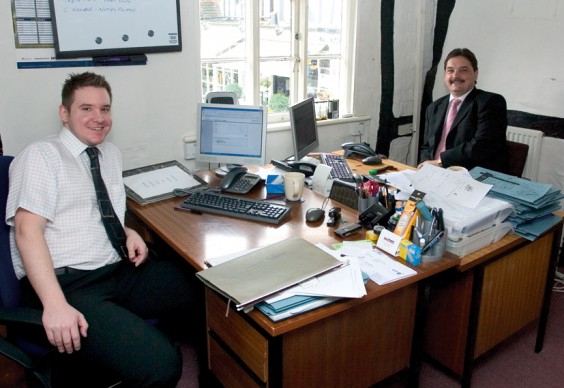
Melvyn Reynolds started his own business in 1990, and he has since been joined by his son Gareth, whose background in estate agency provides valuable knowledge of the property market.

Based in the same offices as David Matthews (also a long-established family-run business), Melvyn and Gareth aim to make the difficult financial world less complicated, and have helped clients all over the UK to find the perfect solution to their needs.

“Since we are fully independent, we can search the whole market to find you the best deal,” says Melvyn.

With over 20 years’ experience of the industry, they also have the facts at their fingertips – Gareth points out that 19 per cent of people in the UK do not realise that they are paying over the odds for their mortgage, and with interest rates on the rise again, now is a good time to make sure your finances are in order.

“Life assurance is also a very important issue,” Gareth continues. ”A surprising number of people don’t have any cover, yet in 2004 alone, 220 people aged between 25 and 64 died every single day!

“It’s not a nice thing to think about, particularly when you’re younger, but if something were to happen to you, your family could end up having to take care of your mortgage repayments.

“We all insure our homes and cars – in fact we are required to do so by law – but not our lives.”

Those seeking advice on life or critical illness insurance, as well as other mortgage queries, can visit one of MGS’s regular Mortgage Clinics held at the offices.

The company handles a variety of mortgage requirements, including Buy to Let, Right to Buy and Self Certified. Melvyn and Gareth will liaise with the estate agent involved in order to ensure the whole process runs as smoothly as possible, and can tailor each mortgage to the client’s specific needs.

MGS can also offer clients extra options such as the ability to “draw down” a set sum of money each year, which could be used to pay for school or university fees, home improvements or a wedding.

“More and more youngsters want to go to university, and the costs can be huge – so it’s well worth thinking ahead and starting to save when your children are small,” Melvyn adds.

Clients can also receive advice on re-mortgaging their home, changing to a lender with a lower interest rate or releasing cash for investments.

For expert advice on all financial matters, just give Melvyn and Gareth a call or pop into the office.

MGS Mortgage Solutions
16-17 The Square, Alvechurch
0121 445 0500
https://www.mgsmortgagesolutions.co.uk
.(JavaScript must be enabled to view this email address)

Plots of community spirit

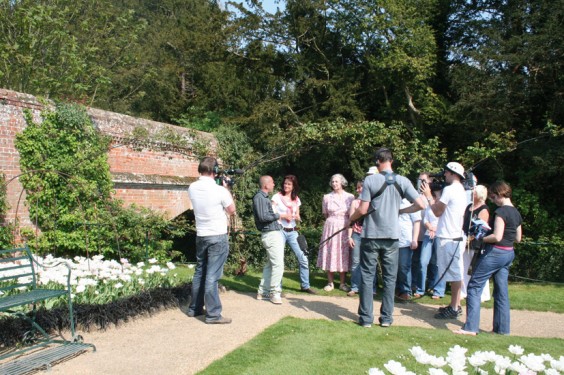
Last day of filming

Hannah Genders meets some caring, sharing gardeners during a recent foray into the world of television.

It’s a funny business, this TV work; you never know what will pop up next. When I received a phone call offering me the chance to judge the top allotment sites in the UK, I decided to say yes.

This made life madly busy over April and meant filming most weekends, as the production company wanted the allotment sites to look full and many of the people we needed to interview were only available then.

As a judge on this series I am co-presenting with Chris Collins, who did a series called The Plantsman on BBC2 about six years ago. He has done plenty of other TV work since and is currently the gardener on Blue Peter.

This really suits him as he is passionate about bringing on the next generation of gardeners, and it also means he gets recognised by kids as we travel around. I have to say that he is been great fun to work with – we share a similar sense of humour and a love of plants.

The series is called Digging for Victory, and is being shown on UKTV Gardens this month. It follows the nine short-listed sites from the competition entries.

The prize of £2,000 goes to the whole site and not to individual plots, so the plot holders must club together to tidy up the site ready for judging.

The sites are judged not only on produce and visual impact but also on community involvement, sustainability and organic practice. This makes the programmes much more interesting and has resulted in us meeting and interviewing some great characters.

It has really been quite moving to see how much these allotment sites mean to people, and we have experienced such a sense of community spirit; something which we are always being told has died out these days. Believe me, it is alive and well on allotment sites all over the UK.

As well as creating a great sense of people coming together on the plots, many are doing fabulous community projects with local schools to show children how to grow vegetables and encourage healthy eating.

One of my favourites was a project in Stoke-on-Trent where the allotment site had given over a plot to the local special school. I met and interviewed Linda, the lady running the project, and many of the children were there, too, some with quite severe autism.

These kids just loved getting away from the classroom and having the chance to do something physical instead of learning maths.

The other plot holders on the site had a positive input into the project and enjoyed showing the kids how to grow different types of vegetables and fruit. It was everything it should be in terms of horticultural therapy – building up the kids’ self-esteem and breaking down barriers across the community.

Each half-hour programme sees us visiting and judging one of these sites – it has been so interesting as every one is so different in its aspect, soil type and layout. I have to say that it has not been easy to choose between many of them and I think the scores will be really close.

It is so interesting to see how people get to know and work with different soil types, many over a number of years.

Added to this is the community aspect – we have met some great characters, like the Italian cousins in Bournemouth who make 550 bottles of organic tomato sauce from their two plots every year.

They also supplied us with a rather generous amount of home-made wine, which also tasted superb. It is part of the job to taste the produce – a tough call but someone’s got to do it.

With all the recent interest in “growing your own”, allotments have really come to the fore again. I have learnt that there is a waiting list of 4,000 people wanting allotments in London alone.

Even with all this public demand, many sites are still being lost to the developers – so if this new series encourages people to go out and get a plot and begin the challenging and rewarding job of growing their own produce, I shall be really pleased.

Digging For Victory is on UKTV Gardens at 10pm on weekdays
from Friday June 1- Thursday June 14.

Finishing touches

0

Glassware

ADVERTISEMENT FEATURE

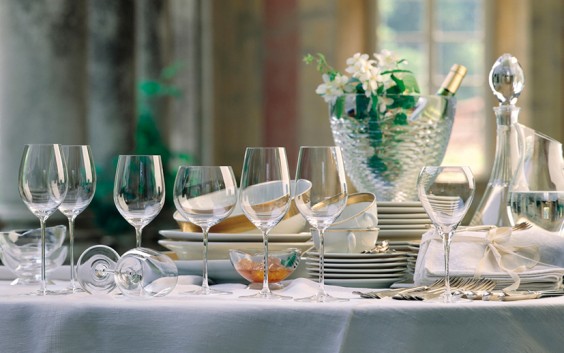
Anyone who loves to fill their home with beautiful things will be delighted by a new online business selling luxury homeware and giftware.

Coast Interiors, set up by Barnt Green resident Nicole Little, allows customers to browse the attractive, simple-to-use website and choose from a huge range of luxury items, including collections from well-known brands such as Villeroy&Boch, Wedgwood and Christy.

Nicole has carried out extensive research to ensure that the products she offers are synonymous with true quality.

“When you’re selling over the Internet, it’s especially important for customers to have some assurance about what they are buying, and I am confident that the range from Coast Interiors is of the highest quality,” she explains.

“Companies like Villeroy&Boch also offer innovative designs, which is great for people looking for something a little bit different.”

Nicole’s background in sales, combined with her qualifications and lifelong interest in interior design have given her the necessary skills to set up on her own.

“When my children started school last September, I wanted to return to work and so decided to take on the challenge of opening my own interiors business,” she says.

“I love the finishing touches and how they can transform or update a room.”

The unusual homeware and gift ideas available from Coast Interiors certainly do that, but many of the products are practical as well as beautiful: for instance, the stylish, durable and unbreakable polycarbonate tableware is perfect for al fresco dining.

“It is such a convincing and safe alternative to glass, not only to look at but also to hold,” explains Nicole, and adds that she is able to take enquiries for bespoke items.

To discover the collection of products available, visit https://www.coastinteriors.com, call: 0121 445 5375 or email: .(JavaScript must be enabled to view this email address)

Green for go

Barnt Green

A few years ago at a heated public meeting, one of Barnt Green’s traders warned that planned changes to the centre of the village would “pull the plug” on its shops.

Well, the bollards and planters are in place – and mostly accomplishing their purpose of keeping vehicles off the pavement – and the village appears to be thriving.

Early afternoon on a wet Wednesday and you might expect the place to be quiet, but no, shoppers and villagers are milling around making the most of what has developed into an eclectic mix of shops along the high street.

The past year has seen an influx of new names, including recent arrivals Eye Opticians, It’s A Gift and The Locker Room.

This latter – offering sportswear, workwear and school uniforms – is one of a rare breed in town or village centres, with many people having to travel further afield to find this type of shop, according to owner Charles Millinchip.

The Locker Room allows customers to have their name, logo or insignia embroidered on to a large range of garments, and is a stockist of uniforms and sports kit for a number of local schools and pre-schools.

The shop also specialises in ladies’ football kits, and has been asked to supply various teams and clubs such as Bromsgrove Swimming Club and Barnt Green Scouts.

Clients can also have names or messages engraved on a range of trophies – as with the clothing, the shop displays samples for customers to browse, with the opportunity to order from a vast catalogue.

The Locker Room is an official supplier of Aston Villa merchandise, as well as selling scarves and mugs from other football clubs.

If you visit the shop in the next few weeks, make sure you buy a ticket to be in with a chance of winning a shirt signed by Wayne Rooney – it’s being raffled in aid of Leukaemia Research, and the official draw is expected to take place during June.

More relatively new faces include Style Council, Barnt Greens, Longfords Furniture and the Magic Moments nursery, while several businesses – such as Peter’s Pan, the Victoria Inn and the Deedar restaurant – have undergone major refurbishments.

There have also been a few other changes in the village, with Deli & Cafe on the Green changing hands, and Victoria Travel cruising off to a new home in Redditch.

That particular gap was soon filled by renowned Barnt Green hair stylist Michelle Griffin, who has established her new academy on the premises, and clients can also visit the Nikki Jarvis beauty salon on the upper floor.

This year also saw the departure of Lloyds Bank, amid rumours that the vacant building may become a restaurant and hopes that it could be offices for Barnt Green Parish Council.

However, the worries that Tesco Express would kill off trade in the village appear to be unfounded – the new arrivals are a case in point, while a number of new online or home businesses such as Coast Interiors and Cherry Portraits have also been set up in the area, joining long-standing names like interior designer Mary Barber Fray.

Established shops and businesses in Hewell Road are still drawing in plenty of local and not-so-local trade, with boutiques like Hollywood Collections, Continental Collextions and Joolz attracting customers from much further afield.

As well as attractive shops and eateries, visitors to Barnt Green will also discover a range of other services, from floristry (Oasis Flowers & Balloons) to physiotherapy (Kath Hamflett) and estate agents (Allan Morris & Peace) to DIY (Tony’s Handyman).

And for a perfect introduction to everything this village has to offer, why not pop along to the Barnt Green Festival on June 23?

Barnt Green Festival 2007
Saturday June 23, 2pm – 6pm

This well-established and popular event draws most of the residents of Barnt Green into the village centre for a wealth of activities and events, and has also become quite an attraction for those living in the neighbouring villages.

The village centre will be closed off for the afternoon and taken over by bands and dancing groups. There will be side stalls, refreshments, raffles and a balloon release at 6pm, while major highlights include the arrival of MP Julie Kirkbride by plane.

The proceeds will be divided between local charities and a donation will be made to the Scout and Guide Hut Appeal. 

The station now waiting. . .

0

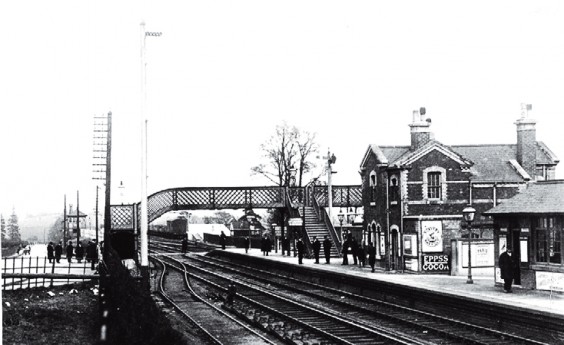
Barnt Green station

Barnt Green arrived 50 years after its railway station . . .

This article by Margaret Mabey, the well-known local historian who died two years ago, was first published by The Village in 1998.

Most people think, if they happen to think about it at all, that Barnt Green is just a railway village and that it only came into existence when and because the railway arrived.
Well this is true, but only to an extent.

It is true that if the Gloucester to Birmingham railway had taken a different route in 1840 (and it nearly did because of fears that the Lickey incline was too steep to be practicable) then there would probably never have been a Barnt Green village.

But the railway station called Barnt Green sat peacefully among fields for nearly half a century before any houses were added to the landscape.

We know from the diary of William Partridge, the Alvechurch schoolmaster, that Barnt Green station opened in April 1844, a welcome amenity for Alvechurch folk.

But it was much more important to Redditch, a booming industrial town in urgent need of an up-to-date method of sending its needles out into the world.

Within a few weeks there was a horse-bus running from the Unicorn Inn to Barnt Green station and wagonloads of needle-bales were trundling along the lanes.

But 15 years later Redditch got its own branch-line and station and although it was now a junction with a stationmaster in a top hat, Barnt Green station continued to be surrounded only by fields, a few farms and Barnt Green House which was occupied by the land-agent of the Windsor estates.

The Windsors (not related to the Royal Family) lived at Hewell Grange, Tardebigge, and owned much of the land in the area including most of Redditch and the Lickey Hills.

They had asked for Barnt Green station to be made and probably used it themselves but they had no plans at the time to develop the land surrounding it.

By 1884, however, young Lord Windsor did have a coffee-house and Temperance Hotel built at the end of the sandy lane which would one day become Hewell Road. It was presumably meant for any carriage-folk who wished to “put up their horses” while they took a train trip to Birmingham.

The Windsors were much more concerned with the dangers of drink and it was some years before it was licensed for anything stronger than coffee (and about 70 years before it got a seven-day licence).

The Victoria Hotel (now generally known as The Vic) must have looked strangely out of place standing imposingly at the corner of Primrose Lane (now Sandhills Lane) and Hewell Road neither of which had any buildings in them at all.

Sometimes it did have distinguished customers. I have a bill to Lord Windsor for 10 lunches at one shilling and sixpence (about 7p). These are believed to have been eaten by a shooting party his Lordship had taken into the Lickeys for a morning’s sport.

But the Vic’s splendid isolation was soon to be ended. In 1889 the Windsor Building Estate issues a handsome sale catalogue offering for sale plots of land on the slopes of the Lickeys above Barnt Green station for the building of superior residences.

Lord Windsor’s land-agents were hoping that prosperous Birmingham citizens might be pleased to rear their families in the “fine and bracing” air of these wooded hillsides while they themselves commuted daily on the train (“17 to 20 minutes journey””) from the station which had been waiting all these years for them.

It was of course the train-service that made the scheme practicable. The Calthorpe Estate had provided the genteel development suitable for a pre-railway age and was now being encroached upon by Birmingham’s less agreeable growths. Now it was possible to escape even further from the city’s grime.

The sale catalogue makes it quite clear that this was to be high-class residential development. The houses had to be of good quality – minimum values were laid down and there must not have been more than one lodge for an employee (such as a coachman).

The owners were also forbidden to “set up any public-house, beer-house, tea-garden or public strawberry-garden or any place of amusement”. Surely they would not be likely to do any such things?

Well, no: but parts of the Lickey Hills had already been given to the people of Birmingham and they would have been delighted with such amenities. They would, however, have to do without them.

Lord Windsor’s agents did realise that these prosperous new households would need gardeners, grooms, washer-women and so on, living within easy reach, so down below the railway in what is now Hewell Road, some small plots of land “suitable for cottages” were also offered for sale.

So great was the demand for these that by 1900 there were terraced houses along both sides of the road, whose occupants were nearly all dependent in some way on the big houses on the hillside of which there was now a sizeable colony.

These humble terraces were the beginnings of Barnt Green village. They would never have been built if the “up the hill” dwellers had not needed the services of their inhabitants, some of whom were soon shopkeepers.

It looked at the time as if Barnt Green village was going to stop there – just an unpaved road lined with terrace houses, existing only for the convenience of the gentry on the right side of the tracks . . .