Hannah Genders enjoys her annual visit to Chelsea.
With a strong theme of sustainability, there was plenty to see and be inspired by at this year’s Chelsea Flower Show.
There were some stunning show gardens along the main avenue – where the great and good of the garden design world come together to show what they can do. These included Andy Sturgeon’s Cancer Research Garden – you may have noticed from previous articles that I am often impressed by Andy’s work and this year was no exception.
Steamed oak ribbons wove through the garden in a really exciting way to take up the theme of togetherness, working with Cancer Research’s message: “Together we will beat cancer”.
The garden was sponsored by a private donation and, as ever with Andy’s work, the planting was superb. Mature dogwoods (Cornus controversa) were dotted through the garden and drifts of grasses and perennials took up the movement seen in the sculpture.
Next door to Andy’s garden was Diarmuid Gavin’s garden and – love him or hate him – Diarmuid has always produced some interesting designs. This was no exception, with a curved central building as a “his and hers” studio space for an older couple. I loved the look of this building and again the planting was so brave.
The only flowering plants in the main part garden were alliums; every other plant was for form and texture. The garden was awarded a silver-gilt medal so I’m sure Diarmuid will be back to try and get that elusive gold.
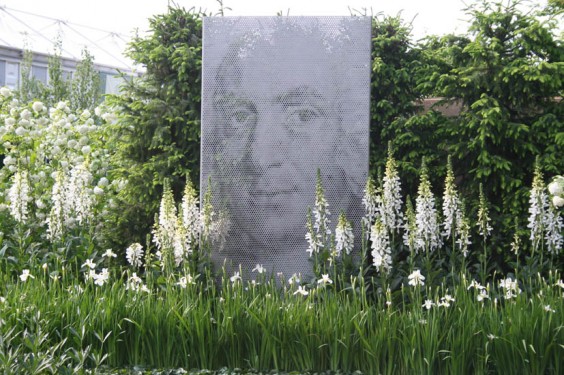
At the end of the infamous main avenue was a garden (above) celebrating Linnaeus, the Swedish botanist who gave us the binomial system we use today for naming and categorising plants.
A brilliant system and a brilliant garden to celebrate – it was unashamedly modern with grey frameworks dividing the garden and allowing us to look through to the stunning planting beyond.
White foxgloves and white irises planted in soft drifts gave a really subtle effect with the grey backdrop. Linnaeus’ outline was created on a beautiful screen that seemed to appear and disappear as you moved around the garden.
The planting was eye-catching, set against a modern layout, and this garden deservedly got the gold medal.
Moving on to the small gardens: these are always so popular with the visiting crowds and this year was no exception. The courtyard gardens tucked away around the back of the bandstand were packed with enthusiastic visitors and I managed to catch up with the designers who had created the only gold-winning garden in this category.
Adam and Jonathon had built a stunning little garden called The Old Gate. To do one of these small gardens well is such an art – given a space of only 4.5 by 4.5 metres to work with, the best designs always have one main feature and everything ties into it.
In this case the little lean-to building at the back led on to the path, and an area had been cleared to grow some heritage varieties of vegetables. The theme of this garden was to show how the Dig for Victory campaign needed everyone to do their part and plant some home-grown produce.
Bath Cos lettuce from 1885 nestled alongside a beetroot called “Cooks Delight” and the runner bean “Coal” clambered up the wall – this variety came from a Shropshire mining village.
It was great to see these old heritage vegetables used in this little garden and I can only wish all the best to these guys; if they can turn out a garden like this for Chelsea they should do well in their chosen career. This garden also got the Best Courtyard Garden medal alongside the gold.
The other section that should never be missed at Chelsea is the main marquee – you really could spend days in there looking at those incredible displays from the top growers, coming together from all over the world.
There is so much I could enthuse about, but one stand I really loved as much for its design as its content was the Growing Britain exhibit.
All the produce and flowers were from British growers all over the UK and had been displayed on a series of stainless steel raised boxes. The way vegetables and flowers had been mixed together was so effective – it made you look at vegetables in a new way with the colours and textures perfectly complementing each other.
The designer, Penny Riley, has evidently created displays for 27 years at Chelsea and this garden deserved not only the gold medal it was awarded, but also the highest accolade of the RHS presidents’ award.
I am sure you can pick up my enthusiasm for this wonderful show which I have the privilege of visiting each year. There is so much more I could write about… I am wondering if we need a separate section in The Village next year just devoted to Chelsea, like the national newspapers have?
I will speak to the editor and let you know!