Home Blog Page 712

Cycling for Uganda

Peter Salmon

Cofton Hackett resident Peter Salmon has raised more than £1,000 for an African IT project by cycling from Lands End to John O’Groats.

Peter completed the challenge over two weeks to help Net2WorkUganda, which runs a three-month IT training course for impoverished young Ugandans, aged 16-24.

As The Village went to press Peter’s justgiving.com page showed donations totalling £1,175.

See https://www.justgiving.com/end2end4net2work

Accident blackspot

Crashed car

An accident blackspot added another crash to its tally when this car careered through the hedge and across an area where children often play.

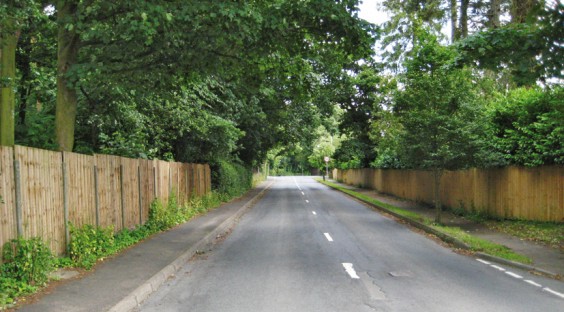
This was the latest in a long string of crashes on the Redditch Road bends as cars come into Alvechurch.

Speed sign

The County Council moved the 30mph flashing warning sign to the spot from the other side of the village two months ago, but as The Village went to press it was still to be connected up.

Meanwhile, district and county councillor Peter McDonald was thanked by Lickey and Blackwell Parish councillors Keith Woolford (left) and John Williams for helping them to get a flashing sign installed on the Old Birmingham Road, near Lickey First School.

Better by design

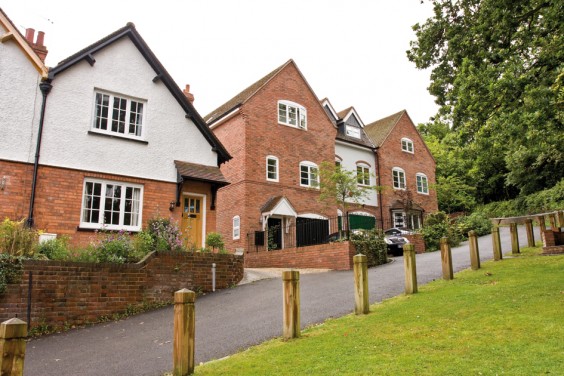
Bear Hill houses

The Alvechurch Parish Statement celebrates ten years of retaining rural character.

If you’ve ever stood in a queue for the counter at Alvechurch Post Office – and let’s face it, who hasn’t? – you may have noticed a laminated poster pinned to the central pillar asking for suggestions of village features that should be cherished and preserved, writes Richard Peach.

It’s been there nearly ten years now and was in fact the centre pages of The Village magazine of January 1999, forming part of the research of a group of people from Alvechurch parish keen to ensure their little bit of Worcestershire retained its character.

Their names are listed across the bottom of the poster; some are no longer with us, some have moved away, but the seeds they planted a decade ago grew into the Alvechurch Parish Village Design Statement.

Design Statements were a central Government initiative aiming to act as guides to help to retain the rural character and natural landscape features of places like Alvechurch, the features that draw many people to live in the area in the first place.

In 1998 a group of interested residents from Alvechurch village, Rowney Green, Hopwood, Weatheroak and Bordesley, led by Tony Cowles, took part in a series of workshops to identify the character and rural elements of their local areas.

They photographed, discussed and recorded positive examples of rural character. This information then formed the basis of the document, which was produced with detailed examples from each of the five distinct areas of the parish.

The completed Alvechurch Parish Village Design Statement is now formerly adopted by Bromsgrove District Council as Supplementary Planning Guidance: it is easily accessible on the district council website via the home page of the Alvechurch Parish Council website: https://www.alvechurch.gov.uk

The idea is that whether a project is large or small, the document is a working tool for individual householders as well as potential developers.

It provides ideas and examples of good practice and may also be used to ease the passage of a planning application.

Persimmon Homes specifically referred to its use of the Design Statement in its application to build the Mill Court development.

But it’s not just about big developers. If you are thinking of changing your gate, your fencing or planting a hedge or erecting a garage, a porch or changing your windows, the document and its many pictures is a good place to start.

Mass-produced materials and “quick fix” solutions often threaten rural character, but with thought and with care, we can all help to introduce and preserve a little piece of it.

Above is an example of what is felt to be good practice introduced since the publication of the Design Statement and which contributes towards the preservation of the character and rural feel of this much-loved area.

If readers have other suggestions of good practice – not just in Alvechurch Parish – email them in, with a picture if possible, to .(JavaScript must be enabled to view this email address)

Pictured: This Bear Hill development reflects existing buildings both next door and across the road.

Let’s take politics out of it

I hope you will allow me to respond to the letter from Coun Roger Hollingworth in the June issue of your magazine. 

I cannot help but think that this response, ably assisted by T Gillespie, is little more than a party political agenda.

I fully understand that due process of lawful actions cannot and should not be unduly interfered with and that lobbying of councillors in order to prejudice their decision is not to be encouraged.

However, a disclosure of facts, including the fact of the existence of a 160-plus signed petition, presented by the residents, would not, I believe, be considered as lobbying.
I still have not had an answer as to what actually happened to that petition once it arrived at the Council House in July 2007.

Why was this document’s existence not made known before the planning committee sat, in September 2007?

Coun Hollingworth’s dismissal of the relevance of the infill within the Hopwood hamlet gives encouragement to the likes of Baroness Andrews and her non-elected body.

Surely, the duty of Coun Hollingworth, Julie Kirkbride MP and all other right-thinking politicians is to listen to their voting public and stringently resist the setting up of and authority of such bodies. That is what true democracy is all about – the electorate first, the party second.

Let us have no more of this bickering; I personally do not and never have placed any blame for the Hopwood development at the feet of Coun Hollingworth or Julie Kirkbride.

All I ask is that they and all other right-minded politicians get back to listening to and acting on behalf of the British Public, not their party. Or any other political party for that matter.  

Peter Higgins, Hopwood

Couple celebrate 65-year partnership

Lily and Derek

When Derek Bourne was 14, he went to work alongside his father at the rubber mill in Stirchley, travelling in every day from Alvechurch.

Around a year later, a young girl was brought in to help him, cutting up his work ready.

“And he’s worked me to death ever since!” joked Lily, now 83, as the couple celebrated their 65th wedding anniversary.

It was after working alongside each other for a year that they went on their first date.

“We were 16 when we went to the pictures together and we have been together ever since,” says Derek, now 84.

They were married three years later in June 1943 at Pineapple Church, Kings Heath, but within two months Derek was called up and was away in the Army for five years.

When he returned, aged 24, they lived for a while at Lily’s mother’s then Derek’s mother helped them to buy a home in Redditch.

She owned the terrace in Swan Street, Alvechurch, known as Bug Row, where Derek had been born at number 5. So after a year in Redditch, it was a happy move back to Alvechurch when number 6 became available.

The couple would eventually build a house in the garden, number 29, where they lived until they moved to a bungalow in Brookside Close seven years ago.

It was after the move back to the village that Derek started running a taxi business, which was going well until the Suez crisis brought the return of petrol rationing.

To make ends meet, he worked as the caretaker at the school in School Lane for the next 14 years while still building his taxi business.

“I often had to go on until 4am and Lil would stay up waiting for me with a cup of tea,” he says.

When he took a contract to transport workers for Delson’s in Redditch, Derek bought a small minibus and Swan Street Taxis grew into Swan Street Coaches.

The school connection continued, with Lily taking on the caretaking at the new school for about 10 years until she retired aged 59.

Derek worked until he was 70, when he handed over Swan Street Coaches to sons Stephen and Terry. “I gave everything to the lads on the condition they look after us, and they have been great.”

They now have six granddaughters and five great-grandchildren.

Looking back, Derek and Lily feel it is their ability, discovered when they first met, to work together that has been so important.

“I think it is partnership, I really do,” says Derek. “We are as much in love now as we were when we first met. We have never fallen out, even when we have been really down and out.”

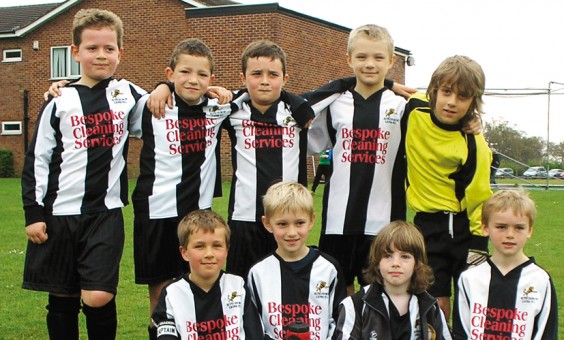
Young lions

Under-8 team

The Alvechurch Lions Under-8 team celebrate winning the Central Warwickshire League after only two years in existence (above) and it was awards night for the Under-14s team (below).

Can you spare a room?

A local charity is asking Village readers to consider using their spare bedrooms to help young people at risk of homelessness.

Nightstop provides beds in a family home for one night to vulnerable young people from Bromsgrove and Redditch.

The volunteer hosts provide bed, breakfast and an evening meal. If the young person needs a place to stay the following night, Nightstop will provide another bed and will also find them a place in safe long-term accommodation.

After that, staff offer support as the young person adapts to living independently.

One young man who was helped by Nightstop has talked of his experience. James came to the charity after a family dispute left him vulnerable and with no money.

“Nightstop provided me with accommodation via an elderly man named Tony,” James told The Village.

“He was a very understanding man who gave me plenty of time alone but provided me with meals and a bed, which was what I needed.

“He also showed interest in my ambitions and tried to encourage me as much as possible to pursue my dreams and never stop trying.

“I was put in touch with St Basil’s and now I’m living in a bedsit and continue to busk to pay for my shopping and occasional luxuries.

“If it wasn’t for Nightstop I would soon have been homeless and would probably have turned to crime to survive,” James added.

Nightstop receives support from the Big Lottery – in the form of a £460,000 grant last year – and other organisations, which pays for staffing and office costs, but the charity could not operate without the generosity of its volunteer hosts.

Spokeswoman Juliet Horne, who lives in Alvechurch, said: “The need for accommodation in the area is increasing and Nightstop desperately needs to find new hosts who are willing to open their homes to vulnerable young people.”

Nightstop’s project manager, Gill Groom, adds: “We know that the idea of welcoming strangers into your home is daunting, but our current hosts will tell you that in reality the experience of being a Nightstop host is overwhelmingly positive.

“We provide full training and support for hosts and we conduct detailed risk assessments to ensure that the young people are suitable for a placement in a family home,” Gill added.

Anyone who would like to talk to Gill or one of the current hosts can call Nightstop on 01527 66036.

Pre-school’s new premises

Pre-school kids

Rowney Green Pre-school children and their carers enjoy the fresh air outside their new premises at the Pavilion on Rowney Green playing field.

The new venue means the children can spend even more time outdoors, weather permitting.

Pre-school is open Tuesdays and Thursdays from 9.30am-1pm during term time and this summer the Parent and Toddler group will be opening on Mondays 10.30-12pm at the Pavilion.

Sessions start on July 21 and are every week except Bank Holiday. Admission is £2 and £1 for every other child. As well as play activities, snacks will be provided for the children and tea/coffee for parents, then the morning will end with a singing session.

Just turn up, or call Rosemary Puckering on 0121 445 6102 or 07836 770468 for details.

Hold on to village life

Close-boarded fences

Susan Whitehand offers a personal view of why we need to think carefully about what we construct in our villages.

Traditionally much of north Worcestershire has relatively few villages. Until the nineteenth century it was largely an area of hamlets, dispersed farmsteads and a few market towns. In more recent times a number of commuter settlements have developed – Barnt Green and Blackwell are examples. 

A careful look at these “villages” will quickly indicate that they contain little of great age, although some of the country lanes that have been incorporated within them are old.

There are few timber-framed buildings other than the occasional farmstead that has been absorbed into a growing commuter settlement. Nevertheless village life is aspired to by many urban dwellers. 

What is it about a village that we find so attractive?  What image comes to mind at the mention of the word “village”?  More importantly, having “bought” into this image, do we understand its manifestations well enough to conserve them?

I would suggest that a number of aspects of a village make life in it something that is aspired to. The size of a traditional village community was generally small, usually fewer than a thousand people.

There is a widespread feeling that villagers are more neighbourly, taking a genuine interest in one another. All this goes towards encouraging that sense of belonging which in urban areas can be more difficult to achieve.

The sense of community is seen as an important attribute of village life and may also be encouraged by belonging to particular social or sports groups, and perhaps having children at the local school. Another major attraction of the village is its rural location, its informality, trees, green hedgerows and cottage gardens.
 
All of these attributes – the sense of community, the sense of place – require us to be vigilant if we wish to see the image we “bought” into conserved. That is not to say there should be no change, but that changes should be sensitive to the character of the local environment.

All too frequently changes are made that if carried to their logical conclusion can have a devastating effect on the character of the “village”. For example, the construction of high, close-boarded fences and electric gates are isolating: they are a rebuttal of the sense of community. They destroy the greenness of the environment.

Driving a car replaces walking – with accordant parking problems. Even though many so-called “villages” in north Worcestershire are not old, many of their layouts pre-date the car and many features are evidence of this – winding roads especially.

We need to think more carefully about what we want, and before we make changes, for example to individual houses and gardens. We need to consider what might be the long-term effects. 

If you value the characteristics of a village, walk around your local area and consider what those characteristics are and how they could be conserved and enhanced. 

Especially think about the cumulative effects of individual changes you may make when later repeated by your neighbours.

Do you really want to convert your local environment into the urban one you left behind?

Essential eyecare

ADVERTISEMENT FEATURE

Local optician Shafik Haji gives advice on eyecare for kids.

Did you know that kids’ eye tests are free under the NHS? Quality eye care for children is vitally important, especially because children aren’t usually aware that they can’t see properly, and have difficulty communicating this to parents.

This is because they do not know what to expect from their eyesight.

The eye examination takes 20-30 minutes, checking vision and eye health. It is free under the NHS and is recommended from the age of five.

It’s important to recognise early signs of possible visual problems in children. Here are a few things to look out for:

* Frequent headaches
* Eye strain/aching, sore eyes
* Excessive eye rubbing
* Problems in school, e.g. copying work, sitting close to the board
* Squints (eye turns in or out)

So why not add an eye test to your “back to school” list?

Frames can be fun!
Children’s eyewear has come a long way in recent years. Kids can really enjoy wearing glasses, removing the stigma that used to be attached to them.

Today there is a wide choice of funky frames in bright colours, with decorative motifs such as butterflies, hearts, footballs and skull and crossbones – and don’t forget that glasses as well as eye tests are available free on the NHS.

The selection process can also be fun, especially with the SmartMirror machine which scans the child’s face and then reveals what he or she would look like wearing the various frames.

Top tip…
Kids who choose their frames themselves are usually much happier wearing them!

* Full eye tests and a huge range of kids’ frames are available at Eye Opticians, 28 Hewell Road, Barnt Green. Tel: 0121 445 4545.