Sixteen gardens in Alvechurch opened for charity in the National Gardens Scheme, raising £3,167 in one day.
Below is The Shrubbery, owned by Chris and Stephanie Miall, which features some impressive Giant Redwoods.
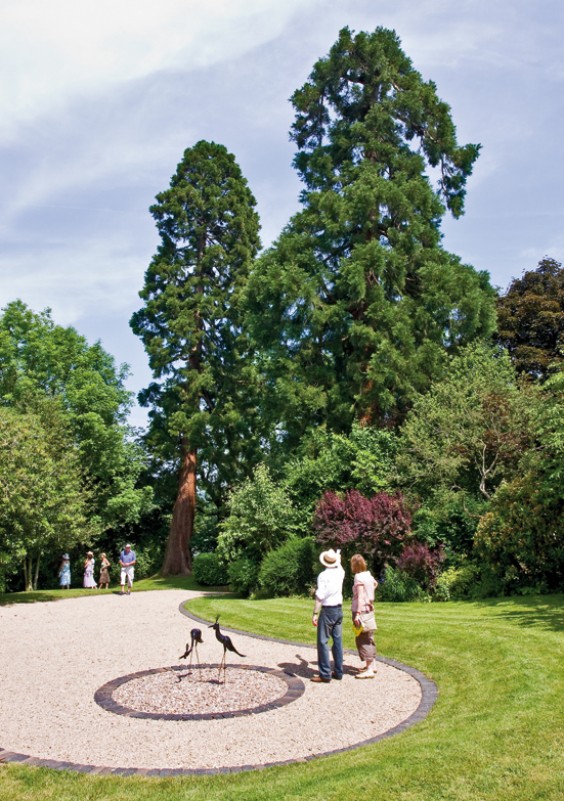
Sixteen gardens in Alvechurch opened for charity in the National Gardens Scheme, raising £3,167 in one day.
Below is The Shrubbery, owned by Chris and Stephanie Miall, which features some impressive Giant Redwoods.
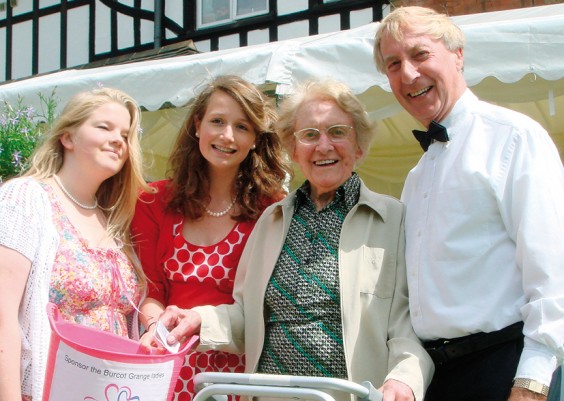
Residential care home Burcot Grange raised a record amount for charity at its annual garden party, with staff, residents, families and friends enjoying a sunny afternoon in the picturesque grounds.
More than £500 was raised for Acorns Children’s Hospice, which Burcot Grange has supported for many years – the amount was higher than raised at any previous garden party.
Traditional teas, strawberries and cream and home-cooked cakes were served, while entertainment included lawn games, hand and nail massages, music from the Ralph Allen Jazz Band, and a raffle with prizes donated by Fresh@ Burcot Garden Centre.
Pictured: Guest Hannah Hill with Olivia Bales, resident Mrs Nancy Harvey and staff member Alan Brown.

Long-time Barnt Green villager Stephanie Strong has completed the Inca trail in Peru to raise money for charity.
Stephanie, pictured left in Machu Picchu with friend Claire, a colleague from Jaguar Cars, raised around £6,000 for Macmillan Cancer Support.
I have recently discovered some interesting facts about the humble hedgehog that I would like to share with readers of The Village magazine.
After a rescue attempt on a sick hedgehog and nightly sessions watching these loveable creatures from my window, it is amazing how many people I speak to who do not realise these prickly creatures are endangered.
I have made up a leaflet which I plan to distribute to friends and relatives as well as at work.
I have attached a copy of this and if you find any of the facts interesting or would be kind enough to include some of the details in the next edition, I would be extremely grateful as it is a chance to get the information across to so many readers.
Donna Timms, Alvechurch
OK, Donna, here are a few of your facts about hedgehogs:
* Their fleas can only survive on hedgehogs. They cannot live on you, your pets or your soft furnishings.
* They are now an endangered species; only 1 in 5 survives.
* They are nocturnal. If you see a hedgehog wandering around in the day time they need your help as they are usually injured or dehydrated.
If anyone would like a copy of Donna’s leaflet, we can email it to you. Just send an email to: .(JavaScript must be enabled to view this email address)
In reply to a letter I wrote in May, Coun Roger Hollingworth said that he and Julie Kirkbride had made sure it (the affordable housing development in Ash Lane and Smedley Crooke Place, Hopwood) was presented to the full Planning Committee and the final decision by them must be based on planning policies.
I could not agree more with him that this was the right procedure, but my whole point that Coun Hollingworth seems to have missed is that the Planning Committee did not adhere to planning policies and went against the general consensus and used vague housing list figures to validate their actions.
By not adhering to planning policies and allowing the development in Hopwood, which he says “pales into insignificance”, a precedent has been set for Green Belt departure and the result is 3,300 more houses now being considered on further Green Belt land.
We the public will keep fighting and asking sensitive questions in an effort to protect this country and it would be nice to think we had the backing of our elected representatives.
If local councillors and Government representatives had been more supportive and shown more foresight in fighting the Hopwood development on Green Belt land, then un-elected Regional Planning Partnerships and Spatial Bodies would not now have such a hold over them, and local people would be listened to a lot more.
I think it used to be called “democracy” but I may be wrong: it seems such a long time ago that the general public could make use of it!
Adrian Smith, Hopwood
The Barnt Green Scout and Guide appeal was given a £1,000 boost by a Canadian youngster who heard about the group’s plight while in England for the jamboree celebrating 100 years of scouting.
Marko Cwyk and his parents visited friends in Barnt Green during their stay last year and were invited to a campfire by the village unit.
There he was told about the fire that destroyed the scout hut and when he returned to the 153rd Old Mill Group in Toronto he organised a silent auction which raised the cash.
Michael Docherty, chairman of Barnt Green Scout and Guide Field Trust, said: “The initiative shown by Marko surprised every member of the Barnt Green units.”
After four years of fundraising, the trust is almost half-way towards its £270,000 target.

A model train enthusiast from Lickey End has won first prize in a national competition in Oxford.
Brian Bain, pictured aboard his Sweet Pea class locomotive, was one of four members of the Bromsgrove Society of Model Engineers – which has been running at its track at Avoncroft Museum for 25 years – to enter the contest.
His winning model, which took him about five years to build, is a coal-fired steam locomotive running on five-inch gauge track. On passenger-hauling duties at Avoncroft, it will pull eight to ten passengers.
One of the other Bromsgrove entrants was Bob Harbon, who won the event in 1998, and another current Bromsgrove member, Alan Hodgson, won in 2002 wile he was a member of the Cheltenham club.

Travel counsellor Jane Ward plans a romantic getaway on the Italian coast.
Tracey Hanna from Marlbrook wanted to treat her husband for their 25th wedding anniversary.
They have just returned from Amalfi in Italy, where they stayed at the 4- star Luna Convento Hotel, originally a medieval convent dating from the 9th century – believe it or not, it has been a hotel for 180 years.
The rooms are simple with tiled floors and period furniture and all overlook the sea. Tracey said the food in the hotel was excellent, accompanied by superb service from the waiting staff.
The couple visited Pompeii, about an hour’s drive away, and also Ravello, a village in the hills with narrow pedestrianised streets leading to the famous gardens of Villa Ruffolo and Villa Cimbrone.
Amalfi has a fine cathedral and here they saw a couple getting married. Tracey said the holiday was very romantic and she and her husband will always remember it.
Best points about the holiday
1. The beautiful scenery
2. The hotel food, especially seafood
3. The lovely restaurants, shops and cafes in and around Amalfi Port.
Top tips
1. This area can get very busy in July and August; road noise is common in many hotels as most are built above the roads on the cliffside.
2. Eating out can be very expensive – perhaps choose a half-board option at your accommodation.
3. If you love the beach, remember this area’s beaches are almost all shingle or non-existent, and most hotel pools use salt water which doesn’t suit everyone.
If you want good food, beautiful scenery and ancient sites this region has it all. Why not combine this area with a city break to Rome or Naples or perhaps one of the islands such as Capri or Sicily?
Call Jane Ward on 0121 445 3605.

High summer holds many joys for Mary Green, who also uncovers some surprises about the humble yellow buttercup.
The bee orchids next to the canal came back again in June. I was a bit worried because the patch was mowed later than last year, dangerously near their growing and flowering time, but it was fine as the orchids came up later this year.
There don’t seem to be any this year on the patch at Romsley, though there are plenty of common spotted orchids there. Sadly, the poppies near Bewdley have disappeared almost completely, the land being used for crops, and presumably treated.
The alternating warm and cold spells in spring and early summer mean that things continue to be a little late. The hawthorn was wonderful in the warm days of late May, the best for years. On a walk nearby, I met a couple of retired women who were revisiting the cottage they grew up in.
They were admiring a hawthorn tree, and saying they had never seen the flowers so thick on the branches. The apples flowered and set well too. However, the earlier flowering plums, sloes and damsons don’t look so well set, as frost and snow came after they blossomed.
July and August are high summer in the countryside. One of the most famous bits of weather lore focuses on St Swithin’s Day on July 15. If it rains on St Swithin’s, it will rain continuously for forty days afterwards.
Like many of these old sayings, this relies on the generalisation that fine weather in summer comes from an area of high pressure which, once established, is likely to continue for a while – and vice versa. Last year it was definitely vice versa.
Swithin was an interesting saint. He was a bishop of Winchester in the 9th century who, legend has it, asked to be buried humbly in the churchyard. When his wishes were disobeyed, it rained for weeks until he was re-interred where he had asked.
However, we have to remember that rain in July used to be welcomed in some places, as being good for the apple trees. Here in the Midlands, the apples were said to be “christened” on St Swithin’s Day.
The feast day of St Laurence is on August 10, and used to be celebrated in Alvechurch with a big fair. The hot sultry weather common at this time of year was called St Laurence weather.
I found out recently about an academic study of buttercups, which can help to establish the age of meadows. I used this as an opportunity to look closely at the buttercups in the fields near me. There are four main kinds of buttercups around, two of which are the most common.
These are the meadow buttercup and the creeping buttercup. (The others are the somewhat less common bulbous buttercup and Goldilocks buttercup). In my field, there were lots of meadow and creeping ones.
The creeping buttercup is known by many as a garden weed, but is fascinating. It has dark-gold flowers and distinctive three-part leaves, and spreads by runners rather than reproducing sexually. This latter feature means that mutations in the flowers gradually increase as the plant spreads and ages.
All buttercups usually have five petals. Old creeping buttercups may have up to nine. In the nearest field to me I found patches where nearly all the flowers had six, seven or eight petals. Some looked like true double flowers. I think this means the meadow is relatively old and neglected!
At real, old, properly-managed meadows, like Eades Meadows, the buttercups are mostly meadow buttercups. These are taller, and have more delicate finely-segmented leaves and a mid-yellow flower.
In case you’re curious about Goldilocks, this is an early buttercup with fine leaves like the meadow one, characterised by often having petals missing so it rarely has five. The bulbous one is less common here but recognisable by having turned-back sepals (the bits at the back of the flower.) So this very ordinary flower, which children still hold to your chin to “see if you like butter”, has an intriguing diversity.
As for July, in this area it is full of scents and colour. The canal banks are thick with meadowsweet, willow herb and loosestrife. Meadowsweet is another plant you can use in cooking.
It smells lovely, a bit like marzipan, and was once used to flavour mead. It is widespread in any damp place. You can use the flowers in stewed seasonal fruits for an extra heady sweetness, a bit like elderflower.
Loosestrife is the big showy purple plant growing in spikes, adding a strong colour. There are several willow herbs but the best-known ones are rosebay and great willow herb.
The first loves waste land and grows in a cone-shaped head of pale pink flowers. The second is often called costards and cream (the costard is an apple) because of its large deep pink flowers with creamy centres.
In the meadows, and on verges, flowers abound through July and August. Poppies and chamomile dominate in some places, cranesbills or betony in others, but the key meadow flowers of this period are the knapweeds and scabious, growing tall and purple or blue.
Even where there are few flowers, the meadows are full of beautiful grasses, which I wish I knew more about! The “new forest” planted between Alvechurch and Hopwood already has lovely long grass now the fields aren’t grazed.
Near water you will find the intrusive alien Indian balsam, which is huge, pink and pretty despite its rampant habits. On my stretch of canal is the much more delicate orange balsam, together with the attractive pink marsh woundwort.
One of the most attractive summer plants is tansy, with its feathery leaves and heads of yellow button flowers. It isn’t common round here but grows well at Alvechurch railway station. It has lots of herbal uses and can be baked into a lovely cake.
Its near relative, ragwort, is all too common. It is hated by farmers as it is poisonous to livestock, but it does look quite dramatic and golden in the wild.
Throughout the hedges, honeysuckle continues to flower through the summer, scenting the air especially in the lengthening evenings, when you might see bats flitting past.
A key flowering plant of late summer is heather. There are three common kinds – ling, bell heather and cross leaved heath.
In this area it is uncommon as it needs acid soil, but you can find it on part of the Lickeys and one or two other local patches, including Hartlebury Common and the delightfully named Devil’s Spittleful near Kidderminster.
On a sunny day it smells lovely and is usually full of bees. In the same habitat you will usually find bilberries – our native equivalent of the blueberry – which you can pick in August and stew or make jams and jellies.
Insects thrive at this time, including the midges and mosquitoes we’d rather do without. But there are beautiful ones, too. In the meadows are butterflies – peacock, red admiral, painted lady – and the striking red-and-black burnet moth, which loves knapweed and scabious.
Damsel flies across water are joined by other dragonflies, the big golden and brown hawker and chaser varieties. Ants we would again probably rather do without, but it fascinates me the way flying ants all choose the same day in July to swarm.
Last year I watched them swarm outside a building in Kidderminster and got home to find another lot had invaded my kitchen. I discovered that this synchronisation usually happens, and helps them in their mating patterns.
At some point during this period you will suddenly realise that the birds have gone quiet. Of course, individual birds will still sing, but the massed dawn and twilight choruses have gone. On the water, the mallard drakes will have lost their colours so that it looks for a time as if there are only females.
Summer is ending, and August is the start of autumn. Blackberries are ripe, hawthorn berries and rosehips have set, and I will soon start making hedgerow jam from any berries available – blackberries, elderberries, crab apples, wild plums, hips and haws.
Writing this in June, I don’t know yet whether we will have a good summer for everyone’s holidays and celebrations. I hope so.
The poem, written by Holly Timmermans, is about last summer.
Submerged Fire
The roses open into rain and rain and rain
shimmering skeins of it pouring itself
into the overflowing bowl of the earth.
The roses open like water lilies,
floating their heads in downpours.
Blooming and fading into jewelled blueness
dropping their petals on the dancing pools
Drop after drop after day after week
soft soaking, mud bearing,
its bank breaking power to wash away
hold captive.
Submerge the fire of the year.
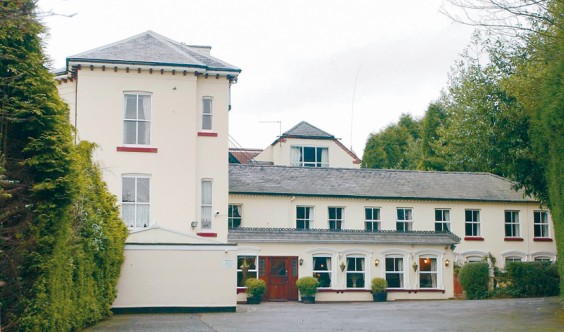
Sally Oldaker returns to a Clent hotel where the food and drink more than live up to the beautiful location.
The last time I visited The Mount Hotel in Clent, it had just been taken over by new owners and was about to undergo a massive refurbishment, bringing the Victorian building right up to date.
Returning to try the brand new grill restaurant, I couldn’t believe the transformation – the bar and lounge area has been decorated in contemporary style with leather sofas, dark wood and striped upholstery, while the restaurant itself is light, spacious and most attractive.
We chose our drinks from the bar (I was informed that real ales will soon be a feature, and was happy enough to settle for a Banks’s bitter) and were invited to take a seat on the comfy sofas where the drinks and menus were soon delivered.
The fact that the menus were stylishly presented in slim wooden folders was an indication of The Mount’s attention to detail, and augured well for the rest of the evening – as did the options within.
The hotel, which was built in about 1850 as a girls’ finishing school, has taken inspiration from these roots – the Victorian pupils enjoyed a diet of fresh, home-cooked local food, and so the new menu consists solely of ingredients produced and sourced from the local area.
Our only problem was deciding what to choose, as we didn’t want our choices to overlap, and we both liked the sound of the roasted vegetable terrine.
As well as the list of starters, which included soup of the day (leek and potato), fillet of beef carpaccio, black tiger prawns and baked boxed camembert, a couple of salads were available as either a starter or a main course.
In the end I picked the terrine, while my companion eventually decided to forgo a starter and save room for dessert (more on that later!).
With our food choices settled, we were left to enjoy our drinks in the lounge rather than going straight to the table.
When we were shown through to the restaurant, a basket of soft, poppy seed-coated bread awaited us, just enough for a pre-starter, and it wasn’t long before my terrine arrived.
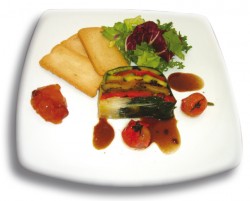
The presentation was beautiful, with the colourful red pepper, courgette and aubergine densely packed in a chunky slice with a leafy outer wrapping, and accompanied by a mini salad.
The dish also came with a tangy chutney and several crunchy crispbreads, and was a delicious and summery way to start the meal.
The main courses had provoked much debate, with the chargrilled steaks, lemon chicken and rack of lamb all seriously tempting – but I had been swayed by the speciality sausage trio.
It proved to be an excellent choice, with each sausage offering a different flavour, and there was no problem in swapping the billed creamy mash for roasted new potatoes with lemon and olives, spotted on the list of side orders.
Bowketts of Oldbury, the source of the sausages, is currently the Supreme Sausage Champion of Great Britain, and it’s not hard to see why – the trio comprised leek, tomato and black pudding varieties, and each had its own special quality.
The leek one had an almost perfumed taste, with the suspicion of pear about it, while the tomato one was tangy with a wonderful deep orangey centre under the chargrilled exterior.
The favourite was the black pudding sausage, which was actually a “regular” sausage studded with pieces of black pudding.
As well as the tasty potatoes, the dish came with a gorgeous red wine gravy plus some seasonal veg.
My companion had picked the smoked chicken salad as her main course, and much care had gone into the presentation of what could have been a simplistic dish.
The ingredients, too, provided plenty of interest, with a variety of mixed leaves and salad vegetables as well as croutons and parmesan – but the real flavour came from the highly smoky chicken and the sweet-and-sharp cranberry dressing.
An unusual salad and large enough to constitute a “proper” main course.
On to desserts, and The Mount’s house speciality is crepes – my companion chose to sample one of these after reluctantly ruling out the chocolate pecan brownie.
Her choice of filling was baked apple (others included profiterole and strawberries and cream), and this came in a sweet, pureed form folded into the light, golden crepe, which looked and tasted like an authentic French version rather than a normal pancake.
Having spotted the ice-creams accompanying other desserts, she was able to request a scoop of honey and ginger flavour with the crepe, and this more than met her expectations.
I considered the poached pear, but had to go for the seasonal fresh fruit salad – it’s not often you find this on a menu these days, so I grab it when I see it.
Attractively presented, as we had by now come to expect, the bowl of refreshing fruit featured plenty of variety and included fresh strawberries and raspberries.
All in all, The Mount had done us proud from start to finish, and we would be very happy to return on another occasion – hopefully others will follow suit, as this restaurant certainly deserves to be full.
* As well as the bar and restaurant, The Mount offers 14 individually-designed en-suite bedrooms, so visitors can soak up even more of the relaxed and friendly atmosphere and enjoy views over the Clent countryside.
The Mount Hotel Bar & Grill
Mount Lane, Clent,
Stourbridge DY9 9PR
Tel: 01562 885904
https://www.themount-hotel.co.uk

We hope you enjoy our magazine in print and online. Please get in touch anytime via email at the address below.
Contact us: info@villageonline.co.uk
© All content is the copyright of Platform Publishing & Media Ltd 2025. For further information, please email info@villageonline.co.uk