
Susan Whitehand offers a personal view of why we need to think carefully about what we construct in our villages.
Traditionally much of north Worcestershire has relatively few villages. Until the nineteenth century it was largely an area of hamlets, dispersed farmsteads and a few market towns. In more recent times a number of commuter settlements have developed – Barnt Green and Blackwell are examples.
A careful look at these “villages” will quickly indicate that they contain little of great age, although some of the country lanes that have been incorporated within them are old.
There are few timber-framed buildings other than the occasional farmstead that has been absorbed into a growing commuter settlement. Nevertheless village life is aspired to by many urban dwellers.
What is it about a village that we find so attractive? What image comes to mind at the mention of the word “village”? More importantly, having “bought” into this image, do we understand its manifestations well enough to conserve them?
I would suggest that a number of aspects of a village make life in it something that is aspired to. The size of a traditional village community was generally small, usually fewer than a thousand people.
There is a widespread feeling that villagers are more neighbourly, taking a genuine interest in one another. All this goes towards encouraging that sense of belonging which in urban areas can be more difficult to achieve.
The sense of community is seen as an important attribute of village life and may also be encouraged by belonging to particular social or sports groups, and perhaps having children at the local school. Another major attraction of the village is its rural location, its informality, trees, green hedgerows and cottage gardens.
All of these attributes – the sense of community, the sense of place – require us to be vigilant if we wish to see the image we “bought” into conserved. That is not to say there should be no change, but that changes should be sensitive to the character of the local environment.
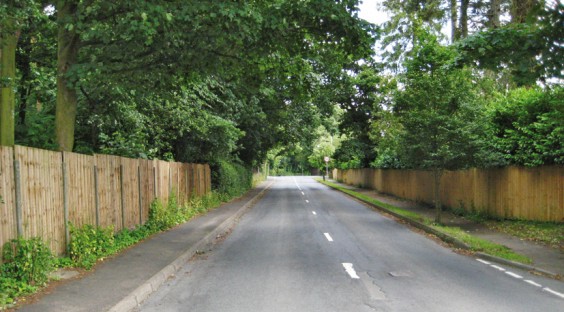
All too frequently changes are made that if carried to their logical conclusion can have a devastating effect on the character of the “village”. For example, the construction of high, close-boarded fences and electric gates are isolating: they are a rebuttal of the sense of community. They destroy the greenness of the environment.
Driving a car replaces walking – with accordant parking problems. Even though many so-called “villages” in north Worcestershire are not old, many of their layouts pre-date the car and many features are evidence of this – winding roads especially.
We need to think more carefully about what we want, and before we make changes, for example to individual houses and gardens. We need to consider what might be the long-term effects.
If you value the characteristics of a village, walk around your local area and consider what those characteristics are and how they could be conserved and enhanced.
Especially think about the cumulative effects of individual changes you may make when later repeated by your neighbours.
Do you really want to convert your local environment into the urban one you left behind?
