
Hannah Genders’ tips for creating a cottage garden.
March is a great month for gardeners – after the long winter we feel as if we are coming alive again along with our beloved plants. Jobs in the garden start in earnest now and many of the vegetables can be planted later this month.
March is also a great time to look at flowering plants especially if, like me, you love the perennial plants. Perennial, as its name suggests, is any plant which flowers year after year – traditionally they die down each winter, as opposed to a shrub which will keep a structure in the winter months even if it loses its leaves.
These perennial flowers are the backbone of our traditional cottage gardens and we are fortunate in this country to have a massive choice (maybe too much choice for those of you new to gardening); they are such versatile plants and can be used in a number of ways.
A herbaceous border, as seen in many of our great country houses, would be almost entirely made up of perennials, usually planted in drifts for maximum effect.
So it’s well worth a visit to Sissinghurst or Packwood House in early summer to gain some inspiration for you own garden – but do take note: the reason this style works well from a design point of view is that the soft planting is set off by the very strong structure around it, either yew hedging or old brick walls. This rule needs to be followed in the domestic garden, too.
For an up-to-date look, try planting these perennials in drifts with different grasses, sometimes referred to as matrix planting. I really like this effect and in this instance the grasses provide the added structure and also some interest when they flower in late summer after the perennials have finished.
The other tried and tested idea is to mix perennials with shrubs, and I do this a lot in planting schemes. The shrubs provide structure throughout the year and the perennials come up as an under-layer of planting, providing added interest and flower colour.
The only drawback to these wonderful plants is the length of their flowering season – traditionally the cottage garden would always be at its best in April, May and June as flowers we know and love, like foxgloves, delphiniums and perennial geraniums, are all at their best in these months.
If you visit some of those country houses in August you might well be disappointed to find that the flowers have all finished, so what can we do to extend this flowering season?
As I’ve alluded to before, using shrubs or grasses will give interest in other months, and you should choose carefully which plants you put in as there are some perennials that flower later in the year.
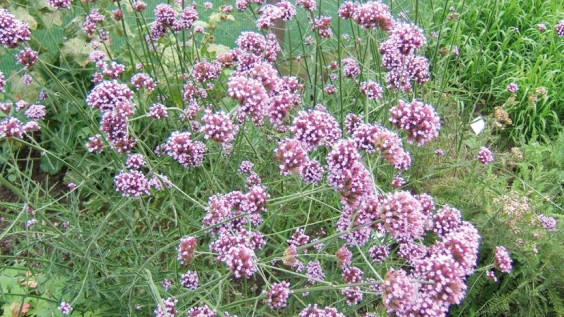
I would recommend Verbena bonariensis (pictured), as I love this flower with its flat, purple heads in late summer. It grows quite tall but has a lovely airy feel and looks especially good in a matrix planting with grasses.
For a splash of bright yellow or orange try the Rudbeckias with its daisy-like flowers and dark centre – you can see where it got its common name of “Black-eyed Susan”.
Another trick is to plant annuals in with the perennials to keep the flowers coming through July and August; they can just be sprinkled on the bare soil in March and left to come up.
Grow something hardy like cosmos or cornflower from seed or plant out some of your spare annuals when you have finished filling your pots.
Finally, don’t forget bulbs – they don’t take up much room and they do such a good job of extending the flowering season.
The lovely little Iris reticulata will pop its head through in February along with the early daffodils, and autumn flowering bulbs like Nerine bowdenii will keep your garden cheerful into the winter months.
* In February’s gardening piece we labelled the main picture incorrectly – it should read: “Seed heads of the common English ivy, Hedera helix.“
