Ian Hayes on an ingenious solution to canal water shortages.
When “Printer” Heming, proprietor and editor of the Redditch Indicator, visited the upper Arrow Valley at Cofton in 1860, he described the river as having an “entangled, mysterious, mingled existence with the waters of the canal”.
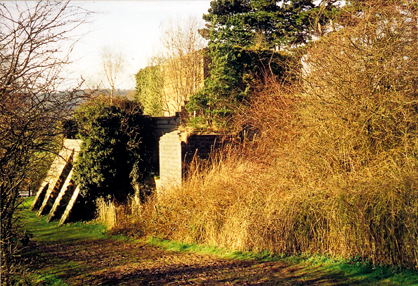
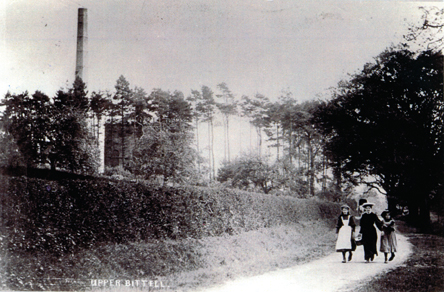
The system was, and is, very complicated and one of the most interesting features is the great pump house which lies about half way along the track between Bittell Farm Road and Cofton.
The story goes way back before the coming of the canal, when a series of fish ponds were constructed by damming up the Arrow. One was subsequently much enlarged to form Cofton Reservoir, while two others, Upper and Lower Arrow pools, were converted to provide power for a small water mill, Cofton Mill, which lasted until about 1830.
The Worcester and Birmingham Canal was planned to cut across the valley below the pools, and the embankment was used to dam up the river yet again, this time to conserve water for the water mills downstream at Alvechurch and Redditch.
The original 1791 Act for the canal, however, would not allow it to extract water from any of the streams along its route. This left the canal in an impossible situation with the canal deprived of water and the mills over-provided.
The problem was finally rectified in 1815 and the canal was allowed to tap most of the local streams. However, there are a few cases, particularly at Alvechurch, where streams are still piped under the canal.
With the passage of every boat a lock full of water was lost down the Tardebigge flight, and by 1830 traffic on the canal had risen to such an extent that canal feeder reservoirs were authorised. One of these, Upper Bittell, was completed in 1832, and contained the equivalent of 10,000 locks of water. The cost was £2,000.
Within a year or two it became apparent that in times of drought even this supply was not enough and in 1835, presumably with the agreement of the millers, a contract was signed for the construction of a pump to convey water from Lower Bittell 50ft up to Upper Bittell, while in 1836 a short branch canal, Jacob’s Arm, was driven from the main canal to a point just below the pump site to transport building materials, and later, fuel for the boiler.
A large Boulton and Watt pumping engine was installed and was almost ready for use in the spring of 1837. However various problems initially prevented the efficient operation of this machine.
Over the years the pump did not work continuously but only at times of water shortage. Often, apparently, an engineer had to be sent specially from Boulton and Watt. It is known that a certain Mr Henry Melley of Parsonage Farm, Cofton (since demolished to make way for the Aero Works), was on call as a stoker when required, in the early years of the 20th century.
The last time that the pump was used was on December 29, 1914, but it was not finally dismantled until some years later. Jacob’s Arm was used comercially and a wharf was built at the bridge under Bittell Farm Road. The last recorded use was to transport drinking water from a spring up the valley down to Reservoir Cottage.
Significantly the early problems with the pump were not finally resolved until 1839, when the canal had, at last, an adequate back-up to its water supply. But on Thursday September 17 1840, Mr William Partridge, headmaster of Alvechurch School, took 30 pupils to the temporary station at Cofton on the Birmingham and Gloucester Railway to see the first steam trains arrive.
The days of canal monopoly were over.
I would like to thank Mrs Irene Newton, Mrs Maria Thornett, Mrs Lorna Sage, and Revd Alan White for help in putting together this article.