Home Blog Page 822

The (giant) parish pump

0
pump
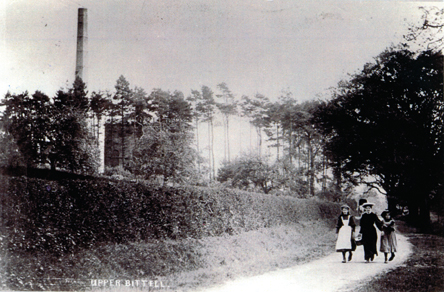
The Engine from Arrow Pool, circa 1908.

Ian Hayes on an ingenious solution to canal water shortages.

When “Printer” Heming, proprietor and editor of the Redditch Indicator, visited the upper Arrow Valley at Cofton in 1860, he described the river as having an “entangled, mysterious, mingled existence with the waters of the canal”.

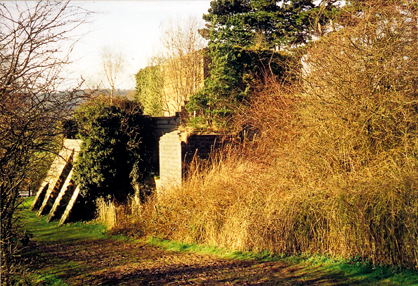
The system was, and is, very complicated and one of the most interesting features is the great pump house which lies about half way along the track between Bittell Farm Road and Cofton.

The story goes way back before the coming of the canal, when a series of fish ponds were constructed by damming up the Arrow. One was subsequently much enlarged to form Cofton Reservoir, while two others, Upper and Lower Arrow pools, were converted to provide power for a small water mill, Cofton Mill, which lasted until about 1830.

The Worcester and Birmingham Canal was planned to cut across the valley below the pools, and the embankment was used to dam up the river yet again, this time to conserve water for the water mills downstream at Alvechurch and Redditch.

The original 1791 Act for the canal, however, would not allow it to extract water from any of the streams along its route. This left the canal in an impossible situation with the canal deprived of water and the mills over-provided.

The problem was finally rectified in 1815 and the canal was allowed to tap most of the local streams. However, there are a few cases, particularly at Alvechurch, where streams are still piped under the canal.

With the passage of every boat a lock full of water was lost down the Tardebigge flight, and by 1830 traffic on the canal had risen to such an extent that canal feeder reservoirs were authorised. One of these, Upper Bittell, was completed in 1832, and contained the equivalent of 10,000 locks of water. The cost was £2,000.

Within a year or two it became apparent that in times of drought even this supply was not enough and in 1835, presumably with the agreement of the millers, a contract was signed for the construction of a pump to convey water from Lower Bittell 50ft up to Upper Bittell, while in 1836 a short branch canal, Jacob’s Arm, was driven from the main canal to a point just below the pump site to transport building materials, and later, fuel for the boiler.

A large Boulton and Watt pumping engine was installed and was almost ready for use in the spring of 1837. However various problems initially prevented the efficient operation of this machine.

Over the years the pump did not work continuously but only at times of water shortage. Often, apparently, an engineer had to be sent specially from Boulton and Watt. It is known that a certain Mr Henry Melley of Parsonage Farm, Cofton (since demolished to make way for the Aero Works), was on call as a stoker when required, in the early years of the 20th century.

The last time that the pump was used was on December 29, 1914, but it was not finally dismantled until some years later. Jacob’s Arm was used comercially and a wharf was built at the bridge under Bittell Farm Road. The last recorded use was to transport drinking water from a spring up the valley down to Reservoir Cottage.

Significantly the early problems with the pump were not finally resolved until 1839, when the canal had, at last, an adequate back-up to its water supply. But on Thursday September 17 1840, Mr William Partridge, headmaster of Alvechurch School, took 30 pupils to the temporary station at Cofton on the Birmingham and Gloucester Railway to see the first steam trains arrive.

The days of canal monopoly were over.

I would like to thank Mrs Irene Newton, Mrs Maria Thornett, Mrs Lorna Sage, and Revd Alan White for help in putting together this article.

pump
Bittell Pump House in 1993

Blackwell Club: going strong at 100

group
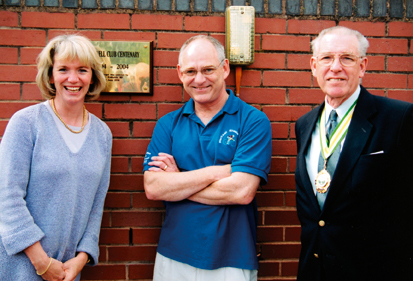
Julie Kirkbride MP with Ivan Beavis and parish chairman Ron Brown

Blackwell Club is celebrating its centenary this year with a host of special events to mark the occasion. Although the official birthday is November 3 – the date when the club’s inaugural meeting was held in 1904 – celebrations have already been taking place this summer.

In June a Summer Centenary Day was held, involving fun for all the family. Children were entertained with Punch & Judy shows from Professor Greatrix and face painting provided by mums from Linthurst First School, while visitors both young and old had the chance to learn circus skills, try their luck on the coconut shy and play Giant Jenga!

The Hog Roast was washed down with pints of special Blackwell One Hundred bitter, and local MP Julie Kirkbride came along to help club chairman Ian Beavis unveil a commemorative plaque. Blackwell Wind brass band and 60s cover band Rain provided musical entertainment, and the day ended with a charity auction.

Blackwell Club’s annual charity cycle ride was renamed The Centenary Challenge this year, and took place on July 3, with 33 riders covering 3,000 miles between them, on varying routes encompassing Britain’s “other” Blackwells in Derbyshire and Warwickshire. Back at base, awards were presented by parish council chairman Ron Brown. It is hoped that £10,000 was raised to add to the £30,000 from the past three years.

Centenary events continue throughout the year, including a bonfire and firework display on November 6. Find out more at https://www.blackwellclub.co.uk

A brief history of Blackwell Club

Blackwell Club was founded in 1904 as a working men’s club for the village and district, housed in the old Wesleyan Chapel on St Catherine’s Road, then known as School Lane. This stone building, erected in 1847 and in use until the Methodist Church on Greenhill opened in 1882, still stands at the entrance the The Avenue.

It was leased to the club free of charge for three years by its trustees, though the grand sum of £40 had been spent on renovation. It seems that the idea behind forming the club was that wealthy industrial families in the area wanted to “better” the lives of working men in the area.

A series of “smoking concerts” were the first events, involving songs and music performed by the committee. It is interesting to note that ladies were invited to one of these, though it would take 93 years before women could be full club members. Educational lectures were also given, often with an agricultural theme, and an airgun team was formed to play in a local league.

By the 1920s, the club had moved premises, probably to Linthurst Newtown. It moved to its present location in 1936, now under the ownership of its members, and was licensed for the first time. Activities in those days included billiards, dominoes and cribbage, recitals and concerts, an annual flower and vegetable show and various day trips.

In the post-war years, Blackwell changed considerably, with new homes and the M42 being built, the closure of the station and village hall, and population expansion. The club adapted to these changes, particularly by admitting women on certain occasions and eventually letting them become associate, then full, members.

In recent times the club has become more family-friendly, and fuctions as the main social centre for the village.

Living the dream

celebrating

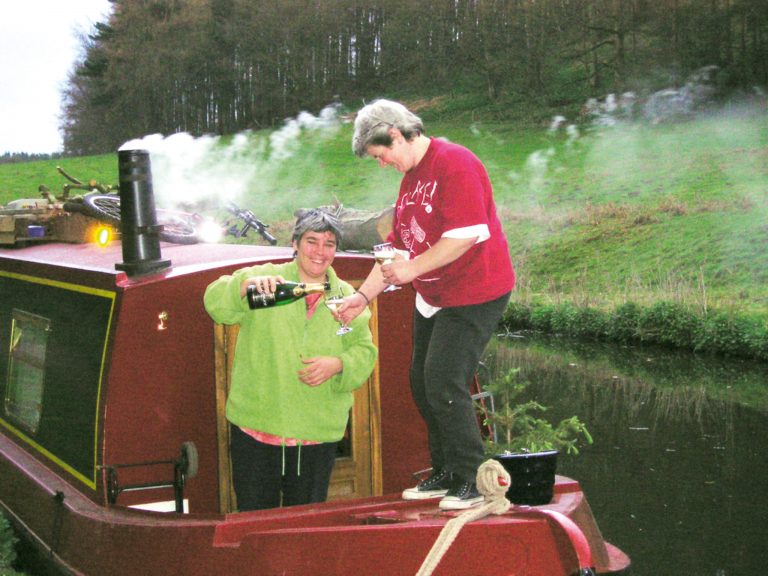
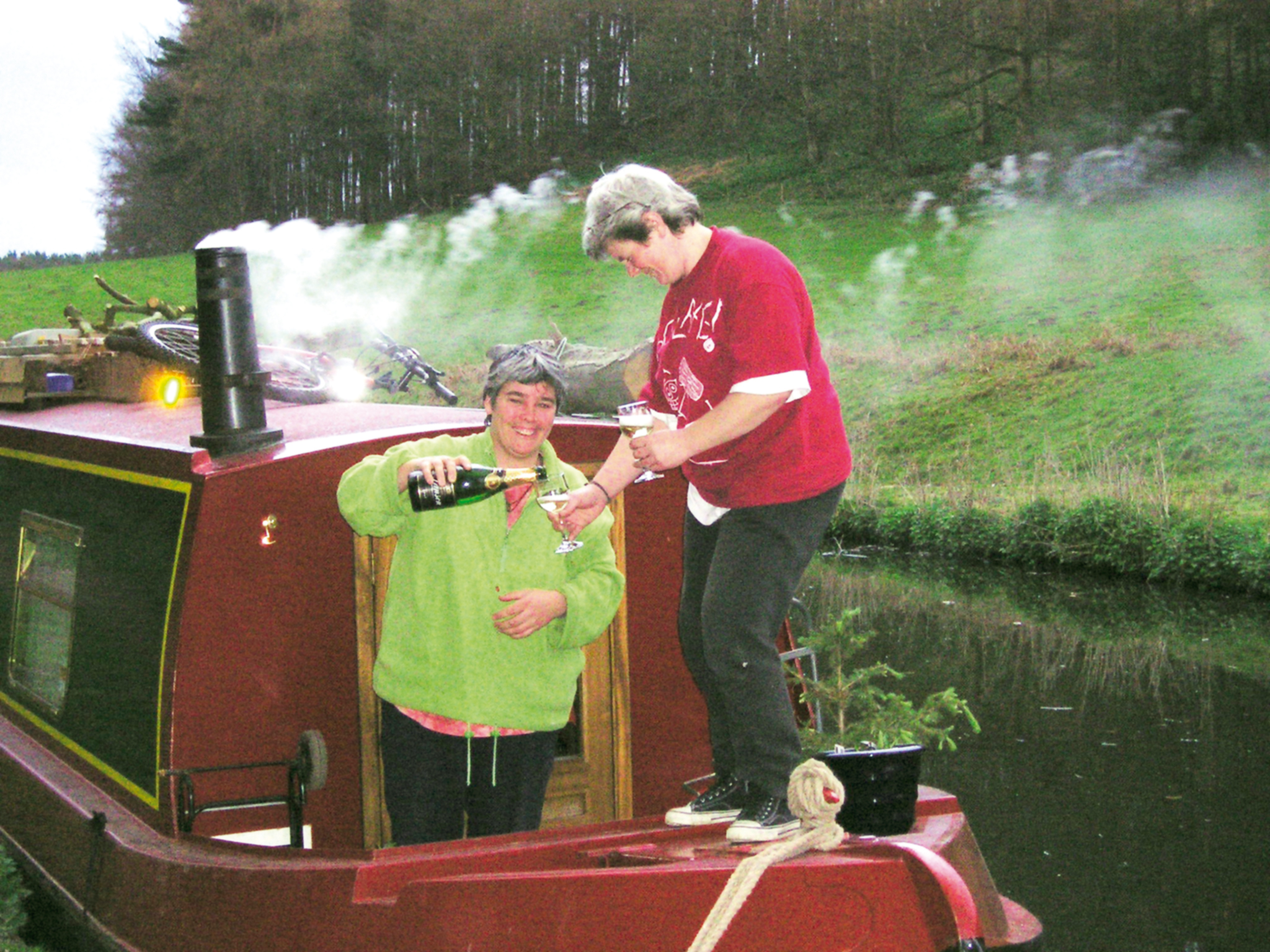
A walk past Alvechurch Marina gave Philippa and Martine the idea of escaping the rat race. Just a few months later, writes Philippa, they had embarked on a new life afloat. . .

Alvechurch is home. We have walked its hills and towpaths over many seasons and watched the oaks on the playing fields change colour; we never thought we wanted more.

I remember when that changed. It was winter. Martine and I were walking past the sleeping boats in Alvechurch Marina when our crazed menopausal minds began to think about “escape”.

I was a special needs teacher and Martine worked in the travel industry. We loved our life, but we hated the rat race. Suddenly we wanted to live our dreams…

Within three months, we had sold our house in Latimer Road, left our jobs and were living on a narrowboat with our four cats. We were penniless, but free!

Unable to afford a fully fitted narrowboat, we found ourselves living in a bare steel shell without electricity, water or furniture. With a brightly coloured bucket for a make-do toilet, sleeping bags for beds, and a toolbox full of strange (but apparently useful) tools to build the boat ourselves, we survived through laughter and womanly resourcefulness.

We wanted to be as eco-friendly and self-sufficient as possible, so chose not to have any unnecessary consumerisms such as a washing machine or a colour TV. We collected reclaimed wood to build bedrooms, a galley and a bathroom, and tackled the plumbing with the help of plastic push-fit pipes and a DIY book.

Initially, the capable men of Alvechurch Boats were close by with welcome advice, and the Weighbridge pub kept our spirits high with our favourite brew of Tillerman’s Tipple.

Martine is Irish-born so the boat was bound to have connections with her powerful roots: “bhaile”, which means “homewards” in Irish, became the boat’s name. Sharing an eccentric life with this crazy Irish woman, I decided I must start a diary to record the laughter and tears which filled each day and a book will be waiting for a good publisher soon.

My two children, both at university in Staffordshire, had responded to the news of their mother’s new lifestyle with a “silence” I knew needed reassurance, so we decided to journey northwards, taking ‘bhaile to say hello to them. Being constantly on the move made the boat build more difficult, but we were not bothered about being sensible.

Waving goodbye to Alvechurch, we cruised off into unfamiliar territory, suddenly noticing that Fear was teaching us to yell at each other. When I was at the tiller (a boat’s steering wheel) in charge of 58 feet of steel, a certain pitch in my scream would fetch Martine instantly to my rescue at tight bends and bridges. Thankfully she is a more competent tillerswoman than I.

Old sailors had warned us of the perils of the mighty Wast Hills tunnel ahead; it seemed that if we survived the 40-minute navigation through its black depths, dripping with spiders and bats, we might then face a gang of Kings Norton’s infamous youth who apparently sport on vulnerable boaters with weapons of stones and urine. Martine is tunnel-phobic which did not help our anticipation of the day.

As a mother of teenagers, I knew that the youths would not emerge from their beds until after midday, so we had planned a 5am start. Our tactics paid off and we were drinking coffee with a view of the new Mailbox in Birmingham’s Gas Street Basin by 9am.

It was here that we really began to appreciate our lifestyle change as we looked out at Birmingham with a different “eye view”. We were boat people now, in a water underworld watching city office workers hurry past with no time to notice us.

The following day took us beyond Wolverhampton. Arriving in Staffordshire, 34 miles and 25 locks later, we realised that it had taken us two full days to travel a distance which my old Fiat Uno would have covered in an hour!

Summer sped by as we reached the Potteries, and we began to prepare for winter. Our indispensable wood burning stove would look after our every need over the harsh winter months; heating our boat, cooking our food, boiling our kettle, keeping the cats cosy and drying our hand washing. Supplies of wood had to be gathered and chopped for our stove and extra woollies and blankets stowed aboard.

We began to fit in with canal culture and met fascinating characters of the “cut”: one boatman predicts the weather through his artificial leg, and another, a Scottish aristocrat, absconded 12 years ago to a boat life alone and still grieves over whisky for his lost Highlands love.

We made many friends along our way but Sonia and Neil, who we got to know in Stone on the Trent & Mersey canal, became the most special. As the snow fell and the canal froze, we shared our first magical boat Christmas with them, carrying memories of these two magnificent swans with us after the thaw.

Hawthorn blossom, ducklings and new life brought an idyllic spring as ‘bhaile, for the first time, faced southwards. We had survived our first harsh winter and were looking forward to travelling wherever the canals took us for the summer.

The Staffordshire & Worcestershire canal briefly followed the M6 just outside Stafford, deafening us as we choked on the memories of our former life. We did not want to return to the rat race or drive in the middle lane of the M6 again, but our self-sufficient good life was being threatened by our struggling finances, with boat maintenance and licence costs mounting.

Starting our own small arts-based business from the boat seemed to be an answer. My son produced websites for us, and we took on another exciting new challenge. Martine and I are both artists influenced by our outdoor lifestyle, keen to share some of the simple pleasures we are lucky enough to enjoy: having thrown away our alarm clocks, we wake to the sounds of dawn, watch the noisy flight of geese in the evenings and have time to spot nature’s daily magic.

We decided to work together to create nature-led arts which capture this “calm” often missing from everyday life. Martine has a growing portfolio of stunning photographs which we exhibit in eco-friendly frames handcrafted in our tiny boat workshop. We also create unusual greetings cards.

Passing through Stourport, we joined the River Severn which brought us back to the Worcester & Birmingham canal at Worcester; 16 miles and 58 locks later, we reached Tardebigge Top Lock, exhausted!

Two more (thankfully short) tunnels, and ‘bhaile’s bow peeks round the bend and we can see the colours of Alvechurch Marina again after four seasons away. We cannot wait to enjoy liquid celebrations as we moor conveniently opposite The Crown.

Alvechurch has a swan of its own now who visits us every day for food and chat; he is getting to know us and we call him Alf of Alvechurch.

The sun is shining this September morning and the bells of St Laurence Church are comforting. With ‘bhaile glad to linger a while in Alvechurch, the cats have settled down for a day’s snooze and I am working in our open air office in ‘bhaile’s bow.

Passers-by stop and chat, delighted by a glimpse of one of the cats or our prize geranium showing off on the roof of the boat.

“What a wonderful life! We are thinking about living on a narrowboat…”

A woman speaks her dream to me and gesticulates to her husband, standing beside her with their dog impatiently pulling on the end of its lead. Their eyes look at ‘bhaile hungrily.

“Go for it…” I reply.

To find out more about us and our arts and crafts, please visit our website: www.artsafloat.co.uk
Why install a library handrail now?

0

It would be interesting to know how much more money has been wasted on erecting a handrail after all this time to a library [Alvechurch] that is proposing to move from the centre of the village to an area in the wilds.

Old people and children will have to cross a busy main road and I feel certain that the elderly people, who must be the greater users of the handrail, will resort to buying magazines to while the time away.

Elderly Avid Reader

From the kerbside . . . to the gutter

0

kerb

I have been attempting to get satisfactory responses about Barnt Green street cleaning – or lack of it – for six months. I have finally received news that the street cleaning machines are old and frequently break down, hence no cleaning is done.

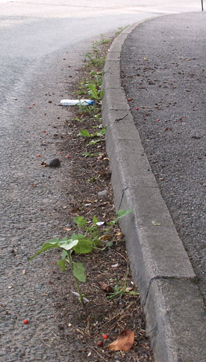
The streets are supposed to be swept a minimum of four times per year, however I am sure Barnt Green has not been cleaned in the last two years, perhaps longer. We have a fine collection of weeds, even tree seedlings, growing in gutters (please see photo, right).

Then, in respect of the dreadful wheeled bin episode, it has become apparent that collection of household waste will be fortnightly.

Should residents be away, bins will not be placed “kerbside” and, given a fortnightly frequency of collection, waste might be uncollected for up to six weeks. This is scandalous.

I have asked Brian Fuller [the Bromsgrove district councillor for Hillside ward and holder of Bromsgrove’s environmental portfolio] for an explanation.

Both of these episodes illustrate bad management. I would now like to know what penalties will be applied to those in positions of authority in order to avoid Bromsgrove residents having to pay increased taxes to cover this.

Les Bailey, Barnt Green

Labour calls up a major

jones

The man with the task of swinging this area’s voters to Labour should have few problems planning his campaign. As a Major in the Territorial Army, recently returned from Iraq, David Jones is used to running a tricky operation.

He was mobilised in 2003 and spent five months as officer commanding 225 Plant Squadron Royal Monmouthshire Royal Engineers just south of Basra. While in Iraq he organised a large fun run for coalition personnel that helped to raise several thousand pounds for the local hospital in Umm Qasr to buy essential medical supplies.

Mr Jones, aged 37, who has been selected as Labour’s prospective parliamentary candidate to take on Tory Julie Kirkbride for the Bromsgrove seat, is originally from Belfast but has lived in the Bromsgrove area for around 12 years and now lives in Catshill.

He is a manager at Focus Futures in Birmingham, working with homeless young people aged 16-25. “Professionally I have been working with disadvantaged communities for all my adult life,” he says.

He received the MBE in the recent Queen’s Birthday Honours List for work with young people in the West Midlands

Mr Jones is also a magistrate on the Bromsgrove and Redditch Bench and works voluntarily as the regional representative for the Commonwealth Youth Exchange Council, with responsibility for the West Midlands, Worcestershire and Shropshire.

He is also a committee member for the Birmingham Branch of the Army Benevolent Fund and St Martins Youth & Community Centre, Perry Common, Birmingham

He is a keen sportsman and enjoys linking events to raise money. In May this year he completed the Belfast Marathon and raised money for the Army Benevolent Fund. In the past he has raised money for Acorns Children’s Hospice and leukaemia charities.

Mr Jones describes himself as a “family man”, with five-year-old twin daughters, Hannah and Sophie, who attend Stoke Prior First School.

As a politician he pledges to “challenge and not turn a blind eye to the poorly performing Bromsgrove District Council” and to introduce more affordable housing to the area while securing the green belt. “I ask the question, will your children be able to buy a home or live in Bromsgrove?” he says.

He also wants to attract ”more suitable amenities to Bromsgrove”, adding: “Let’s be frank, the high street is dying on its feet and requires energising.”

Law and order is also high on his list: “It is essential to a good quality of life for all and as a Labour MP I would work to provide the right tools to tackle anti- social behaviour in the district.”

Thank you for a great magazine

0

What a marvellous magazine this is. I have been in regular receipt of this ever since its inception some years ago, and it never fails to inform and delight.

The “regular” features over the months such as traffic calming measures and the Alvechurch church land sale have been most amusing in their ability to stir up the letters page!

The balance of articles has always been very good – as an example, September’s pieces on “Prime of Life” and “Lucy’s on song”, are truly delightful and a lovely mix. Serious issues such as the rendering plant and other issues are well covered, as is local history.

News of local festivals and school activities are most welcome, and the whole publication professionally delivered.

I love receiving each issue – very many thanks for a marvellous magazine – well done and keep up the good work!

Mr S Tovey, Barnt Green 

The origins of the ‘Black Paddock’

0

I wonder if any of your readers can answer me one very simple question.

I believe there were two burial sites in Alvechurch for the unfortunate victims of the Black Death and that one of these communal sites was somewhere in Pestilence Lane, so named after that terrible disease, and the other was, and still is, known as the Black Paddock.

When the route for the M42 motorway was projected and investigated, some human remains were discovered somewhere in the vicinity of Pestilence Lane and the proposed route was, quite properly, modified slightly so as not to violate and desecrate that most sensitive area.

Now the simple question: Why, on the one hand, was the course of an important motorway altered, and on the other hand, in the face of overwhelming local opposition, a complete housing estate was permitted to be built on a similar site?

Fortunately I was not a victim of the terrible Black Death, but if I had been I would most certainly not like a housing estate (however salubrious) to be built over my dead body.

Morris Jephcott, Alvechurch

Editor’s note: We were under the impression the Black Paddock was named after the Black Path running alongside, so named because it was made from black ash. If any reader can throw any light on this, or on changes to the route of the M42, please do write in.

Paying price of Man’s meddling

0

The matter of the proposed rendering plant at Hopwood needs a good look at Nature’s method of dealing with dead animals over thousands of years, then later Man’s method and finally the Government’s recent legislation, to get some idea of proportion.

Soil started as a sterile collection of rock particles on which nothing grew. Nature produced tiny plant life, which, when it died, added nutrient to the sand, allowing development of larger plants.

In due course this encouraged development of small creatures, forerunners of present creatures (worms, ants, fish, birds, deer, wolves, sheep, cattle etc.) all of whom excreted, further enriching the soil, producing more and larger plants.

Both plants and creatures died. Some of them were eaten by those still alive. Those not eaten decomposed, adding to the fertility of the soil (which, by the way, gets rid of the pollution naturally).

When Man appeared, and later settled in villages, the process continued, but any decomposing creatures were buried to remove the mess and stink – after skin, bones, horns etc., being of use to man, had been removed.

This system continued up to the present day, but so few people understand the natural cycle that a fly-ridden rotting carcass says “pollution” instead of “nature removing pollution” and they scream for action to be taken.

Thus in the last year or so, Defra (Department for Environment, Farming and Rural Affairs) has brought in regulations to prohibit the burying of dead farm animals, though allowing even large pet animals to be buried, and ignoring what happens to decomposing wild animals. Hardly logical. Farmers, naturally, buried carcasses quickly.

Since burying is forbidden, Defra has set up a procedure whereby a farmer has to keep dead animals in a building until such time as an officially approved lorry arrives to remove them (which can be days later, when carcasses start to decompose) and transfers them to approved rendering plants, often many miles away.

So, objectors, target the Government, who have reacted to countrywide fears of pollution by passing regulations that have results you like even less. Nature, or more exactly God, had a much better system. When we decide to interfere we must put up with what happens.

Very few politicians or civil servants, on any subject, bother to study in depth the matter on which they legislate, hence the many silly regulations passed to appease protest groups, who often also only have a partial understanding of the matter.

A rendering plant is not unlike a crematorium. There are very few complaints about these. So take heart.

V Greaves, Barnt Green

Fundraising for facilities

group

Alvechurch Village Hall committee is organising a series of fundraising events to pay for new kitchen and toilet facilities.

The first event is a Pre-Christmas Fair on November 6, to be opened by former England cricketer Gladstone Small at 2pm.

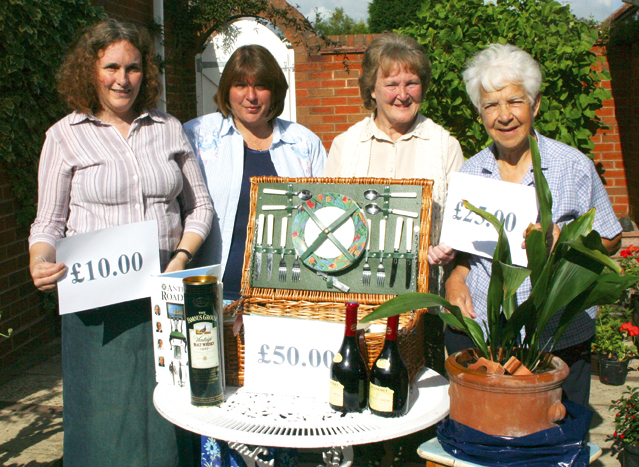
Above: Fundraisers Sue Williams, Diane Farlow, Grayce Sheppard and Lorna Sage with some of the prizes already donated for the tombola.