Home Blog Page 798

How to stage   a play . . . in 8 steps

0

Wizard of Oz

Alvechurch Dramatic Society’s Chris Davies takes us through the essential elements involved in putting on a play.

Alvechurch Dramatic Society is on the hunt for new members. Best get that out in the open straight away, I think.

You’re still reading? Good. If you’re thinking to yourself, “Alvechurch Dramatic what?”, then where have you been for the past 57 years?

Yep, we really have been going that long! If you’re thinking, “Wow, that sounds intriguing” – and I’m sure you are – your next thought might well be, “What’s it all about then, and how do I get involved?”

Or it could be, “I’ve had enough of this, where’s the letters page?”

If it’s the former, then you’re in luck. Here, ladies and gentlemen, is our easy cut-out-and-lose-only-to-find-it-three-months-later-when-looking-for-your-passport guide to how Alvechurch Dramatic Society puts on a play, in eight easy steps…

1. Finding a play to produce
Sometimes a piece of cake, sometimes rather more tricky. The show needs to be suitable in terms of cast size and type (choruses of thousands are, for the moment, out).

It also needs to be something that we think our audience will enjoy (this is, after all, the point of the exercise!).

In recent years, the Society has produced a variety of shows, including a comic pastiche (Daisy Pulls it Off); a murder mystery (A Murder is Announced); a family show (The Wizard of Oz); a drama (A Warwickshire Testimony) and a classic comedy (Present Laughter).

Most recently, we performed Michael Frayn’s hilarious selection of short plays observing the trials and tribulations of modern life, Alarms and Excursions. Next up, we are planning a pantomime for the end of November, our first panto since Beauty and the Beast five years ago. Oh yes we are.

2. Finding someone to direct the play
If you thought step one was tricky, it’s got nothing on this one. The normal process of selecting a director is that everyone in the Society runs away or looks at the floor when the subject is raised, until one brave (or foolhardy) soul breaks the silence with a “Well, maybe. . .” and is immediately pounced on (in the nicest possible way) by grateful associates.

Now, if there is anyone out there thinking they might fancy a stab at directing a play or two, they will be welcomed with open arms and quite possibly a cash bribe, believe me. 

3. Rehearsals
In which the director shuffles various cast members around the stage – and usually back again – whilst asking them to speak with “a bit more passion. No, not that much,” and so on.

Also an opportunity for bouts of hilarity as cast members accidentally fall off chairs or detect all manner of innuendo in apparently innocent lines.

Rehearsals take place on Tuesdays and Thursdays in the run-up to productions. For the autumn panto, they will start in September.

4. Post-rehearsal discourse
Very important, this. Members of the Society repair to a local watering hole to discuss how things are going and other matters of great import.

If the director is absent (or at the bar), this might be an opportunity to indulge in a spot of whinging about how daft it is that they are being asked to perform that handstand in the middle of Act 2.

Most planning of future social events (such as theatre trips, beer & skittles, barbecues, race nights, quizzes and so on) is, perhaps not surprisingly, done in the pub.

5. Design and build of sets and props
It’s not just about acting, you know. Where would we be without those members who design the set and certain essential props, and take the lead in constructing the same?

Up a certain creek without a certain implement, that’s where. The Society couldn’t do without people who are ‘good with their hands’ because, let’s face it, most of us don’t know one end of a screwdriver from the other.

If you’d like to get involved in this sort of way, we’d love to see you at our new members night, or at any other time. Backstage members are especially important at step 4, to stop things from getting too ‘luvvie’!

6. Sound and lighting provision
Another fundamental corps within the society. These hardy souls are consigned to the ‘lighting box’ – a delightful euphemism for the shoebox-sized crow’s nest at one end of the Village Hall.

From this eyrie the show is lit and provided with its necessary sound and other special effects. Great fun if you like setting off explosions and manipulating spotlights. . .

‘Techies’ are especially respected by other members of the Society who are painfully aware of the power held by someone who could, if they wanted to, turn the lights out on you during your ‘big speech’. . .

7. Performing
Ah, the crux of the matter – finally it’s time for the actors to strut their stuff on stage, and to run around in a panic backstage looking for that vital prop that’s temporarily gone missing.

This is where the vital help of the stage manager and backstage crew is, well – vital. Not to mention those members working ‘front of house’ to ensure that tickets are checked, programmes sold, tea and coffee dispensed and the raffle drawn without too many fights breaking out. 

8. After the show
Time to relax and have a drink or two – before starting all over again! Post-play inquests are especially entertaining, as everyone tries to work out how we got away with missing out half the script and paraphrasing the rest so that “My lord, your presence is requested with the utmost urgency” ends up as “Oy, come with me, quick!” Only joking. 

Now, has that whetted your appetite at all? Of course it has! What you need to know is that we will be holding a New Members Night on Thursday September 8 at Alvechurch Village Hall, starting at 8pm.

If you are interested in getting involved in any capacity, then we’d be delighted to see you. No previous experience is necessary – just a willingness to get stuck in and get the beers in later on.

You don’t have to leave it ‘til then of course – you can give us a ring anytime on 0121 447 7071, or come down to the Village Hall on any Thursday from September 1. Hope to see you soon, dahlings. . .

Above: Kelly Harrington as the Cowardly Lion, Adam Brown as the Tinman, Fiona Holmes as Dorothy and Chris Davies as the Scarecrow in The Wizard of Oz (2003).

“Knee-jerk” response

I was disappointed, but not surprised to read the “knee-jerk” negative reactions to my letter. Your correspondents have clearly not read my proposal thoroughly, nor do they offer any alternative. 

I have, however, become accustomed to ridicule. As students in the late fifties, we advocated the integration of the Birmingham Canal Network to enhance the city environment. 

Similarly a proposal to pedestrianise Bromsgrove High Street was scorned!

Your initial challenge to inspire a constructive debate seems to have failed and we are destined to continue to re-organise deck-chairs on the Titanic!

David Barton, ARIBA

Victorian Day at Blackwell

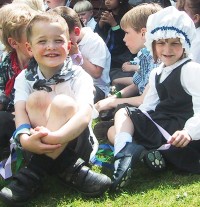
Victorians

Blackwell First School pupils entered into the spirit of a Victorian Day by dressing up in 19th century clothing to learn about the life of Victorian children.

The day was rounded off with a traditional dance around a Maypole.

One rule for one . . .

I feel the following information may be of some use for anyone who has loved ones in St Laurence graveyard, Alvechurch.

After a conversation with the Rector regarding overgrown plots and polished headstones, his response to my complaint was as follows: The overgrown plots were not his responsibility, as these plots were leased to family members for a limited period of time and the work that was carried out was done voluntarily.

The polished-look memorial was said to be a mistake, but it is heart rending to myself and others who have struggled with the red tape of the diocese about the ruling of uniform-type memorials, denying all who suffer the great pain of bereavement.

Yet, as we can now all see, large glazed buildings surpass such rulings.

Name and address supplied, Alvechurch

Canoeing for charity

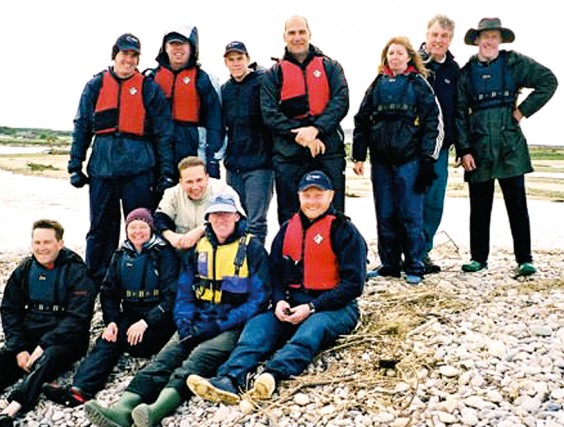
Team

A team from the Abbey Hotel Golf & Country Club, Bordesley, completed a 100km canoe trek from Aviemore to the sea.

After three days battling atrocious Scottish weather, they raised around £2,000 for The British Heart Foundation.

My turn to soak up Chelsea’s sights

Chelsea Pensioners' garden

Hannah Genders enjoys a more relaxed trip to this year’s RHS Flower Show. . .and looks forward to 2006!

Wow – the Chelsea Flower Show! It was so great to be back there again and catch up with old friends and acquaintances from last year.

I had several things running through my mind as I entered the showground on the Sunday of the build-up week, just one day before the gardens were judged on the Monday, or Press day.

Firstly, I felt very privileged to be back there, and secondly, I was relieved to have stuck to my idea of having a year off before entering again for 2006.

It takes a great deal of time during a year to design and build a garden for Chelsea, and so far I have done two gardens in the “small” garden category. My sponsors have approached me to do another one and this time to go for a “show” garden which is four times the size of the little gardens and a lot more work.

The submission date for the design entry is also sooner – July instead of September – so if you can imagine, it would have meant finishing my garden last year and then having just a month to turn around the next design. Madness? I thought so, and decided to take a year to consolidate my ideas ready for 2006.

As I write this article my ideas are in my head and I have a few weeks to put them all on paper, but I am really excited about the theme and know that no one has done anything like it before.

I just hope it grabs the judges’ imagination and that they give me permission to go ahead this August – if it goes to plan, I then have a year to work with my team to do it all again on a bigger scale.

Anyway, back to Chelsea this year. I was lucky enough to get in on a press pass and was able to view the gardens during the last rush of planting, washing down and general preparations before the big day of judging on the Monday.

It was great fun to swan around wearing my press badge, and when invited into the gardens to do some photography I would take out my small (but beautifully formed) digital camera.

I definitely looked out of place against the other “press” who either had large cameras, zoom lenses or a separate photographer in tow if they were really important!

There is a real buzz during the day as exhibitors are able to work through the night on the Sunday, but must finish their garden by 7am on Monday.

In reality most of the gardens are well under way by the time the press start visiting, although there are always some exceptions when things go wrong; for example, Andy Sturgeon’s Merrill Lynch Garden.

He was so stressed when I talked to him that morning because a large curved wall had been ruined in transit and he was trying to find enough plants to fill a large gap.

I was really pleased to hear he got his gold medal after all that hassle and for what was – in my opinion – the best show garden this year; beautifully designed and exquisitely planted.

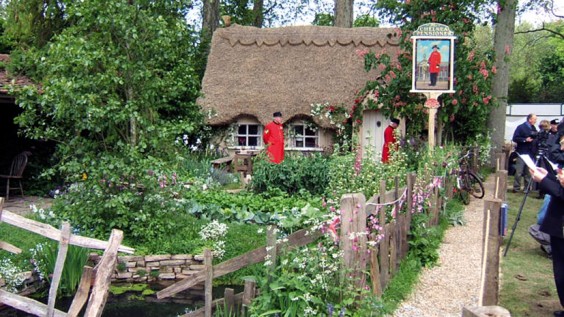
It was also lovely to see the Chelsea Pensioners’ Garden (above), designed by Julian Dowle, come away with a gold medal and Best in Show. Julian has the reputation of being one of the nicest guys at Chelsea and my own experience backs this up.

As this is likely to be his last show after creating many award-winning gardens, I was really pleased for him, and he scooped the BBC People’s Award to boot.

If you went to Chelsea this year I hope you managed to get some great ideas for your own garden – and here’s to next year!

For more information on this year’s Chelsea, and to view the gardens and the awards in full, visit the RHS website: https://www.rhs.org.uk.

Green light for festival

Alvechurch Alight is going ahead in September with the popular, pagan-style lantern procession planned to weave through the village on Saturday September 24.

Lantern-making workshops will be held at the Village Hall on September 11 and 18, from 10am-12.30 and 1.30 – 4pm.
 
The organising committee is looking for help over the festival weekend and anyone who wants to get involved should ring Annette English on 0121 445 0108.

Living a magical dream

Christian

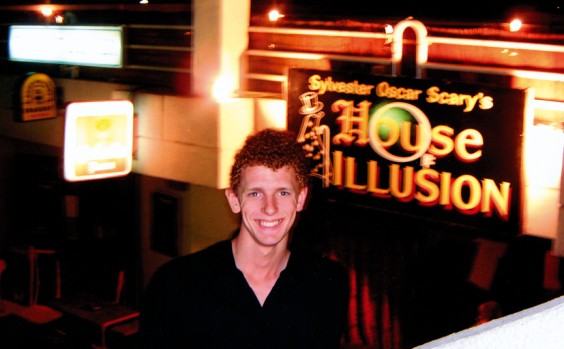
Back in November 2003 we featured Christian Fletcher, a student from The Swan pub in Alvechurch, in a series on young village achievers.

His dream was to travel the world performing magic – and it’s come true already.

Christian, now aged 17, left South Bromsgrove High School in December 2004 determined to turn his dream into reality. In February of this year he auditioned in Birmingham for a large entertainments company.

Auditions were held all over the country and in March, Christian was informed that he had been successful, and was rewarded with a six-month contract to work in Salou, on the Costa Dorada in Spain.

He flew out in April along with 70 other performers including dancers, singers, comedians and three other magicians. Some of them had previously worked as Red Coats at Butlins so he was among some very talented people.

The company he works for provides entertainment for about 24 hotels in Salou and works closely with Thomson, First Choice and Cosmos.

Christian is working at The House of Illusion, a magic theatre club, where holidaymakers pay for an evening of magic, including free drinks and a meal. He performs two shows each evening, six nights a week.

The show starts with the magician doing close-up magic among the audience, then there is a comedy magic slot, stage magic using doves, and magic that defies definition: illusions and escapology.

“I get such a buzz from performing,” says Christian. “When people clap and cheer, it’s fantastic, especially working in this small intimate area.

“I feel I can really communicate with the audience and I am learning so much more than close-up magic.

“I love the fact that I can look out of my dressing-room window and see the audience before I go out on stage. During my time out here I will also learn the technical side of stage lighting and sound and soon hope to be using the microphone, which is a bit daunting.

“In September when the resort quietens down I hope to have my own show and will perform in the hotels. I now have a fully-trained magician’s assistant, who of course is small enough to fit into my stage illusions!

“My boss is keen for all the entertainers to develop new skills and I really look forward to working with doves, so I’ve told my dad to extend his aviary ready for when I come home.

“I have now settled in, though obviously at first I was a little homesick. I am living in an apartment overlooking the beach, close to where I work.

“Although I perform each evening from 7pm until 2am, I do have most of the day to myself, apart from three welcome meetings a week with the relevant travel representatives.

“What more could I ask for – living the dream, being in the sunshine and getting paid for it!”

A boy’s own war in Worcestershire

0

Mike with uncle and aunt

Mike Bannister shares some more childhood reminiscences from his ‘Dandelion Days’ spent in 1940s Cofton and Alvechurch.

Church-going to St Michael’s and All Angels meant adventures, not always theological. At the end of Chestnut Drive, there was a walled garden with a wooden door.

A rough path, The Stocken (we all said ‘Stocking’), led out from under a ‘spreading’ chestnut tree, south along a causeway between the Cofton Pools, known to us choirboys as ‘Big Rezza’ and ‘Little Rezza’.

Beside that track, the German bombs had come down in the night, leaving craters and holes with sandy sides for sliding. There we mined, with careless hands, ugly shards of deadly steel shrapnel, which we took for trophies.

In that small wilderness, we were free, for an hour or so, to sing and shout, throw stones, play games, take risks, and make small mischief. 

In 1942, winter hung on, with deep snow. Our ‘Little Nanny’ Priscilla Rollason (five foot nothing of whirlwind and uncompromising discipline) came to stay. Our dear sister Judith was born on a Monday – Cub night.

Marcella, whose heart was never strong, had ‘Done her Best’, had lived through an ordeal, and brought a magic gift. Everyone was mightily relieved about this, and happy to be five.

One Sunday I came in very late from Miss Chaffer’s Sunday School, my short green trousers not quite dry, after a tricky voyage across the Little Rezza aboard a waterlogged door, in the company of a tall kid called Kenny.

I little realised that Elsie Marcella had already walked out to look for me, had observed my daring adventure from on high, and was waiting for me with a gale of questions.

She began with, “Have you any idea how to swim? Do you happen to know how deep that pool is?” It ended with a belting, some tears, and early bedtime.

Another time Dave and I, after Morning Service, came home with news so thrilling we could not keep it to ourselves. We had found a grand CAVE, not twenty feet below the Rezza dam.

It was to be our new ‘Camp’ and we needed to think of a name for it. Charles looked thoughtful, and said perhaps he should come to see it for himself.

We set out, bubbling with the excitement of it all, only to find the entrance to our ‘cave’ guarded by a very solemn-looking, fully-armed soldier. The military guard talked at some length to Dad, who then walked us home very quietly.

The ‘cave’, Charles explained, was the point of entry of a bomb, which in the soft clay of the dam had failed to detonate. It would be better, he thought, if we did not venture there again, until the high explosive was removed.

That night we lay awake, whispering in the darkness, brothers in alarm, thinking, differently, of The Green Hill Far Away…. 

How close did we come to ‘the enemy’? Pretty close. Over the following months, the sky seemed always full of aeroplanes. By day they grumbled and moaned from north to south, never very high, it seemed to me.

Ours, the friendly ones, had circle targets painted on their sides. If they were very close, we ran to and fro, cheering and waving. Once a friendly fighter-pilot rocked his Spitfire, side to side, as if to return our childish salutations.

At night it was a different story. First the siren droned its banshee drone, warning us of danger. Then, faintly at first, came an angry little noise, like cornered wasps, this time south to north. The whole effect was fearful.

One special time in broad daylight, Mom had just served up a rabbit stew, with potatoes and greens and gravy. Suddenly the wasp noise was very near; we ran outside.

There, within a ‘stone’s throw’, a huge plane, not with a circle but with a cross – an ‘enemy’ plane – came trailing black smoke, so near, so very clear. We could make out the pilot’s anxious face, peering overside, as if to seek some smooth landing place to put his aircraft down.

Uncanny it was to see men in danger of almost certain death, sinking earthwards. ‘Enemy’ or not, it was a desperate situation.

Some of the enemy survived the heat of battle; some lay with dreadful injuries in hospital wards, receiving the care that was their due under the Conventions of War.  There it was that our father went each day to work as Charge Nurse over a ward of the severely wounded and disabled from all nations.

Being party to these matters certainly broadened our green minds and, to some extent, I think it began to suggest to us the sad futility of war.

March 1944: Little Nanny was staying with us again. By some coincidence, our second little sister, Jenifer, was born.

In spite of our concerns about her weary heart, Marcella lived through childbirth, again, and we were thankful to greet a new life in the family. Now we were six.

One Saturday that summer, the local community trooped out, over The Stocken, down Cofton Church Lane, to goggle at the wreck of a German fighter plane that had come down in the meadows above The Arrow Pools.

The silver nose-cone was buried in the turf, its propeller buckled, the dome smashed out. The field was guarded, cordoned off, for security reasons.

The ‘grown ups’ talked about how the pilot’s feet had been mangled in the impact. We stared and stared, and then went quietly home.

It would be several weeks before small pieces of that plane began to circulate at school, swapped for bits of shrapnel, the pocket trading tokens of wartime school kids up and down the land.

THE BEGINNING OF THE END
Time went by; the milkman came each day, drew up with his horse, and ladled out rich milk that actually tasted like milk, from churn to jug.

Once a month, Arnold Leadbetter, the handsome poacher cum game-keeper,  appeared, smiling, at the back door of Drachenfels. He would have fresh eggs or a rabbit for the pot; sometimes even unofficial butter in a clean fold of greaseproof paper.

Marcella was a genius at ‘Making Ends Meet’ – through careful economies, she somehow managed to ‘afford’ such extras.

One clear, windless day in early summer 1944, the whole sky went dark with glider planes. Like long-winged birds, hooked up to roaring planes, they drifted in their hundreds, going south again.

Planes like these had flown Uncle Bert Muir over the North Sea, months before, to drop him by parachute into Arnhem, and thence, due to the ineptitude of his commanders, to months in captivity.

But today’s migration was something else: something new and big was happening, something that not even Alvar Liddel had mentioned on the wireless. We were puzzled, and excited.

It was the sixth of June. The Longest Day was just beginning.

April 1945: I overheard Marcella say that she intended to stop the Daily Telegraph for a week. Sure, we could still have the Knockout comic on Wednesday as usual, with Sexton Blake and Stone-Age Kit the Ancient Brit (“Daft, I call it”).

Every week, Charles made a fuss of ‘getting first read’ of the Knockout. There would be a mock dispute that raised voices, and the threat of us being late for the school ‘chara’.

But why no Telegraph, for one particular week, with its small photographs and acres of grey print that seemed to occupy them both for ages? I continued to be mystified, but not for long.

On my way from school some days later, an almost complete spread of the Chronicle, adrift on the breeze, almost wrapped itself round my feet as I dawdled home past Fletcher’s Amusement Arcade. This was my moment.

I quickly stamped on the greasy sheet, a cast-off chip paper, and turned it over to find the most ghastly scenes of half-clothed men, women and boys clutching at the wire of some prison yard in Bergen Belsen.

There was more, and worse, of bodies piled askew, and earth pits being filled. My gut churned. I headed for home, wanting only the quiet dominion of Drachenfels, the smell of good food, the clink of tea-cups, and Elsie Marcella; quiet and constant in her care and love for all of us.

That same night I lay awake, mouth dry, unable to broach the topic of the pictures I had seen, and lost, quite lost, for any explanation as to why and how people could do these things.

It was a hateful world, a million miles from all I knew and loved; a hideous living dream to haunt me all my days.

Sometime in May 1945, we tumbled off the ‘chara’ as usual one afternoon, free from the overbearing gloom of Waseley Hills for another evening. Brother Dave and I went to climb and swing in the willow trees between the tramway terminus, and the gate to Cofton Park.

This was no ordinary day. A youth from Fletcher’s Fair came down, shouting wonderful news. “The War‘s over!’ he said. He’d heard it on the wireless that very hour. I was eight and a half years old, and I felt gloriously happy for weeks and months to come.

Victory in Europe! There was a huge bonfire in Parsonage Drive. Uncle Bert, our own family parachuting hero, newly released from the Stalag Luft prison, went missing for three whole days.

Mr York Jones, who owned, I think, the Lickey Tea Rooms, gave each child in the neighbourhood a free goody-bag with ice-cream.

Collecting mine with Dave and Betty Coley, I fell off my bike, and was taken, in great pain, by Elsie Marcella on the tram to Selly Oak Hospital and there was fitted with a fracture sling.

ALVECHURCH FOUND
Somehow, life was never quite as threatening again. A year went by, and in 1946, we made the great family migration to Alvechurch village, and to Gothic Cottages in Mill Lane.

For us four children, Mother Nature opened her doors to a time of peace, freedom, and if not exactly plenty, enough at least.

Our new home was lit by gas. Electricity was not available. Where once the wireless had reigned supreme, reading seemed to take hold of our lives as never before.

It began with the pages of Arthur Ransome’s Coot Club, Henry Williamson’s Tarka, and Richard Jeffries’ Bevis, whose doings we re-imagined as we haunted the wild green run of Rasmussen’s Dingle, and The Dumps, the old carp pools below Mynott’s farm.

In company with our namesakes, the Mynott brothers, Dave and I camped out and cooked, mapped and made dens, or rambled our summer days away;  finding bird nests, stalking rabbits, keeping company with grass-snakes and kingfishers, fishing for perch, finding mushrooms, and drinking from clear springs. It was an idyll like no other.

Coming back home after spending a night or two under the stars always meant a special welcome. In fact, one of the single, greatest joys of being a ‘little brother’ was being ‘spoiled’.

I would creep into the quarry-floored kitchen at Gothic Cottage, and settle into the corner chair at the work-table, just when sweet cooking smells were at their most appetising, and there, sometimes, I was gifted – and surprised, always surprised – with some sublime delicacy from the casserole; maybe the rabbit’s head (tender tongue, cheek-meat and brain!) dripping with a delicious deep brown aromatic gravy of garden herbs and vegetables; or perhaps a simple chicken claw, golden, gluey, succulent and nourishing.

What grander tokens of a mother’s love were ever wished upon a child?

But there remained one singular and important lesson for me to learn about War. A strange experience lay waiting in these woodland ways as, gradually, Dave and I began to involve ourselves in the routines of life on Mill Farm.

Ernst Rasmussen’s magnificent dairy herd of 30 or so long-horned Ayrshires was managed by Celia Burman, Tony and John Small, and we were fascinated, brother Dave and I. It was our first introduction to Real Men’s Work. We shared in it, and we learned about life to the full.

From the war-prison camp in Tanyard Lane came German prisoners, helping to rebuild productivity; carrying forward the landwork until our own heroes would came marching home.

Dressed in dark brown fatigues and heavy boots, Hans, Max and Josef spoke only a few words of English. Helping them learn more was my first experience of teaching, and one which made me feel positive and somehow useful in the world.
 
As time went on these three became family friends. We came to see them as no more than ordinary men, with the same capacity for laughter, love and loneliness.

Their feelings about war mirrored our own feelings; that it was a massive and mindless cruelty, a waste of time and life, a curse upon the common people everywhere. In all my sixty years and more, I have not found much reason to think otherwise.

Occasionally, our ‘alien friends’ came to supper, listening in awe as Charles regaled us with the family saga: how only three generations previously, not quite a hundred years ago, his mother’s (my grandmother’s) people had migrated from Prussia to the Port of Cardiff; fugitives from the horrors of some other war.

Often these strange, convivial evenings ended with some singing, handclasps, and a few sentimental tears.

When the time came for their release and repatriation, one of our German friends made Elsie Marcella a willow basket; another made Charles a ‘German Village Scene’. It was a village, just like ours, in winter snow, set inside a half-size whisky bottle, bright-painted and magical.

Time for leave-taking; no more folk-songs, no more sad smiles or halting reminiscences. The war was finished with, for good and all; and in our innocence, we reassured ourselves that there could never be another.

* Mike Bannister’s collection of 25 poems, Greenstreet Fragments, was published in 2003 and is on sale at £4.50 at Alvechurch Post Office. Signed copies can be bought from Mike at £4.50, post-free, from 23 Station Road, Halesworth, Suffolk IP19 8BZ.

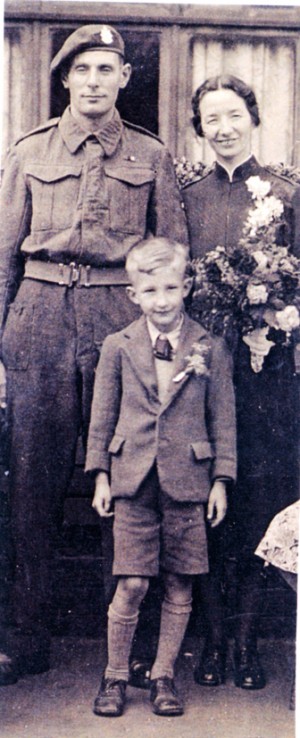
Pictured: Mike with his Uncle Bert and Aunty Josephine on their wedding day in 1945.

People are left out

We returned from Alvechurch Village Society’s meeting on Wednes­day June 23 about the new schools, charged up with cynicism provoked by the general tenor of the meeting.

Unfortunately this seems to fit a common pattern these days. Despite central government’s new-found philosophy of including local people in the decision-making process on local matters, the panel seemed to be out of touch with both local people and central government (if panel members are to be believed).

The actual process was rather redolent of the way in which decisions were taken regarding the new church hall, but that’s history now.

The common underlying pattern to emerge is that decisions are made by various elected and non-elected esoteric groups, who then seem to hatch a plan to present them in a quasi-public meeting under the guise of inclusion, in the hope that “the public” are persuaded by their plausible arguments.

At this meeting, at no time did we hear any of the panel acknowledge that an audience member had a valid point of disagreement, and that as a consequence a particular issue would be reconsidered.

The term that comes to mind is railroading – or perhaps steamrollering might be better. The whole meeting was simply a PR stunt and made it almost pointless. The only inclusion apparent was being included in the audience to be told what is going to be done to us.

We have a particular gripe which might be a minor one compared with those of others we heard, but ours concerns the inevitable increase in traffic along Old Rectory Lane (the rat run syndrome), which is already periodically overloaded, evidenced by residents in the lane experiencing hazards entering and exiting their own driveways, opposing traffic arguments about who reverses, also sounding horns at each other 10 feet from someone’s bedroom, minor collisions at the chicane, at least one serious accident at the junction with Radford Road, and destruction of the fabric of the lane by inconsiderate and inappropriate vehicles driving on the verges.

All of this is under the national speed limit of 60 mph, and where even 20 mph is too fast. How barmy can you get?

Time and again we have argued that a single track, blind bend lane is totally unsuitable for so-called normal modern day traffic, and some appropriate restrictions are necessary before the new school run starts.

Peter Cottrell & Christine Swainson
Old Rectory Lane, Alvechurch