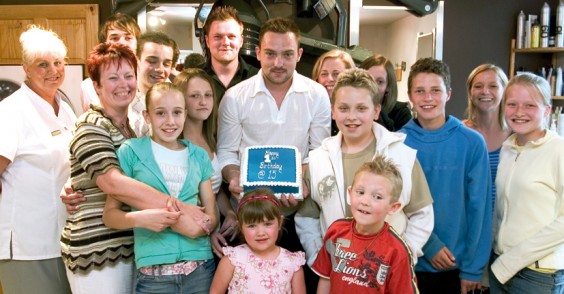
Staff, customers and friends gathered to celebrate the first birthday of @15, the hair and beauty salon in Alvechurch.
Salon boss GJ Hudson (pictured holding the cake) was joined by guests for food and drink as well as free beauty treatments.
Staff, customers and friends gathered to celebrate the first birthday of @15, the hair and beauty salon in Alvechurch.
Salon boss GJ Hudson (pictured holding the cake) was joined by guests for food and drink as well as free beauty treatments.
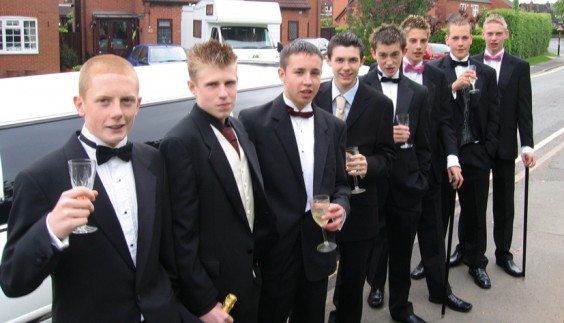
A group of Alvechurch teens journeyed to their prom at Bromsgrove’s Hilton Hotel in style.
Luke Edwards, Adam Harding, Tom Newman, Zach Mould, Alex Roebuck, Luke Shovelton, Adam Warder and Matt Bodnar-Smith – all in Year 11 at North Bromsgrove High School – were picked up from Tanyard Lane and driven around for an hour in a white limousine listening to ear-splitting rap music before being delivered to the function.

I am writing to express my disgust at the state of the St Laurence churchyard.
My family and I went to great expense for our mom to be buried in Alvechurch, as she was born there, and it was her wish to be buried near her family.
It was our understanding that the graveyard was maintained to a good standard. I felt so hurt and angry to see my mother, who was a very dignified and proud woman, insulted in this way.
I respect and understand the fact that it is down to a lack of volunteers and the wet month of May.
However, it is my belief that they have volunteers serving tea and coffee in the recently acquired cafe and licensed bar – is it that they are concentrating more on the inside and immediate surrounding area of the church and are neglecting the bottom part of the graveyard?
After making a phonecall to complain, I was told that it was the family’s duty to maintain their loved one’s grave, and the church’s to maintain paths. What about elderly or disabled people who are unable to maintain their loved ones’ graves?
Are people aware of this, or is it a new policy? I’m sure anyone visiting their lost loved ones would not be prepared for the kind of devastation and hurt that I have suffered.
In the four years since my mom was buried here, this has been my first cause to complain, and hopefully my last, as I am hoping that the standards will soon resume their previous level – I have no wish to offend anyone.
Natasha Tucker, Coventry
The bollards and planters installed on the eastern pavement in Barnt Green village look smart but, as your picture (June 2006, p5) shows, vehicles now park on the edge of the pavement and partly on the road, where they add to the existing traffic chaos.
Parking is a big and increasing problem, and the construction of a wheelchair crossing, while most desirable, has further reduced the parking spaces.
The eastern pavement is unnecessarily wide for pedestrian use, while the section nearest the road is uncomfortable to walk on, because of its slope.
In my opinion a better use of the space would have been to convert the outer section to obliquely orientated parking spaces, and edge the narrower, inner pavement with kerbstones, to demarcate it as a pedestrian walkway.
Richard H R White, Barnt Green
Alvechurch Village Hall will close on July 24 for further refurbishments
It will reopen with an Open Afternoon on August 26 from 2-4pm, with stalls, cream teas and a chance to see the new kitchen and other improvements.

Alvechurch will soon see work start on the biggest construction project in the village since the building of the M42.
The new “through school” and library to replace Crown Meadow First and Alvechurch Middle schools will transform the fields in the north of the village by Birmingham Road.
Work will be carried out by HBG Construction, part of the company which won the £60 million PFI contract to upgrade Bromsgrove area schools.
Before a sod has been turned, however, HBG has been working with pupils from the schools on various projects.
One of these was a newt watch at the site of the new schools where one group of children was lucky enough to see a great crested newt, which had been captured in the nearby pond.
Phil Eves, Learning Resource Co-ordinator from HBG, says his company has been keen to raise awareness of the new development through the school pupils.
HBG also helped out in Crown Meadow First School’s participation in a “walking bus” record attampt and has been working with year 8 pupils from the Middle School to raise the awareness of careers available in the construction industry.
And as The Village was going to press, HBG was planning a cricket challenge at Alvechurch Cricket Club on July 18 where residents could also ask further questions about the project and about the major effects it will have on Birmingham Road.
The evening was open to villagers and children with entertainment laid on by HBG and the proceeds going to Andy’s Fund.
Pictured: Josie Ross (left) and Emily O’Neill hold the banner at the front of Crown Meadow’s walking bus record attempt.

Wet weather couldn’t dampen the spirit of the Chelsea Flower Show, writes Hannah Genders.
It almost didn’t feel like Chelsea this year, with the grey skies and steady rain – I must admit I felt really sorry for the exhibitors who were outside, having to contend with such awful weather.
I was fortunate enough to have two days at the show this year; Sunday, which is still classed as a build-up day with many of the exhibitors frantically finishing their gardens, and Monday, which is the official press day before the show opens to RHS members on the Tuesday morning. Armed with my new camera, I was ready to be inspired.
The large show gardens on Main Avenue were certainly inspirational. Cleve West had created the garden for Saga Insurance, the main show sponsors this year.
Cleve’s garden contained some really dramatic sculptures throughout, with three massive bowls in the back section of the garden for collecting water.
Whereas most designers had packed the plants for a very full effect, Cleve had planted up in a way that was more like a real garden, allowing the plants room to shine and surrounding the areas with pea gravel.
It was a brave move and I am glad it paid off with the judges, who awarded him a gold medal.
Tom Stuart Smith’s garden for the Daily Telegraph won a well-deserved gold medal and also walked away with the Best in Show title.
The combination of rusted metal walls as a backdrop with copper coloured iris in the foreground was really beautiful.
On the corner of Main Avenue was Andy Sturgeon’s garden for Cancer Research. It was full of life and vitality with a large swimming pool and seating area under the curved waterfall.
As with all his gardens, the planting combinations were exquisite.
One of my favourites this year was in the small show gardens category: Chris Beardshaw’s garden, entitled “Growing for Life at Boveridge House”, really stood out.
The inspiration comes from Boveridge House in Dorset where Chris is involved in a restoration project.
The gardens at Boveridge were originally designed by Gertrude Jekyll and the garden Chris had created at Chelsea was classically formal with the soft planting associated with Jekyll’s style.
Pale blue iris and forget-me-nots were set off by a beautiful, pale yellow tulip called Tulipa ‘Spring Green’. The blue irises were still wrapped in paper on the Sunday just to make sure they were at their very best for the judging the next day.
Aside from this being a well executed exhibit, there was also a special message behind this garden. The house at Boveridge is now a residential home for young adults with special needs.
It is Chris’s intention to set up an educational programme to train these young people in all aspects of horticulture, under the title “Growing for Life”. A number of the young people had helped with the garden at Chelsea.
Having started my own horticultural career working in a special school farm and gardens, I can understand Chris’ enthusiasm for this project and it was great to hear that he received a gold medal for his lovely garden.
Just along from Chris’ garden was another eye-catching exhibit called Garden Africa (pictured above). This garden looked so different from all the others and it had been put together on a very low budget with a sponsor coming on board only at the very last minute.
The Garden Africa initiative uses garden-related projects to help fight the battle against HIV/AIDS and malnutrition in Southern Africa.
The Chelsea garden they had created was a typical example of the sort of garden they would build with volunteers on their training programme, complete with a little hut, the characteristic red soil and even an old car seat propped up in the planting.
It was very refreshing to see this little garden in amongst all the glamour of Chelsea and a privilege to meet some of the people involved in this inspiring project.
This year, what with all the bad weather, the Great Pavilion was the place to be. Rob and Kim Hurst from The Cottage Herbery nursery in Worcestershire had put together a beautiful display.
It really looked like a cottage garden and as well as celebrating 30 years of organic, peat-free growing, they also had two new plant introductions – a deep red nasturtium called ‘Indian Ruby’ and a very delicate Astrantia named after the nursery, which Kim informed me turned an apricot pink as the flowers matured.
Also under cover in the Grand Pavilion was the Kirstenbosch exhibit; with 27 gold medals to date this stand is always worth a visit. Using only plants native to Southern Africa, the designers had created a stunning feature with large earthenware pots and screens to sub-divide the stand.
The Barbados Horticultural Society created an incredibly colourful display and completed the experience with a steel band playing next to their stand on press day. You really could spend a whole day in the Grand Pavilion and never venture outside – there is so much to see and learn.
Despite the weather, Chelsea had managed to pull it off again – for sheer inspiration this really is the greatest flower show in the world.
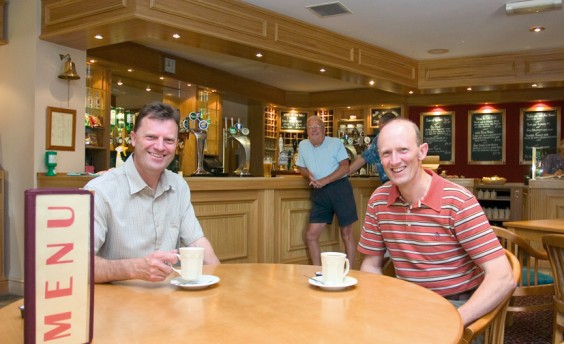
Richard Peach revisits Bromsgrove Golf Centre, which is celebrating ten years of a clubhouse everyone can enjoy.
There is a lingering image of a golf club being the sort of place frequented only by blazer-clad men of a certain age who haven’t seen their toes for more years than they’d care to admit.
Woe betide anyone arriving in the clubhouse without a tie and, in any case, if you’re not a member then you’re not welcome at all.
Thankfully such dinosaurs are fast disappearing, helped on their way to extinction by economic reality and the growth of a new breed of golf centres that emerged during the golfing boom of the 1980s.
These were the days when the game was so popular that hopefuls would sleep in their cars outside the Lickey Hills public course on a Friday night to be sure of a game the following day.
More courses were needed and, as the game’s administrators cast around for ideas, farmers across the country formed an orderly queue to point out they had the land and they reckoned they could make good use of it by encouraging people to whack small white balls around the place.
At Slideslow Farm, owned by the Morris family on the hills between Burcot and the eastern edge of Bromsgrove, this was not a new idea. Ted Morris, a golfer himself, had attempted to get planning permission for golf there in the 1970s, but been knocked back.
With the new demand recognised, however, in 1989 the Morrises – by now sons Philip and Adam were on board – were able to start the golf dream rolling with a 41-bay driving range, administered from a portable cabin.
A nine-hole “pay and play” course followed three years later which proved very popular and helped to provide an outlet for some of the pent-up demand from golfers (I should know, I was one of them) with a second nine holes following three years later.
These were still run from the cabin, where golfers would cheerfully arrive to stump up the green fee for a round, but grander things were planned and in July 1996 a brand new clubhouse, designed to nestle into the bottom of the course, was opened to many plaudits.
To celebrate its 10th anniversary, Adam and Philip, who now run the centre as co-directors, have just spent £150,000 on a major refurbishment of the clubhouse’s facilities.
Adam said: “Over the past ten years we have built a reputation as a centre of excellence in relation to golf, along with business and conferencing facilities.
“This latest investment is designed to enhance and broaden the appeal of the clubhouse restaurant in its own right.”
And, of course, everyone is welcome to call in for a drink or a meal so the talk isn’t all of missed putts or sliced drives. In fact, Adam says they get a lot of non-golfing customers walking in from nearby parts of Bromsgrove for a meal or driving there and making use of the many parking spaces available.
“We do all the catering ourselves and have gone from a staff of three at the start to around 30 now,” Adam explains.
The menu offers something for everyone, from traditional English fare to Mexican, Chinese, Italian and Indian. There is a specials board and the restaurant also offers dining on a theme, such as the popular Fish Week or a Creole Night, for example.
For people looking for somewhere new to enjoy a Sunday roast (three courses for £10.25) in a lovely setting – with plenty of al fresco dining space on hot days – it’s certainly worth trying, and you could always drop in for a drink beforehand to get a feel for the place.
For golfing readers, if you haven’t played at Bromsgrove for a while, you’ll be astonished, as I was, by the growth of the trees around the course.
In the 10 years since I last reviewed it for another publication, they have flourished to bring magnificent definition to the fairways.
The secret, as I discovered touring the course with Adam, is in his love for trees. As a former employee of Webbs of Wychbold, Adam knows every variety and seems to know individually many of the thousands of trees around the course.
Bromsgrove Golf Centre is a real local business success story and even if you never play golf it provides everyone with attractive views on the edge of town and somewhere different to enjoy a meal or a drink.
* Golf was first played on the hills of Slideslow Farm more than 100 years ago when it was the home of Bromsgrove Golf Club, formed in 1894.
The club started out at Breakback, just off Rock Hill, until it moved to Slideslow in 1904. The club played a 2,537 yard course there until 1912, when it moved back to Breakback before closing in 1918.
The Slideslow course was described as having “nine rather sporting holes”, with golf only played on Saturday afternoons, the greens having been mown in the morning.
The “fairways” would have been the land in its natural state, trimmed by grazing livestock.
There were around 80 men and 20 women members who played competitions against other local clubs, including Blackwell in 1896, with Bromsgrove victorious, although Blackwell gained revenge the following year.
Golf Centre Reception: 01527 570505
Restaurant: 01527 579179
https://www.bromsgrovegolfcentre.com
Pictured: Adam and Philip
ADVERTISEMENT FEATURE
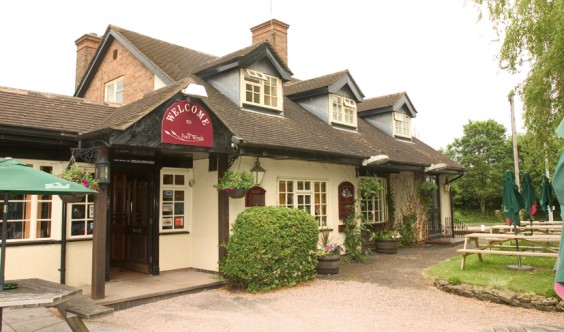
With so many pub-restaurants relying on frozen or ready-prepared food, establishments offering good quality home-cooked food seem to be few and far between – but the Four Winds at Belbroughton prides itself on doing just that.
“As far as possible, everything on the menu is freshly cooked on the premises, right down to the batter for the battered cod,” says owner and manager James Judd.
The menu offers a comprehensive selection of traditional, well-loved dishes available for both lunch and dinner, with food served from 12–9pm.
Particular highlights include Belbroughton Lamb in the chef’s own Belbroughton sauce, and a steak, mushroom and ale pie made with beer from Hobson’s brewery in Cleobury Mortimer.
Meanwhile, the regularly-changing “specials” mean more choice for diners, with many dishes reflecting seasonal produce – fresh lobster has recently been on offer, alongside mussels and asparagus.
As well as the regular menu, a special lunch menu is available from Monday to Saturday from 12–5pm, with two courses for £4.95. On Sundays between 12 and 5pm patrons can enjoy a three-course roast dinner for £9.99.
The quality of the food is not the only attraction at the Four Winds, with the friendly and relaxed ambience contributing to its popularity. “I felt it was important to keep that traditional atmosphere,” says James, who has been in charge for 15 months.
The restaurant is fairly informal, but the efficient table service means diners can relax and enjoy both the food and the surroundings – including the lovely countryside views.
A large garden area allows for maximum appreciation of the venue’s setting: “On a clear day you can see right across Worcestershire and Shropshire to the Clee Hills,” James points out.
Those visiting for a drink will no doubt be pleased with the rotating range of cask ales and the 40-strong wine and champagne list, while a selection of cocktail pitchers are the ideal refreshment for a summer’s day.
The Four Winds
Hollies Hill, Belbroughton
01562 730332
A variety of traditional businesses are thriving at Burcot Forge, writes Sally Oldaker.
In an age of mass-produced and imported goods, it’s great to see smaller, traditional businesses thriving in the local area. Burcot Forge is a case in point, where a group of businesses have formed a small community on the historic site.
The Forge itself continues to operate as such, almost 100 years after it was first opened by the Floyd brothers.
Today it is run by blacksmith David Franklin, who took over the business last September and creates railings, gates, curtain rails, fire baskets and decorative items like weather vanes and house numbers.
“After I was made redundant from Rover, I worked at SeaLion boatbuilders in Kidderminster for a few months, and then I noticed that the Forge was on the market,” David explains.
“I had always enjoyed metal work as a hobby, including customising vehicles, so the idea of taking on this business really appealed to me.”
Since then David has had plenty of work in the immediate area and further afield – as he points out, a traditional blacksmith is quite a rare find these days.
Keen to preserve the history of the Forge, he also takes pride in the fact that his creations are of extremely high quality in comparison with mass-produced metal work.
“All the items I make are fully galvanised with a method called pot-dipping, where the coating adheres to both the inside and outside of the metal to make it much stronger,” he explains.
“Many manufacturers spray the metal with zinc coating, which looks fine but won’t last as long.”
David’s products are also low-maintenance, another benefit of the galvanising process – items can still be painted in glossy black, but because the metal underneath has been properly galvanised, it won’t rust under the paint and cause it to flake off.
He adds that many imported products are “cast metal”, which cannot be fixed if anything goes wrong. The durability of David’s work, on the other hand, means that any such problems are far less likely – plus, he is not far away if more advice or additional items are required.
“Being a smaller, traditional business, I can offer a more personalised and more creative service,” he says.
David displays a book of photographs of previous projects, helpful for those customers who need a little assistance with choosing a design, though he will also work to a client’s own design – for instance, someone recently asked for a weather vane in the shape of a reindeer.
“It’s not a case of ‘one size fits all’ – it’s about what people want,” he says. “Although I do sometimes get people asking if I can shoe their horses, and I have to turn them down!”
The Forge stopped shoeing horses 50 years ago when there was no longer a real demand for the service, but otherwise the business retains its traditional atmosphere.
Many local homes have benefited from David’s handiwork – one client, whose home had been broken into three times, reports that he has not been broken into since David installed his new gates and railings.
David’s work can also be seen in the park in the centre of Barnt Green, where the Forge’s previous owner, David Eastwood, had created the archway.
“He did Phase One, and I completed Phase Two!” says David, who also made the bus shelter window frames.
Burcot Forge is also home to a dress maker, a wood turner and a stonemason – all traditional businesses that benefit strongly from the support of the local community.
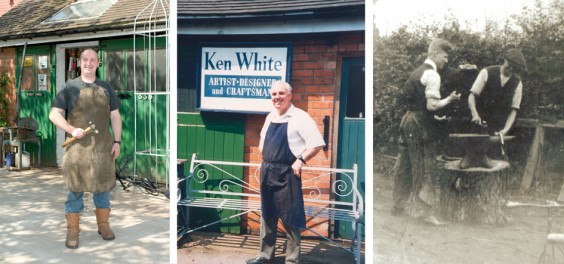
Pictured (from left): David outside the Forge; Ken White, of Blackwell, outside the Forge in the days when he was the iron man of Burcot; The Floyd brothers who founded the original business.

We hope you enjoy our magazine in print and online. Please get in touch anytime via email at the address below.
Contact us: info@villageonline.co.uk
© All content is the copyright of Platform Publishing & Media Ltd 2025. For further information, please email info@villageonline.co.uk