Home Blog Page 758

The light goes out for village festival

The 10th Alvechurch Alight festival was the last – for the time being at least.

The organising committee took the decision last month not to go ahead with a festival this autumn.

Annette English, who had been the committee chairman for the past two years and involved for the past five, told The Village it was time for a change.

“The committee is really only five stalwarts, and two of us were not doing it this year – which did not leave enough to continue. I think it is sad – it was lovely to have a celebration in Alvechurch that brings the community together.”

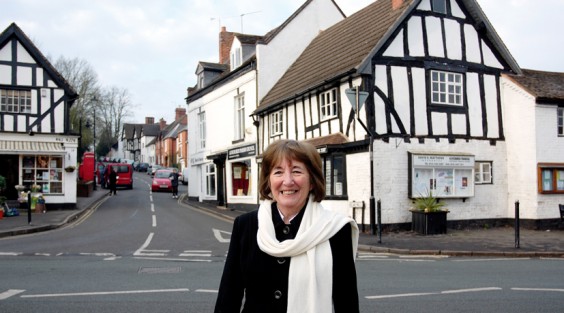
Annette (left) added: “It’s a shame that some people see the negatives and I also think it would be good to have more people involved in making it happen.

“It grew like Topsy, and it is time for change and to do something else to celebrate Alvechurch.”

Annette said there had been discussions about an event next year and it would be interesting to hear what ideas people had.

Any funds left in the festival coffers would be given to Alvechurch Middle School for arts projects.

How should Alvechurch life be celebrated? Send your ideas to The Village.

Amazed by the microclimate

Vegetation

Hannah Genders explores a unique rainforest habitat on a sunshine island…

Who could resist the opportunity for some winter sunshine in the middle of January? Not me – and my recent trip also provided the chance to do some walking with good friends and learn some Spanish in preparation for a visit we are planning to Peru this summer.

The destination for this break was La Gomera, a small island near Tenerife in the Canaries. I have to confess, to my shame, that I hadn’t realised how far down the African coast the Canaries are and I was surprised to find that it was a four-hour flight from Birmingham.

Still, this did mean an average temperature of 22°C in January.

After arriving in Tenerife, the island of La Gomera is reached by a 45-minute ferry ride into San Sebastian, the main town – and the place we were staying with another friend, also keen on walking, who had become fluent in Spanish during her three-month stay on the island.

Unlike the other, larger Canary Islands, La Gomera is relatively unspoilt by tourism. It is one of the smallest islands, being only 20km across, with the central mountains rising to 1,487m or 4,500ft (the height of Ben Nevis).

You can understand that you need to like steep walking to enjoy the scenery by foot.

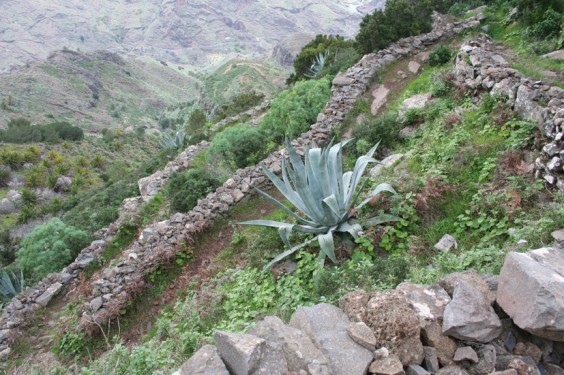
The landscape is volcanic, but rather than being barren the slopes are covered with arid-loving plants on most of the island. Euphorbias grow in profusion along with Agave – these get very big and the ones we saw had impressive flower stalks left over from the last season.

The predominant trees on the lower slopes were palm trees, but around the main peak of Garajonay is a unique rainforest habitat and I have to say I was smitten at first sight.

This high central area of the island is usually covered in mist even on the hottest days, giving a microclimate in this one area of permanent moisture. In fact, on the day we walked through, the forest was dry, but this was unusual and we were told that the trees drip with of water most of the time.

Laurisilva or Laurisillva is the name given to this specific type of laurel forest. The trees are instantly recognisable as laurel from the evergreen leaves, although the species growing here had a finer leaf than our garden varieties.

Many of these laurel hardwoods can grow up to 40 metres, but in the poor soils of the laurel forest they grow in contorted, twisted shapes that give the whole forest a mystical quality.

Added to this, the trees are covered with the most beautiful lichen, hanging down like a lace curtain. The lichen, like the trees, must be very old and indicates very clean air quality.

These indigenous forests only in exist in the Mediterranean area – another example is in Madeira. The one on La Gomera is a unique example for this landscape.

These sub-tropical rainforests were thought to exist over the whole of the Mediterranean millions of years ago, and were reduced during the ice age.

Further exploitation occurred as trees were cut down for hardwood and these forests are now protected as world heritage sites to ensure no more deforestation occurs.

Although my Spanish didn’t improve much in the time we were there, I wouldn’t have missed the privilege of walking in such a stunning landscape, especially in good weather during January.

I find most woodland inspiring and this one really felt as if you were walking through a living fossil; it was utterly beautiful.

An experience like this encourages me to source any wood I buy ethically, particularly hardwoods, so I can do my bit in helping to preserve unique habitats like this one.

It may also mean I have a tendency towards designing rainforests for my next few clients!

Travel tips with Jane Ward

0

Blackwell travel counsellor Jane Ward offers advice.

Birmingham airport was first opened in 1939 and was originally called Elmdon. Over the years it has grown to what is now the UK’s fifth largest airport, being home to over 50 airlines, it now has two terminals and at least 9 million passengers pass through each year.

Airport Tips

Always allow plenty of time to reach the airport so that you will be there two hours prior to departure for charter flights and three hours for all scheduled services (your travel agent should advise).

Plan how you are going to get there. If taking a taxi, book in advance and ask them how long the journey will take at that time of day.

If you intend to drive to the airport it is always advisable and cheaper to prebook parking. The long stay car parks are ideal for stays of over a week; there is a courtesy bus service connecting the car parks to the passenger terminals.

The buses run 24 hours a day, seven days a week and approximately every 12 minutes. But remember to allow at least another 40 minutes to your journey time for parking and transfer to the airport, longer at busy times of the day or when there are popular exhibitions at the NEC.  Prices from £3.74 a day.

For the ultimate convenience try the Meet and Greet Valet Parking. A chauffeur meets you at an arranged time at your departure terminal and parks your car in a secure car park.

On return the car will be delivered to you outside the arrival hall. Prices from £8.03 a day.

If you have an early flight why not stay overnight at the Novotel, with either eight or 15 days secure parking included?  Example: one week with eight days’ parking in June would be £105.

Before you leave home do make sure you have all your passports (and any necessary visas), tickets and holiday money in your hand luggage. 

If in doubt regarding hand luggage restrictions contact your travel agent or airline for their latest information.

All this will ensure a good start to your holiday.

Jane is an independent travel counsellor based in Blackwell. Tel: 0845 058 7140

You shall go to the prom!

0

Staci and Fran

Liz Dove on a boutique that takes the pain out of the big school event.

With so few opportunities for putting on the ritz these days, it’s no wonder that one particular social event causes more teen tension than perhaps any other. Yes, we’re talking Prom Night. And it’s sooner than you think.

When your daughter arrives at what has come to be the glittering highlight of the school calendar, she will want to look and feel like a million dollars.

And while, for many parents, it might feel like we’ve actually spent that amount on providing the dress/shoes/hair/nails/make-up/jewellery and accessories to turn our Cinderellas into the Belles of the Ball, we probably wouldn’t have it any other way.

Fortunately, you don’t have to fork out a fortune for a dress that will only be worn once. Neither do you have to traipse around every shopping centre in the Midlands to find the ideal outfit for this sartorial rite of passage. There is another way.

At Continental Collection in Barnt Green, glamour is dripping from the walls. And among the rails of gorgeous gowns and decadent dresses, you are sure to find something that won’t just fit the bill but will take you straight to fashion heaven.

Best of all, you don’t have to have Victoria Beckham’s bank balance to secure the dress of your dreams. If you don’t want to buy, you can hire an outfit, take it home, wow them at the Prom and then (if you can bear to part with it) return it the next day when it will be professionally laundered and put back on display.

This season’s Prom dresses are now in stock at the Hewell Road boutique, rubbing satiny shoulders with the hundreds of other outfits in every size, shade, style and label, from figure-hugging silk to sequin-studded lace.

Celebrating its 15th anniversary this year, the highly successful business started by couturier Diane Carr has a large and diverse client base.

From its infancy selling and hiring other people’s desirable cast-offs, it has mushroomed – in both size and reputation – into a place that stocks both well-known and independent UK designer labels, being the main supplier in the area.

Women seeking the perfect outfit for a special event, from weddings and parties to Royal Ascot, are assured of success. And manageress Rachel Meller and her assistants are happy to welcome new faces.

If you can’t immediately find what you want, don’t fret. Swatches of fabric attached to many of the gowns means you can order them in a particular shade and size.

“With the Prom dresses, we have ten main suppliers and we try to stock items you won’t find in the big high-street stores,” Rachel explains.

The atmosphere is relaxed and casual. There is no pressure to parade in public, hurry through quick changes or make any snap decision.

Women sometimes feel intimidated by small boutiques but there are no pretensions here.

“We try to be chatty and informal so our clients feel at home,” Rachel explains. “We don’t take ourselves too seriously and like to have a bit of a giggle.”

Without wishing to denigrate the menfolk, Rachel tactfully suggests that girls try to avoid shopping for a Prom outfit with their dad – unless absolutely necessary – sticking to the company of female family or friends.

“Most dads tend to get slightly less carried away about the whole thing than we do! They can also be a bit protective about what might be on show!”

Dress sizes start at 6 (an American size 2) and go up to 22 and, in some ranges, 28.

With its tasteful lighting and sumptuous furnishings, unlike so many high-street changing rooms with their skimpy curtains and garish lighting, Continental Collection is a place where you can linger over your fairytale frock before choosing, if required, the right bag/shoes/accessories.

Rachel has some pearls of wisdom for this summer’s Prom queens (see below), including such essential common-sense tips as making sure there is someone around to zip you up on the night, putting your dress on before your make-up to avoid clown-like results, and not spraying perfume on to a dress “because it WILL stain.”

She also points out that it’s sensible to avoid overkill.

“You can make more of an impact with just one quality accessory rather than having matching shoes, bag, gloves, earrings, necklace, etc.”

Have a great Prom!

The Village asked South Bromsgrove High School students Fran Peach and Staci Marshall (right) to swap their uniforms for some of the dresses on the rails at Continental Collections and give us their impressions.

Their verdicts:
Fran: “The dresses are lovely. There is a huge range of colours to choose from and you don’t feel under pressure; you can try on as many as you like, which we did!”

Staci: “The staff are really helpful and give you advice about the most popular styles and which colours will suit you best.”

Rachel’s top tips for Prom Night:

1. Have a rehearsal. Try on your entire outfit in a relaxed atmosphere well before the event, complete with make-up, shoes and accessories. Ask yourself the following questions:
• If going strapless, can I keep my dress up securely?
• Are my shoes the right height for my dress?
• Does my make-up and jewellery complement my outfit?
• Can I get in and out of a car with dignity?
• Will my dress train (if you have one) trip me up? If necessary, attach a hook and eye to secure it while dancing.

2. Find out what your best friend is going to be wearing so you don’t clash or – horror of horrors – turn up in the same outfit.

3. Check the weather forecast. Do you need to take an umbrella if you are waiting outside for a lift? Would a pashmina/wrap be useful?

4. Think ahead. If you’re choosing an outfit soon, the weather could change significantly by the time Prom Night arrives. There’s no point opting for a heavy, black satin affair if you’ll be wearing it on a balmy June night.

5. Don’t forget: the best thing you can put on is a smile. Be happy and enjoy yourself!

Cofton-by -the-Sea?

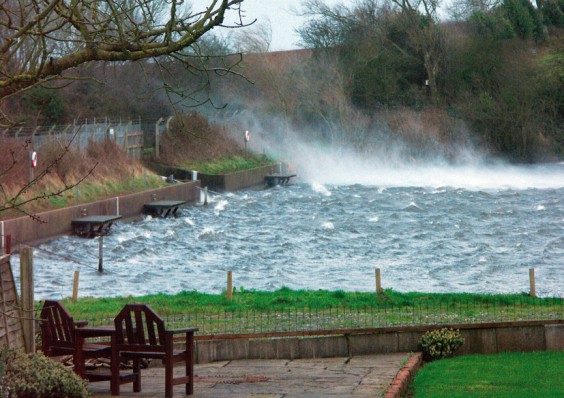
Lake spray

Spray flies across Cofton Lake during a January storm in this picture (above) sent in anonymously by a Village reader.

Less than a fortnight later, another reader, Paul Whitby, captured a much calmer scene during the February snowfalls (below).

We always look forward to seeing readers’ pictures – simply email them to .(JavaScript must be enabled to view this email address)

Icy lake

A village childhood

0

Val in Alvechurch today

Val Birch, who has written a book about her life for her family, shares her recollections of growing up in Alvechurch.

I was born in 1943 and throughout my childhood I lived in the same house in what was originally called New Station Road.

The builder, who built the house just before the war began, had run out of money before building the road, which remained nothing more than a dirt track for a number of years. That is until the council took it over and renamed it Latimer Road.

A walk around the centre of the village evokes many childhood memories because it really has changed very little.

I recall being taken by my father on Sunday mornings to a little café in one of the cottages beside The Swan, or to the Red Lion where I would play in the grounds that are now the village car park.

The nearest we got to convenience food was fish and chips from the local “chippy”. “Three pen’rth of chips” never tasted better than when served wrapped in old newspaper.

We would make a hole in the newspaper and pick out a piping hot chip, trying not to burn our fingers.

Bread and dripping was a good “standby”. This was bread spread with the fat saved from the Sunday roast. No one worried about cholesterol in those days. We wouldn’t have known what it was.

Only food that was in season was available in the shops. There were no such things as supermarkets and all food was bought in the village shops or from Redditch market.

Meat was bought from the butcher in The Square. The grocer’s shop was also in The Square and I remember being intrigued at seeing the money being put into a little metal container and then dispatched along an overhead wire to the office in the back. The same little container would then be sent back with the change.

The smell from Mr Pretty’s bakery would greet everyone entering the village, and was so enticing that there was never any need for him to advertise his wares.

However, it was not necessary to go to the baker’s shop for bread as it could be bought from the delivery van, which would drive around the streets, several times a week.

Fresh milk was delivered daily from a local farm; a necessity as no one had refrigerators and so, in hot weather, the only way to keep it cool was to stand it in cold water.

A favourite shop with the children was the sweetshop, which was run by an elderly spinster called Fanny Twitty. She didn’t appear to like children very much, so running a sweetshop must have been a constant trial to her.

Sweets were the last thing to be rationed after the war and it was a red-letter day when rationing ended in 1954. Because of the frugality of our diet due to post-war rationing and low incomes, obesity was rare and generally we had a healthier diet than is the norm now.

Another shop I enjoyed visiting was the draper’s shop, run by Mr and Mrs Giddly (what interesting names the shopkeepers had).

The shop was tiny but crammed full of pretty ribbons and brightly coloured wools and threads. Many clothes were home made; a post-war necessity.

We had no television and not a lot of toys, so we needed to amuse ourselves in other ways.

On fine days, a group of little girls would gather in the street with a skipping rope that was held and turned by a girl standing either side of the street, and the other girls would take it in turns to run into the rope and start skipping.

On the rare occasion that a car came along the rope was quickly gathered in until the car had passed, when skipping would resume. Often we could play all afternoon without being interrupted by a passing car.

Sometimes we would make our way to The Meadows, where we could play on the swings or the slide, paddle in the paddling pool, or fish for “tiddlers” in the stream that ran alongside.

Occasionally we might venture further afield to play in the aqueduct beneath the canal, colloquially known as the “acky duck”.

(We once had a new teacher in school who asked one boy in the class to talk about what he had done at the weekend.

“We played in the acky duck, Miss”. “The what?” asked the teacher. “The acky duck, Miss, that goes under the canal”.

“Oh you mean the aqueduct.” She then wrote it on the blackboard and made us all repeat “aqueduct“ six times, and then write it in our exercise books.

After this lesson in correct pronunciation she told the boy to continue to talk about his activities. “Well, like I said Miss, we were playing down the acky duck”!)

Another favourite haunt for my sister and I was Alvechurch train station which was within easy reach of our house. Mr Coggins, the station master, and his wife were a friendly couple and always kept a watchful eye on us.

Mr Coggins kept himself busy between trains by tending his garden and watering the plants in the troughs along the platform. It really was very pretty there in those days.

During the winter months he kept a coal fire burning in the waiting room, which was much appreciated by the waiting passengers. When a train was due he would put on his stationmaster’s hat and go out on to the platform ready to wave his green flag.

One end of the platform was lower than the other end and if someone wished to alight at that point, Mr Coggins would rush along with a little step to make it easier for him or her.

These were the days of steam and so we would hear the train approaching for some miles and, when it eventually pulled into the station, the noise of the steam made it almost impossible for us to hear ourselves speak.

One of our uncles was an engine driver and when his train arrived at the station one day while we were there, he lifted us on to the footplate. I can still recall how the heat seemed overpowering as we gazed into the furnace of red-hot coals.

It was the ambition of many small boys to be an engine driver, although I can’t imagine why as it seemed a very dirty and uncomfortable job to me.

Even though we were so much poorer materially than today’s children, our wealth was in our freedom to roam safely, and to enjoy the space of the open fields of the countryside around us.

The first Wednesday of October was eagerly anticipated by all the children of the village, as this was the day the fair came to Alvechurch.

The Alvechurch “Mop” dates back to the sixteenth century when it was customary on that day for all to gather for the hiring of servants.
Although the fair continues to visit Alvechurch to this day I doubt that it provokes quite the excitement that it did then. You will appreciate that in the days of my childhood with limited transport and few holidays, a visit from the fair with its bright lights and jolly music echoing around the village all evening was a very real thrill.

Another highlight of our year was bonfire night, when parents and children would gather in School Lane and then process through the centre of the village carrying flaming torches, constructed by puncturing holes in tin cans, filling them with rags soaked in paraffin and attaching them to long poles.

We eventually would arrive at The Meadows where we gathered around the huge bonfire to watch the firework display. I can still recall the taste and smell of the hot potatoes that had been baked in the vendor’s little oven.

I remember the street party that was organised to celebrate the Coronation of Queen Elizabeth II, when I was 10, and how we all crowded into a neighbour’s living room to watch the ceremony on their tiny black and white television.

The celebrations seemed to dominate most of that year. Each child in the school received a commemorative mug.

I started school at the age of four and a half in January 1948. This was considered the coldest winter since 1881 and 20ft snow drifts were recorded in some parts of the country.
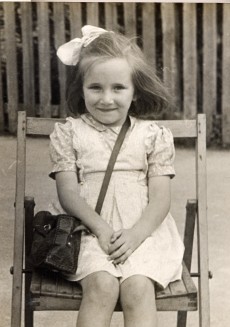
Val aged 6

I imagine most people remember their first day at school. I certainly do. These were the days before preschool nursery and that first day at school was the first occasion on which I’d been separated from my mother for any length of time. I had no idea what to expect but was determined to put a brave face on things.

The first teacher I had was a motherly woman called Mrs Russell. Most of the teachers in the school were Welsh for some reason that I have never understood.

They would talk to one another in Welsh, which was very frustrating for us, as we had no idea what they were saying. Despite this there was a certain comfort for me in hearing Mrs Russell’s lilting words of reassurance in those early days.

I remember there being a rocking horse in that first classroom and lots of other interesting toys. We made our first attempt at writing, but not for us paper and pens – we had a slate and chalk.

Halfway through the morning the teacher gave us each a little bottle of milk to drink through a straw and so, by and large, I concluded that school wasn’t going to be so bad.

The little village school in School Lane had been built just before the First World War. My first classroom was little more than a large hen house.

In the middle of each room was a coke stove that was stoked periodically by the school caretaker Mr. Thompson. He had a constant battle with the children who would take great delight in running up and down over the coke pile in the corner of the playground, scattering coke far and wide.

I was to attend this school until I was 15 and to say that my education was abysmal is an understatement; it was virtually non-existent. This was not the fault of the dedicated teaching staff, but largely due to the lack of facilities and basic equipment.

We had no science laboratory or gym and homework was never given. The only children that had any hope of an education were those bright enough to pass the eleven-plus examination, which meant they would go on to the Grammar School in Redditch.

The National Health Service was formed in 1948, promising health care for all “from cradle to the grave” and so a number of measures were introduced to ensure better health for everyone, rich or poor.

Every year a doctor paid a visit to the school. A nurse, whose job it was to weigh and measure each child, accompanied him. Few children were obese but some would appear to be undernourished and so cause concern.

The school dentist held a surgery in the Village Hall and the nurse, holding a chloroform mask over the mouth, would anaesthetise any child needing fillings or extractions.

It was a terrifying experience, and it was no wonder that a generation of children grew up with a morbid fear of visiting the dentist.

My memories of growing up in post-war Alvechurch are mostly happy ones and I hope that today’s children will in time will remember their time in Alvechurch with the same affection.
Post office serves me well

0

I use Alvechurch Post Office on Fridays to buy stamps, pay my home care/day care bills, and buy the Baptist Times and My Weekly for Trudy and a comic for nippers at the coffee morning at Alvechurch Baptist Church (9.30am-12 noon).

I hope that everyone still tries to use it.

Mark Williams, Alvechurch

The cover forecast!

0

My copy of the February edition of The Village arrived this morning and, having seen its cover picture, I now know who to blame for today’s snow!

Andrew Gilmour
(February 8 2007)

Bench theft heartbreak

0

Thieves have stolen a bench placed in the Lickeys by a woman in memory of her mother.

Police believe they sawed through the bench legs to remove it.

Barnt Green summer festival date

A Summer festival returns to the streets of Barnt Green this year – with plans to make it an annual event.

A day-long event had been held every other year, but the festival committee – now being led by Barnt Green Parish Councillor Diane Carr – is considering making it shorter and running it more frequently.

This year’s festival will be held on Saturday June 23 and Diane would like to hear from anyone who would like to perform or have a display table.

Call her on 0121 445 445 1220 or email .(JavaScript must be enabled to view this email address)