With news stories telling us that Christmas jumpers are bad for the environment, the Cleaner, Greener Alvechurch group offered a way for people to recycle their festive outfits.
“The Great Christmas Jumper Swap”, held at Alvechurch Library a month before Christmas, invited residents to donate jumpers and outfits to swap with others. Those who didn’t have anything to donate could buy themselves a jumper, with all proceeds going to The Lounge.
Villagers could also donate, swap or buy various other Christmas items such as spare crackers, cards, baubles and decorations. Leftover items were donated to charity.
Independent district councillor for Alvechurch Village, Kate Van der Plank, who founded the group with Alvechurch South councillor Annette English, said: “Christmas is an expensive time, especially for families – so the Jumper Swap was a great opportunity for people to save some money and have fun, while at the same time helping to reduce our environmental footprint.”
The aim of the group is to take practical action to improve the natural environment in the village and share ideas to help reduce environmental impact. Launched in July 2019, the group already has more than 230 members, and activities include litter picking, vegetable growing, and initiatives to reduce and reuse.
Despite some setbacks in 2019, work will soon continue on the restoration of the derelict wind pump at the top of Cobley Hill between Tutnall and Alvechurch.
The structure, which was once a state-of-the-art Climax Oil Bath Wind Pump erected in the 1920s or 30s, is being rebuilt by members of Tutnall and Cobley Parish Council.
The group is using original plans and assembly instructions (right) to recreate the pump, with the thousands of steel components specially made by WD Fabrications in Redditch.
Unfortunately Coun Steve Cooper, who had been looking forward to erecting the tower with ropes and harness, suffered a serious injury at the beginning of the year and was unable to do so.
Coun Peter Whittaker was able to provide a “man box” on a telescopic load handling machine with cross-country capability – but who would be brave enough to go up in it?
The council decided that the crew of the “sky team” should be male and female, so in September councillors Mike Ryan and Ann Wheeler-Vine stepped up to the challenge (above right) and the tower was raised.
The inclement weather of autumn and winter then brought a halt to progress, but it is hoped that the tower should be completed in the next few months, time and weather permitting.
An access platform will be constructed about two metres from the top, with timber donated by Border Fencing. The top of the tower will then be fitted with the original gearbox and shaft, with a small fixed rotor or windwheel and tail vane.
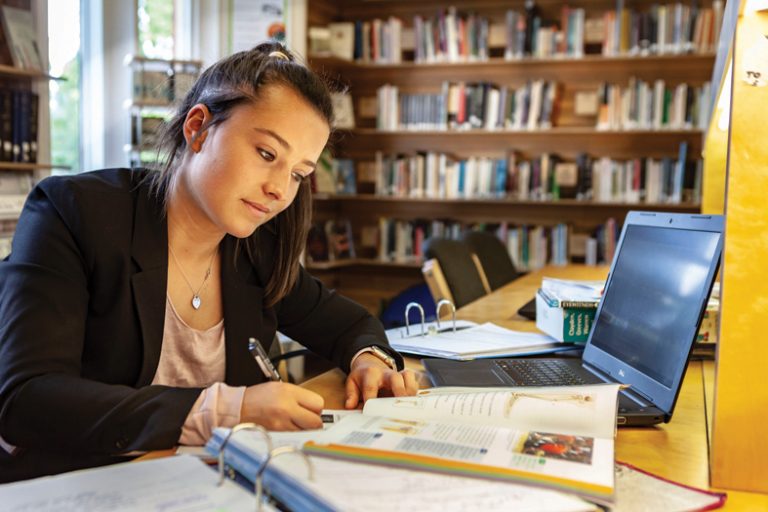
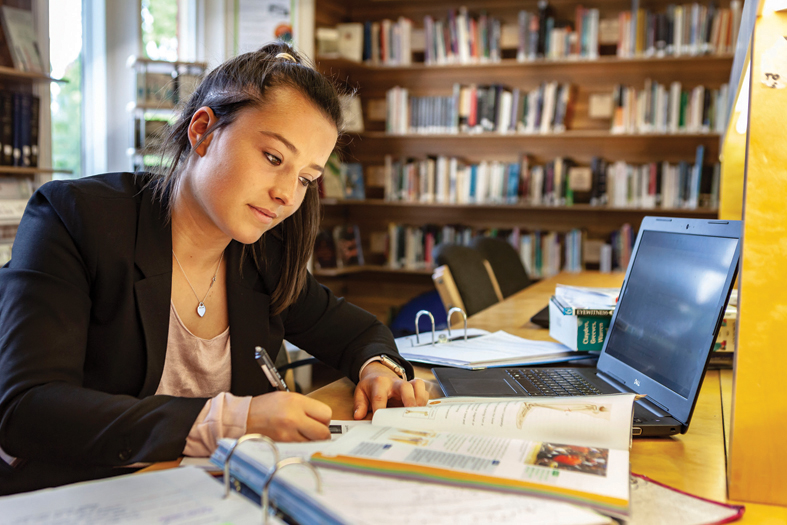
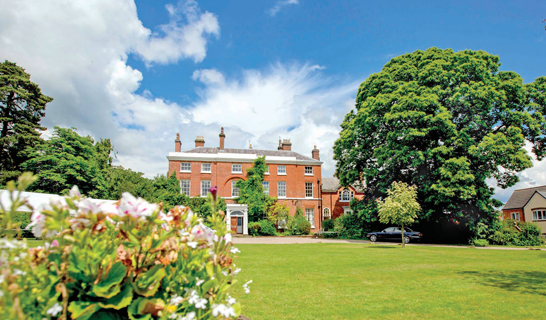
A sense of history permeates every brick of this remarkable school, from the medieval Edgar Tower, housing the oldest classroom in the country, to the ancient College Hall.
Around every corner, however, stunning contemporary architecture blends seamlessly with the ancient fabric of the school, and that encapsulates the ethos perfectly: respecting its proud history and traditional values, while embracing technology and innovative teaching methods.
King’s Worcester is a dynamic and supportive community where pupils discover and develop their passions in the classroom and beyond. A community made up not just of pupils but also of dedicated teachers, a supportive and meaningful house system and a strong focus on wellbeing.
Pastoral care, also referred to internally as The King’s Warmth, is not just a complementary practice but a caring approach fully integrated and interwoven into the fabric of teaching and learning; the school’s organisation and engagement with the world beyond the school gates.
Through the school’s focus on the development of each individual, it provides a genuinely caring environment where young people can thrive and develop as curious and engaged members of the King’s community and a broader society. The school’s ethos emphasises mutual respect, openness, and warmth; it is the quality of relationships within the school that the pupils talk highly of and that makes the pastoral care so special.
The young people who come to King’s do outstandingly well academically because they enjoy what is on offer, throw themselves into the opportunities school life presents and push themselves to give their best in everything they do. They develop a passion for learning inside and outside the classroom, a curiosity about the world and a desire to know more about it.
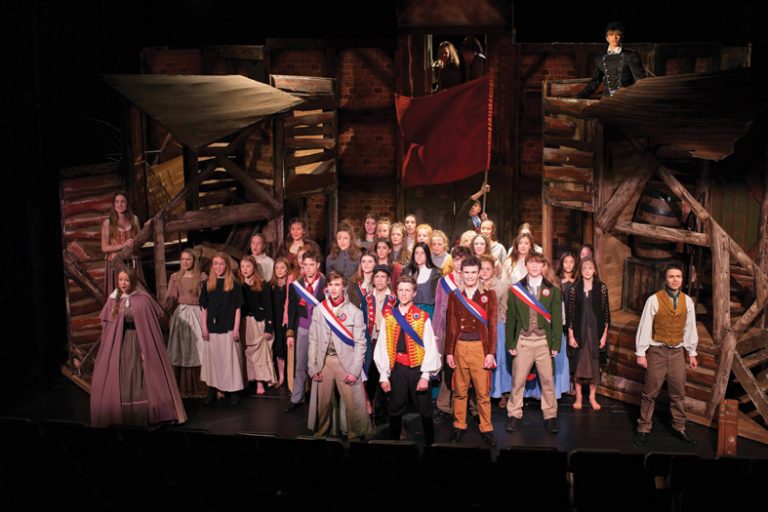
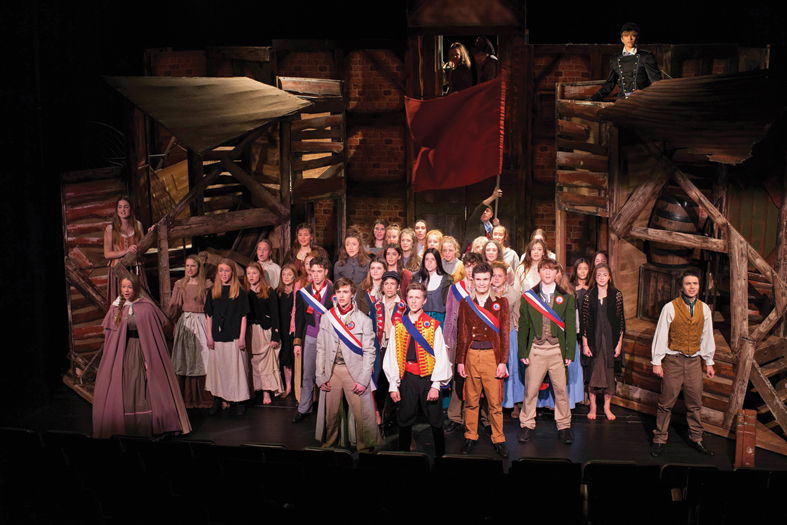
Discovering new experiences and getting involved in activities that stretch both mind and body are what make the days at King’s special. In addition to music, drama and sporting activities, there are more than 100 clubs. From chess and Mandarin to sub-aqua and climbing, there is something for everyone.
For the adventurous there is the Duke of Edinburgh Award Scheme, for which pupils have received an exceptional 79 gold awards over the past three years, a Cadet Force that has achieved outstanding success in regional and national competitions, and the school’s own outdoor activity centre in the beautiful Welsh mountains.
The school enjoys a wonderful location adjacent to the Cathedral, with fantastic sporting facilities on site, an amazing boathouse and some of the most beautiful playing fields in the country across the river.
For more information or to find out more about Worcester’s leading independent school visit https://www.ksw.org.uk/discover
The RGS Journey offers an outstanding education for boys and girls aged from two to 18. Whether a child begins their journey at RGS The Grange, RGS Springfield, RGS Dodderhill or RGS Worcester, they will receive the very best preparation for life.
RGS The Grange is a Prep School, full of opportunities. for boys and girls aged two to 11. Set in 50 acres with its own Astroturf and forest school, the school combines superb facilities with a caring and supportive education designed to build confidence for each child.
RGS Springfield is the small school with a big heart, for children aged two to 11. Tucked away in beautiful Britannia Square, the school provides a city centre campus with a country school feel and a nurturing, supportive environment to develop every child’s all-round potential.
RGS Dodderhill is an Independent School in Droitwich for girls aged two to 16 years, now that it has a brand new Nursery opening in January 2020. The school provides an environment that allows girls to develop a love of learning and facilitate their development into confident young women.
RGS Worcester is a senior school with breathtaking facilities and opportunities for children aged 11 to 18 years. Pupils join from the Prep Schools and from more than 40 primary schools, taking advantage of excellent transport links. With academic results that are the best in Worcester* and award-winning careers provision, students are well prepared for the world beyond school.
With a strong reputation for pastoral care, the schools support pupils throughout all stages of their personal development, making sure that they settle in quickly and enjoy the exceptional opportunities available, both in and outside the classroom. Co-curricular provision at all four schools is superb with more than 20 different sports and 80 different clubs and activities. Scholarships and Bursaries are available.
You can view the schools on their Open Mornings or at a time convenient to you. A warm welcome is guaranteed and the pupils would be delighted to show you their school.
“RGS Worcester does what it does with a vision and panache that not many can match”.
– The Good Schools Guide
The happiness of the children lies at the heart of everything at Winterfold. Each child has the opportunity to excel academically and is encouraged to develop a sense of adventure and achievement in many different directions.
The excellent facilities at the school cannot fail to impress. More than this, the family-friendly feel of the school is central to its ethos. The children are learning for life and the staff aim to give them the opportunities and environment they need to help them grow in confidence and become engaging, successful and resourceful young people. The children love coming to school and are very proud of their achievements.
Winterfold is a non-selective school and there are no formal entry requirements or tests. Children are accepted at any age, provided there is a place available. The school believes that it has a duty to educate any child who wishes to attend, if it is felt that they will benefit from their time at the school.
Winterfold takes pride in the fact that the staff truly know every child and ensure that they achieve their potential in every aspect of school life. The children develop a sense of purpose, determination and confidence, due to the wide variety of activities in which they take part. They leave as well-rounded individuals who have become good citizens of the future.
You can see for yourself at the Open Morning on February 8.
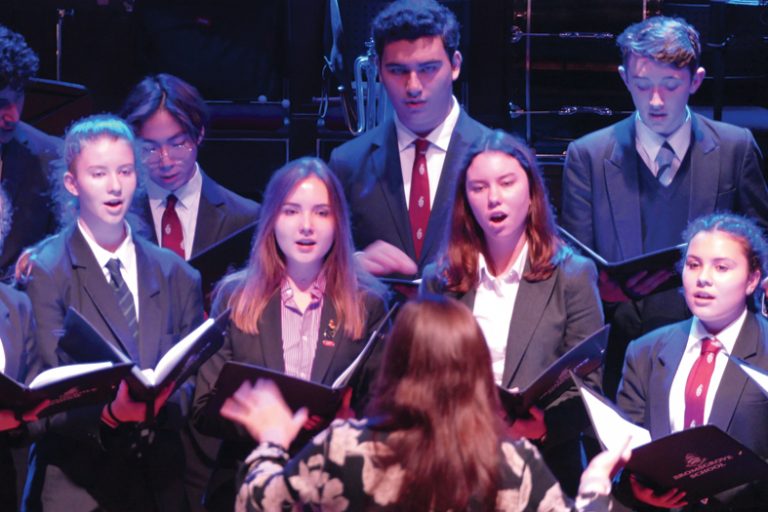
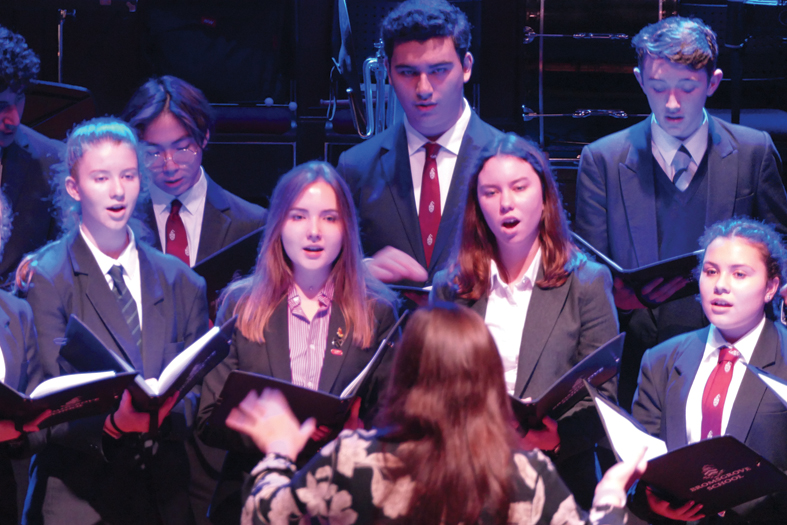
Bromsgrove School believes its pupils are happiest when they are succeeding. The school offers an all-round education, combining academic excellence with a richness of opportunity.
Pupils engage enthusiastically with knowledge, embrace new ideas and are intellectually stimulated. The school prides itself on the outstanding opportunities available, both inside and outside the classroom.
Bromsgrove School offers a significant number of scholarships and bursaries for Year 7, 9 and 12 entry. If your child is gifted in a certain area such as music, drama, sport, is particularly academic or generally a good all-rounder, it is worth applying for a scholarship.
These are of small financial value but they can be supplemented by the generous means-tested bursaries the school offers. The means-tested bursaries are available to enable talented boys and girls, who might otherwise have been unable to consider an independent education, the chance to do so. Contact the school for further information.
Sean Tomás Beag, Barnt Green’s Quakerwarden, describes an encounter with the village WI.
Did you know that we Friends have been in the heart of Barnt Green village for 124 years – and we aim to stay.
We discussed it, asking members this question: “We’ve been here 110 years; do we want to stay another 100?”
The “Hope so” went round the circle. . . it was a big fat yes.
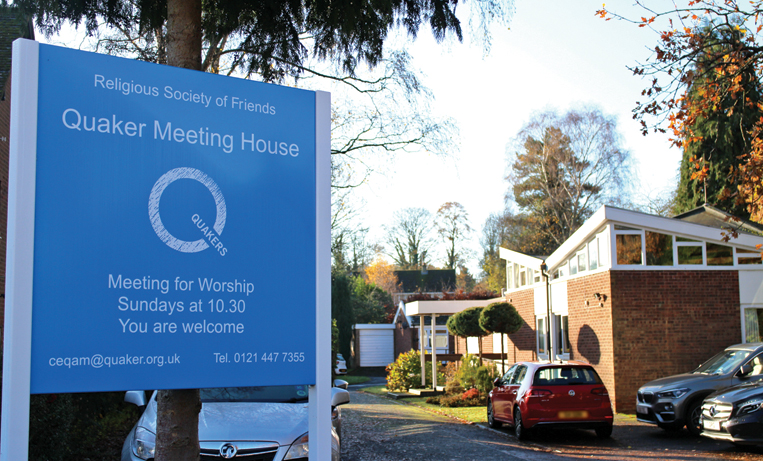
We erected a new noticeboard. Figuring that our village was not informed by our old sign that said “Friends Meeting House”, our new sign reads “Quaker Meeting House”.
I was asked recently by one of our dancing girls to give a talk on Quakers in Barnt Green. “Dancing girls”. . . let me explain: 124 years ago, a Quakerman, John Gibbons, who lived up in Shepley Road, bought land in the middle of the village and on it built a hall.
Friends used it as a place of worship on a Sunday. During “plain days” this “Tin Tabernacle” became the hub of village life – Band of Hope, pre-school, that sort of thing. When I came to Barnt Green in 2010, there were 14 groups using our facilities: art classes, choirs, fitness. . .
The Keep Fit ladies exercised to music such as Abba, and in unison they looked to me very happy and fit. And it seemed to me that these girls were dancing. Nicknames stick. “Quaker” is a nickname – it has nothing to do with porridge oats.
Fast forward to 2019. Thursday, September 19, to be exact. I was going about my business when, outside Tesco, I met a mate of mine. When I told him where I was off to, he screamed: “Are you mad?”
“You reckon?” I said.
“Yes, yes I do. You must be mad going down to the Baptist hall to speak to a bunch of women – they will gobble you up and spit you out.”
“Stop it now,” I told him.
“Listen, mate, seriously, ask any man. . . would he go into a room full of WI women? Don’t say I haven’t warned you!” he replied.
We parted company and I walked down Hewell Road slowly, very slowly. Of course I was afraid. Terrified, in fact. But I must do the thing I fear. My religious upbringing drives me to do the thing I fear and the death of fear is certain.
I entered the lions’ den. There was not just a couple of dozen women waiting, as expected. There were over 50 of them. The dancing girl who had invited me greeted me, all smiles. Was she preparing to throw me under a bus – moreso, was she going to feed me to the lionesses? Gulp!
Nervously, I began my talk about Quakers in Barnt Green. . . but it didn’t flow. All the while I was waiting for a sneak attack. One of you women is going to attack me with a smart, witty question and I will stumble and the pack will devour me.
But it never happened. My English ladies were just that. The poise a man has to earn the gentleman title – these Barnt Green women had it in bucketsful. So full of grace, they were indeed gentlewomen.
I rambled on and on, waiting for an attack that never came. Suddenly the talk was over and the women applauded. I joined them for tea and cakes and then I walked back up Hewell Road, relieved.
Next day I met my Tesco pal.
“How’d it go?” he asked.
I said: “Do you know – the WI do not have male members and I now understand why. They are a happy band of sisters, mothers, aunts – and did you know that the Women’s Institute is a charity?”
No, neither had I – and no, they did not let me off the hook. There is no hook. Women are from Venus, men from Mars – ‘nuff said.
Regrets. I have a few. I regret not being a better speaker. I wasted too much time waiting for an ambush and I failed to tell them the wider Quaker story. I should have mentioned Cadbury, Rowntree, Fry, Harris the paintbrush maker, Nobel Prize winners, slavery abolitionists, Pennsylvania, Lloyd’s, Barclays, Judi Dench, the Girl with the Pearl Earring, Uncle Tom Cobley an’ all. . .
But I did mention that “You cannot love to live if you cannot bear to die”. And I failed to nail the Quaker thing. So before I close, let’s nail it.
Back in 1640, our founder, a George Fox, gathered English folk together and questioned. He set up a belief system that refused to take oaths. Let your yea be yea. We were truth sayers. We gathered as friends of the truth.
He was flung into gaol for refusal to conform. A dissenter who kept coming back to court, time and time again. The court judge, on seeing Fox before him yet again, bellowed: “Listen, I am your judge–”
Fox interrupted; “You are not my judge. God is my judge. . . and when you meet him, in his presence, you will quake.”
“Aah, so you are a quaker, are you?” said the judge. Fox stayed silent and the name stuck.
Friends meet each Sunday at 10.30am for to worship God. Stella from the WI came along recently – thank you, Stella. Maybe my talk wasn’t so bad after all.
Would I talk to a bunch of women again? 50 women in a room with only one man. Not on your life!
Spend wisely and save more with these top tips, says Martin Pryor.
At a time of year even more focused on spending than usual, there are a few habits you can develop to help you keep a rein on your resources.
Retailers understand the psychological cues that encourage us to spend, and deploy them online, in their store layout, advertising and marketing campaigns. Multi-buy offers, or short-term sales such as Black Friday, can create a sense of urgency and encourage impulse buying. It can be hard to resist, even in straitened times.
Shrewd shoppers can deploy some simple strategies to help them spend wisely and save more.
Prioritise saving: Move money into your savings account or ISA before you have time to spend it. A simple direct debit going out on pay day is a great first step towards adjusting your spending habits. Set a budget on spending and stick to it.
Pay in cash: Leave your debit and credit cards at home and take cash instead. Studies have shown paying in plastic reduces the “pain” of paying, because it feels less like “real” money.
Contactless payments can make spending even more “painless”. Brain scans have shown the “pleasure” regions of the brain are associated with purchases made on plastic, but both “pleasure” and “pain” light up for those paying in cash.
Don’t shop until you drop: Avoid hitting the shops when you’re tired, which reduces your ability to focus and make logical decisions. Long shopping trips, or hours browsing online, just add to this fatigue, and undermine your willpower when trying to make sensible purchasing decisions.
Take your time: Do you really want or need that item? When shopping online, simple steps, like disabling ‘one-click’ purchasing and deleting saved cards details on your computer can create useful delay. Better still, keep your wallet in another room when browsing. Even small hurdles like this can nudge us away from an online purchase.
Waiting at least 24 hours – or better still a week – before buying also gives you time to shop around on price.
Clear out “cookies”: Delete these regularly to avoid being bombarded with ads for items you’ve been browsing online. These constant reminders can wear down the resolve of even the most careful shoppers.
Once you get into the habit, it’ll be easier to keep that New Year’s resolution to save more and spend less…
All change on company car tax
If you are changing your company car soon you need to get on top of the new tax rules.
CO2 emissions have been the basis of company car taxation for over 15 years, with each new tax year usually seeing a nudge up in the scale charge for most emission levels. However, from 6 April 2020, the tax scales undergo a more radical set of changes:
* For newly registered cars, the “real world” WLTP measure of CO2 emissions will replace the existing and largely discredited NDEC basis (which will still stand for older vehicles). WLTP emission results are on average 20%–25% higher than NDEC figures.
* For all hybrid cars with CO2 emissions of 1–50g/km, the scale charge will take account of the electric-only range.
* The scale charge for zero-emissions cars will itself be nil in 2020/21, rising by 1% a year in the next two tax years.
From January 2021, all newly registered diesel cars must meet the RDE2 emissions standard, which exempts them from the current 4% diesel surcharge.
The government has already published revised company car tax scales for the next three tax years (2020/21 – 2022/23), which take account of the reforms. In 2020/21, most of the scales will begin 2% lower than originally legislated for because of the sharper-than-anticipated increases in emissions under WLTP.
Tax laws can change. The Financial Conduct Authority does not regulate tax advice. This article is for general infor-mation purposes only. For specific tax advice refer to a tax specialist
Action from a home win against St Ives Town (Photo/ Ian Macvie)
Alvechurch FC boost morale with cup win under new boss.
Dean Holtham, who took charge as interim manager after the departure of Darren Byfield, has now been given the position permanently.
Chairman Richard Thorndike said:
“We considered enquiries from a number of candidates, some from higher up the pyramid, but we feel that Dean is the right man for the job.”
Holtham moved swiftly to appoint Matt Kirby as his assistant – Matt has been manager of Cadbury Athletic FC for eight seasons, gaining a promotion and maintaining their status as a step 5 club without a budget or even their own ground. He is well known to AFC and his brother played for the title-winning ’Church side of 2002-03.
Things are already looking up, with Alvechurch progressing to the semi-final of the Worcestershire Senior Cup by beating West Midlands League side Worcester Raiders.
On a cold night playing on a 3G pitch at Malvern Town, a Javia Roberts goal gave ’Church a 1–0 lead before a Raiders equaliser ensured the game went straight to penalties – which AFC won 4–2. They have been drawn away to either Bewdley Town or Kidderminster Harriers in the semi-final; date to be confirmed.
Several league matches have been postponed due to the weather, but some crucial fixtures lie ahead in the coming months.
* A flurry of signings followed Holtham’s appointment, including fan favourite Kieran Cook who returns from Stourbridge. Kieran’s goals played a vital role in the success of the club last season. Experienced central defender Joe Hull has joined from local rivals Bromsgrove Sporting, while forward Louis Monaghan has played at Redditch United and Sutton Coldfield Town.
Also returning to Lye Meadow are forward Jazz Luckie and midfielder Theo Llewellyn. Jazz started his career with Birmingham City and has played non-league football for Redditch United, Stratford Town, Hednesford Town, Rushall Olympic and Chasetown before rejoining Alvechurch.
Theo returns from Southern League division 1 side Mangotsfield Town, having played for Bristol City, Yate Town and Gloucester City.
Centre forward Ethan Jones has joined AFC from Halesowen Town. Ethan started his career at Shrewsbury Town before going out on loan to National League side Tranmere Rovers and Welsh Premier League team Newtown.
* Unfortunately, Alvechurch stalwart and club captain Jamie Willetts has left the club. He was wanted by many clubs but decided to follow his old manager Ian Long to Stourbridge FC.
Jamie was instrumental in the success of Alvechurch over the past four years with his dominant displays in the centre of defence, his vital goals and leadership. He was always willing to attend presentation ceremonies for the younger teams and give talks.
The club would like to thank Jamie, described as a true gent and Alvechurch legend, for leading the team over four wonderful seasons.
Also departing are Fin Thorndike and Stanley Asomugha, whose one-month loan deals have ended. Both have now returned to their West Bromwich Albion teams, Fin to the under 18s and Stanley to the under 23s. The club wishes them well in their professional football ambitions.
Javia Roberts has been a regular starter this season since rejoining the club from Walsall Wood, but has decided to go back there.
Also leaving the club are Fortune Maphosa, whose short stay ended when he joined Highgate United, and Jordan Goddard, who joins Nuneaton Borough.
* For more info or sponsorship enquiries, please contact Trevor Ball at saintsarehot2@btinternet.com or visit www.pitchero.com/clubs/alvechurch
Follow the club on Twitter @Alvechurch1st
Mary Green suggests ways to help the environment in 2020.
I was talking to some younger people about New Year’s resolutions, and they said they didn’t quite know what to resolve, faced with the climate and environmental challenges, which left them feeling helpless. It made me think about what we can all do, in our small local way or together with others, to protect and enhance our environment.
My particular activities are around the loss of species and biodiversity due to loss of habitat. It’s one of four related aspects of environmental decline: the others are climate change, caused by human activity, especially excess carbon in the atmosphere; pollution from a number of sources, but especially from burning fossil fuels and over-use of plastic; and depletion of natural resources so that we will eventually use them all up.
No wonder people feel overwhelmed. But all these are caused by humans and therefore we can reverse them. Acting on one usually helps with the other aspects, though sometimes they are competing.
There are things we can all do locally about loss of biodiversity. Biodiversity refers to the multitude of species we have on earth – plants, animals, birds, fungi, invertebrates and even bacteria. And us. We all exist in a complex web of relationships which have to be kept in balance for all of them to thrive – our ecosystem. It’s natural for some things to live off others, but they would not usually wipe them out, as that would be counterproductive.
All species depend on other species, and it’s collective survival that matters. Unfortunately, human activity has upset this balance and many species have declined and disappeared within a relatively short space of time.
The more species you have in your area, the healthier your environment is likely to be. It’s interesting where these areas are in Britain. As you might expect, the Scottish Highlands, where human intervention is least, come out top, and inner city London areas are the least bio-diverse.
The borders of the West Midlands and Wales do pretty well – Shropshire, Powys and Herefordshire are in the top ten. We’re not far behind. Traditional pastoral farming, as carried out here, is quite good for biodiversity.
Some species loss is caused by climate change or pollution, but most is from loss of habitat. In other words, some or all of the web of other creatures needed for its survival have gone. This means that the important thing to do to save an endangered species is not to concentrate on that endangered species itself, but on the whole habitat it lives in.
In the past the emphasis often was on individual rare creatures, by breeding them in captivity or nature reserves, which is really a last resort. Most scientists now think this is a mistake. It’s important to look after all the other more common species as well – the whole ecosystem. Iconic species like pine martens becoming rare mark a more important loss of other less noticeable species disappearing behind them.
How do we look after our habitats and keep nature’s balance? The problem is that nowhere here is wild nature any more. We humans live in it and shape it. We can’t “rewild” totally except on a small scale. There are some exciting experiments in this – see Isabella Tree’s book, Rewinding.
However, we can all restore aspects of our environment to make them nearer to the wild state. That’s what our environmental charities do: the Woodland Trust, the Worcestershire Wildlife Trust and the RSPB, for example. You could join one of them.
They will help you understand the environment and you can supply practical help. They tend to look after special endangered environments like meadows, native woodland, wetlands and heathlands.
Around here you can see a managed meadow environment at Eades Meadow, ancient woodland at Piper’s Hill or wetlands at Upton Warren. Managing them means allowing a whole network of plants to develop and thrive, bringing with them fungi, insects, birds and mammals.
It should not involve disturbing soil, removing plants or introducing plants from elsewhere unless previous harm needs remedying. It may include mowing for hay and/or grazing, and some cutting of trees, at the end of the growing season. These measures replace the way, in wild nature, grazing animals would help control the vegetation.
Most of our habitat is just everywhere around us, especially in farmland which accounts for the majority of our land. (Buildings and hard surfaces actually cover quite a small percentage.) So the next thing is what farmers can do.
Farming upsets the balance of nature. Many historians date species loss from the time we started herding animals into enclosures and especially cultivating crops instead of being hunter-gatherers. The soil is the basis of our ecosystem and it needs to be full of organic matter and deep-rooted perennial plants. Farming disturbs and depletes the soil.
We can’t go back to being hunter-gatherers. But farming can disturb nature as little or as much as we decide. Traditional pastoral farming – raising animals for milk or meat – creates a relatively benign environment for native plants and their insects, birds and beasts. Modern intensive livestock raising doesn’t.
We as a country and as individuals could encourage grass-fed traditional rearing methods if we want meat and milk. This also means not using pesticides, herbicides and routine antibiotics, as these will not allow the natural habitat and soil to thrive.
This type of farming usually involves hedges: they can be left to grow tall and untidy, so they flower and fruit, adding another layer to the biodiversity. Woodland can even form part of the grazing. If streams and ponds are well managed, flood threat can be lessened too. Meat from animals fed on flower-rich meadows is higher quality too. You can see this in action here at Cooper’s Hill farm.
Arable farming – grain crops – is less benevolent. It is a major threat to our ecosystems in Britain. Ploughing the land every year, weedkilling and using pesticides are destructive of ecosystems.
It is possible to go back to earlier farming methods and grow grain organically, but it means leaving the land to recover between crops (“fallow”) or interspersing with other crops – and even then every time the land is ploughed the ecosystem is disturbed and carbon released into the atmosphere.
We aren’t going to stop arable farming. But we could ameliorate it by using fallow and between-crops, leaving wide margins around the fields with native flowering plants in, leaving the stubble longer, and letting the hedges round the fields grow.
There are farmers trying this, and Wildlife Trusts support them. I don’t know of any near here (please tell me if there is) but have seen it elsewhere.
A farmer and author, John Lewis-Stempel, has written fascinating books about restoring his Herefordshire farm in a way that enhances nature, including growing arable crops and including woodland in grazing.
Growing other vegetables like potatoes or greens, and growing fruit like apples and strawberries, can be destructive if done intensively but doesn’t have to be. It is possible to grow them in a sustainable way, and you can see this in some of our local growers. Fruitfields near Barnt Green is an example. Unfortunately our only really local vegetable supplier, Hewell Prison farm, is closing in spring.
Local small-scale vegetable growing, so long as it doesn’t use pesticides and herbicides, can be beneficial. Incredible Edibles are promoting this in Alvechurch.
All these changes to farming really need to be part of a national drive for sustainable agriculture, as there is cost involved. Mass production of cheap food is bad for the environment.
The other big thing that could be done to save our ecosystems involves local authorities and other public organisations who own and manage all our “green space.” This includes roadside verges, the big stretches of grass between pavements and roads in our villages, public parks, churchyards, cemeteries and sports grounds, canal towpaths and so on.
Here there could be a huge difference without extra cost. Just not mowing all that grass along our verges and within our villages during the growing and flowering season would allow all the ordinary local wildflowers to come back (as they do when mowing is delayed) and with them the insects and all the other life we want.
Grassy spaces in Alvechurch contain daisies, buttercups, self-heal, yarrow, dandelions, cat’s ear, sorrel, trefoil, moon-daisies, cow-parsley, clover and lots more. Many of our road verges have orchids and other endangered plants in as well as common ones, and they would come back.
Our hedges too are full of flowers for insects and berries for birds but are rarely allowed to grow to full stretch. Flailing hedges has ruined the ribbons of biodiversity along our roads and between fields.
Even in sports grounds we could only mow the actual pitch and have unmown areas around – some football clubs have done this. All vegetation can be given a winter cut to keep in control, so we are not actually leaving it truly wild.
But it does need to grow, flower and fruit and die down naturally back into the soil, so nothing is lost, and insects always have somewhere to live. Anyone involved in local councils can influence this. The Canal and Rivers Trust now do this better along our canal, and we have a wonderful wildlife corridor.
Of course, we should also avoid obvious things like cutting down trees. Most people understand this, although there are still some who think it’s OK if you replant new ones. It takes centuries for the ecosystem of a wood to develop. Never cut down a tree unless there is no alternative.
We should plant more trees, but I think it’s more important we look after the ones we’ve got first. We could allow native tree seedlings to grow, rather than bringing in new trees from outside. And we should stop using words like weeds and pests when talking about our ecosystems. Collectively, we destroy habitat all the time.
And then there are our gardens – but I’ll leave them till next month!
I wrote the poem a few years ago.
Fairy story Let me tell you a little story.
The people whose job it is
To protect our countryside
Decided to get rid of the insects
Gnats and wasps and horrid flies –
People were getting bitten and stung –
And while they were at it, the spiders
And worms and slugs, nasty things
Nature should be cuter, and not hurt.
They sprayed to make sure.
Of course, the bats went too, and some birds.
Then they killed off the unattractive birds
Pigeons, Canada geese, noisy sparrows –
Chopped off their little heads, tore them apart –
To make way for something nicer.
Once all the magpies and mice and worms had gone
They brought in pretty birds, sweet furry animals
From all over the world. Most died of course
But some thrived and multiplied
Making sure the natives never came back.
It’s only a story of course, it didn’t happen
Don’t have nightmares.
Except
They are doing this every day to plants,
Those so-called experts and conservationists,
Cutting and slashing and pulling out
The ordinary plants that live around us
The brambles, the nettles, the towering hogweed
Chopping the heads off hedges and trees
Which should host the birds and worms and insects
Why? To make a ribbon of tidy sterile grass
Or plant some seeds called “wildflowers” on the packet.








 Mary Green suggests ways to help the environment in 2020.
