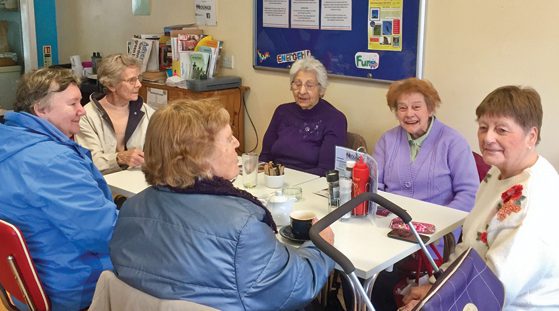
Earlier in the year, The Lounge café and youth project started the Alvechurch Community Survey. The idea was to understand clearly what the community wanted us to do for them, and how to grow The Lounge, writes manager Sarah James.
The results are in, and we are grateful to Dagmara, Sarah and the team for their efforts in helping us to understand our future direction. The great number of people who told us what they thought means that we can have confidence in the support of the community.
From a great variety of requests, the top findings were as follows:
An overwhelming support for our existing youth activity and a strong interest in developing inter-generational activities in the village.
Older generations were particularly vocal in requesting more inclusive events as well as expanding their own offerings, particularly around Citizens Advice Bureau information, food and nutrition, and support for computer usage.
People asked for additional opening options for the community cafe, such as later opening or Sunday opening. People made special mention of the pop-up cuisine evening events that we ran in 2017.
Creative activities, crafts and games would be welcomed by all ages, particularly using the premises on a Monday.
Now we have an idea of which requests would be appreciated by the community and how we might be able to achieve them. However, to make them a reality, we will need to be successful in gaining additional external funding.
Helping us to continue our existing work and delivering the new requests will need additional volunteer support from within the community.
If you think that you have the skills or time that could help us either on a one-off or a longer-term basis, let us know via Facebook or just pop in to The Lounge, and together we can quickly realise the new projects for the whole population of Alvechurch.
Alvechurch Village Society invites villagers to take part in a Springtime Litter Pick on Sun April 15 from 10.30am to 12.30pm.
Meet outside The Lounge in the shopping precinct, where all equipment will be provided – but participants should wear suitable clothing.
The Lounge will be serving refreshments from 10.30am to 1pm. All children taking part will receive a certificate.
* Oakalls and Parklands residents are asked to support the annual litter pick on the estate, which takes place on Saturday April 28 at 10am and lasts for about one and a half hours.
The event is part of The Great British Spring Clean national campaign, which aims to bring people across the country together to clear up litter.
Meet on the open grassed area by the notice board/post box on Trianon Road. All litter picker tools, gloves, high visibility jackets and refuse bags will be provided.
Julie Ward is a qualified, experienced alcohol specialist who runs ACT Alcohol based in Bromsgrove. Her service provides one-to-one sessions to teach individuals how to gain control over their drinking.
“Whether or not you achieved Dry January, it is more important to make sure you know how to drink moderately all year round,” says Julie.
“Abstinence for a month will give your body a rest, but it is not an answer to a healthier relationship with alcohol.
“Many of us struggle to keep our alcohol levels down… after all, it is a drug and that’s the nature of the beast! It’s all too easy to put it off for another time, when life will surely be easier.
“Sometimes that can happen, but more often than not it is overlooked and you find yourself drinking more. How did that happen!? It happens to a lot of us, but it’s what you do about it that makes the difference.
Julie has developed an exciting new approach to cutting down, called “The Personal Formula”.
“When you understand your own personal formula then long-term control is achievable. The key is to learn simple rules and strategies for yourself that when applied guarantee immediate results.
“It’s not difficult to learn, it doesn’t take very long and it will be the best thing you ever did in 2018!”
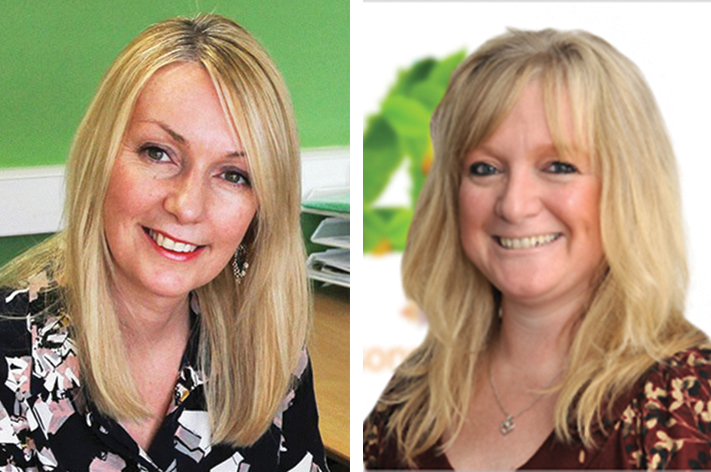
Julie is offering free 30-minute introductory “PERSONAL FORMULA” sessions at the Bromsgrove office. Either Julie (far left) or Louise (left) will introduce you to the formula and how it will work for you.
Text “PERSONAL FORMULA” to 07434 286826 and one of the team will respond immediately, or call 01527 878162 to book an appointment.
Find more information by visiting www.actalcohol.co.uk or searching ‘ACT Alcohol‘ on Facebook
Are you a woman struggling to cope with anxieties or challenges? Do you feel as though you could do with some help or support?
Have you ever wondered how good it might feel to take that first, positive step towards making a change or achieving your goal?
Deborah Glover, who runs Lickey Hills Hypnotherapy for Women, believes she can help.
“Skillfully employed, clinical hypnotherapy can be really helpful for a wide range of issues from anxiety and addictions, to insomnia and grief,” she says.
“Being a woman, wife and mother myself, I feel able to relate personally to many of the health issues and problems experienced particularly by women.
“I can offer sympathetically tailored, one-to-one therapy for all aspects of women’s physical and mental health and well-being, in a calm and sensitive environment. Allow me the opportunity to guide you through your voyage to greater resilience.”
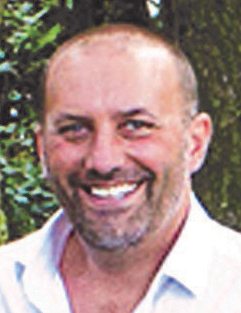
Just some of the areas Deborah (right) can assist you with include:
Boosting Fertility/ Pregnancy/ Birth and Beyond
Baby Bonding/ Breastfeeding/ Adopted Babies
PMT/Period Pain/ Menopause/ Hysterectomy
Weight Loss and Healthy Lifestyle/ Confidence and Self-Esteem
Living with Chronic Illness/ Fibromyalgia/ ME/ IBS
Chronic Pain Management
Relationships/Intimacy
Anxiety/Depression
Smoking/Drug Cessation/ Deep Relaxation
Deborah is a fully qualified and Registered Clinical Hypnotherapist (GHR Affil.), Dip. Clin. Hyp. and an Affiliate Member of the General Hypnotherapy Standards Council.
For more information see https://www.lickeyhillshypnotherapy.co.uk or ring Deborah on 07866 564 724 for a free initial consultation.
There’s no need to rely on the ‘Bank of Mum and Dad’, writes Martin Pryor.
First-time buyers are vital to the housing market, but often need help getting on the property ladder. If the “bank of mum and dad” is not an option, then here are a few effective tips to help save for that deposit.
According to the Halifax, the average deposit for a first home has now crept up to £33,000. This prospect, for the often-debt-laden student, is a daunting one. It is no wonder that younger buyers are struggling to get on the property ladder.
Some first-time buyers rely on the “bank of mum and dad” and it is believed that 25% of first-time buyer purchases are funded this way.
This still leaves 75% of buyers having to find that money themselves… It might not be easy, but it is possible for couples, who comprise 80% of first-time buyers, to save £33,000 by giving up just six things for five years. The surprise, hopefully, is that some of these savings can be made with relatively small changes to lifestyle.
Let’s start with coffee. While buying a latte is now part of our every-day routine, it is hitting us in the pocket. According to Buddy Loans, we’re paying on average up to £700 a year on coffee at outlets such as Costa. For a couple that could mean a saving of £6,248 over five years – a massive step towards that deposit target.
Another huge contribution could come from giving up a gym membership. Before you consider this: if you are a regular gym goer then your membership may represent good value for money – but according to adult training provider Be A Better You, the average person visits their gym 13.5 times a year. The average cost of gym membership is £550 so this could save a couple a cool £5,500.
When it comes to weekend escapes, according to travel search site Skyscanner, the typical cost of a city break is around £700 per couple, so you could save £3,500 over five years.
Be careful, though; staying at home can be even more expensive. Research from Voucher Codes reveals that we spend, on average, £110 a month – per person – on takeaways! After some quick calculations that amounts to £13,200 over five years.
Meanwhile, the cost of scratch cards and playing the National Lottery is estimated to be £416 per head, so £4,160 over five years for a couple.
Finally, the cost of mobile phone upgrades calculated by Sell My Mobile is £770 over a five-year period.
Add all these savings together and you will have reached your target to buy your first home.
Finding the money for a first home is without doubt hard work, but if more young people are able to save for a deposit and enter the residential property market, the benefit will be felt by all homeowners as these buyers move up the property ladder.
This article apologises to readers who own local coffee, gym, travel, and takeaway businesses who might not appreciate a generation of frugal first-time buyers – but just think of all those wealthy mums and dads relieved of their banking duties!
The six things a couple could give up for five years to save the average deposit of £33,000:
Takeaway coffee £6,248 Gym membership £5,500 Mini breaks (once a year) £3,500 Takeaways £13,200 Lottery ticket £4,360 Mobile upgrade £770 Total: £33,378
Sources: Buddy Loans, Be A Better You, Skyscanner, Voucher Codes, Voucher Code Pro, Sell My Mobile, The Deltic Group, Strutt & Parker.
Your home may be repossessed if you do not keep up repayments on a mortgage or other loans secured on it. Buy-to-let (pure) and commercial mortgages are not regulated by the FCA. Think carefully about securing other debts against your home.
Firstly I would like to thank you for the response to my last two adverts; I can really see how people value getting personal advice from a local advisor!
This month I thought it would be helpful to give a couple of examples of how I am helping some new clients:
A couple in their early seventies, who have a lovely bungalow in a village setting, are looking at ways of maintaining their lifestyle by releasing some of the money in their bungalow. They had thought of downsizing to release some extra funds; however, they really want to stay where they are, being so close to friends and family.
We then discussed equity release as a way of getting access to their funds progressively – they were not aware that they could potentially draw down funds gradually as required, as opposed to having all the money at once. This really appealed to them as it gives them so much more flexibility for their financial future.
Another couple I met recently are both in their late sixties and have an existing interest-only mortgage, which equates to about 25% of the value of their property. They were worried as they are coming to the end of their mortgage term and the bank has been asking how they intend to repay the loan.
We discussed various options available to them, including how changing to an equity release loan could help solve this issue. What appealed to this couple was the flexibility they could have – the fact that they do not have to make any interest or capital payments for the rest of their lives and that they also have the option to pay off lump sums of up to 10% each year without penalty.
Having a choice about how to proceed and still stay in their home allayed their worries about paying off the bank mortgage, giving them both peace of mind.
It gives me a great deal of satisfaction to help clients fulfil their dreams and solve their financial problems. If you would like to talk in confidence about your financial needs and future financial planning, please contact me directly on 07730 011897, for an initial discussion to see how I can help you and your family.
Village Financial Solutions Ltd The Coppice, Rowney Green Lane, Rowney Green, Worcestershire. B48 7QF Mob : 07730 011897 Email : mark.meads@villagefinancial.co.uk
Village Financial Solutions Ltd is an Appointed Representative of Personal Touch Financial Services Limited which is authorised and regulated by the Financial Conduct Authority.
AN EQUITY RELEASE PRODUCT WILL REDUCE THE VALUE OF YOUR ESTATE, WILL NOT BE SUITABLE FOR EVERYONE AND MAY AFFECT YOUR ENTITLEMENT TO STATE BENEFITS. TO UNDERSTAND THE FEATURES AND RISKS PLEASE ASK FOR A PERSONALISED ILLUSTRATION CHECK THAT THIS MORTGAGE WILL MEET YOUR NEEDS IF YOU WANT TO MOVE OR SELL YOUR HOME OR YOU WANT YOUR FAMILY TO INHERIT IT. IF YOU ARE IN ANY DOUBT, SEEK INDEPENDENT ADVICE
Our typical fee for equity release services is £650, which is payable upon completion.
Mary Green continues her series on trees in the Celtic calendar.
Our relatively average winter turned into a harsh cold one in late February, holding back a lot of the native plant species. Little bits of cherry plum blossom started to come out, then stopped, and there weren’t many native daffodils out for St David’s Day.
I hope we are lucky through the start of spring and don’t get another cold blast. Cold in February doesn’t do too much harm – cold in April does!
Ash is the Celtic tree for this time of year. It gives its name to a letter of the alphabet that was still used in Old English for the short “a” sound. It’s generally represented nowadays by Æ and you can see it in the name of the founder of Alvechurch and our women’s Morris side, Ælfgythe. So, ash is our tree too.
Ash was also in Norse mythology the tree of life, called Yggdrasil. This was the source of all life and its branches covered the world. In Greek mythology the gods met under a great ash tree, which had an eagle on top and a snake coiled round the bottom. There are links there with the tree of knowledge in the Christian garden of Eden, though that was not an ash as our ancestors ate the fruit!
Even in relatively recent times ash was though to have healing powers. There are stories of sick children being passed through a cleft in an ash tree to heal them. Perhaps one of reasons for its powerful associations is that it grows fast, but can also grow to a great height and girth and live to an old age. Very few trees do both!
Ash was perhaps the most prized of all trees for the variety of uses and adaptability of its wood. The common name for a walking stick was an ashplant, as it was the most common wood used for this. It was used for houses, furniture, ships, wheels, poles, sporting equipment (oars, hockey sticks, billiard cues) – even the famous fork handles.
It is pliant and bendable as well as strong. It also makes great firewood, which can be burnt new as well as seasoned (“Ash green, fit for a Queen”) unlike many hardwoods.
The trees were usually coppiced, developing huge bases (“stools”) from which a little forest of branches grew for cutting. This meant the trees seemed to last for ever, perhaps another reason for their link with the gods.
Coppicing was really important in the rural economy, creating a sustainable supply of wood for manufacture and fuel. Trees are cut down to a base, which then sprouts lots of branches. After a few years these are harvested for use and the process begins again.
Not all trees coppice well, but ash does and so does hazel, which I will write about in the summer. There are still woodsmen carrying out coppicing, including one in Alvechurch who coppices hazel for beanpoles and other plant supports, not to mention Morrismen’s sticks! If you want to know more, contact coppice.worker@btinternet.com
Coppicing and other woodland management is not just important for sustainable wood, it is good for all wildlife too. By letting light into woodlands it encourages the growth of flowering plants, and therefore of insects, birds and all the other elements that make up biodiversity.
Ash spreads really well, as anyone with a garden near an ash tree will know. It seeds readily and the young whips grow very quickly. I have had to remove some from my garden, where I normally let anything grow that arrives by itself, otherwise I would just have an ash forest!
All of this means that ash has a very strange history. It was loved and revered, it was prized by ordinary people for its ready growth and usefulness. But later, it began to be seen as a nuisance, a second-grade tree, almost a weed.
It was often removed from woods to let more unusual trees grow. This was very short-sighted. After the mass destruction of woodland in the great storm of 1987 (the one that wasn’t a hurricane!) it was ash that came back and filled the gaps.
In more recent years, the picture has got even madder. While people were happily grubbing up native self-sown ash, they were also importing young ash whips from abroad to create new woodlands.
There seems to be some sort of prejudice in England against naturally occurring woodland, often dismissed as “scrub”, in favour of planting young trees brought in from elsewhere.
The result in this case was the introduction of ash dieback from abroad, a deadly disease for the tree. It has caused loss of trees especially in the east of England, first in young trees then spreading to some established ones.
Ash is no longer imported and is not usually planted now. If you look at recently-planted native trees, such as the new ones along the railway in Alvechurch, there is no ash.
Tree experts still don’t know how bad the disease will be. However, some are quite hopeful that many of our established trees will turn out to have immunity. If a large number die, it will have an enormous effect on our local ecology.
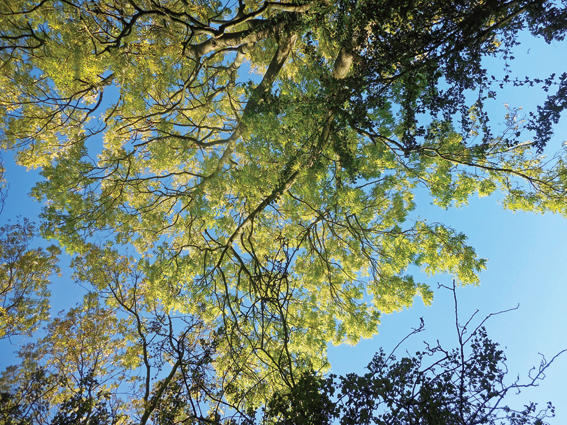
At this time of year, ash is lovely to see. The blunt black buds that have tipped the twigs over winter start to burst into flower – a tassel of purplish-yellow stamens. The leaves come afterwards around the flowers. It is usually the last naïve tree to come into leaf, often not till May.
There is a well-known piece of weather lore:
Oak before ash, only a splash Ash before oak, many a soak
Oak nearly always has leaves before ash. However, oak is more susceptible to temperature whereas ash reacts more to light. So, in a cold year the oak may be later and may come out with or even after the ash – quite likely this year. Like most of these sayings, it’s much more about what has been than what will be!
Ash has lovely feathery leaves, pairs of leaflets set along a central stem. It is relatively open in habit, so it lets sunlight through even in summer, and other plants will grow under it. Having been the last leaves to arrive, they are one of the first to drop, turning a beautiful yellow in early autumn and dropping quickly.
The fruit is a hard seed with wings, called “keys”, which blow in the wind and help spread the trees. When young, they are edible and were sometimes pickled for later eating. When mature they are hard and brown and often stay on the trees through the winter.
Another tree to look out for in April is our native cherry or gean, which doesn’t figure in the Celtic calendar. It is quite common around here and many people don’t realise it’s a wild native.
Unlike some of the pink introduced cherries, it has bunches of large pure white flowers in April. It has lovely glossy bark, and long leaves. In the autumn the leaves turn a beautiful red.
The fruits are small and red and quite edible, though not as sweet as the darker cultivated cherries. However, they only ripen fully in a good summer, and you have to get them quickly before the blackbirds do!
Wild cherries are often included in plantings along newer roads, and I think everyone should have one in their garden: beauty all the year round and perfect for bees and birds.
A mixed woodland with feathery ash and shining cherry blossom is one of the delights of April, especially if there are bluebells underneath. Roll on spring!
Following my St Patrick’s Day poem last month, here’s one for St George on April 23.
St George’s Day It’s St George’s day, Shakespeare’s birthday
What more English than a narrowboat
Painted by hand with castles and roses
Coming down the long flight of locks
Through a spring midland landscape.
Life slows down to a rhythm, led by the engine
(Shining and green with starry red knobs)
Taken up by four people, who become
Part of the boat and its journey. Two walk ahead
Opening the lock. Two bring the boat into it
One closing the gate, then taking the boat
Through while one opens the front gates
Just timing it to step back on board. You test the gates
By leaning into them with your bum, push
With your body’s momentum. At this pace
You can feel the boat and control its heart
In time with your human hearts. In the lock
You go down into greened walls and dark
Your eyes level with the daisies and dandelions
Come back up into the blue and gold of sky
And rape fields and shimmering oak trees
Plum and blackthorn blossom bridal alongside
Like Persephone entering the underworld
Every few minutes, and bringing spring back
Bringing life and the clarity of youth back.
Eyes sharpened, we see a moorhen’s nest
Notice the different bricks on each lock wall
The banks of primroses and heliotrope.
Our noses wrinkle at the smells: chicken manure
The oily perfume of rapefields, then the chips
At the pub past the bottom lock, journey’s end.
Rhythm and movement, work and harmony
At the heart of England. Happy birthday, Will.
Hannah Genders introduces a special project celebrating our county’s fruit-growing.
The wonderful author and lifelong environmentalist Roger Deakin (people may know him from his books Waterlogged and Wildwood) was also a key person in setting up the Common Ground movement in 1982.
Common ground, which is still going strong, is all about connecting people with their local landscape, recognising the local diversity we have in the UK and celebrating it. For example, here in Worcestershire we are blessed with some of the best growing land in the whole of the country and what it grows particularly well are apples and fruit.
Our local Worcestershire apples include the well-known Worcester Pearmain, a small, red eating apple dating back to 1870, but there are countless others – like Pitmaston Pineapple, which produces only small apples, but they are very sweet, almost honey-flavoured. The cooking pear Worcester Black is featured on the Worcestershire coat of arms.
As I now live in the Lenches, just north of Evesham, an area with many orchards, each year we have a blossom trail where people cycle or drive round to admire the orchards in full blossom.
But as many of you will know, these precious orchards are falling into disrepair, becoming overgrown and neglected so they don’t produce as well as they should, and for those that do produce the problem is finding enough labour to pick and use the fruit.
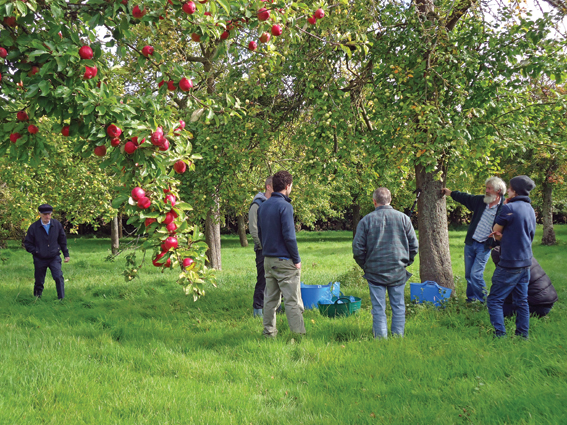
This is where the whole idea of “community orchards” comes into play. Many of these orchards up and down the country are being taken over by groups of people (volunteers) who recognise their significance to our local history and their value in producing food and are doing something about it.
One thriving group I met up with recently is Colwall Community Orchards, on the west side of the Malverns. The group, headed up for the most part by Tim Dixon, bought the orchards in 2011, at which point it was just a field – but according to research it had previously been an orchard, known as Gas Orchard.
There was a thriving fruit-producing business there and an apple shed which went out of business in 1961 – about the time that landowners were being paid to grub up these orchards and the mass imports of apples were starting. It is thought the orchard was originally planted in 1900.
So, from a bare field, the group have come together and to date planted 244 trees, all varieties from the local counties of Worcestershire, Herefordshire and Gloucestershire. They have also planted 47 fruit trees in the hedges around the site.
The orchards surround a sunny open area which has been developed for allotments, so members from the village can come together and grow their own food. The allotments are all part of the community project, and the orchard project bought the land which is about seven acres, so the site is secure.
There are around 60 allotments altogether, although many of them are not the full allotment size that you would find on a council allotment site – and this seems to me an excellent idea, as many of the full-sized sites are way too big for people to manage.
There is a strong emphasis on it being a fun site, with lots of social events and community events as well as teaching sessions in their newly-refurbished apple shed which they managed to get a grant to restore.
There seems to be so much going on here and it ticks so many boxes: producing local, sustainable food, addressing the issues of loneliness in our society, getting fit and being outdoors. What’s not to love?
This wonderful group of people, along with other community groups who are growing food, providing local green energy, rural eco-housing, and live music, will be part of my Eco, Green and Growing feature at the Malvern Spring Festival this year.
The show runs from May 10–13. There will be opportunities to hear the story of this orchard and all their plans for the future, along with many others, so come and be inspired and say hello.
As I started by telling you about Roger Deakin, I wanted to finish with an interesting story.
The person who got him into loving wildlife was a science teacher, who asked Roger and his friend to measure how deep a great diving beetle could dive down in their school pond. A simple task, but one that got him hooked and helped him fall in love with the natural world.
It reminds me of how important it is to help our children and grandchildren engage with nature.
For more information on the orchard, visit https://www.colwallorchardgroup.org
For more information about the Malvern Show see https://www.rhsmalvern.co.uk/whats-on/grow-know (please be aware that ticket prices vary on different days).
An enthusiastic group of volunteers gathered at Tardebigge Community Hall car park to learn the traditional art of hedge laying, taught by Wade Muggleton, Countryside Officer for Worcestershire County Council.
The mixed hedge of traditional English plants such as field maple, hazel and beech was planted as part of the “Tree O’Clock” project in 2009, when volunteers helped the UK set a new Guinness World Record for the most trees planted in one hour in multiple locations. Since then, it had grown to more than 10 feet tall.
“We managed almost half of the 75m hedge, which for a bunch of rank amateurs was a great effort!” said organiser Lucy Parkes.
“It was certainly hard work, but we had a lot of fun and learned a new skill into the bargain. A big thank you to everyone who gave up their time.”
The plan is to complete the job in late November, so if you are interested, or know someone who is, contact Lucy on 01527 871132 or 07817 067730 or ljparkes@btinternet.com
Sarah Rees reports from the Oakalls and Parklands.
The “Beast from the East” caused a delay for children hoping to celebrating World Book Day on March 1, with snowy conditions forcing the closure of local schools and nursery groups.
However, with costumes already bought or made and children eager to dress up as their favourite book characters, the event was quickly rescheduled.
Finstall Pre-School celebrated World Book Day a week later and there were some popular choices among the selected costumes, with three children dressed as Alice in Wonderland and two as the Gruffalo. Other outfits included Horrid Henry, Peter Rabbit and Hulk.
Three-year-old Ben, dressed as the fox from the Fox’s Socks book, said: “It’s my favourite book and it’s fun to dress up.”
Archie, aged four, was Monty from the Monstersaurus book. He said: “Mommy bought my costume because I like getting dressed up and I love Monstersaurus.”
Finstall First School also rescheduled World Book Day, with the event taking place on March 9. Costumes included a colourful unicorn, several tigers from The Tiger Who Came To Tea book, Robin Hood, Billionaire Boy, and Newt Scamander from the Fantastic Beasts book.
School staff also dressed up and deputy head Matthew Mason’s scarecrow costume caused sniggers from the children as he scattered straw around the school throughout the day.
He said: “We weren’t going to let the snow prevent us from celebrating World Book Day, we just celebrated it a week later than originally planned. It is always a special day for our young students and they enjoy taking part in a range of reading activities.”
Peter, aged eight, explained one of the more unusual activities: “We took reading selfies, showing ourselves reading our favourite books in strange places. I read my book in a bin.”
Nine-year-old Niamh, a big fan of author David Walliams, said it was great to see the different characters people dressed up as.
Please contact me with your news, views and concerns about any aspect of life on the estate. Email: oakalls@villageonline.co.uk






 Sarah Rees reports from the Oakalls and Parklands.