
Emma Carney of Bromsgrove tells us about her bunny, Twiglet.
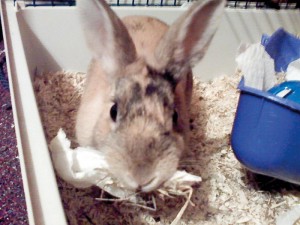
Twiglet, aka The Twigs, is a four and a half year old Dutch rabbit, a very friendly house bunny who just loves a good cuddle and any sort of attention.
She lives in a beautiful penthouse cage in the kitchen, and uses this prime lofty location to survey (and most often tease) our two dogs from up high.
Twigs’ morning routine starts off with a sneaky treat of a tiny portion of digestive biscuit – only tiny as she is currently watching her figure – before she goes about her daily schedule. This routine has become so important to her life that it has been known on many occasions for her to throw a tantrum like a drama queen if it is ignored, often throwing her dummy out the pram – or in her case, her toy ball.
After a busy few hours of preening herself and generally keeping up the Lady Muck persona, Twigs often finds time to engage in her favourite activity of annoying the dogs, whereby she will repeatedly throw her ball against her cage until the dogs just have to come over and have a nosey.
To keep herself in shape Twigs can frequently be found frolicking around in her outside gym in the garden, performing some impressive acrobatics whilst also refuelling herself on the so-called latest health food, grass.
After her busy day Twiglet will request her dinner and extra bedding via room service by clambering up against the bars of her cage, before she eventually settles down for bed after her long hard day.
Rabbits are very easy pets to keep and they just love plenty of attention. They may require plenty of exercise but that is easy to achieve with a little bit of time and effort. Twiglet is a healthy, happy and loving bunny who knows she is part of the family – she often acts like she rules the roost, but we all still love her to bits.
Sarah Detheridge of Townsend Veterinary Practice offers some advice on keeping rabbits:
Rabbits are very sociable animals that love to be fussed and cuddled. It is important that rabbits are fed the correct diet, as an incorrect diet can cause obesity which can lead to other illnesses.
A rabbit’s diet should consist of plenty of meadow hay as this keeps their teeth worn down and contains plenty of fibre, helping prevent diarrhoea. A small amount of pellet concentrate food should be given as it contains the required nutrients – a mix concentrate food isn’t recommended as they can pick out their favourite bits, which are most likely high in fat.
Vegetables can also help to keep teeth worn down, but only in small amounts. Lettuce and cucumber can cause diarrhoea as they have a high water content, so should be avoided.
Rabbits can eat grass as they like to graze, especially in the morning and evening when they are more active – but during spring the grass can be rich and cause diarrhoea so small amounts should be given at this time of year. Rabbits should not be given a lot of grass and vegetables until they are at least six months old.
Fly strike is regularly seen in obese rabbits, especially when the weather begins to get warmer. This is caused by bluebottle flies laying their eggs on the rabbit; these then hatch into larvae which eats away at the skin.
To prevent this from happening the rabbit’s weight should be monitored regularly and the genital area kept as clean as possible. The hutch should be cleaned out regularly to prevent it from smelling and attracting the flies. Preventative treatments can be purchased from your vet, and it is important that fly strike is treated as soon as possible as it can cause death if left too long.
Dental problems are often caused by rabbits not being fed the correct diet. Overgrown incisors are common in rabbits that are not fed on enough hay and will need to be seen by your vet as soon as possible to have them filed down.
Molars can also cause lacerations of the tongue and cheeks, and regular checks should be carried out by a vet as the molars cannot be seen without a special instrument.
Toys are important as they can help rabbits to exercise and prevent them getting bored. Wooden blocks to gnaw on can help keep the incisors down. Hiding food around the hutch, in toys or the garden can also help with exercise and stimulation.
