
Your chance to tell us about the pets you love – the more unusual the better! – and have your animal questions answered by a local vet.
This month: Louise Robinson shares the story of how she fell in love with her two unusual pets.
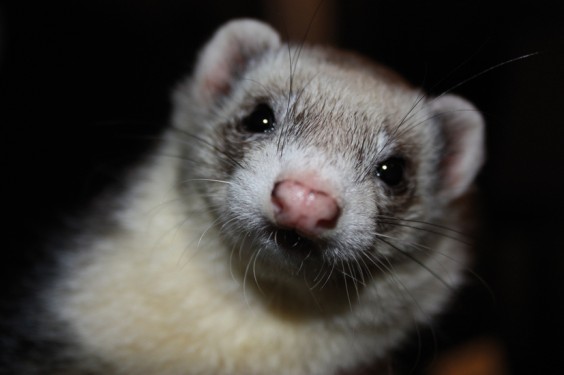
When my husband Nigel said he wanted to get a ferret, I flatly refused – I’d heard that they bite, and that they really smell. However, I was assured I wouldn’t need to have anything to do with the ferret, as Nigel and my daughter Charlotte would look after it . . . so Sheila arrived at our house in September last year, this little albino ball of fluff with pink eyes and very sharp teeth!
I had nothing to do with Sheila for the first couple of weeks, but one day Charlotte dropped her in my lap. . . and I found out how lovely ferrets really are!
Sheila quickly became Charlotte’s pet, so Nigel brought home another ferret, a baby this time, with the intention of taking her out ferreting – but little Roxy is now my pet as well! We have hours of fun with both ferrets. They love new toys, one of them being a crinkly carrier bag which they have hours of fun running in and out of.
Those who know me know I’m very houseproud, but these little friends have captured my heart. They are actually very clean animals – yes, they do have a smell, but don’t all animals? I keep their blankets and cage clean so there is not a problem.
Sadie, my Staffordshire bull terrier, has taken to the ferrets and allows them to come into the house in a small cage – this means they can watch what we’re doing and be part of our daily routine.
Ferrets will sleep for up to 22 hours a day, and once they’ve been playing for a while, they soon settle down and fall asleep. Charlotte and I love to cuddle them before bedtime.
Ferrets are lactose intolerant, so I buy them goat’s milk or soya milk. I give them porridge in the morning, scrambled egg once a week, and meat for tea (along with ferret biscuits), and I’ve found that giving them cod liver oil every other day has made their coats really soft. We give them sultanas as a treat.
We’re looking forward to the summer when they can play on the lawn. We have bought a ferret harness with an elastic lead, which means you can exercise them without worrying they may escape – it’s good fun too! They really do make lovely pets.
Bryn Morgan of Townsend Veterinary Practice answers some ferret FAQs:
Q: Do ferrets need inoculations?
A: Yes, ferrets can catch canine distemper and this can be fatal or cause permanent brain damage. Your vet can vaccinate against this using the vaccine licensed for dogs. I recommend a primary course of vaccinations at eight and 12 weeks of age and then annual booster vaccinations.
Q: How long do ferrets live?
A: Ferrets can live as long as 18 years, however the average life expectancy is about eight years and they are considered old from the age of five.
Q: If mated, how many kits do they normally have?
A: Litter sizes can vary from one to 18 kits but an average litter would be about eight to 10 young.
Q: Can you have them microchipped?
A: Yes, and this is highly recommended as a lost ferret is likely to be taken to a vet, who will scan for a chip and obtain your contact details. Microchipping can be done at any time but is best performed at the same time as an operation – under anaesthetic your ferret will not feel a thing.
Townsend Veterinary Practice
168 Birmingham Road, Bromsgrove, B61 0HB Tel: 01527 831616
North Street Estate, Droitwich WR9 8JB Tel: 01905 772002
95 New Road, Rubery, B45 9JR Tel: 0121 453 5828
www.townsendveterinarypractice.co.uk
.(JavaScript must be enabled to view this email address)
