
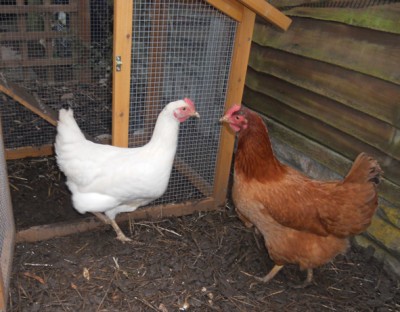
Matthew Purvey of Rubery introduces his escape-prone hens, Rita and Wendy.
We used to have a trampoline in our garden until we had no need for it, so I decided – and managed to persuade everyone else – that the best thing to fill the empty space in our garden would be chickens. With chickens we would get two things: a pet and, hopefully, eggs.
My sister, brother, mother and I went along to the farm shop to get the chickens. There was a great variety, from the traditional-looking chickens to some that looked like they belonged in outer space.
We decided to go with the chickens that laid more often. We chose a red chicken which we called Rita and a white chicken, Wendy. Not the most obvious names for chickens but they seemed to like them.
My mother enquired about getting the wings clipped, which would stop the chickens from being able to fly, but the shop owner said it was not necessary as they could not fly far… however, as events later proved, they can fly far enough.
After transporting the chickens home in a cardboard box (yes, there were holes in it) we put them in their new house. We had to leave them locked in to get used to their home, which gave me some time to use my “skills” to build them a run.
When we finally let them out – earlier than we were supposed to, I have to admit – they seemed to love the open space. One day we were sitting inside having our tea and my mom looked out and said “Is that a pigeon?”
As you may probably guess, it was not a pigeon, it was Wendy. Apparently they can fly high enough to get out of their run. After running around after the surprisingly fast chicken we finally caught her and put her back in her run. We decided to put a net over the top of the run.
The next-door neighbour soon found out we had chickens and joked about stealing and eating them, which was funny the first time. But after hearing the joke eight thousand times it starts to get a bit old.
Jess, my sister, came back from university and complained I had bonded with the chickens more than her. If by bonding she means having my hands attacked when trying to feed them, cleaning out the hutch just for Rita to decide she would just mess everything up again seconds later, and every time you go outside the chickens stare creepily at you like they know something you don’t, then yes, I think we get on very well.
And after all of this we still have not had one single egg. So my advice to you all is if you want an interesting pet then yes, get a chicken – things won’t be boring, trust me – but if you want eggs then just go to the shop.
Jessica Russell of Townsend Vets offers some chicken tips:
The number and quality of eggs laid in small backyard flocks is quite variable and depends on a large number of factors. The age of the chicken is important – the older they get, the fewer eggs they tend to produce. The age at which hens start to lay can be anywhere between 18 weeks (in fast maturing breeds) and 26 weeks plus (in pure breeds).
It is best to obtain your hens before they begin to lay so that their cycle is not upset by the change in environment – eggs can usually be expected two to four weeks later.
The maximum number of eggs a hen can produce is one per day, and this is usually only achieved in breeds designed specifically for laying. Other breeds may only produce a couple of eggs per week at their peak lay.
How you feed your chickens is also significant – reasons for not laying properly may be that the hen’s dietary requirements are not being met.Check their condition by feeling how prominent the keel of the breastbone is; if the hens are too fat or thin they may not lay. We would recommend feeding a good quality layer pellet throughout the day and only feeding treats in moderation in the evening.
Health can also affect laying. It is important to use preventative treatment against parasites such as red mites or worms, while illnesses such as infectious bronchitis may also stop laying. Other stresses such as bad weather, a change of environment, predators or transportation may also cause hens to go off lay.
Chickens are seasonal, and the decreasing hours of sunlight will bring hens out of lay and into moult. They usually start to lay again about two weeks after the shortest day (Dec 21).
Townsend Veterinary Practice
168 Birmingham Road, Bromsgrove, B61 0HB Tel: 01527 831616
North Street Estate, Droitwich WR9 8JB Tel: 01905 772002
95 New Road, Rubery, B45 9JR Tel: 0121 453 5828
https://www.townsendveterinarypractice.co.uk Email: .(JavaScript must be enabled to view this email address)
Follow us on Facebook
GET IN TOUCH!
If you’d like your pet to feature, send pics, stories and questions to the usual Village addresses.
