
A Rowney Green wood is about to be transformed with native tree species.
Newbourne Wood in Rowney Green is our nearest Local Nature Reserve, under the Worcestershire Wildlife Trust. Their other nearby reserves include Grovely Dingle, Lion Wood, Beaconwood and Broadmoor Wood, and of course a little further away the incomparable Eades Meadow.
Situated within the medieval Alvechurch Park, Newbourne is mostly fairly recent woodland, planted in the 1950s on the site of gravel workings, with a small amount of older woodland.
Unfortunately, this was at a time when non-native conifers – larch, pine and fir – were planted, for commercial purposes, and not many of the trees were native deciduous species.
For many years the Trust has had a policy of periodically felling conifers for timber and replacing them with native species. The Newbourne timber is now of the size to carry out more felling works.
Rowney Green Association has helped to co-ordinate discussions between local residents and the Trust to make sure everyone understands why the work is so important, and to listen to people’s ideas and views.
Many local residents have had a long history of involvement with the wood, even helping to manage it as volunteer wardens.
Though the current wood is situated on a hill with fabulous views, and has some patches of good native woodland, the coniferous sections are not very biodiverse.
There is good bird life, but the conifers shade out most woodland plants and shrubs. Clearing them will mean the sunlight can get in.
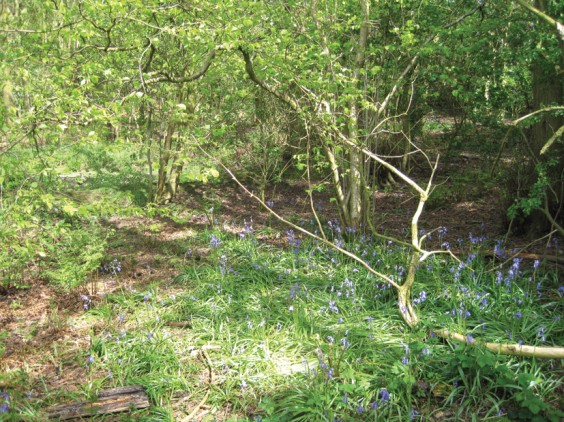
There are native bluebells and wood anemones under the deciduous trees at the bottom of the wood, and these should spread through the wood once the conifers are gone. Local people will be invited to help plant young saplings of native species.
The access track to the wood will soon be improved to be able to take forestry vehicles. The large-scale felling work will not start until the current nesting season is over.
Andy Harris from the WWT said: “Initial clearance does look brutal and there will be areas of bare ground for months. Brambles and small trees will initially re-colonise the area and it could take up to 20 years for a strong canopy to develop.
“You may not think it, but this phase of young woodland actually attracts considerably more wildlife than is present at the moment.”
There is good pedestrian access into and around the wood and a public footpath alongside – not the case in all reserves. But woodland needs managing if it is to thrive.
That’s why many local people support the Wildlife Trust. You can find out more about it on https://www.worcestershirewildlifetrust.org
This project shows good collaboration between the local Rowney Green Association and the WWT. Some local people have already enquired about becoming wardens for the wood.
It should become a real jewel in our wildlife crown.
