
Hannah Genders on the challenges of creating a French chateau garden…
Having taken on this project to restore the grounds of an 18th-century chateau in north-west France, I thought you might be interested to know how it is going and about the trials and tribulations of doing a garden overseas.
As I mentioned in a previous article, the clients contacted me after seeing the Heaven’s Garden series on UKTV, and Mike, my husband, and I spent a lovely weekend with them last June.
The design work for the first project is now complete – this will be an organic vegetable and fruit garden in the design of a traditional French potager.
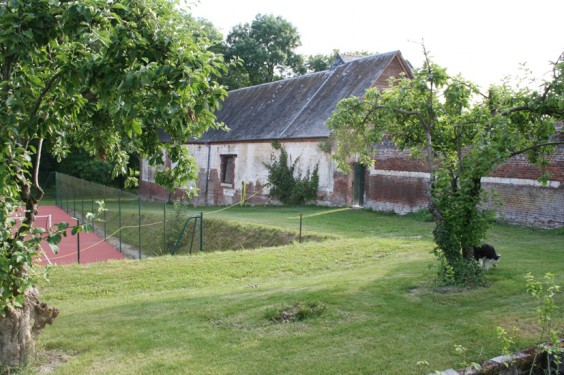
The main headache has been trying to disguise an ugly tennis court that had been put in by the last owner.
The area is enclosed by an old brick and limestone wall, which is beautiful to look at and will be great for the espalier fruit I want to grow, but it presents lots of problems with access to the site, namely that all the materials need to be lifted over the wall.
The walled garden area is large, even with a tennis court in it, measuring about 50m (150ft) by 40m (120ft), giving plenty of scope to grow enough fruit and vegetables to supply the chateau and its guests.
As you can see from the design, the layout is formal in the French potager style, with gravel paths running between the beds and areas for sitting out and enjoying the sunshine.
To keep the garden sustainable as well as organic I have specified the use of green oak for all the borders and trellis frame – this will all be sourced locally from managed forests that are then replanted.
The cleft chestnut on the trellis work is also from local woodlands and by using cleft wood (cutting it down the grain) rather than sawn wood, the finished effect will have lots of character.
The entrance to the garden is through an old gate and the first set of borders are for flowers and herbs; this mixture of crops is typical in the French potager and means there will be plenty of fresh flowers to cut for the chateau and plenty of traditional herbs for the kitchen.
A bespoke metal pergola over the path with individual vine leaves will provide support for the vine plants and some shade to this part of the garden.
The top section of the garden is for salad crops and fruit; I have included every sort of fruit from raspberries, red, white and black currants to strawberries and rhubarb. Once established, these crops are easy to grow and essential to a good kitchen garden.
The espalier fruit trees grown against the old wall will be sourced from the local area and there are plenty to choose from, due to the warm climate. I have chosen peaches, nectarines, cherries and apricots.
To the right-hand side of the garden the path continues under a second pergola – this acts as a focal point for this part of the garden and the design in the metal work copies the railings at the front of the chateau.
This area is for the main vegetable crops and has four large beds to allow for good crop rotation, an essential practice for any organic garden.
A series of cold frames runs along the back wall of the garden and these will be made from reclaimed bricks and the old windows that are currently being replaced in the chateau.
With all the design work complete, the work will start in September this year and I will take a small team of landscapers out to work with the chateau gardeners to do the basic build.
I will plant up the beds myself with the gardeners once the hard landscaping is complete; all the fruit and box hedging will go in during the autumn and there’s plenty of green manure to be dug in over winter. The second planting for all the vegetables, salads and flowers will be spring of next year.
It has been an amazing experience to be involved in such an exciting project, which – all being well – should continue over the next few years with other projects to complete there.
The chateau gardeners have already done an excellent job in clearing the woodlands, which were much neglected and probably hadn’t been touched in about 30 years.
I have found it challenging to source materials for the first phase and my French is improving slowly, although there was much hilarity in the kitchen when I asked the head gardener if he could find us some well-rotted horse manure.
I think I literally asked for “**** of the horse” – unintentionally of course…
