
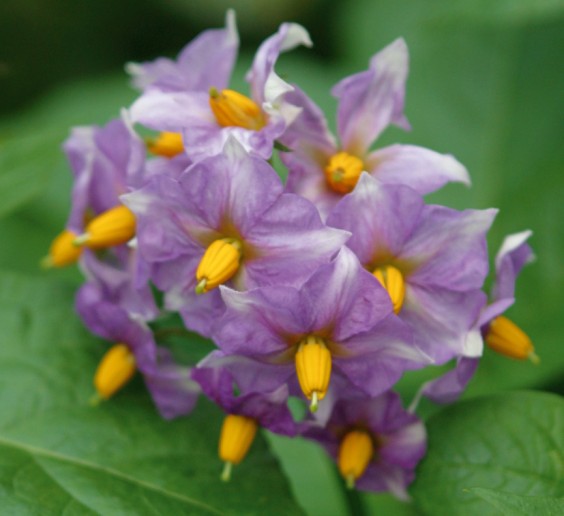
Potatoes make a great start for newbie vegetable growers, writes Hannah Genders.
With all the new interest in growing your own vegetables these days, I am often asked by people where they should start if they want to have a go.
I have been growing vegetables for over 15 years now and it all started on an allotment in South Birmingham.
Taking on an allotment at that time was a life-saver for me, having grown up on a smallholding in Somerset where we produced all our own food, not only fruit and vegetables but milk and meat too.
I was, I confess, a complete bumpkin and felt so out of place living in a large city. The allotment I took on provided an escape and the chance to grow some cheap, healthy food when the children were small and we didn’t have much money.
It was also the best place to learn all the techniques for growing produce successfully as I picked up tips from the old guys down there who had been doing it for years.
I still think this is the best way to learn, so if you have a friend or family member who does grow their own vegetables, spend some time with them and learn the skills first hand.
Let me encourage you if you are taking on an allotment or digging up some lawn in your own garden – for me there is still little else as rewarding as growing my own produce.
The vegetable plot I have is quite small; just enough for me to keep my hand in with the pressures of a busy job.
So, where to start? Well, I would always start a new plot with potatoes – they are easy to grow and have the added benefit of breaking up new ground. Potatoes will do better if the soil has had a good addition of well-rotted manure added before planting.
Decide on the type of potatoes you would like to grow – it’s really down to the amount of space you have and what you like to eat!
Salad potatoes and new potatoes are in the ground for the shortest time before harvesting whereas a maincrop will stay in the soil until well into the summer before being dug up.
I grow a variety of new potatoes and one salad of either Charlotte or Pink Fir Apple, and this is due to space. It means that I have harvested most of the crop by early summer and can plant on a bed of leeks for the winter.
Plant, dig over the soil and fork on a good layer of manure as you dig the trenches; this will then be incorporated into the soil as you go. For the trenches you need to dig down about six inches and allow 18 inches between rows, and a little more for maincrop varieties.
Place the tubers along the row about 12 inches apart with the eyes of the potato facing upwards as much as possible. Cover the potatoes with your soil and manure and heap the soil up over the row.
That is essentially it with potatoes – just continue to “earth up” the rows, which means scraping the soil back on to the heap as the plants grow. This stops the tubers getting too near the surface and turning green.
Even though potatoes are readily available in the shops, there is nothing like the first taste of your own home grown ones – believe me.
Another easy crop to grow is the loose-leaved salads that are now available in mixes. This is the equivalent of growing the contents of those over-priced mixed-leaf salad bags you can buy in the supermarket.
Sometimes they are called “cut and come again” salads, and this perfectly describes what you need to do. Prepare the area by turning over the soil and raking it to a fine crumbly surface, make a very shallow trench only about 1 inch deep and lightly sprinkle the seed on the surface, then cover the seed over gently with the soil.
If you make successive sowings every thee weeks you can keep yourself in salad leaves throughout the entire summer. For many varieties, if you snip off the leaves at the base you will get new leaves coming through on the same row.
This simple exercise can also be done in a pot if space is really tight – just make sure the area you choose has plenty of sun and keep the seeds watered in dry weather.
I grow nasturtiums on the side of my salad plantings for two reasons: it makes the patch look so pretty and the flowers and leaves have a lovely peppery taste when added to the mixed salad leaves.
I hope this gives you somewhere to start planting this spring – I am sure that, like me, once you have seen the reward of your own crop you will be hooked.
NEW SERIES
Following the success of Heaven’s Garden, Hannah will be filming for a new series on allotments in April, visiting allotments all over the UK.
The series goes out in May on UKTV Gardening and is called Digging for Victory.
