
I read with interest the letter from Morris Jephcott regarding the “plague pit” episode at Alvechurch in 1984. Perhaps I can shed some light on the background.
It has been generally assumed that the Black Death of the 14th century was identified as bubonic plague, but early in 1983 Dr Graham Twigg, a zoologist of Royal Holloway College, London, published a paper drawing attention to certain inconsistencies in the theory. Analysing various alternatives he put forward a theory that at least some of the outbreaks could have been due to anthrax.
Anthrax was carried in wool and hides along trade routes – one of which, from Coventry to Worcester, passed through Alvechurch. The spores of anthrax are believed to survive in the ground for tens, perhaps hundreds of years. These days the disease is used as a base for weapons of mass destruction.
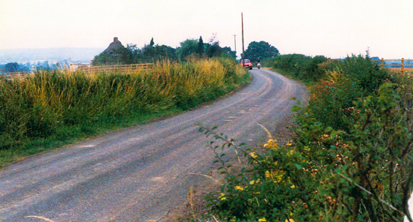
In 1983 the M42 works were edging towards an area near Black Pits and Pestilence Lane which might, just possibly, have been a plague burial ground. On contacting the Redditch Indicator I found that they had not as yet noticed the significance of this situation.
The first article appeared in the Redditch Indicator for July 22 1983, in which the reporter canvassed various medical authorities, none of whom would state categorically that there was no problem. A Department of Heath spokesman said that it was quite possible for anthrax spores to survive several hundreds of years.
Redditch’s environmental health chief said: “Anthrax strikes very quickly; the only way to destroy it is by fire.” Perhaps by coincidence, Porton Down did a survey of Gruinard Island, which had been used for germ warfare experiments in the Second World War, and found the disease still active in July 1983.
In January 1984, BBC Timewatch covered the problem with a documentary making specific reference to Alvechurch. Riding on the publicity, Dr Twigg produced a book, A New Look at the Black Death. The scare was also featured in the News of the World and the Daily Mirror.
As to what happened at “Pesty Lane”, I can find no published information. Word of mouth said that a pit was found, containing bones, but that the horse appeared to have died peacefully of old age. After a short delay the M42 proceeded on its way.
Now to Black Patch. Anyone walking Black Path before the recent development will have noticed the well-developed “ridge and furrow” mediaeval field cultivation. There was no sign of a disturbance – even a marl pit. It therefore seems very unlikely to me that the field contained anything like a plague pit, especially as the old name for the field, going back hundreds of years, was the Pig Yard.
Incidentally, the romantically-named “Pesty” or Pestilence Lane had almost certainly little to do with the plague. It seems likely that it was the name for the lane leading down to the Pessel, the little brook that flows from Weatheroak through Radford to Alvechurch.
Ian Hayes
Bordesley
