Home Blog Page 94

Great British blooms

0
field
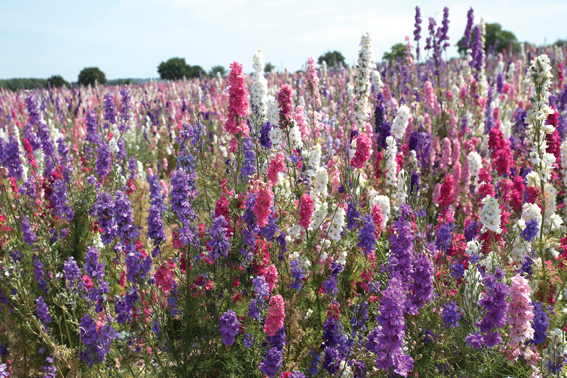
Confetti fields at Wick, Pershore

Judy

Keen garden photographer Judy Lawrance shares some of her favourite locally–grown flowers.

As an enthusiastic plant and garden photographer, I attend many local and national flower shows during the spring, summer and autumn months. The Malvern Spring and Autumn Festivals and the BBC Gardeners’ World Live at the NEC are always a thrill for me as I can travel there and back, click away with my camera to my heart’s content and come away with the most amazing variety of images – all in one day!

Despite the popularity and “wow” of the show gardens at the larger events, the floral marquees, in my opinion, offer the most variety and interest.

As you walk through the doorway of these canvas structures, you are met with a kaleidoscope of colour and a heady fragrance emanating from the huge bowls of perfumed flowers, usually lilies, placed near the entrance (perhaps to lure people in).

When you look around the marquee, every flower head is perfect, every leaf in its place and every colour coordinated. Proud British growers man their stands and are only too willing to share their stories of how it all started for them.

Once inside, my first port of call is the Flowers From The Farm exhibit. These incredible stands are planned, constructed and manned by volunteer local flower growers. Their imaginative, complex displays and the variety of British-grown flowers they use is impressive, to say the least.

Not only that, they are such a friendly bunch (excuse the pun) and are very happy to share information with anyone who takes an interest.

Flowers From The Farm, founded in 2011 by arable farmer Gill Hodson, is a network of independent like-minded artisan British flower growers spread over the UK. The 500-strong membership is a mixture of farmers, gardeners, smallholders and florists.

Some have small cutting gardens to feed their floristry businesses, some have acres of land growing a variety of flowers to supply shops, but no matter how big or small their plot, these dedicated and passionate creatives all have a common goal – to produce British, sell British and promote British-grown flowers, the ones that are perfumed, quirky, imperfect and beautiful!

You don’t have to look far for a FFTF florist; there are several dotted around the West Midlands and Worcestershire (visit their website to find one near you). Many of them run workshops, besides supplying funeral, corporate and more especially wedding flowers.

What could be better than a wedding bouquet to touch a bride’s senses as she walks down the aisle, and table decorations that perfume the air. The delicious smell of English roses, peonies, lilies and jasmine and the like, all playing their part in the memories of that special day.

On a similar note, and continuing the wedding theme, the Real Flower Petal Confetti Company at Wick in Pershore grow delphiniums – acres of them. They are open to visitors just before harvest-time, but for only 10 days a year, so if you blink you’ll miss it.

It’s a sight to behold, as far as the eye can see: hues of pinks, blending into mauves, purples, whites and reds, and all of them grown for the purpose of making biodegradable confetti.

Here today, gone tomorrow. The day after the last visitor leaves, the crop is harvested, by hand, the colour being maintained by laying the petals out to dry in the sun. They are then packaged and offered for sale on their website.

Another British grower who has dedicated his life to growing British flowers is David Austin of David Austin Roses based in Wolverhampton. A visit to the gardens and tearooms is not to be missed. Although many of his varieties repeat-flower, the best times to visit are June and September, when most varieties are in full bloom.

As you enter the gardens, the scent is in the air, subtle but penetrating, and you can’t help but stoop down and take a bloom in the hand for a closer smell! There are more than 400 varieties on sale, with names such as Judi Dench, Emily Bronte, Maid Marion and Scarborough Fair, evoking that sense of English-ness.

The gardens contain very little else other than rose bushes, climbers and ramblers. You’d think it would be too much, an overkill, but it’s not; it’s a place to linger and sit and contemplate.

As you enter the Long Garden, the central walkway, you realise that this is no ordinary place. This area, interlaced with rose-clad pergolas, contains a collection of old roses that flower just once a year.

Leading off from there, the formal, circular Victorian walled garden is divided into “pinwheel” sections, each section outlined with manicured box hedging and filled with English roses and repeat-flowering shrub roses. These roses flower right through to the frosts of early winter.

The Renaissance Garden is as you’d imagine: Italian-looking with English rose bushes lining a long straight pool that runs down the centre, flanked by wide borders leading to a verandah with seating, a welcome respite on a hot summer’s day.

Then of course, there’s English lavender, sold all over the world and grown on our very own doorstep. In mid-July in Snowshill, Broadway, there’s an unmistakable perfume in the air, when the fields at Cotswold Lavender are in full bloom. For a small entry fee you can walk among the rows of plants, offering a great photo opportunity for families with small children.

Even in our British climate, there is hardly a month during the year when growers in the UK can’t produce something of interest. So it’s heartbreaking to think that although £2bn a year is spent on cut flowers, only 12 per cent of the flowers sold in the UK are grown here. Flowers grown for the European market are imported from the likes of Kenya and Colombia.

On the 127 farms in Kenya, flowers are grown in polytunnels and picked by poorly-paid workers. They are watered three times a day and when cut, dipped in antibacterial solution before being chilled to put them in a state of semi-hibernation.

Under these controlled conditions, each flower is the same as the next, the same size head, the same length, the same shade, with very little or no perfume. They are then flown overnight 4,000 miles to Holland, where they are sorted, graded and packaged before being auctioned and forwarded on to their final European destinations.

However, it’s unrealistic to think that we can grow enough flowers in the UK to meet demand, at a price we’re prepared to pay. With that in mind, the imported flowers in our supermarkets will always have the market share. They are cheap and cheerful and easy to add to the weekly shop.

But for those special occasions, I believe we could all do more to support our British growers. Their blooms have no air miles so are therefore environmentally friendly, they have character and soul, they have provenance, and best of all, they have perfume.

And if we have to pay a little more for these fresh, long-lasting, scented flowers, then I believe they are worth every penny.

DIARY DATE:
Malvern Autumn Festival 2018: Saturday and Sunday September 29 and 30

https://www.flowersfromthefarm.co.uk

https://www.davidaustinroses.co.uk

https://www.confettidirect.co.uk 

https://www.cotswoldlavender.co.uk

Mars is star of show

helicopter
How a Mars helicopter might look (Image courtesy of NASA)

Brian

Amateur astronomer Brian Watkiss peers into the Village night sky.

September, and we’re halfway between the longest day and the shortest, or between Midsummer and Christmas, with the Autumnal Equinox at 02:54 on the 23rd (although the day when day and night are closest to equal is the 25th).

If you’ve a good view of the south-western horizon, you may still catch a brief glimpse of Venus, very low in the glow of the sunset. There will be a very slim crescent Moon just above on the 12th but you will need a keen eye. I think we can say goodbye to the silvery planet in our evening skies for this year.

Jupiter doesn’t fare much better as it too sets not long after the Sun. At least it is a little higher in the sky. The Moon is above and to the left on the 14th. Interesting to notice how close Venus and Jupiter got before they disappeared, hand in hand, into the sunset.

As soon as the sky starts to properly darken, Saturn takes centre stage in the south at the same altitude as Jupiter. This most wonderful object to see through a telescope has had only a minor role this year, being outshone by all the other planets. The Moon gives it a brief cuddle on the 17th.

Then to the left and closer to the horizon, we have the star of the show and the cause of Saturn’s diminution, Mars. It really has been spectacular, having swung close to the Earth in its orbit.

It continues to be really bright with its orange colour very obvious even though we are moving away from it now in our smaller, faster orbit. A big, bright Moon is close by on the 19th and 20th.

Interesting to see that NASA is hoping to develop a helicopter for use on Mars. As the atmosphere there is equivalent to 100,000 feet here on Earth, the rotors will have to spin at amazing speeds to generate enough lift. It is scheduled to accompany the next rover to be launched to the red planet in 2020.

Closer to Earth, Japan launches the “Kounotori7” HTV-7 cargo vessel to the ISS on the 14th. If the Space Station is visible at this time, look for a small satellite just ahead of it at this time. As ever, www.heavens-above.com is the site to consult.

When the sky is properly dark, Jupiter is long gone – and in Greek mythology Jupiter, known to them as Zeus, also disappeared on one occasion.

You see, he had taken rather a shine to the wife of another: a beautiful lady called Leda, and in order to, er. . . pay her a visit, he transformed himself into a swan.

He’s there now, high overhead, visible as a cross of stars flying along the Milky Way with one of the most luminous stars in our galaxy, Deneb, on his tail.

September harvest

apples

Mary

Mary Green continues her series on trees in the Celtic calendar.

The hot dry summer had quite an effect on wildlife, though not always in the ways you would expect. Wild vegetation manages the drought better than most gardens and parks. It flourished especially well along the canal where there was reliable water for its roots. Our river, the Arrow, got very dry, but kept enough water for a green patch through the dry fields.

Butterflies and other insects such as bees and dragonflies did really well, again especially near the canal where there was abundant flower for nectar and still-green leaves for the new caterpillars to feed on.

Some plants loved the weather: there was a spectacular spread of wild carrot, for example, and water lilies colonised new parts of the canal. Most of the trees survived quite well, as their roots are deep enough to reach the underlying water (remember way back to the very wet early spring!).

But planted crops suffered – apparently there was a problem with Christmas trees drying up (not native to here) and a reduction in grain and vegetable sizes.

The corn harvest was early and easy, but reduced in volume. Grapes loved it, though, as they have a really long root that goes right down to the water, with a great vintage predicted for English wines. There was also a record lavender crop. Strawberries, both wild and cultivated, did really well, but it was a very short asparagus season!

Until relatively recently, the seasons were defined differently in England. Autumn was from August to October, the harvest season starting with the feast of Lammas. So we are already well into autumn. Winter was from November to January, starting with All Saints’ Day. Spring started in February with Candlemas, and May ushered in the summer with the May Day celebrations.

These are echoed in the Celtic festivals of Lughnasa, Samhain, Imbolc and Beltane, and make sense of the solstices and equinoxes being in the middle of each season. September holds the autumn equinox when day and night are equal length, and many harvest festivals.

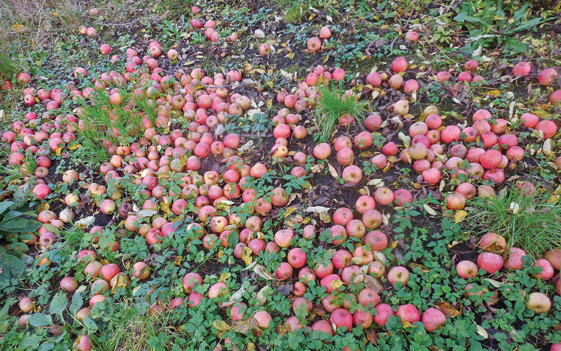
The Celtic trees for September are apple and vine. The first is self-explanatory, the second a little obscure. It probably doesn’t mean the grape vine, which was not introduced here till Roman times, though the Celts may have included grape vines at a later date.

There are several native “vines” it could be – ivy, honeysuckle, clematis, hop, for example – but the consensus is that it probably means bramble.  So we have a tasty pair for this month – blackberry and apple!

Apple trees carry a weight of myths and legends, just as in some years they are bowed down with the weight of apples. We have our native crab apple, and for many centuries have bred other, sweeter and larger, varieties. At some point the tree of knowledge in the Bible was identified with the apple in our translations, though it wasn’t necessarily that in the original language.

So the apple is the tree of wisdom and knowledge, but also because it led to the “Fall” of human beings from immortality into human life, it is also a tree of sex and fertility, often associated with women. It carries messages of love and health.

The fact that it is a host to the magical mistletoe gives it even more significance, and in Celtic legends it grows at the entrance to the next world. Apples can live to a great age for a small tree, often surviving even when the heart wood has gone and only the outer layer is left. This also adds to their mythical nature.

No other tree has so many traditional songs sung about it, mostly at the time of “wassailing” or blessing the apples. It grows really well throughout the country, but especially in the Midlands and South. A good crop of apples meant fruit for the whole winter, not to mention plenty of cider.

I can remember our farmhouse attic having apples laid out all across the floor during the winter, keeping cool, and it was a treat to still have them at Christmas, even if we did get fed up with them around October! Modern storage methods mean they can be kept fresh even longer, until spring.

Wassailing was meant to encourage growth and warm wet weather through the sympathetic magic of rousing the trees with noise and pouring cider and ale over them.

Crab apples, our native ones, have lovely pink-and-white blossom, and small green or yellow sour apples. The apples make wonderful jams and jellies, and were roasted with meat and in punch, so the tree was valued for its culinary uses.

You can still find them around here (my nearest is in Birches Lane), though many of the trees you see are “wildings”. These are cultivated apples from orchards, spread by birds or from discarded cores, and they can produce lovely free edible fruit. There is one by the dead arm of the canal and another at the start of Lodge Farm Lane, with many along the canal. Apple trees were also much planted in hedges, sometimes grafted on to crab apples.

Apples were so important that there are phrases like “the apple of my eye” to mean someone much loved. They were seen as a good food to combat sickness, and are an excellent digestible source of vitamins. “Comfort me with apples,” says the Song of Solomon, “for I am sick of love.”

Cider was the everyday drink of men, women and children in country areas, as late as my childhood (the children on the next farm had free access to the barrel!). Around here it was very common, but now we have only one cider-maker left at Tardebigge.

Orchard apples have some wonderful old varieties with a great diversity of flavour and curious names: Bedfordshire Foundling, Bloody Ploughman, Dog’s Snout, English Foxwhelp, Peasgood’s Nonsuch, Annie Elizabeth (my grandmother’s names!) and of course our local Worcester Pearmain.

They include cider apples, cooking apples and dessert apples which range from the very early ones that don’t keep to the later ones that keep well.

Even some of the varieties I remember from my youth are rarer now – the early Beauty of Bath and green, sharp Granny Smith, for example. Modern standardised varieties like Golden Delicious and Braeburn have driven them out. There are still some surviving in people’s gardens (including mine!) and old orchards (like the ones at Tardebigge Lime Kilns) but there is no protection for them.

You can put a preservation order on an oak or ash, but not on an ancient apple orchard, which is seen as just a commercial crop. Wildings and hedge-plantings have helped preserve some of the old varieties when the orchards were destroyed in the 1970s.

Orchards were good for wildlife. As well as the blossom feeding bees, the ground beneath was often left to old grasses and wild flowers, excellent for butterflies. You can find some echoes of this in places like the Old Orchard between Barnt Green and Blackwell, which has uncommon wildflowers like betony as well as spring bluebells.

Apples are from the rose family, the most wonderful edible plant family we have, and so are brambles. But while we love apples, most of us hate brambles and cut them down whenever possible. This is a shame as they are a vital element of our biodiversity. (Mind you, they are so successful that even I take some of the bigger ones out from my garden!)

They grow everywhere, even under trees as they can climb to the light, and are full of nectar-rich flowers feeding insects for a long period (much better than the short-lived native roses, though the flowers are actually very similar) and then of berries which feed birds through the autumn. You can eat the very young shoots, too.

I find it hard to understand how people can cut down brambles and then buy blackberries in the supermarket. Blackberrying is one of our commonest foraging experience, even in cities where kids pick them on waste land – or used to!

There are hundreds of different micro-species of bramble, and you can recognise that some have fewer, bigger, juicier seeds, some come earlier or later, some are sweeter or sourer.

Brambles used to be placed on graves, to deter grazing animals, and they were welcome in woodlands once because they protect young seedlings from grazing animals. Now everyone seems to see them as somehow dangerous and to be cut down.

This year is not such a great apple year as last year, but they should be really sweet. Many of the brambles are a bit dry, but where they are within reach of water by their good roots, they have been lush and lovely.

I have had my first blackberry and apple crumble already, which I make without sugar, using the natural sweetness of the fruit. Remember you have to stop picking blackberries on Michaelmas Day (September 29) because the devil pees on them that day!

* We somehow managed to put the wrong caption on one of the pictures last month – the bottom picture on page 45 is St Dabeoc’s heath, not field maple.

This is a poem I wrote recently on the theme of childhood.

That girl
What would she think of me, that girl?
Standing in the cool pantry, quiet and still
Among the pans of clotted cream and butter
Struck by a feeling of a future life
With a knowledge of some sort of light
That would guide her in difficult times.
She was skinny, cross-eyed, pigtailed
Hands smelling of cowshit, nostrils full
Of the wild smell of barley, ears lulled
At night by the sound of receding sea.
She already wrote, wanting to catch
The passing spring and press wild flowers
Into words. What did she want to be? I forget.
She half knew she would be a little odd
Never happy in girly talk and dresses
Bright and bookish, reading Wuthering Heights
Non-stop on the living room sofa
As the winter gales howled outside the window.
I think she would be pleased with my life
Though maybe it didn’t travel that far
Still writing poems and smelling barley fields
Sill fighting to follow where that light takes me.

Let loved ones know your final wishes

sue

ADVERTISEMENT FEATURE

Lickey Wills specialist Sue Jenden explains why you need a Health & Welfare Lasting Power of Attorney.

The worldwide number of people living with dementia in 2015 was 47 million, and by 2030 that figure will reach 75 million. A new case is diagnosed every 3.2 seconds.  In the UK the number of people being diagnosed has increased more than 50 per cent in the past 11 years, now standing at 540,000. It is estimated to be closer to 850,000 adding in the undiagnosed cases.

With 12.8 million people over the age of 65, one in 14 will develop dementia, with the cost to the economy more than £26 billion per annum.  Unpaid carers save the economy £8 billion a year.

Given these shocking statistics it is not surprising that there is a widening gap between the rising number of people likely to lose capacity and the relatively small number who have arranged a Health and Welfare Lasting Power of Attorney (H&W LPA).

Only 3 per cent of the population have H&W LPAs registered with the Office of the Public Guardian. This suggests there are 12 million people at significant risk of losing mental capacity who have not made proper arrangements for their care in old age. Many are unaware of the risks.

The majority of people are still avoiding important conversations and practical actions to make their preferences known about their end-of-life care and final affairs. We do need to talk about end-of-life care and what we would want if we found ourselves in circumstances where our quality of life is extremely poor.

Often people tell me they simply want to be comfortable, hydrated and well cared-for. If they have not legally empowered trusted individuals to make these wishes known, it could be that this is not what actually happens.

Part of the reluctance to make our wishes known is the misconception that the “next of kin”, a term widely used in health and social care decisions, has associated rights and responsibilities enabling them to act on behalf of an incapacitated relative.  In fact, the term has little basis in law.

Consulting the next of kin is an expectation in many situations within health and social care practice, but the next of kin is not automatically empowered to make any decisions. The authority to make decisions still lies with the professional within the health or social care system.

The lack of an authorised decision maker from within a person’s family or close relatives/friends can also complicate and even delay the resolution of important matters such as arranging care, finding suitable accommodation and dealing with the funding.

H&W LPAs are useful documents offering protection and control as they allow you to appoint your chosen attorneys. Conversations with relatives are important, but it’s also necessary to empower those chosen people in writing.

The best way to do this is to express your wishes in an H&W LPA and make advanced statements expressing your wishes on such things as your preferred setting for care, whether you want your spiritual beliefs taken into account, and even your food and drink preferences. This eliminates doubt and gives legal validity to your choices.

Sue Jenden Associates can assist you with the practical steps of putting in place a H&W LPA. To reduce the financial strain on your loved ones we can help you with:

  • Recording your funeral wishes
  • Planning future care and support
  • Making your preferences about organ donation known
  • Telling loved ones your wishes
  • Writing a Will
  • Putting in place a Property & Finance Lasting Power of Attorney

Whatever your situation, you can contact us for expert advice:

Tel: 0121 445 5874
info@suejendenassociates.co.uk
https://www.suejendenassociates.co.uk

Don’t get stuck in a frozen tax threshold

ice

ADVERTISEMENT FEATURE

Martin

Martin Pryor suggests ways to lessen the impact of ‘fiscal drag’.

The value of key tax thresholds is being eroded, as elements of the income tax system lag behind inflation. The erosion in the values of tax thresholds is known as “fiscal drag”, and is a highly-effective form of stealth tax used by Chancellors from successive governments.

Fiscal drag is the result of not adjusting tax thresholds (or allowances) in line with inflation. Because incomes and values usually rise with inflation, the consequence of freezing a threshold or allowance is a real (inflation-adjusted) tax increase. From the politician’s viewpoint, however, the numbers do not change so they can claim that taxes are not being increased.

Three key thresholds relating to income tax have been subject to fiscal drag:

High income child benefit tax charge
This tax charge, introduced in January 2013, effectively claws back child benefit at the rate of 1% for each £100 of income over £50,000 (based on the higher of the two parental incomes). The £50,000 threshold has not changed since its introduction.

Personal allowance tapering
The personal allowance is reduced by £1 for each £2 you earn over £100,000. The net result is that for each £2 of excess income, you pay tax on £3 until your personal allowance is nil.

In 2018/19 that generally means an effective marginal rate of 60% (61.5% in Scotland) on income between £100,000 and £123,700.

The £100,000 threshold was announced by Alastair Darling in 2009 and neither of his successors have revised it.

Additional/Top rate tax starting point
The additional tax rate started in 2010/11 with a threshold of £150,000. While it has since been reduced from 50% to 45% (or the 46% top rate in Scotland), the threshold has not increased.

It would now be about 20% higher had it been CPI-linked, as would the personal allowance tapering threshold.

One way to limit the effect of these income-based thresholds is to reduce the income being measured, through tax-efficient uses of income, savings and investment. For specialist advice please refer to your accountant or tax specialist. Some options include:

Tax-efficient financial planning
You may be able to reduce your income by transferring investments to your spouse or civil partner. Even if you both pay the same marginal rate of tax, a switch could reduce your joint tax bill.

Change the type of income
If you are a business owner, drawing more income as dividends rather than salary can help reduce taxation. However, the dividend allowance was reduced to £2,000 in April 2018.

Make pension contributions
Personal pension contributions reduce your income for tax purposes.Because of the way the tax relief operates, you could find a 60% marginal tax rate means 60% tax relief on pension contributions.

Tax-efficient investments
There is no income tax payable on investment income held in ISAs, and they don’t have to be declared on your tax return.

As it is early in the tax year, there is more scope for reducing your personal fiscal drag in 2018/19, with professional advice.

Levels and bases of taxation and tax reliefs are subject to change and their value depends on individual circumstances. The Financial Conduct Authority does not regulate tax advice.

*  Contact Pryor Portfolio for more information:
Tel: 07961 162818
martinpryor@ppm-ifa.co.uk
https://www.ppm-ifa.co.uk


Winning start for AFC

action
Action from the draw against Royston Town (Photo/ Ian Macvie)

AFC have their first trophy of the season in the bag.

Alvechurch FC have already secured their first piece of silverware of the 2018/19 season, winning the Worcestershire Senior Cup for the first time in 41 years.

Having beaten a very youthful Kidderminster Harriers side 6–0 in the semi final at Lye Meadow, they faced a much stiffer test against fellow Evostik Southern League Central side Redditch United at Evesham United’s ground.

With ’Church dominating the majority of the match, a brace from Josh March and a spot-kick from penalty king Tom Turton sealed an impressive 3–1 win.

As we went to press, Alvechurch were due to meet Redditch again, this time in a home league match – this has been swapped with the reverse fixture on Boxing Day which will now be played at Redditch as their 3G pitch is better equipped for potential wintry conditions.

There was also more cup action to come as AFC were due to play Bromsgrove Sporting in the Preliminary Round of the FA Cup.

Meanwhile, the league campaign began with two draws against Royston Town and Tamworth, and a defeat to Coalville Town.

* ’Church received a major pre-season boost with the re-signing of midfielder Babucar Sauane. Fans’ favourite Baba left the club at the end of last season and joined up with the Jamie Vardy V9 project before going on trial at Blackpool FC. Everyone at Lye Meadow is delighted to see Baba back in his pivotal role.

Manager Ian Long also made several more new signings, including 18-year-old midfielder Theo Llewellyn, a former Bristol City scholar who has represented Wales at U16 level and was a squad member of their Victory Shield-winning side.

There are also three new players who began their careers at West Bromwich Albion, including experienced midfielder Aaron Birch, who went on to play a major role at Hereford FC as they won the Midland Football League at Alvechurch’s expense in the 2015/16 season.

Taylor Morrison has joined the club from West Brom’s U21 set up and is a pacy left-sided forward. Jordan Piggott, a 19-year-old centre back, also started his career at the Albion before playing in the Scottish leagues, representing both Dundee FC and East Fife.

Another new face is Johnathan Onyeaka, who has signed dual forms with Nuneaton Borough FC. The six-foot-four-inch centre back includes National League side Solihull Moors and US team Jersey Express among his previous clubs.

* As Alvechurch has moved up the non-league pyramid, larger crowds are anticipated – so some extra volunteers are required. The club is looking for bar staff to go on a rota, for around two to three hours every three weeks. Car parking stewards are needed for a couple of hours perhaps once a month, and match day stewards for one match a month.  You’ll get a pie and a pint as well as a match ticket! If anyone is prepared to lend a hand, please contact the club.

* For more info or sponsorship enquiries, please contact Trevor Ball at saintsarehot2@btinternet.com or visit https://www.pitchero.com/clubs/alvechurch
Follow the club on Twitter @Alvechurch1st

FIXTURES
All league fixtures unless stated

Sat Sep 1  3pm  Needham Market (H)

Sat Sep 15  3pm  Hitchin Town (A)

Tues Sep 18  7.45pm  Stourbridge (H)

Sat Sep 29  3pm  Kettering (H)

Sat Oct 6  3pm  Barwell (A)

Sat Oct 13  3pm  St Ives Town (H)

Tues Oct 16  7.45pm  Stratford Town (H)

Sat Oct 20  3pm  Bedworth Utd (A)

Aiming high and wide

pupils

ADVERTISEMENT FEATURE

At Bromsgrove, pupils are treated as individuals. Everybody is expected to work hard and to accept that if they choose Bromsgrove, they are aiming high and wide and never settling for anything other than their best.

Pupils are happiest when they are succeeding. The school’s value-added results reflect a philosophy that demands that every pupil should aim to be as academically disciplined and as intellectually enlightened as they can reasonably be.

You don’t have to be Einstein or Picasso to come to Bromsgrove; instead, the exceptional results flow from a community that nurtures and encourages, with the expectation that pupils will achieve their best.

Academic facilities have been improved beyond measure in the last decade. Eighteen new and refurbished science laboratories have joined a magnificent Humanities block, Art and Design Building and Library. All older buildings have been given 21st-century makeovers to ensure that every pupil learns in a superbly-resourced environment.

A world-class Performing Arts Centre comprising a new live performance venue and theatre, a large drama studio and an entire suite of new music classrooms, recording studios and practice rooms has benefited pupils from all performance disciplines.

The school would be delighted to show you the solid reality of its buildings, historic and modern, nestled in over 100 magnificent acres – but don’t be distracted by the breathtaking facilities. The heart of Bromsgrove’s success is its people.

More than 1,600 pupils, boys and girls, day and boarding, national and international, aged 3-18, are what give the school its vibrancy, with a staff of some of the nation’s finest educators, coaches and caregivers – passionate professionals, as invested in your child as you are.

Tel: 01527 579679
https://www.bromsgrove-school.co.uk

Develop love of learning

kids

ADVERTISEMENT FEATURE

Applications from aspiring astronauts welcome! Or future Prime Ministers, architects, physicists. . .

What makes Dodderhill Independent Girls School different? From the very beginning, the smallest girls in Reception are encouraged to aim high and to have no limits to their aspirations.

The newly-refurbished Pre Prep department (Reception to Year 4) has large, bright classrooms leading directly on to an outdoor learning and play area. Every week girls go to the on-site Forest School where they climb trees, build shelters and learn how to start campfires. Girls can explore, ask questions and develop a love of learning, both in and out of the classroom.

The curriculum adapts to meet the needs of the different age groups with girls learning French from Reception onwards and Spanish beginning in Year 5. All the girls have access to purpose-built sport and music facilities, as well as modern science laboratories and art and textiles studios.

There is an exceptional range of co-curricular opportunities for girls to enjoy, including iMotion Animation, Wellbeing Club, Duke of Edinburgh Award, Environmental Club and many more.

The youngest girls at Dodderhill are nurtured in small classes, in a school where traditional values and manners co-exist with the best of modern technology.

At Dodderhill, every girl is celebrated as an individual and her talents are encouraged, whatever they may be. The school’s excellent GCSE results are achieved by giving the girls confidence in their own ability from the earliest age.

When you join Dodderhill, you become part of the family and a member of a school where everyone will know your name. Girls enjoy coming to school each day and leave at age 16 with firm, lifelong friends.

If you are looking for a school that promotes a “can do” attitude and encourages girls to grow in confidence and resilience, book a visit to experience the Dodderhill difference!  You will discover a school like no other in the area and experience a community where a love of learning is part of our culture.

Open events take place on Friday September 28 (2–5pm) and Saturday September 29 (10am–12noon).  Alternatively, the school welcomes visits during the normal school week. Contact the Registrar, Mrs Wood, to arrange a visit or book to attend one of the open events.

T: 01905 778290
E: info@dodderhill.co.uk

An outstanding journey

rgs

ADVERTISEMENT FEATURE

The RGS Journey offers an outstanding education for boys and girls aged from 2 to 18. Whether a child begins their journey at RGS The Grange, RGS Springfield or RGS Worcester, they will receive the very best preparation for life.

RGS The Grange is a Prep School full of opportunities. Set in 50 acres with its own Astroturf and forest school, it combines superb facilities with a caring and supportive education designed to build confidence for each child.

RGS Springfield is the small school with a big heart. Tucked away in beautiful Britannia Square, it provides a city centre campus with a country school feel and
a nurturing, supportive environment.

RGS Worcester Senior School begins in Year Seven and pupils join from the Prep Schools and more than 40 primary schools, taking advantage of excellent transport links. With extremely strong GCSE and A Level results, the school provides academic stretch and support so that each pupil achieves their potential. The award-winning careers provision ensures they are well prepared for the world beyond school.

With a strong reputation for pastoral care, the schools support pupils throughout all stages of their personal development, making sure that they settle in quickly and enjoy the exceptional opportunities available, both in and outside the classroom.

Co-curricular provision at all three schools is breathtaking, with more than 20 different sports and 80 different clubs and activities. The performing arts are strong, and a £2.8 million building project to create a new Performing Arts Centre is expected to be completed by October. Scholarships and Bursaries are available.

As one of the six oldest schools in the world, RGS Worcester combines the very best of independent school tradition with a forward-thinking modern education, designed to equip pupils for their futures. An education at RGS Worcester is inspiring, unique and exceptional.

You can visit during the Open Mornings or at a time convenient to you. RGS guarantees you a warm welcome and the pupils would be delighted to show you their school.

“RGS Worcester does what it does with a vision and panache that not many can match”. The Good Schools Guide

Tel: 01905 613391
https://www.rgsw.org.uk


We’re learning for life

kids

ADVERTISEMENT FEATURE

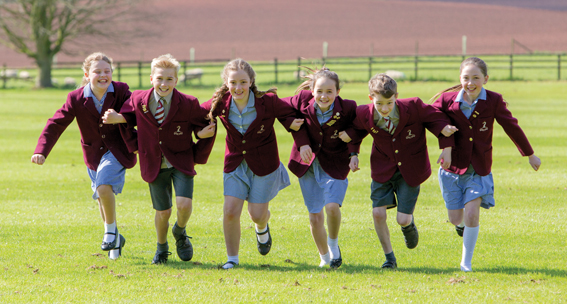
The happiness of the children lies at the heart of everything at Winterfold. Good manners, a cheerful smile and a sense of purpose are seen in every pupil.

Each child has the opportunity to excel academically and is encouraged to develop a sense of adventure and achievement in many different directions.

The excellent facilities at the school cannot fail to impress, while the family, friendly feel is central to its ethos. Here, the pupils are learning for life and the school aims to help them grow in confidence and become engaging, successful and resourceful young people. The children love coming to school and are very proud of their achievements.

Winterfold is a non-selective school and there are no formal entry requirements or tests. Children are accepted at any age, provided there is a place available. The school believes that it has a duty to educate any child who wishes to attend, if it is felt that they will benefit from their time at Winterfold.

At the heart of the school’s success lies its dedicated and highly professional staff. Winterfold takes pride in the fact that the staff truly know every child and ensure that they achieve their potential in every aspect of school life.

The children develop a sense of purpose, determination and confidence due to the wide variety of activities in which they take part. They leave the school as well-rounded individuals who have become good citizens of the future.

At Winterfold, children are given the freedom and security to work and play, giving them childhood experiences they will never forget.

Contact the Admissions Manager on 01562 777234 to arrange a visit.

Winterfold House School
Chaddesley Corbett
DY10 4PW