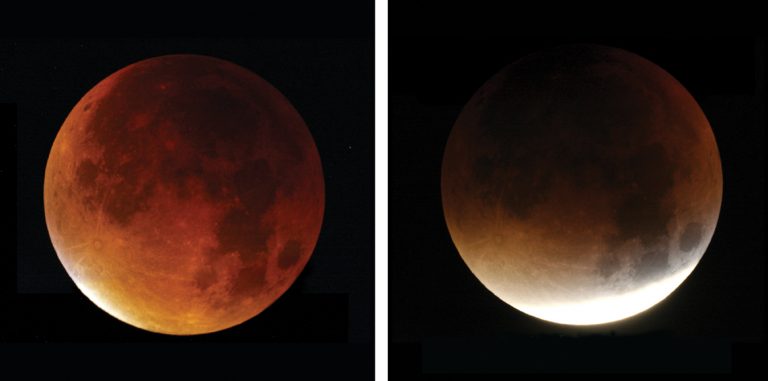
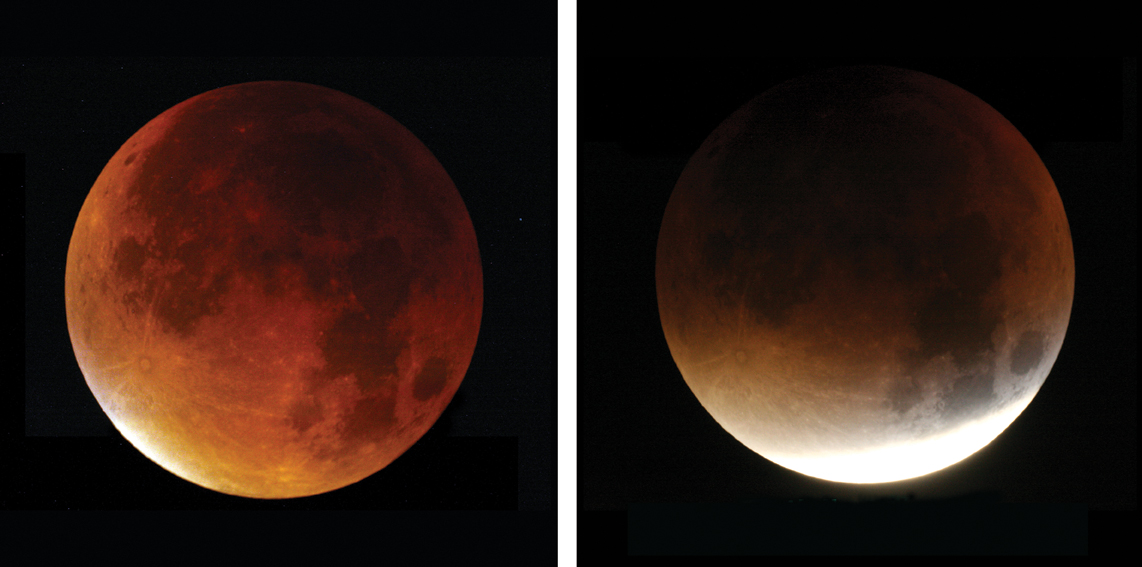
Left: Moon at maximum eclipse. Right: Partially eclipsed, showing difference in brightness.
Amateur astronomer Brian Watkiss peers into the Village night sky.
Welcome to another year here on planet Earth. Actually, this year marks a special anniversary. It was in the late afternoon of January the 1st 2009 that I was lured into writing these notes. There’s a moral there somewhere.
Anyway, what’s going on in the sky? Well, Mars is still with us, having been visible in the evening sky for the last six months. It seems to hang around for so long because it’s travelling around the Sun at about half the speed that we do, so we don’t just pass it by like the outer planets but it keeps up with us for a while like a stray dog on a country walk.
It’s high in the south as soon as the sky is properly dark still with its orange hue. A substantial Moon is just below it on the 12th. It disappears in the west just after ten o’clock.
The big Solar System event of the month is the total eclipse of the Moon in the morning of the 21st. This is when the Moon passes through the shadow of the Earth and this time, it is at perigee. This just means it is at or very near its closest to the Earth in its elliptical
orbit, so will appear slightly larger than normal anyway.
Unlike a Solar eclipse, the Moon doesn’t disappear completely; it turns a deep red colour because our atmosphere bends red light round our planet which then reaches the Moon. Think of how red the sky can be after sunset.
Unfortunately, not much light makes it, so it is very dark – but your clever eyes compensate for this and make you wonder why you can’t take a decent photo of the event.
It all starts at half three in the morning when the red shadow starts creeping across the face of the Moon, from the right, covering it completely from twenty to five for about an hour. It’s a shame it’s a Monday morning, unless you happen to be one of those lucky so-and-sos who don’t work on Mondays and Fridays, but do try to at least take a peek during maximum.
Something everyone can see are the meteors of the Quadrantid meteor shower, which peaks on the 4th but shooting stars may be seen a few days before and after this date. The Moon is out of the way at this time so any time you are out at night, keep half an eye on the sky ‘cos they always take you unawares!
Now, what could be one of the most significant events in manned space flight might take place in January. This will be the launch of an American space vehicle capable of carrying crew into space.
It’s a test flight of the SpaceX Crew Dragon, so no-one will be on board, but it is scheduled for the 7th. This could be delayed because NASA has safety concerns about the project, seemingly due to the behaviour of the SpaceX’s founder, Elon Musk. I can’t think what they mean.
During my illness last year, I found watching what was going on in the world around me a great help. To me, the interesting things in what we call wildlife are not the rare things or even the beautiful things, but the fascinating behaviour of apparently ordinary things.
I don’t see “nature” as something separate from human life: we are part of it and influence it, and it influences us, all the time. So, the more we know about it the better.
It’s surprising how little we notice what’s around us, how little we know about what happens out of our immediate vision, and how little we teach children these days about their own local ecology. “Wildlife” to many people means tigers and elephants, viewed on safari or on TV – or cute furry animals shared on photographs.
I am hoping this year to get behind some of our familiar plants and animals and see the amazing stories that are all around us. In a ten-minute walk you will see more interesting wildlife activity than in all the TV documentaries.
I’m starting the year with birds. In January, they are more visible among the bare branches of trees and without the distraction of many flowers. They are quieter now than in spring, so we do notice the ones that call, like robins and great-tits. Birds are especially visible on our canals, reservoirs and rivers. If the winter continues mild as it is when I write this, watching them should be easy.
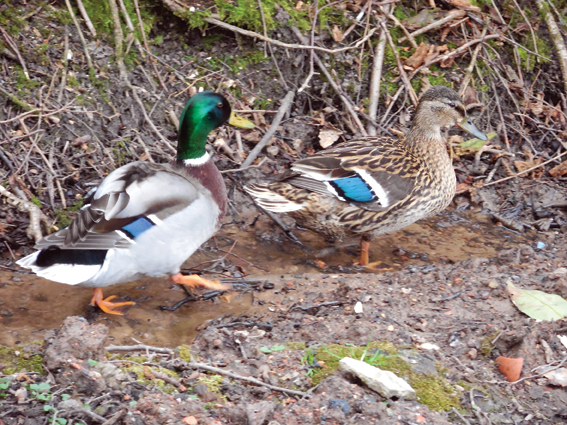
Perhaps the most common and recognisable bird we see all year round is the mallard duck. It is so common that we take it for granted – the archetypal duck seen in the old days in china versions flying across living room walls. It’s the ancestor of most of our farmyard ducks and can still breed with them to produce mixed broods of ducklings.
Children recognise it and feed it – often unsuitable food. It may not seem of any great interest. But it hides a secret in its mating habits. I feel I ought to give a little warning about the details to follow! Those of a sensitive nature can skip the next two paragraphs.
We’ve probably all seen mallards mating, starting in February or even sometimes in January. The drake and duck bob and weave to each other to show they are ready and then the drake mounts the duck and they mate. Then she rises out of the water and shakes her wings.
But mallard drakes are unlike other birds. They have penises, which most birds don’t. Not only that, but their penises are twisty like corkscrews. Ducks have vaginas, sometimes more than one, again with a twisted pattern. What this means is that the drake can hold on much longer to the duck than most birds, which simply shed sperm from one opening to another.
It also means the drake can use some force and may mate with a duck that is not ready. The imbalance of more males than females makes this common. The slight uneasiness some of us feel watching them is possibly justified. But it does mean mating is usually successful.
The female’s shape means she can be impregnated by more than one drake, so may carry eggs and subsequently ducklings from more than one drake. Because of their ability to breed with other kinds of duck, this means they can have ducklings of different colours.
Ducks do pair up and stay together to look after their ducklings, but they are not sexually monogamous. This is quite a common pattern with birds. I have even seen two male mallards engaged in mating behaviour together – they can be gay, like many birds, if the opposite sex isn’t available.
Mallards make quite good parents, guarding their eggs and ducklings. We rarely see their nesting sites, unlike moorhens and swans. They often go far from water to nest in grassy areas or even gardens. Once they have reached adulthood, they generally don’t have natural predators in this country. They eat a wide variety of plants, small fish and crustaceans and algae and even tolerate white bread, which is not good for them (just like us!)
They are able to work together. When the canal is frozen, they band together in one place near a bridge and keep a circle of water free from ice. All these factors may explain why mallards are one of our most successful and common birds.
Later in the year, mallards also show very vividly another aspect of bird behaviour. The males dramatically change colour. Once mating and duckling-rearing is over, all the brilliant greens and dark browns disappear from their plumage and they become drab brown. At first glance they look like females, but close up you can still see differences. Female duck feathers are very pretty in detail – many different shades of brown in intricate patterns. Their beaks are plain light brown, though.
Summer drakes, on the other hand, have rather dull monotone brown feathers. But their beaks retain the yellower colour of their spring brightness. So, during the summer they work together as parents, looking the same. Then in the autumn the colours come back ready for them to start pairing off again.
Other ducks change colour in this way: the wonderfully bright mandarin drake does so spectacularly and is unrecognisably drab in summer. It does not interbreed with any other ducks. Other birds too: blackbirds get yellower beaks in spring and great tits yellower breast feathers. Black headed gulls – the kind of gull we get on our canal – are only black-headed in the breeding season. At other times there is just a small black spot on the head to identify them by.
However, some birds, such as Canada geese, are exactly the same all year round once they reach adulthood and it’s hard to tell the males from the females. They do have a moulting period, though, during which they do not fly. From my observation, geese seem to be more monogamous than ducks, and often return as a pair to the same place year after year to nest. Their pairing and brooding times are quite long, but the goslings grow up fast and take on adult colours in their first summer.
Ducks and geese in the wild often nest in trees or up on rock faces. The young, once they have hatched and grown big enough to take to the water, often have to jump down big distances to get there. Barnacle geese are especially noted for this, with tiny goslings leaping down into the sea or rivers. Mallards have been known to nest in domestic hanging baskets, again expecting the ducklings to take the leap down when ready.
Barnacle geese appear in passing on our canal most years but are common visitors to Scotland. They are migrating birds, appearing suddenly, and this led to a very peculiar old tradition about them, and to their name. The belief was that the shellfish called barnacles turned into barnacle geese for part of the year and then back into barnacles again.
Canada geese, of course, do not migrate. They still have a migratory instinct, though. In late summer, after their sedentary period while they moult, you see them wheel off in great flocks and then settle back down again. But they don’t go anywhere.
Another common factor for these water birds is that they were once a primary food source for us. Mallards were caught or shot and eaten in huge numbers. Black headed gulls were very much eaten as they don’t have the fishy taste of other gulls. And barnacle geese, because of their supposed half-life as shellfish, were eaten during Lent when fish was allowed but not fowl! Now these eating habits have gone the birds are even more successful.
As you can see, the very common birds we see everyday have their own lives, adapted to living with us on our artificial waterways, and making the most of their ability to breed and continue their species. Every bird and plant you see has a similar fascinating story.
This was my Christmas poem at the end of 2018, but it is also for the start of 2019.
Midnight clear For Alvechurch Community Choir
The sun slips lower and the choir comes out in red
First carols for the village, voices remembering
The familiar tunes even if the brain forgets
And all our Christmases past contained in us
As we stand and become the old song once again.
The year has been a hard one, many singing
Through sickness and loss and all the ordinary
Shocks of life, shot through with brightness
Of loves and marriages, babies and friendships.
These glorious songs of old have been there in the trees
All the year round, their warm wings comforting
Sprung from a time even before Christmas
When the year’s turning brought both fear and hope
The bright robin victorious on the holly bush
Saying the sun will come back once again.
Though it may be midnight, and the men of strife
Seem sometimes to hold us weary by the way
It is a clear midnight, with stars pointing to dawn.
There is no magic will make next year easy
But there is the power of love and song
Will touch us with gold and keep the tree alive.
It was such a hot summer last year – I can only just remember the last one in the 1970s, when our pond dried up on the farm in Somerset where I lived at the time. The ducks didn’t know what to do with themselves, and the whole of the school summer holidays were sunny!
With a similar very dry season throughout the summer and autumn, I’ve that found some things in my garden have done badly and others have thrived in the hot weather.
In the vegetable garden, my beans came in two hits. I put in seed for the purple French beans I usually grow and as nothing appeared I assumed the mice had eaten them – so in a panic I bought some French bean plug plants from a little stall over the road in the village here and shoved those in.
In fact, I got several pickings from the plug plants, but the best ones were the purple French beans that came later. The mice had not eaten them; they were just late germinating and came on and gave us a crop at the back end of the summer and well into autumn. I love this variety, not only for its beans but the flowers too.
Tomatoes did amazingly well, and I know they did for most people, both in the greenhouse and outside. I also grew some Padron peppers in the greenhouse – these are a tapas pepper, and I had tasted them at a wedding last year so I decided to see how easy they were to grow. With the summer we had they were very easy, and we’ve had loads of them.
I grew both the tomatoes and the peppers in hedging bags, which are much deeper than grow bags and I fill them with my own home-made compost. This gives any of the plants plenty of space for their roots to fill out and with a regular feed, like an organic tomato feed or a comfrey feed, they thrive.
The description that came with the peppers was that most of them are mild with the occasional hot one – but mine were all hot! In fact I am using them more like chillis and have them drying in the kitchen as I write. It’s always good to try a new plant each year and see what you can grow. The tapas way to cook them is to fry them in hot olive oil and eat them with a little salt and pepper; delicious if you are willing to take the heat!
I also find with gardening that nature knows best. For years I have been trying to get Verbena bonariensis growing strongly in my bee border, and allowed the seedlings to come up but moved them if they were misbehaving and growing outside the border.
But this year, I was unable to do as much gardening and so the Verbena self-seeded in the gravel and has done amazingly well, much better than any plants I moved. So, I think I’m just going to leave it there and keep the gravel full of flowers.
The sedums thrived with their fleshy water-retaining leaves, but some of the other perennials with larger leaves really struggled as they need much more rain in the summer season.
Mediterranean plants like lavender or rosemary, which are used to very hot temperatures, have small leaves with a small surface area to avoid moisture loss. The leaves are tough and silvery grey which also reflects the light – this is why they can cope in drought conditions.
In fact, both my rosemary and lavender flowered for ages. The rosemary I grow as a low hedge along a raised border and it seems to love it. It is the horizontal one, Rosmarinus officinalis ‘Prostratus’, which is ideal as it doesn’t get too tall. Other herbs like purple sage and oregano did well too.
It’s a good year for apples – we had a wet spring and not many late frosts, so they have done very well. However, my pear tree has struggled this year. It broke under the weight of the fruit last year, but this time it has had a fungal disease called pear rust, where you get orange spots on the leaves and the fruit is affected.
There are different schools of thought on what to do about it, including a good prune of the tree to remove any infected branches and burning affected leaves. I’m not into using chemical controls so I’ll try this and see how it does.
As winter is now upon us there is less to look at in the garden, but a few things appear to brighten these darker days. I have a winter flowering viburnum, a variety called Viburnum ‘Bodnantense Dawn’; quite a common shrub but worth its place for the heavily-scented white and pink flowers in December and January.
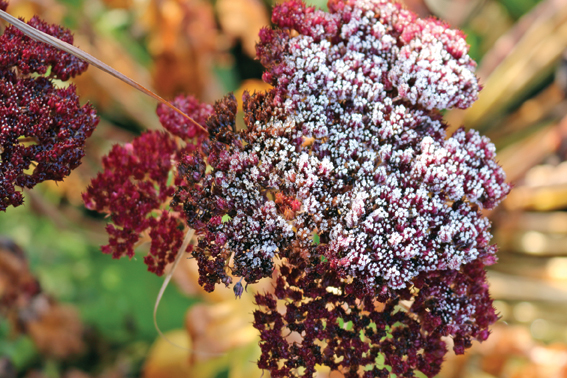
I also leave the heads on my sedum plants to protect the new growth, but they give winter interest as they frost up.
Alvechurch amateur weatherman Phil Thomas records the changes.
The first seven days of December followed the bland November trend. Following an Atlantic blocking anticyclone on the 13th, very cold air was brought across the UK. These words are very much the same as December last year.
The difference this year is that the Atlantic weather systems have more energy and power and will prevail into a third month after only a brief spell of cold weather. It’s looking like December’s mean temperature will be well above the local value.
December 2018 (to the 18th)
Mean Max 9C 1.9 above average
Mean Min 3.4C 1.9 above average
Mean 6.2C 1.9 above average
Rainfall 57.7mm 83% of average
Sunshine 36.7 hrs 75% of average
November was a mild month with a mean temperature of 7.9C, which is 1.2C above the local mean. March was the last month this year with a near normal average temperature, the rest being above normal. The end of the month saw a return to more seasonable temperatures. Rainfall was slightly below average, only 60.6mm (78%).
November 2018 Mean Max 10.7C 0.9 above average
Mean Min 5.2C 1.6 above average
Mean 7.9C 1.2 above average
Rainfall 60.6mm 78% of average
Sunshine 69.8 hrs 110% of average
Autumn 2018 (Sept, Oct, Nov) Mean Max 14.4C 0.5 above average
Mean Min 7.0C 0.5 above average
Mean 10.7C 0.5 above average
Rainfall 159.6mm 70% of average
Sunshine 322.9 hrs 115% of average
Outlook The most likely scenario for the end of the year is for periodically unsettled Atlantic weather to move across the UK from the west. However, there is an increased likelihood that mild conditions will be short-lived and a colder and more showery northerly or northwesterly regime will become established.
Through the first half of January, there is an increasing likelihood of colder-than-average conditions with potential overnight frost and fog, as well as some snow.
More information at https://www.alvechurchweather.metsite.com
You can see an improved HD weather-cam, updated at one-minute intervals, at: https://www.alvechurchweather.metsite.com/webcam_alvechurch.php
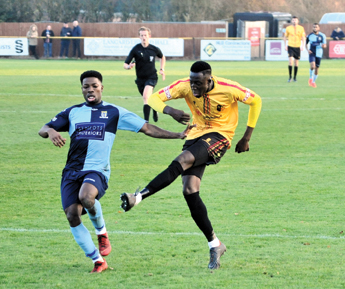
Action from the 3–2 win against St Neots Town (Photo/ Ian Macvie)
AFC gives fans plenty to get excited about as a new year begins.
Alvechurch FC were still fifth in the league as we went to press, with three games in hand over leaders Stourbridge. The recent level of success on the pitch means it’s no surprise that ’Church have increased their home support this season by 51 per cent, the highest in the league.
Just four seasons ago the club were attracting fewer than 100 supporters to Lye Meadow, but after the back-to-back promotions the club now averages 268. Due to hard work both on and off the field, not only there is extra revenue coming in but the atmosphere in the ground is now buzzing with the extra vocal support.
In another statistical triumph for ’Church, the team displayed the best form in the league for October and November – they won five matches and lost one, scoring 11 goals and conceding eight, amassing 15 points in the process (a better run that those of big spenders Kings Lynn Town, Kettering Town and Stourbridge).
Speaking of Kings Lynn Town, the pre-season league favourites notched up a comfortable 3–0 win at Lye Meadow, but that was soon forgotten with a feisty encounter at Rushall Olympic. The match looked to be heading for a 1–1 draw until AFC’s Kieran Cook bagged a last-minute winner (and goal of the month) by shooting across the keeper.
This was followed by an exciting home clash with St Neots. Alvechurch took an early lead but two quick St Neots goals just before the break meant the home side had it all to do in the second half. They didn’t disappoint, scoring twice more to secure the win.
December began inauspiciously with a 4–2 away loss to Biggleswade Town, then came two solid draws against Halesowen Town and Rushden & Diamonds – plus a dramatic late win at Lowestoft, with Andre Landell’s header one minute from time bagging the points for ’Church. The home match against Leiston, already postponed from November, was called off again due to a waterloggd pitch. It’s that time of year. . .
* The club has waved goodbye to several players recently – Taylor Morrison has left to join fellow Southern League Central Premier side Stratford Town, having joined AFC earlier this season from the West Bromwich Albion academy.
Also leaving is forward Danny O’Callaghan, joining Rushall Olympic who also play in the same league as Alvechurch.
After completing a month’s loan back at Lye Meadow, fan favourite Yusifu Ceesay has been loaned out again by Blackpool FC, this time to National League Northern side AFC Telford.
However, centre forward Tristan Dunkley has returned to Alvechurch bringing plenty of experience – as well as playing for Loughborough University while studing, he’s had spells at Worcester City, Hednesford, Halesowen, Solihull, Rushall Olympic and Tamworth.
Congratulations to forward Kieran Cook, who won both the Player of the Month and Goal of the Month awards for November. The 18-year-old’s hard work and tenacious play make him a deserved winner, as does his last-minute winner away at Rushall Olympic.
* For more info or sponsorship enquiries, please contact Trevor Ball at saintsarehot2@btinternet.com or visit www.pitchero.com/clubs/alvechurch
Follow the club on Twitter @Alvechurch1st
You may think all is quiet with Christmas on its way out and nothing but the winter weather ahead, but behind the scenes there’s a hive of activity going on preparing for Easter!
Easter 2019 promises to be one to remember as local churches of all denominations, their priests, ministera and congregations, are busy making plans, together with Alvechurch Baptist Church, to bring the village a new way to celebrate the Easter season.
“Alvechurch Arise” is very much under wraps at present but whispers have been heard of soup kitchens, choirs, processions, family activities, street theatre, palms, rocks, egg hunt, children, donkey. . .
In our recipe series, keen baker Jen Morris, of Rowney Green, creates some healthy treats to help keep those resolutions. . .
I’m guessing some of us will have made New Year’s resolutions to eat less cake and exercise more, which is why January’s recipe is for muesli bars, because you can’t be expected to hit the gym on an empty stomach!
These are easy to make, store and transport and packed full of good ingredients… particularly if you forego the chocolate dipping stage.
Ingredients:
150g butter
150g golden syrup
100g soft brown sugar
300g rolled oats
150g nuts or mixed seeds
50g dessicated coconut
50g plain flour
150g dried fruit of your choice (chopped, if large)
1 tsp vanilla extract
150g dark chocolate (optional)
Extra dessicated coconut for sprinkling (optional)
Method:
1) Pre-heat oven to 160C / 140C fan / Gas 3. Line a tin with baking parchment (approx 28 x 26cm or equivalent).
2) Put the butter, golden syrup and sugar in a microwave-proof bowl and melt in the microwave, by heating on high and stirring every 30 seconds, until they have melted together.
3) Remove from the microwave and add all the remaining ingredients; mix thoroughly.
4) Press the mixture into the tin and bake for 30 mins, or until golden brown and slightly firm.
5) Allow to cool in the tin, then remove, peel off the paper and cut into bars (I cut mine into 12).
6) To chocolate-dip your bars, break the chocolate into squares into a microwave-proof bowl, and melt in the microwave by heating on high and stirring every 30 seconds until liquid.
7) Lay out a piece of baking parchment, dip one end of each bar into the chocolate, and leave on the parchment to cool. Scatter with the extra coconut.
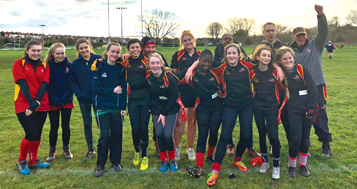
The West Midlands Girls Tag League held its last tournament of 2018 at Evesham RFC. Kings Norton RFC Rhinos fielded two teams, the Rhinos Reds and Rhinos Blacks.
The Reds played four games in total, of which they won two, drew one and lost one – an achievement attained through a great degree of determination and concentration.
The Blacks played five games, winning them all, and were crowned champions of the tournament. They had also won their first tournament the previous month at Berkswell and Balsall RFC.
The club is delighted that the girls are showing great promise, which is well deserved after their commitment to training over the past three years and a great reward for their coaches, Stuart, Neil, Tony and Jim. The club would like to thank the parents for their support, and Evesham RFC who made them very welcome.
If you are interested in playing tag rugby at Hopwood Park, email rhinos@knrfc.co.uk
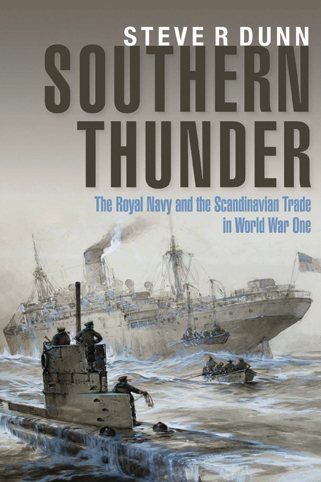
Barnt Green author Steve Dunn has written a seventh naval history book, this time focusing on the role of Scandinavia in the battle for the North Sea in WWI.
Southern Thunder: The Royal Navy and the Scandinavian Trade in World War One tells a little-known story from both a naval and a political standpoint, promises the usual detailed analysis and first-hand accounts of the fighting from those who took part.
The book is published by Seaforth and will be released on January 30 on Amazon and local bookshops.
Kingfisher Probus Club recently enjoyed a day trip to Bristol Aerospace Museum, writes Malcolm Shine.
The Bristol Aeroplane Company was one of the first and one of the most important British aviation companies, designing and manufacturing both airframes and aircraft engines. We were given a guided tour of the museum starting with a tram, which was what the company originally produced.
The displays traced the growth of the Aerospace Industry at Filton from 1910 ‘Boxkites’ through to the planes and their engines of the two World Wars. In the post-war years the site continued manufacturing aeroplanes (Britannia, Sea Harrier) as well as Bristol cars, helicopters, guided missiles and satellites.
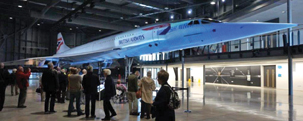
The highlight of the Museum is Alpha Foxtrot, the last Concorde to be built and also the last one to fly. We were able to board the plane and view the cockpit, but not sit in the leather passenger seats which replaced the original bright fabrics when the plane had a refit!
Alpha Foxtrot landed at Filton in 2003, although it wasn’t until 2017 that the museum opened to the public in two First World War, Grade II listed hangars. A new building opened in 2018, housing Concorde and related exhibits such as stewardesses uniforms and the crockery used by passengers.
All in all an excellent, interesting day out, from boxkite to supersonic, about 60 years of progress in three and a half hours. The only niggle is that even with satnav the museum is hard to find; if visiting keep your eyes peeled for the right turn filter on Hayes Way!
Kingfisher Probus Club of Redditch is a socially-oriented activities club for retired or semi-retired men. With members from local villages including Alvechurch, Barnt Green, Blackwell and Burcot as well as Bromsgrove and Redditch, it arranges trips to a wide variety of places of interest.
It meets regularly at 11.30am on the second Thursday of every month, at the Foxlydiate Arms, Webheath, for lunch and to hear talks from visiting speakers.
You can find more information at https://www.kingfisherprobusredditch.co.uk