Home Blog Page 721

£1.3m makeover at Hillscourt

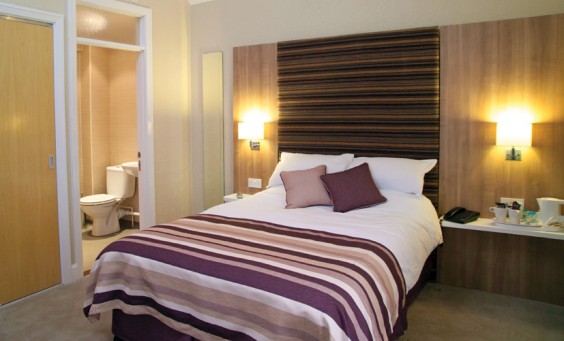
New bedroom

ADVERTISEMENT FEATURE

Major refurbishment means the Lickey Hills centre now offers hotel facilities to suit all sorts of visitors.

Hillscourt Conference Centre’s combination of rural charm and modern convenience has made it an extremely popular venue – the extensive accommodation, top quality catering and state-of-the-art facilities are in high demand for a variety of functions from corporate events to weddings and parties.

However, Hillscourt’s manager Matthew Baker is keen to make more people aware that the accommodation is not restricted to those visiting for a conference or special event.

“The hotel accommodation is available for all, whether it’s families on a short break, couples seeking a relaxed weekend or business travellers who need an overnight stay,” he points out.

A recent £1.3 million refurbishment has seen some major changes to the bedrooms, making the hotel more family-friendly and offering more spacious accommodation all round.

Smaller single bedrooms have been knocked through to create doubles, while a former training room has been converted into a large family suite with its own lounge area.

There are now four family rooms, 12 doubles and 39 singles, all of them en-suite and all featuring flatscreen TVs with Freeview, direct dial telephones and tea and coffee facilities.

The brown and cream colour scheme offers a warm feel, while the contemporary decor introduces stylish touches such as foot throws, large mirrors and box canvas artwork.

The en-suite bathrooms are similarly attractive, with innovative bamboo tiling and the latest power showers.

As well as the bedrooms themselves, the public areas of the hotel such as the corridors and toilets have also received a makeover, with smart new carpets and cherry wood veneer doors adding to the overall feel of modern elegance.

“The new family rooms should make Hillscourt more attractive to clients looking for a weekend break, while the new accommodation will also appeal to local business people,” says Matthew.

“In fact, we can negotiate corporate rates if a company decides to use Hillscourt on a regular basis.”

Hillscourt’s prices compare favourably with other accommodation in the “budget sector”, and of course it has the added bonus of being located in delightful countryside rather than beside a busy motorway or main road.

The attractive building dates in part from 1866, with extra additions in 1897 and in more recent years, and several original features remain.

Hillscourt can also offer dining for hotel guests, while non-residents can book a table in advance. The restaurant is open for bistro-style dining most evenings, and a three-course meal from the table d’hote menu costs just £20.

Meanwhile, the centre will remain popular for weddings – Hillscourt is licensed to hold civil ceremonies and the beautiful 25-acre grounds make it a perfect spot for photographs.

The extensive conference facilities include nine spacious rooms with the largest seating 200 people in a theatre-style layout, and Hillscourt is shortly to become a BT Open Zone with wireless internet access throughout the centre.

Hillscourt Conference Centre
Rose Hill, Lickey
0121 457 6100
https://www.hillscourt.co.uk

On guard for centenarian party parade

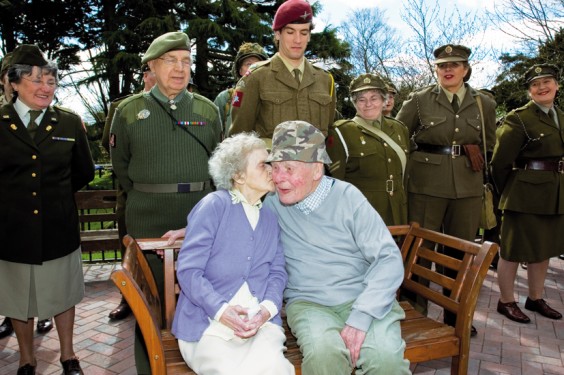
Dorothy and Ted

Two residents at The Lawns, Alvechurch, were taken back in time for a special birthday party as scenes from World War Two were re-enacted in their honour.

Dorothy Harris, aged 100, and Ted Reeves, 102, were treated to a special parade formed by members of the World War Two Society and Forever 40s, followed by a piper and singing and dancing from the 1940s.

Sunshine surprise!

0

Sunshine and staff

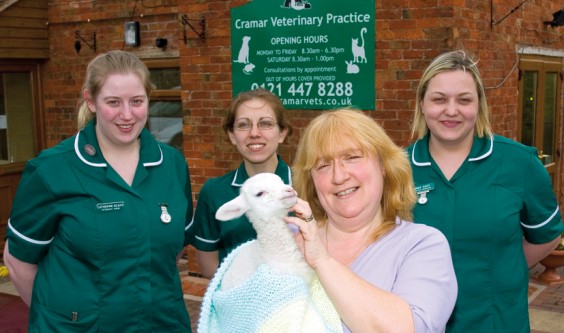
Staff at the new Cramar Veterinary Practice in Hopwood had a big surprise in early April when a lamb arrived in their waiting room.

The animal had been found lying lifeless in a snowy field by two women tending their horses. They rushed her into the Redditch Road practice where she was revived and given the name of Sunshine.

Sunshine, who had been rejected by her mother, is now being hand-reared by “foster mum” Kim Grice, and a local farmer has donated colostrum (vital nutrients which a lamb would normally get from its mother) to feed her.

“We are a small animal practice, but we are doing everything we can to help Sunshine and she’s getting bigger all the time,” says Cramar’s manager Emma Hart.

“She’s become our mascot!” 

The new surgery offers high quality healthcare for dogs, cats and “small furries” at affordable prices, making its services accessible to as many pet owners as possible.

All proceeds from the practice go directly to New Cramar Cat Rescue & Sanctuary.

Above: Foster mum Kim Grice holds Sunshine, watched by (from left) vet nurses Catherine Scaife, Vicki Letchford and Emma Hart, who is the practice manager.

Flooding concerns

0

We object to the building of houses on Green Belt land by Arrow Valley.

If the building was carried out, we would have more floods as the concrete, tile and Tarmac will take over the land and not absorb the rain.

Mr and Mrs Giles, Alvechurch

NIMBY and proud

0

Regarding your article Fight over 10,000 homes, Coun Hollingworth said: “They are talking of 363 acres of Green Belt land thus joining Redditch and Alvechurch . . . The Green Belt is sacrosanct unless the Government wants to use it.”

He should have also added: “. . . unless the Government and Bromsgrove District Housing Trust wants to use it.”

Don’t get me wrong, but do I not remember Bromsgrove Councillors and some readers of the Redditch Standard calling the good folk of Hopwood NIMBYS recently, for trying to defend the Green Belt when Bromsgrove District Council’s Planning Committee passed a housing development on such a Green Belt site? 

Call me sceptical if you like, but “the pot calling the kettle black” springs to mind.

Even if these councillors have turned into NIMBYS, I for one, as a fully confessed and proud Nimby, will offer my full support to defend what we have left of our Green Land and support these councils and their councillors until the next election comes around.

Then I think we all need to have a serious think about who we are electing to represent us and the consequences of our actions if we get it wrong.

Adrian Smith, Hopwood

Lake’s future assured

The preservation of Cofton Lake, bought by village “shareholders” two years ago to ensure it could never fall into the hands of developers, was reconfirmed at the annual meeting of its owners.

Shareholders, who each paid £1,500 for a share, heard of work that had been carried out over the year, including the installation of a bridge to enable walking around the east end of the lake.

Cofton Lake Conservation Ltd Secretary Diane Carr told the meeting: “Without all of you, we could not sit and quietly contemplate that our combined efforts, especially prior to the demise of Rover, had ensured the sanctity of our little Cofton Lake enclave – not just for now but for all time – independent and legally protected from the enormous financial forces which must be applied over the Rover sites.”

Hopwood homes date

0

Work is to begin on the controversial affordable homes development in Hopwood by the end of the year.

Ten months after plans for 20 homes were submitted, Bromsgrove District Housing Trust spokesman Gary Fowler said building would begin in November at the latest.

“We will be finished on site in July next year,” he told Alvechurch Neighbourhood Committee.

They were currently carrying out environmental checks at the site off Ash Lane.

“It has taken more time to do the environmental survey than we will take to build the development,” he added.

Mr Fowler said the trust was receiving phone calls “all the time” from people interested in moving into the homes.

Bringing in the may

May blossom

Mary Green looks at some of the traditions associated with may blossom.

March was very cold, coming in and continuing like the proverbial lion, though it was pleasantly lamb-like at the end, and April was traditionally changeable.

The season continues to be a little odd. Although the blackthorn flowered late, the plum tree in my garden came out a week earlier than usual. During March I saw the wild daffodils in bloom in Farndale in North Yorkshire, which were perfectly on time. I saw my first bluebell out locally in March.

I think May is my favourite month. The everyday hedges and verges look celebratory in frothy white, and the sun feels warm at last. May blossom, or hawthorn, has always been associated in England with the celebration of Mayday, which is the ancient Celtic feast of Beltane marking the start of summer.

In the days before the change of calendar in 1715, the blossom did indeed show around the start of the month. After that time, it generally didn’t come out until halfway through the month. In my childhood I always associated may blossom with my birthday towards the end of May.

Now the wheel has come full circle, and with warmer springs the may blossom is usually again out for Mayday. “May Day” celebrations, however, often went on for several weeks as this was once an immensely popular festival, second only to Christmas in the number and range of celebrations.

There are two or three different varieties of hawthorn round here, affecting the blossoming time. The oldest form is the less common Midland or woodland hawthorn, which blooms early and has a slightly larger shinier leaf and strong-smelling flowers.

The more usual kind is the common hawthorn, which forms most of the hedges round our fields and farms.

It’s hard to imagine that before the eighteenth century these ribbons of hawthorn hedge didn’t exist, because farm land was not enclosed. The older Midland hawthorn was more likely to occur as individual trees and small clumps. It was a much cherished tree and often used as a boundary marker.

The third kind of hawthorn is a variety from continental Europe often planted along motorways and new bypasses. This is also early-flowering and is one of the reasons hawthorn blossom is often first seen while driving along the motorway.

The other reasons are the slightly warmer microclimate along motorways, and the fact that motorway verges are ironically a great wildlife corridor, set back from people.

Much of the hawthorn hedging around fields, canal and ordinary roads is so severely cut back that blossoming is slow and weak, and one Midland hawthorn along the canal (along with an unusual bullace plum) was cut down completely last winter by British Waterway’s contractors. 

In the ancient Celtic traditions, the hawthorn or “huathe” was one of the thirteen trees forming part of the cycle of the year. It was associated with purity and love, but also grew at the gates of death and the underworld. These associations included sex and fertility, reinforced by the characteristic musky smell of the flowers.

The complicated meaning of hawthorn was retained in its Christian symbolism. This includes the planting of the early-blossoming hawthorn at Glastonbury by Joseph of Arimathea, and a belief that hawthorn was used for Christ’s crown of thorns.

Because of the symbolism of white blossom for purity, it was also associated with the Virgin Mary and in some places seen as a Roman Catholic tree. All of these have led to rather ambivalent attitudes to the plant. 

It is part of outdoor May Day celebrations, but is “unlucky” if brought indoors, especially in Puritanical and Protestant England.

For most of us, though, May blossom just epitomises that promising time of late spring and early summer, when the hedges and verges foam with white.

Below the hawthorn will be frothy cow parsley and big white moon daisies, and above will be the dizzy spires of horse chestnut flowers. Sometimes the whole world seems to be green and white.

In the hedges and woods alongside the hawthorn you may be lucky enough to find a wild service tree. These are generally fairly rare now, though more common in this area, as they are remnants of the kind of ancient forests found in the Midlands. I know of five within walking distance of my house.

The tree is a bit like a field maple, with flowers rather like a large creamy hawthorn, attractive cracked bark, and brown fruit in the autumn. These used to be called “chequers” and are edible when very ripe. A drink was made from them and many Chequers pubs are thought to be named after them.

As you will know if you’ve read my previous articles, I am more interested in the everyday wildlife around here than in the kind of thing you have to wait hours to see in a special place. However, there is one special place I would recommend visiting.

Just a few miles south of Tardebigge lie Eades Meadows, managed by the Worcestershire Wildlife Trust. There is a public footpath through them. They show what all our meadows would have been like at one time.

The land is “unimproved” and unploughed. Cattle graze it in autumn and winter and the grass and flowers grow through the summer and are mown in September.

The meadows have a huge population of the uncommon and beautiful green-winged orchid, in all shades of pink and purple, growing among bluebells, cowslips, buttercups, bugle, and bird’s foot trefoil, and punctuated by ancient apple trees.

Later in the month the green-winged orchids are replaced by the common spotted orchid, accompanied by ragged robin in the wetter parts, beautiful pink hoary plantain, twayblade (another of the orchid family), sorrel, moon daisies and yellow rattle, a key marker of ancient meadows.

It’s the sort of place where you think you really should hear the cuckoo. 

Iam writing this before the walk on May 5 when a group of people will be beating the bounds of Alvechurch parish. We should be walking among may blossom and fine golden oak and lime-green beech leaves, apple blossom and bluebells.

North of the Bittell reservoir we may see moschatel, a pretty little flower sometimes called Town Hall Clock because of its four faces. The older hedges will be full of stitchwort and red campion, and woodland and river banks perfumed with garlic. I’ll let you know next time what animals, insects and birds we see. 

For the first time in the 22 years I have lived here, I recently saw something that will radically change the landscape. Between the canal and the Alvechurch-to-Hopwood road, there are several large fields planted with trees – a whole new wood.

There will be thousands of new birch, oak, willow and hawthorn trees. I wonder what the effect will be on other wildlife?

Oak

We expect it of the cherry
Pretty and slender, she shakes out her white cotton dress
She entrances us

And the apple, of course
A lusty lady coming out bold
Spunky and bloody
Singing I will survive

But the oak!
English man, the big daddy of the woods
Sturdy and a little stern
Going to sea or to war
Or wearing leather jackets and tattoos
All year he guards us, whether we want it or not
Then suddenly, as summer starts
He comes out
He is gold and green, he dazzles and dances
With his feet among the bluebells
Nothing in the world is so beautiful
Everywhere we look he sings out

I open my eyes and take him in

Come on, do that gold-dust dance with me
I promise not to tell your mates.
The private PO

0

The old post office

Ian Hayes traces the early days of Alvechurch’s first Post Office.

Mrs Sarah Horton lived at what is now the Flower Mill in the centre of Alvechurch. She was a teacher of music with five boarding pupils.

Her daughter, Sarah, assisted with the teaching and another daughter, Jane, ran a bakery at the rear. Once source, however, shows Sarah as the baker and Jane as the teacher. Whatever the arrangement it was a busy household.

In 1841 another duty was placed on the shoulders of Sarah senior when, as recorded in the diary of William Partridge, headmaster of Alvechurch Grammar School, she became the first post mistress of Alvechurch:

‘Monday 1 Nov 1841
Today opened the Alvechurch Post office for the conveyance of letters etc. Mrs Horton appointed post mistress with a salary of £5 per year, and Warner letter carrier at 6/- per week who will have to go twice a day (Sundays excepted) to the Redditch Office.

The expense incurred are defrayed by private subscription and the whole conducted by a Treasurer (Mr Boulton) and a committee of five Gents viz Rev A Hunter*, Mr Ward, Mr Gaunt Jr, Mr E Moore and Mr Thomson.

For particulars vidi Rules of the Alvechurch Post Office.

Gave Mr Boulton our subscription for the year ending November 1st 1842.

[*Rev Hunter was the Curate, not the Rector]

Note: in November 1842 there were sufficient funds to avoid the need for a further subscription for six months.

23 December 1844
The Alvechurch Post office which has hitherto been supported by private subscription was opened on behalf of the Government – the post mistress Mrs Horton will have £4 per year allowed to her by the Government.

The man engaged to bring and take the letter bag to and from Redditch office will deliver all the letters within 1/4 mile of this office free of expense every morning as soon as he arrives with the bag from Redditch.

He will then go on to the office at Rednall [sic] touching at Bittell and Cofton on his way. He will return in the evening of each day with the letters to Redditch Office.

NB The letter box will be closed 1/4 hour before service PM and continue closed until 1/4 hour afterwards.’

The likely candidate for postman was Thomas Warner, a carrier, who lived a little way up Swan Street. In which case he would have had transport and not had to do the 20 or so miles each day on foot.

By 1873 the Post Office had moved to The Square with a new post master, Mr Ed Perks.

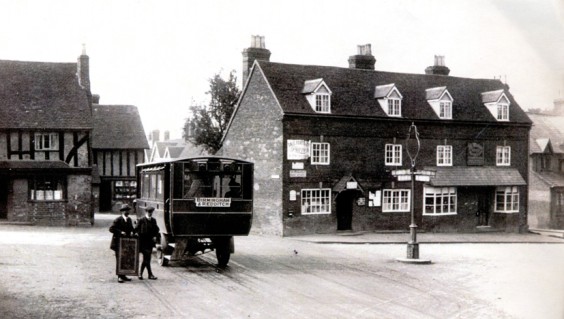
Above: The second Post Office, demolished around 1924 to make room for the road. The bus is a Tilling Stevens petrol electric, one of the first, if not the first, to come through Alvechurch in 1914.

MUGA ‘ready for summer’

A “multi-use games arena” – or MUGA – will be built on an Alvechurch playing field over the next few weeks to be ready in time for the summer holidays.

That’s the plan after the Alvechurch Neighbourhood Committee voted to spend £90,000 on the MUGA and “risky play” equipment to be put on Swans Length.

This followed public consultation first with young people to find out what they wanted and then with residents through a questionnaire.

Of the 339 surveys returned, more than 65 per cent of villagers preferred the Swans Length site, with 12.5 per cent choosing The Meadows, and 17.7 per cent wanting neither.

Commenting on opposition to the plan, Bromsgrove councillor June Griffiths said: “We have almost the same situation as when the Ark was built. It almost makes you think the adults of Alvechurch don’t want to do anything for the young of the village.”

Bromsgrove senior neighbourhood warden Chris Smith pointed out that where similar schemes have been implemented elsewhere in the district, anti-social behaviour had fallen.

And Sgt Tim Harper said that as there was already a football pitch on the field, the only effective change would be a fence going around it and a better playing surface being provided.

A public meeting will be held during May to explain the decision.