Home Blog Page 718

Turnaround

0

How our District Council has gone from ‘worst ever’ to the threshold of being praised as ‘good’ – Council Leader Roger Hollingworth tells Richard Peach what Bromsgrove has done to get back on track.

BDC logo

‘You are the worst council in the country . . . ” The words of the Government Minister settled like a dark cloud on the group from Bromsgrove.

Then, the story goes, the head of the Whitehall local government intervention division, who was also at the meeting, leant over to pass more information to the Minister, Angela Smith.

Ms Smith digested it, looked back towards the group and told them: “I’ve been corrected; you are the worst council we’ve ever seen.”

They knew it would be bad, but to be the “worst ever” was a shock to those summoned to the Department for Communities and Local Government in London, including Bromsgrove District Council leader Roger Hollingworth.

He can afford a smile now, retelling the tale in the less chilly surroundings of his council office, but it was clearly not a pleasant experience.

“The Conservatives will say it was just the Labour Government telling us that, but I think it was right. I think we were the worst in the country,” admits Coun Hollingworth. “If you look at the performance indicators, 85 per cent of ours were below average and 35 per cent were in free fall.”

Coun Hollingworth continues the story: “This was July 2006 and Angela Smith said, ‘I want to see you in November and if it hasn’t improved we will have to see what we can do’.”

They managed to persuade her to give them another couple of months, until February 2007, then headed back to the Midlands to try to turn things round.

The council had already been in “voluntary engagement” with the Government since June 2004, which meant its every move was being monitored and it was under notice to improve, or else.

The “else” was clearly very close two summers ago and could have led to the Government taking over and “members [the councillors] being put into the car park”, according to Coun Hollingworth.

Who knows what this would have meant for the services provided to the people and businesses of Bromsgrove district?

“We had made no progress and it was a farce,” says Coun Hollingworth, giving as an example the council’s lack of a human resources department for an organisation with more than 450 employees.

He had taken over as leader in November 2005 after being elected to the council in May 2003, when he had almost immediately been invited to join the ruling Conservative Cabinet, first in charge of introducing wheelie bins before taking control of Bromsgrove’s finances and resources.

In the latter role, he worked closely with Kevin Dicks, the officer who had recently been recruited as head of resources. It was a relationship that was to prove fruitful.

“We just gelled,” says Coun Hollingworth. “We each seemed to know what the other was thinking.”

Gradually they got the accounts under control and when the council chief executive role required filling in May 2006, with Coun Hollingworth by then the council leader, he naturally wanted Mr Dicks for the job.

Only weeks into the top job – and still with the title “acting” Chief Executive – Mr Dicks had been among the group to be given Angela Smith’s ultimatum.

Eight months later, when he and the others returned to London in February 2007 the reception, recalls Coun Hollingworth, was a good deal more cordial.

Beforehand, the Bromsgrove party was given a parliamentary tour by MP Julie Kirkbride, who then accompanied them to where the meeting was to take place.

“The atmosphere was totally different,” says Coun Hollingworth. “Angela Smith actually invited Julie Kirkbride to stay in the meeting. So this was a Labour Minister inviting a Conservative MP to sit in on a meeting, although Julie wasn’t actually able to take up the offer.”

The reason for the warm reception was that the Bromsgrove team had pulled it off; they had shown sufficient progress to be allowed to continue guiding the council back to health – and Kevin Dicks could lose the “acting” from his job title.

“From appointing Kevin in May, until February the next year, we got ourselves out of trouble – that’s how quickly we did it,” says Coun Hollingworth.

The process involved bringing to a local authority his experience from many successful years getting the most out of businesses in “the real world”.

“Up until we took control, the members were trying to do the officers’ jobs. I stopped members getting involved and I said to the officers, ‘we will tell you what we want and you will deliver it’.

“We created the environment in which the officers could work, but the credit has to go to Kevin and his officers for delivering it.

“What they do is not always what I would do, but so long as they are delivering what we want, that is fine.”

This was a management lesson Coun Hollingworth had learned way back in the days of British Leyland when he and a colleague, faced with a tricky decision with wide implications, went to seek the advice of their chairman, Sir Michael Edwardes.

After travelling all the way down to London, the meeting lasted barely two minutes. “Sir Michael said, ‘You are the managers – do you have a plan B in case it goes wrong? And if it does go wrong, don’t make the same mistake twice.’” He then despatched them back to the Midlands.

“At Bromsgrove now, I keep the members out of the officers’ hair. We have created an environment for them in the way Sir Michael Edwardes did for me.”

“We have supported the officers totally. I have never criticised an officer in public and if they do something I support them.

“They all know they are allowed to make mistakes so long as they do not make the same one twice. The officers really have turned it around for us.”

The council is so confident of its improvement that it has told the Audit Commission it is ready to be reassessed at any time.

Mr Dicks has written to the commission setting out the council’s improvements since its previous Comprehensive Performance Assessment last year which ranked the council as “poor”.

It now believes it will achieve a “good” rating.

Mr Dicks said: “This council has become more focused on our priorities by listening to residents and investing in those areas that are important to them.

“We are better at managing our finances and, following the external feedback that we have received recently, the time seems right to ask for a re-inspection.”

If the request is given the go-ahead by the Audit Commission, inspectors could be expected at the Council House as early as November. Meanwhile, Coun Hollingworth believes that residents should already be starting to see improvement.

“As we have got on top of the organisation we are looking at the services,” he explains. “If you look at litter, only 65 per cent of our roads came up to the standards set by the Government. Now it is 85 per cent.

“We are working now to get to the point where if someone complains about litter within 24 hours we will sort it out.

“We don’t get as many complaints about ground maintenance now and we have a refuse collection system which is 50th in the country out of more than 300 councils.

“Residents should see an improvement in tidiness and cleanliness of their areas. For example, we are now picking up the litter before we cut the grass so we don’t just shred it at the side of the road.”

Coun Hollingworth said people should also see an improvement in safety because they were working very closely with the police.
“And we are working closely with the youth to tackle anti-social behaviour,” he went on. The MUGA [new multi-use play equipment] in Alvechurch is a perfect example.
“We will start to provide more affordable housing. The drive for this is coming from the council because we want to get the mix right. If we don’t get the affordable housing, all the youngsters will leave and only older people will come into Bromsgrove.

Roger Hollingworth

“On planning, we want to make sure that everyone knows that if they speak to their ward councillor then we will either fight their corner or tell them straight that they have no chance.

“I am also trying to spread spending to the villages – that’s what we are trying to do by introducing sports hubs. We don’t want all the money poured into the town – although now I’m getting criticised for pumping too much money into Alvechurch!”

Some decisions, however, are bound to be unpopular, although Coun Hollingworth is ready to take the brickbats. Withdrawing free parking for pensioners in Bromsgrove town centre has upset some very vocal groups, but he is unrepentant.

“We stopped the cheap parking when the Government introduced national travel for pensioners, which we have estimated is going to cost us about £200,000.”

Similarly, there have been complaints about the withdrawal of free green waste collections next year, although Coun Hollingworth points out that we don’t hear from the people who will be pleased they won’t in future be paying for a service they don’t use.

“As a Conservative council we are looking to charge for as many services as we can so that people can choose which they want to use, and then we can bring the council tax down,” he explains.

“The fact that I came from the private sector, from a business background, is what made the big difference. It is not that I am a Conservative, you get good businessmen who are Labour supporters.

“Where the politics come in is that we want to give people the choice of where to spend their money and not tell them, ‘you will spend it on this’.”

What do you think?
Have you noticed things getting better in your area? What else could still be done? Write or email your views, good or bad, to us.

ROGER’S ROAD TO LEADERSHIP

‘Why do I do it? Because I have had a good living out of society and I wanted to put something back in.”

And, Roger Hollingworth could have added, it’s certainly not for the money: as Leader of Bromsgrove District Council, working the equivalent of a full-time job and putting in unsociable hours at evening meetings and weekend engagements, he says he receives around £15,000 a year.

Now 63, Roger retired as managing director of a Redditch-based AT&T Istel subsidiary in 1991 aged 45.

“When I retired I didn’t plan on doing anything after that. I just wanted some freedom to do something I wanted to do, but after a while I got bored.

“I wanted to be a vet and I tried to retrain, but the only college I could get into was in America – everywhere in the UK said I was too old – but my wife didn’t want to go to the States.

“So the next best thing was to buy a farm and some sheep” [this was in Rowney Green, where Roger still lives with wife Jacqueline].

He continued using his business experience as a consultant to a number of companies, helping to turn around their fortunes, but eventually tired of the transatlantic travel.

“In the end I thought, ‘I don’t want to do this any more’.”

It was around this time, towards the end of 1997, that he joined Alvechurch Parish Council, becoming chairman a year later.

“I’d kept complaining about things and John Puckering [another Rowney Green farmer and the current chairman of the parish council] asked me to join the council. My wife said, ‘why don’t you do something about it rather than just complaining?’”

But he found he was “banging his head against a wall” trying to get anything done at a parish level and resigned from the council in 2002.

“When I left the parish council I didn’t plan to go on the district council. It was June Griffiths [the ward councillor for Bordesley and now the deputy leader at Bromsgrove] who approached me and said, ‘I know the frustration you had at the parish council, but you can do something at Bromsgrove’.”

He was elected in May 2003 and became Leader in November 2005.
Who the houses are for

The phone calls that are being received by Gary Fowler of Bromsgrove District Housing Trust (The Village, May 2008) we hope are being answered with the facts.

These being:

That only six of the houses are for “new build home buy” and that these will be offered as a priority to residents of Hopwood and then Alvechurch.

The remaining 14 houses are to be “social rent”. These are to go to the homeless of Bromsgrove, of which there are many.

These statements come from the Bromsgrove District Council planning committee agenda and a transcript of the planning meeting which took place at the council chamber on September 10 2007.

The character of our hamlet will change drastically. We feel that all the facts should be made clear, not just to the existing residents of Hopwood but to the new residents who are to occupy these homes.

Debbie Brown, Hopwood

Charity pedal power

Pete Joannides

A charity bike ride which has raised more than £50,000 for Acorns children’s hospice over the past ten years is to go ahead again next month.

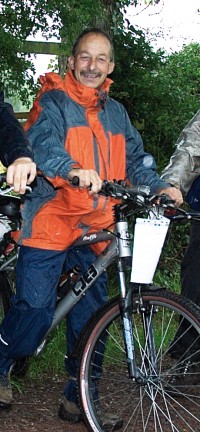
The original organiser, Malcolm Bennett, retired after last year’s event but Hopwood businessman Peter Joannides is now in the saddle to ensure the popular ride along the canal towpath to Worcester continues.

He told The Village they have had the go-ahead from British Waterways to stage the ride on July 5, starting from the Crown Inn at Withybed Green, Alvechurch.

The ride finishes at Digliss Basin, Worcester, where arrangements are made to bring riders and their bikes back, although many cycle the return trip, too.

All proceeds will again go to Acorns and anyone who wants to take part should call Peter on 0121 445 4022.

Distance is no boundary!

Beating the bounds

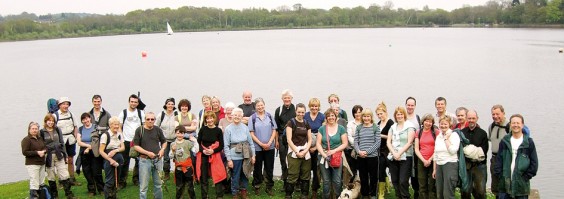
The tradition of Beating the Bounds of the Parish was revived by Alvechurch Village Society on a typically wet Bank Holiday Monday.

The 17-mile epic saw 31 walkers, aged from nine to 79, setting off from St Laurence Church to circumnavigate the parish in an anti-clockwise direction.

Along the way, and with the Rector to hand, they blessed livestock and crops, and stopped off to revive themselves with hot drinks, biscuits and cakes at various venues and beer at The Peacock.

At the three-parish post, where the parishes of Alvechurch, Beoley and Wythall meet, they re-enacted the tradition where the youngest walker is symbolically beaten by an older one, to impress on the youngster the exact boundaries of the parish.

Ten hours after they set out, 26 walkers completed the full circuit – and made their way to The Weighbridge for a well-deserved pint.

Bell’s fusion of flavours

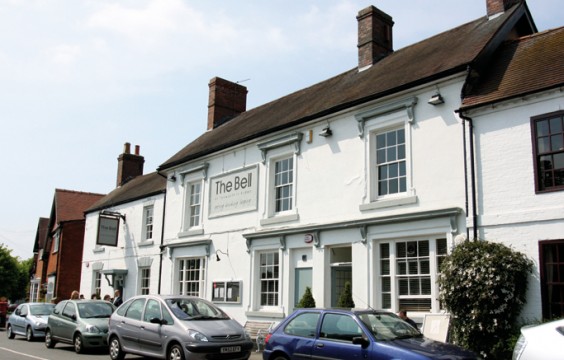
The Bell

Sally Oldaker revisits a pub adding a summer surprise to its menu. 

It had been a couple of years since my last visit to The Bell, when we’d celebrated a family birthday with an excellent meal in stylish surroundings – and I’d heard only good reports in the meantime, so I was keen to repeat the experience.

As well as its location in the charming village of Tanworth-in-Arden, The Bell itself is an attractive venue, having retained its 17th-century-coaching-inn character but trendied things up with some contemporary decor.

The menu’s pretty trendy, too, with a delicious-sounding fusion of flavours and some Mediterranean/Middle Eastern influences, but luckily the amount of choice is just right, i.e. not so much that it’s impossible to make a decision.

The meal got off to a good start with a sharing plate of hand chopped bread and dipping oil, and we were pleased to discover that The Bell is still a real ale pub – the Timothy Taylor ‘Landlord’ was really on form.

The list of starters included soup of the day, which on this occasion was green pea and mint, and found favour with the diner who chose it: the tasty and substantial serving was topped with croutons and a swirl of sour cream and accompanied by more crusty bread.

One companion zeroed in on her regular choice of starter – buffalo mozzarella and vine tomato salad with balsamic dressing – and reported that it was as summery and refreshing as anticipated, with baby tomatoes in lieu of slices and seasoned with plenty of pesto and fresh herbs.

Another of our party picked the gravadlax of Scottish salmon, which was another light and attractive starter with a fresh lemony taste to the thicker-than-expected fish, served with crisp salad and brown bread.

I had considered this option but had to go for the most interesting-sounding dish – home made hummus, stuffed vine leaves, aubergine dip, Egyptian cheese and pitta bread.

It was not billed as a sharing plate, but was a fair bit larger than you might expect of a starter – however, it was so lovely that I managed to polish most of it off

The particularly spicy hummus was tempered by the cooler aubergine dip, both ideal for dunking the olive-oily triangles of pitta bread sprinkled with sesame seeds.

The stuffed vine leaves were fabulous and I’m told that the creamy cheese (which I passed on to the others) had a very unusual flavour.

Hummus platter

Continuing the Arabic theme (developed thanks to the chef’s Sudanese-Egyptian background), I chose the Moroccan marinated chicken with Arabic cous cous, fatouche salad and tahini – I remembered a very similar dish from last time and was eager to sample it again.

It was slightly different this time around – a larger portion for one thing, and topped with a cascade of crunchy toasted pine nuts – but was just as delicious.

The spicy marinade and cous cous were perfect partners for the onion-based salad (from which the kitchen kindly removed the yoghurt dressing on request), and the only regret was not having room to fit it all in!

My diminutive companion also enjoyed this dish, even though she’s not a massive fan of pine nuts, but was also defeated by the sheer amount of food.

The 10oz Irish rump steak with spicy tomato and lemongrass sauce was the choice of another diner, and this was a more manageable size – the tender meat, served medium rare as requested, was given an extra kick by the unusual sauce, while the chunky fries and crunchy leaves provided an excellent accompaniment.

As well as the regular main course and the grill options, The Bell offers a changing list of specials, all of which involved seafood on this occasion.

Although tempted by the fresh Torbay crab salad with new potatoes and lemon mayo, the fourth member of our party chose the pan-fried fillet of halibut, served with creamed potato, wilted spinach and dill butter – a very tasty choice.

The dessert menu featured some lovely treats, but unfortunately we didn’t have the room to do them justice. One diner decided to sample the Bellissimo dairy ice cream and was provided with a creamy melange of the available flavours: chocolate, strawberry and vanilla.

Spotting that the vanilla cheesecake came with spring berries, I asked for just the fruit and was rewarded with a delicious little dish of tangy currants and berries.

Coffee and cappuccino rounded off the meal, while proprietor Ashley Bent filled us in on The Bell’s latest development: al fresco “plancha” tables.

The ingenious invention, a fun and sophisticated variation on the barbecue, allows diners to cook their own food on a built-in grill in the table, whilst enjoying the summer weather (fingers crossed) outside the pub.

This is likely to be a hit in the coming months and with The Bell already offering great food, drink and accommodation, there are plenty of reasons to pay a visit.

The Bell Inn, The Green, Tanworth in Arden, Warwickshire B94 5AL Tel: 01564 742212
https://www.thebellattanworthinarden.co.uk

Fishing down on the farm

The fishery

ADVERTISEMENT FEATURE

There’s more to Woods Farm than festive trees, as anglers young and old will agree.

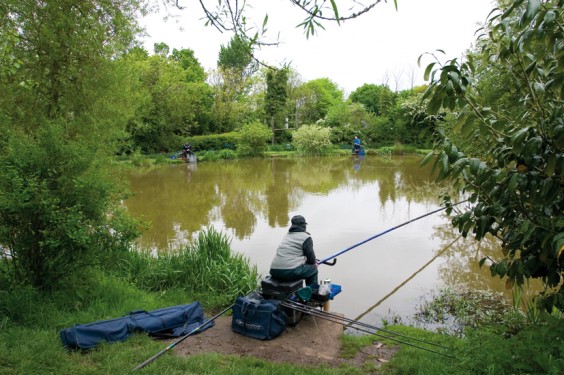
Most people think of Woods Farm in Shirley as the place to go during December to buy their Christmas trees, not realising that just under the railway bridge there is an excellent mixed fishery.

Open all year round, the site consists of three pools on the main site and a competition pool just around the corner, where keen anglers can enjoy the tranquil setting and the variety of fish.
Meanwhile, those who would like to give fishing a go or improve their existing skills can take advantage of tuition from professional instructor Ian Boden.

Ian has been running a fishing school at the venue for five years, including a Saturday junior fishing club, private and group lessons and regular fishing trips for schools. A fisherman since the age of four, Ian now passes on his expertise and passion for the sport to people of all ages and abilities.

“Some people are taught to fish by friends or acquaintances, but it’s much harder to get involved if you don’t know anyone who already fishes,” he says. “That’s why I offer lessons, to make fishing more accessible.”

As a competition angler for more than 20 years, Ian has also noticed that there are very few young people coming into fishing.

“The average age of a competition angler is 40+ years old, so somehow fishing has missed a complete generation,” he comments. “So who will teach the youngsters?”

This concern was the main reason Ian decided to offer tuition, and he supplemented his vast knowledge of fishing by gaining the qualifications needed to teach others before opening the fishing school in 2003.

Youth groups, schools and children with special educational needs can take part in various fishing activities, from very basic taster sessions right through to the full OCN Introduction to Angling and the Environment course, for which students take part in practical fishing sessions plus 20 hours of classroom theory work.

“Not only do people learn to fish, but they also have the opportunity to see plenty of wildlife while fishing,” Ian adds. “Recently we have seen moorhen chicks, tadpoles hatching, ducks mating, dragonflies and much more.”

As well as providing education and enjoyment, the fishing school also supplies all the fishing tackle needed, meaning clients do not have to buy their own equipment.

Those who are already at home in the world of fishing will be impressed with Woods Farm Fishery, which is undergoing a major extension including two new pools and a fishing lodge, due to open next year.

Currently, the main pools are Bills Lane Pool, the Pine Pool, Bridge Pool and Flight Match Pool. Bills Lane holds 32 permanent places to fish, and its depth varies between 7ft on the car park and 4ft along the dam wall. Every platform has a feature, such as a weed bed or overhanging tree.

Although most people fish for the larger carp, which can be seen during the warmer days cruising the margins, this pool is heavily stocked with a variety of fish including barbel, Crucian carp, roach, chub, tench, bream, ghostie, mirror, common and grass carp which run to just over 20lbs.

The average carp in this lake weigh between 3 and 5lbs.

The Pine Pool is a smaller lake with an island running the whole length of the pool. It does not have any permanent pegs at the moment, but can hold up to 20 individual anglers, with trees or reed beds giving a feeling of intimacy.

Again this lake is stocked with a good head of slightly smaller fish than the main pool – roach up to 2lbs can be caught regularly, while carp is the main aim of most anglers, although good nets of Crucian carp and roach can be caught from any peg.

The Bridge Pool, on the left hand side of the car park, holds 12 permanent platforms. The small round pool looks almost clear, but is very deceptive as it has depths running to 12ft.

This is a natural spring that feeds the other pools and is heavily stocked with carp, tench, roach, Crucian carp and chub. It is the hardest of the pools to fish and requires lighter fishing tackle than normal because the water is so clear, but it also holds the fishery’s biggest fish.

Finally, the Flight Match Pool, just off the main complex, is only booked out to clubs for competitions. It was totally revamped at the beginning of 2007; the pool was extended to hold 35 permanent pegs and stocked very heavily with most species of fish including mixed carp, chub, tench, bream and barbel.
For further information, visit: https://www.woodsfarm.co.uk  https://www.ianbodenanglingschool.com

Bag-free Barnt Green

Barnt Green is aiming to become plastic bag-free, with shops in the village already getting on board.

The parish council has decided to follow the lead set by Modbury, in Devon, where plastic bags were first outlawed.

Parish Clerk Roger Westbury told The Village that shopkeepers were supporting the Barnt Green “Green” initiative.

“Quite a few retailers have already agreed to stop dishing out plastic bags,” he said. “We would encourage all residents to work together in trying to encourage this venture by using reusable bags and refusing plastic. Every little helps.” 

Council vacancy

A vacancy has opened for a Hopwood ward councillor on Alvechurch Parish Council after the previous councillor did not attend sufficient meetings.

Parish clerk Yvonne Goode said William Peyton, who was elected as a Conservative last May, had not attended meetings for six months and had not sent accepted apologies for non-attendance.

Candidates for the vacancy have to notify their intention of standing by May 22, with an election date of June 19 if there is more than one candidate.

An election could cost the parish as much as £2,000, although if the seat is uncontested it would be as little as £50.

A natural memorial

Memorial stones

Hannah Genders surveys a site where she has been asked to help to create a very special garden.

I was approached last month by a small, local charity with a very special request. The charity is called Edward’s Trust and it does an amazing job of caring for children and adults who have to cope with childhood illness and loss.

The charity was set up in 1989 by a family who had lost their young son, Edward, and wanted to support other families struggling with these circumstances.

Edward’s Trust has been quietly caring for these families over the last few years and now has the opportunity to provide a permanent memorial for all those they are involved with, in the form of a garden.

The charity has received a donation of a plot of land at the New Memorial Arboretum in Staffordshire to create this garden, and I have the privilege of working with them to make this happen.

It is certainly a challenge because as well as including the names of all the children whose families the Trust has worked with in the past, the charity is also keen to include the names of children and adults they will be involved with in the future.

The garden will become a focal point for any families and friends to visit.

With this challenging and creative project in my head I paid a visit to the National Memorial Arboretum earlier this week. I had already heard, from other people who had visited, what an interesting and moving place it was.

The new arboretum features 150 acres of trees and memorials solely devoted to the concept of remembrance.

The new Armed Forces memorial towers over the site, with its massive curved walls, central obelisk and impressive statues – this contains the names of people who have died in conflict since 1945.

At the other end of the scale, walking around the site of about 130 different gardens and displays, you come across small plaques that mean something special to someone.

One notable garden is called Sands and it is dedicated to all parents who have lost a child through stillbirth. You enter the garden through a small gateway on to a curved path lined with painted stones, each with the name of a child on, put there by a parent or family member.

It was very moving and a lovely way to grieve and remember a child.

The main building is connected to a stunning chapel via a long, covered walkway, and the courtyard space adjoining also has gardens devoted to loss, including a rose garden for war widows.

The chapel itself is a modern building in oak and glass with 12 Douglas firs holding up the roof – these represent the twelve apostles and each one has a face carved on it.

Some of them are really quite humorous and the artefacts and sculptures all over the chapel are full of meaning and symbolism.

I had the opportunity to be shown around this section of the site by one of the many volunteers there, and I would recommend this as a way of fully understanding the significance of the place.

The 50,000 trees on the site have been carefully selected for their beauty and meaning. They are still very young at the moment and the arboretum will change dramatically over the years as they mature.

Many of the trees are also symbolic, such as the avenue of young chestnuts called The Beat, funded by every police force in the UK. Chestnuts were chosen because the first truncheons were made from chestnut wood.

I also took the time to look at the plot designated for the Edward’s Trust Garden – we have a space 10m by 10m overlooking the Tame, and at the moment it has mainly ash and oak trees planted on it.

From my thoughts so far, the design needs to be a fitting tribute to Edward and other children like him. I want it to be space that visitors, especially those grieving the loss of a child, can interact with and experience hope and beauty.

The National Memorial Arboretum is open every day from 9am to 5pm – the site is well signposted just off the A38 north of Lichfield.

Tel: 01283 792333
https://www.thenma.org.uk

For more information on Edward’s Trust visit https://www.edwardstrust.org.uk

I will let you know how the design project progresses over the next few months.

Turning the wheels of history

Forge Mill & Bordesley Abbey

Graham Mellor walks in the footsteps of medieval monks and winces at the conditions of Victorian workers in the Arrow Valley.

Jo-Ann Gloger’s job title is “Keeper of Collections, Museums & Heritage, Borough of Redditch”, which sounds a very grand and wide-ranging role.

The fact that her work is all concentrated on one site is not surprising, given Redditch’s “new town” heritage – yet there is enough history on this one spot to keep anyone interested for many a day.

And who better to show me around than Jo-Ann, who has been working here since 1989?

The site combines Forge Mill Needle Museum and Bordesley Abbey Visitor Centre, which themselves are linked through hundreds of years by man’s desire to harness the River Arrow to power water mills.

First a group of Cistercian monks rerouted and dammed the Arrow in the 12th century to power a mill believed to have been used for metal working. For more than 350 years, monks lived in the magnificent abbey, running a relatively large community until its destruction in 1538 during Henry VIII’s campaign to rid England of monasteries.

Forge Mill itself began life around 140 years later at the start of the 18th century as an iron forge, but by 1730 it had been converted to use the water power for needle scouring – the process of cleaning and polishing the sharpened and hardened needles.

Having shown me the various stages of needle-making on the upper floors of the east wing of building, Jo-Ann led the way into the gloomy basement of the scouring mill in the west, which was still operating as recently as 1958 using machinery installed in the early 18th century.

Visitors can see it working now – thanks to the dedicated help of volunteers – between 2-5pm most Saturdays and Sundays.

It is fascinating to see how the process, which basically involves wrapping up scaly needles by the thousand to be rubbed together in canvas along with some cheap materials like stone dust and soap, remained profitable for more than 200 years.

Back up on the top floor of the east wing there is a permanent exhibition showing the endless uses for the finished materials. From hypodermic needles, to those for playing gramophone records to those used to stitch thermal barrier panels to the space shuttle, there is no end to the ingenuity.

The middle floor of the east wing is used for temporary exhibitions, which during my visit was Wacky Widgets . . . did you know the Victorians invented a machine so you could give yourself a DIY nose job? This ends on May 11, and on May 17 Thr3fold-Unfolded opens – a premiere of a new collection of work by quilt experts.

The feeling at Forge Mill is, naturally, very mechanical; of things clunking, whirring and bashing. But just over the fields is a piece of history relying far more on the imagination, with a wafting soundtrack of canticles singing in your mind.

You can, literally, walk in the footsteps of 15th-century monks and even see the bottom few treads of the worn stone staircase they used to descend into the church at 2am for the night service.

There are also a number of burial chambers – the closer to the altar, the more important the buried person – with the sarcophagus believed to be that of Guy Beauchamp, Earl of Warwick, the closest of all.

He is, among other things, said to have given the abbey in 1306 “27 volumes, including religious works and courtly romances”. Who knows what the monks made of the medieval equivalent of a Mills & Boon?

The surrounding fields offer their own revelations about the monks’ lives, from their fishponds to their millpond. Much of these are humps or hollows in the grass, but with a little imagination and the booklet The Abbey Meadows Trail (available in the visitor centre shop) to guide you, the full extent of this medieval community becomes evident.

If you need more accompaniment, an audio tour provided via a hand-held device by “Brother Nicholas” may help.

Once the outdoor tour is completed, return to the visitor centre, housed in a barn transported to the site from Matchborough in 1992 and rebuilt with a cloistered extension to provide an echo of the abbey itself.

As well as gift shop, there is an exhibition of archaeological finds from the extensive excavations of the abbey, which began in 1864.

One of the most popular is a full skeleton, with bones showing clear signs of the wear and tear of medieval life, while downstairs in the cloisters is a collection of excavated oak timbers that formed part of the abbey’s mill race, all those hundreds of years ago.

On a quiet spring day, it isn’t difficult to be transported back several hundred years yourself – although it is quite a surprise to know that all of this is just a stone’s throw from the busy Sainsbury’s roundabout.

Opening times: Until September: Weekdays 11am-4.30pm, Weekends 2-5pm.
Admission: Adults £3.90, OAPs £2.95, Children £1.
Tel 01527 62509     https://www.forgemill.org.uk