Home Blog Page 67

You really could not make it up

reservoir
The water-filled hollow large enough to be classified as a reservoir

The latest chapter in the sorry saga of Marlbrook Tip sees laden lorries returning to the Green Belt beauty spot with full loads, yet the authorities charged with drawing it to a close appear to be nowhere near finding an ending and the story is beginning to repeat itself. We try to make sense of the latest plotlines . . .

The meeting of the Marlbrook Tip cross-party working group – the first since September 2017 –  included parish, district and county councillors, residents, members of Lickey Community Group, and representatives of the Environment Agency (EA), which has responsibility for the site under the Reservoirs Act.

Proceedings began with an update from Tony Deakin, Reservoir Safety Manager for the Environment Agency, who reported that the EA had carried out a site survey and shared the results with Liberty Construction, which owns the tip – and had also recovered the costs of the survey from Liberty.

Mr Deakin also said that the EA had interviewed the tip’s owner under caution in July, to collect evidence as part of an ongoing process.

He said that during the summer the EA had carried out a cost/risk analysis for several options – including seeking planning permission, carrying out the work required themselves, decommissioning the reservoir, or doing nothing.

“We made another visit on December 7 with a geotechnical engineer and our panel engineer, and are awaiting their report. The initial findings are that the reservoir is still safe and no urgent action is needed.”

Martin Quine, the EA’s Waste Team Leader for Worcestershire, added that he had also attended on December 7 to inspect waste that had been imported. “It was in line with the permit, apart from one load that contained contaminated material, small fragments of metal and plastic. We asked the permit holder to explain those issues, and there will be another inspection in six to eight weeks.”

Resident Charlie Bateman asked whether consideration had been given to using some of the already overtipped material to complete the required work.

Mr Deakin replied: “We have discussed this before. The restoration soil is required to cover up the clay. The site as it stands can’t be reshaped, as this could expose the core. It’s not an option.”

Resident Roy Hughes asked why the owner had started bringing material on to the site, pointing out that lorries were going up and down the Old Birmingham Road with full loads.

Mr Deakin responded that from the EA’s point of view, the owner was carrying out work required under the Reservoirs Act, but admitted that the owner had not provided a plan to show exactly what was being done.

As the EA had stated that only soil and stones were permitted to be brought on site under the Act, residents wanted to know if anybody was checking the loads.

Mr Quine said that the inspection report was public information, but that the EA had no concerns with the majority of waste currently on site.

Mr Quine also told residents that the EA did not and could not inspect every load, the onus being on Liberty Construction to ensure compliance.

“We look at the origin of the waste, and carry out announced and non-announced inspections,” he said.

“Each load is accompanied by a ‘duty of care transfer note’ stating origin and quantity. We also receive ‘waste returns’ from the company each quarter about the quantity imported.”

The EA’s Regulatory Officer, Val Colman, told the meeting that the last time Liberty had been required to submit a return was in October 2018, prior to them beginning the importation of waste – the next was due at the end of January. She had made a request for more copies but had received nothing yet.

Mr Quine admitted that the waste returns were produced by Liberty Construction, but said the EA would intervene if non-compliance was identified.

One resident asked: “Have you learned nothing?”, while another added: “With the history of non-compliance on this site, it surprises me that you are not monitoring the loads – I’d expect someone to be on site to ensure compliance.”

Asked: “Who is checking the checkers?”, Mr Quine said: “We will check the companies where the waste comes from, as we deem appropriate, depending on what we see on site. Previously the site owners were under an old regime, and the current licence is a variation of the old licence under which they brought in material many years ago.”

District councillor Charlie Hotham, present at the meeting as an observer, said: “The engineer said the site was stable with no need for remedial work, but you say the owner is bringing in material under the Act to benefit the reservoir – can you explain the contradictory positions?”

Mr Deakin responded: “The topsoil is required. Our initial findings were that it’s safe to the point where we don’t need to intervene, but the work needs to be done to stop the dam deteriorating in future. I’m not saying it’s unsafe today.”

Coun Hotham pressed: “But you must have an indication of how many loads are required to make it safe? You mention 68,000 tonnes – how much has already been done and how much is still to come? And how will you know when the end point has been reached? You’re waiting four months between receipt of these notes.”

Mr Deakin said that under the Act, Liberty Construction had to appoint a construction engineer, and it was that engineer who would sign off on the works and produce a final certificate.

The EA confirmed that since the lorries carry 17-20 tonnes, it would mean roughly 3,500 to 4,000 lorryloads to achieve the 68,000 tonnes.

Mike Adams, of the Lickey Community Group, asked if the EA had an audit process for the returns, and was informed that the EA looked at the waste on site visits and at the records provided by the customer, and calculated this against waste returns submitted to give an indication of whether the quality and quantity was in line with the permit.

“Jurisdiction is with Liberty as part of their permit,” said Mr Quine.

At this point, Kieron Finney, an environmental consultant working for Liberty, said: “I have written an environmental management system document and there are a lot of procedures that should be followed. Martin has said he’ll be on site in six to eight  weeks but I think it needs to be earlier, as Liberty do need help to follow the systems.”

Residents expressed concerns that a topographical survey due to be carried out at the end of the process might come too late to prevent overtipping, but the EA would not be drawn on what, if any, action would be taken if this were to be the case.

District councillor Helen Jones (Catshill North) asked whether there was a maximum depth for the restoration material, since a minimum of 300mm had been specified. The EA replied that it depended on how Liberty decided to carry out the work: “They may follow the lie of the land, or try to re-profile and take out any bumps. If there’s a dip, it might need 500mm in that spot.”

Ruth Bamford, Bromsgrove District Council’s Head of Planning & Regeneration, clarified that the owner was asked under the Act to import restoration material to a depth of 300mm across the site.

“I am crystal clear that importation of that material needs planning permission, but this has not been sought so far,” she said. “Planning permission would give us, at local level, control of the amounts and the justification for doing it, especially in the green belt. A monitoring regime could address issues such as lorry movements.”

She continued: “We have served a planning contravention notice, which asks questions like what’s going on and why, to get a feel of what’s happening, and also a temporary stop notice, as of 9am today – so if lorries came to site it would be at odds with this.

“You may ask, why temporary and not permanent? The planning authority can’t discuss its next movements but we’re pondering, including liaison with the owner, the EA and relevant bodies.”

District councillor Brian Cooper (Marlbrook) asked: “How can the EA allow tipping when no planning consent has been applied for? Surely the law should apply to everyone.”

Mr Deakin responded: “We were informed by Liberty that they believed they had obtained all relevant permissions.”

This caused considerable surprise among most present at the meeting.

Ms Bamford continued: “The temporary stop notice lasts 28 days. After that, I’m not prepared to say. We are looking into what would be the appropriate thing to do next.”

A resident asked, “If there is no planning permission at the moment, how can the waste management licence be valid?”

Mr Quine said that the the two were not inextricably linked: “You can have an environment permit without planning permission, you can comply with the permit in breach of planning law.

“The permit doesn’t override the need for planning permission – the owner has taken the active decision to import waste without obtaining it.”

Mr Adams remarked: “The owner is doing exactly what he wants. Does the fact he hasn’t got planning permission mean no one is in control?”

Ms Bamford replied: “I’m not a lawyer, but there are two sets of regimes in operation. Under reservoir legislation, the owner was asked to bring material. In another world over here, he has the planning regime to tackle. But he has to get planning permission to comply with what the Act is asking him to do.“

Mr Adams also wanted to know whether there was a time limit for moving the material, or a penalty for not doing so.

Ms Bamford told him: “It could well be that under reservoir legislation there is a need to be doing something, but in my world he has not got planning permission, it’s that simple.

“I’ve asked him to stop temporarily, to give give chance for discussions and better understanding of what’s going on and why. The circle has to be squared to make sure the planning regime is complied with.”

A Lickey resident said that he was astonished at the situation: “We’ve sat in all these meetings, and you know the strength of feeling among residents and you [BDC and the EA] are not even talking to each other; it’s laughable!”

Coun Hotham said it seemed “a big coincidence” that the temporary stop notice had only come into force that very day.

“What changed yesterday to make it relevant now, but not in October when I asked about it?

“I’ve lost faith in the site engineer as the provision of planning permission was crucial – how could he not know it didn’t exist? Can we revoke the permit as the owner must be in breach?”

Mr Deakin replied that there were no legal grounds to revoke the permit.

Ms Bamford pointed out that the contravention notice was also important as it would help shape BDC’s next move. “If it ends up that tipping is not given permission, we’d have the reasons in place.”

Resident Sue Hughes wondered: “If planning permission is denied, would the material brought in since October be removed?”

Ms Bamford said this was unlikely as “it would not be in the public interest. We can’t take action just to make the public feel we’re doing something.”

The EA added that if planning permission was denied, it would be appealed.

Mr Deakin cited the safety of the site and reservoir: “Currently some clay is exposed, so vegetation could grow and water could seep out. It’s safe at the moment but I can’t say what will happen in future. We have to work together for a solution.”

The meeting closed with a decision to hold the next one on March 21.

THE VILLAGE VIEW

If there was a Top 10 of “You Couldn’t Make It Ups”, the Marlbrook Tip debacle would surely be a chart-topper. It has been going on for decades, long-suffering residents have been promised on a number of occasions that their “nightmare” is coming to an end . . . and yet . . .

Does anyone remember March 2011, eight years ago, when the new head of planning at Bromsgrove District Council swept in and told villagers she was going to sort it all out?

“I am personally on the case,” said Ruth Bamford.

Oh, how easy it must have seemed back then. Although, considering the previous inaction by Bromsgrove District Council in already failing to prevent a hillside of waste material being tipped on the Lickeys, it was probably wishful thinking on behalf of a newly-arrived officer.

Ms Bamford has, presumably, since discovered how things work at Bromsgrove – as had the Local Government Ombudsman in awarding a resident compensation against the council for ignoring villagers’ warnings about over-tipping for at least three years.

It started off well with the commissioning of a survey of the Lickey hillside, published later in 2011, showing it was 1,000,000 cubic metres bigger than it should have been. Plenty of talking ensued, including how to make the tip owner remove all of the excess waste – although who would want another 75,000 lorries chugging up and down past their homes? – but very little actually happened.

Then in 2014 the saga took a turn towards the absurd when the Environment Agency, which had been keeping a watching brief over the sorry affair, managed to become fully embroiled with the revelation that what by all accounts is a bit of a pond on the site was, in fact, a reservoir.

You really couldn’t make it up. But worse was to come: now the whole site was under the jurisdiction of the Reservoirs Act and, upon inspection by a top engineer, it was decided the “reservoir” needed to be made safe – by another six months’ worth of lorries bringing loads of soil on to the site.

What’s more, the “puddle” (as it has been described) was now considered a matter of national security, so much so that the engineer’s report had to be “redacted”, with words blacked out, just in case . . . well, in case of what?

Years passed and nothing much, besides hand-wringing and excuses, happened – until the lorries began trundling back up the hill last autumn. Residents complained, but there was no sign of any action until, at 9am on January 25 2019, Bromsgrove issued a “temporary stop notice”  – one hour before a meeting of the tip working group was due to begin.

As that meeting revealed – and as we report it on these pages – it looks very much like the two authorities are not working in unison, creating a push-me-pull-you farce.

“It is like Groundhog Day,” one Lickey parish councillor complained. But at least Groundhog Day was a work of fiction; unfortunately, The Saga of Marlbrook Tip is not made up and no one is prepared to come up with an ending.

Reuben meets Vinny!

reuben

Seven-year-old Reuben Mole, of Bromsgrove, was the latest winner of a Mini Vinny in our monthly competition.

If you want to win one for yourself, you’ll need to try to locate the little hedgehog hiding somewhere in your March magazine.

Just tell us where he’s hiding via phone, email or post – please include your contact details, especially if leaving a voicemail message – and we’ll draw a winner at random. The closing date is midnight on the 18th of every month.

We’ll let you know if you’ve won and you can collect your Mini Vinny from our office – and pose for a photo!

Lawton’s View

0

MARCH 2019

CARTOON


Bench makes beautiful sight

0

bench

I took the photo above while I was out on a run in Lickey Hills.

I have a rule – never stop when on a run – but I had to break that rule when I saw the sunlight streaming through the trees to bless the solitary park bench.

I hope you enjoy the photo as much as I did seeing it.

Paula Thomas, Lickey

Bonfires bring air pollution

0

fire

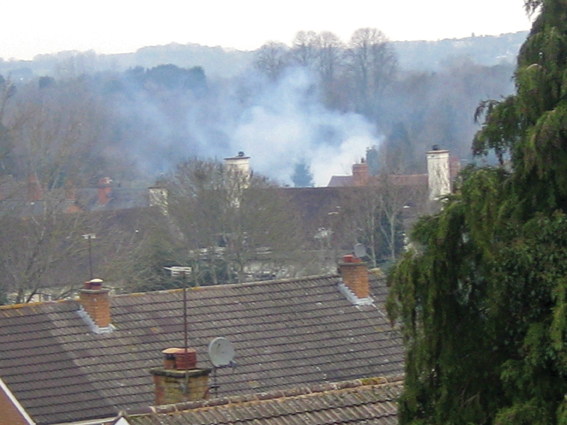
This picture was taken on a Friday morning at 9am. All this talk about air pollution, yet as I write this bonfire has been burning for more than two hours and is still going.

Smoke and fumes all over Alvechurch – why? In this day and age surely this is not necessary.

Whoever lit this fire has no consideration for anybody, especially people with chest problems.

Michael Lewis, via email

More graffiti from ‘Tanksy’

0

graffiti

Following on from your item in the February issue (Green graffiti protest), here is some additional work (above) by the anonymous environmental artist.

The military-style typeface is arguably apt since the green belt is about to become a battlefield. As the inferred armed forces link is perhaps our only clue to the identity of our own incognito artisan, I’d like to suggest we use the name “Tanksy”.

Stephen Farley, Cofton Hackett

Be thankful for hardworking bin collectors

0

Further to a recent letter (Village Views, February 2019) I would like to thank all our hardworking bin collectors for their faithful and efficient service.

They worked very hard over the Christmas period and some of us in Barnt Green had more bin collections than we needed. Many of us would have been sleeping peacefully in our beds when they emptied our grey bins on the Saturday before Christmas, as we usually put our bins out on the night before the collections are due.

We should be very thankful that our bins continue to be emptied regularly, unlike the poor residents of central Birmingham where their bin collectors have been on strike at frequent intervals throughout the last year.

Many of us will have seen videos of these Birmingham bins overflowing with bags and bags of rubbish, attracting rats and other hungry vermin. They have good reason to complain!

Let’s try to look after our environment, use less plastic, recycle as much as possible and use our green bins more so that we don’t have to fill up our grey bins. Many thanks to all our hard-working council workers.

Amanda Dauncey, Barnt Green

Create hedges to attract birds

0

I write in response to the letter Where are the small birds? in your January magazine.

Firstly, I must congratulate Mr Page. He has a resident hedgehog. That is wonderful news! He has installed a home for hedgehogs and it has been “taken”.  If he were to provide homes for the birds, they too would take up residence.

Native hedges, such as hawthorn, blackthorn or holly, that are maintained as a dense shelter are ideal. Dense privet is also suitable. Birds are canny nest-builders and would build in thick, matted climbers, such as ivy and jasmine, and indeed anywhere where there is some support and overhead shelter from the weather.

Food is required to encourage birds into gardens. Berried shrubs are a huge asset and during the summer, plants such as teasel and sunflower produce seed for the birds when winter comes.

In fact, that prompts me to say don’t be too tidy in the garden.  Leave some “rubbish” in which birds can find insects and use as “home building” material. A log pile will be visited frequently, and could be tucked away in an out of the way corner.

Regarding feeding the birds with “bought” seed, peanuts, and fat (in various forms), a bird table will attract some birds, but it is my experience that a “natural” feeding station works wonderfully.

I do not use a bird table at all these days, I have a couple of “unruly” blackthorn bushes and I hang bird feeders on that and on a nearby broom bush. Around these “feeding stations” are other shrubs on which the birds alight, before taking that last short flight to the feeders. They need to know that all is safe before they go to the food.

I should be delighted to invite Mr Page to come and view my “set-up” from the warmth of our kitchen, and watch all the small birds that are regular visitors. We have regularly six goldfinches, great tits, coal tits, robins, blackbirds, and numerous blue tits, long-tailed tits, and sparrows.

Occasionally we have bull finches, chaffinches, and wrens. Wood pigeons, magpies and squirrels also visit us.

Mrs Pamela Chancellor,
Lydiate Ash

Hoping for your vote

Neil
Neil Harris, a founding director of property consultancy Harris Lamb.

Neil Harris, a village Conservative hopeful in May’s local elections, explains why he – and his party – should be given a chance . . .

Q Tell us a little about yourself:

I live in Rowney Green, where I have lived for more than 20 years, raising four daughters, and I have lived in the district throughout my life. I was a member of the steering committee for the original Alvechurch Village Design Statement and have been a school governor in the village. I am very much a person with their roots in North East Worcestershire.

Q What made you decide to stand for Alvechurch Village ward on Bromsgrove District Council?

It seems like the “right time”, what with the adoption of the Alvechurch Parish Neighbourhood Plan and the pressure on the Green Belt around the village, to step forward and offer to best represent the village with the knowledge and skills that I have.

Q The independent candidate beat the Tories with more than 50% of the vote (compared with 33%) in Alvechurch Village Ward less than two years ago. Do you think people are more or less likely to vote Conservative now?

The decision will rest with the people of the village; a good debate and giving people choices is what matters. 2019 is a new moment and we go forward from here – a lot has changed in two years.

Q If elected, what would you do when told to vote along party lines, when you know it is not how the people in Alvechurch Village Ward would want you to vote?

I would expect that my experience and skills from business plus local knowledge would be helping to make the policies that the people of Alvechurch will want.

Q As someone with a particularly good professional knowledge of how developers work, and having been involved in the creation of an earlier version of the Alvechurch Village Design Statement, how do you see the threat to the Green Belt around Alvechurch and across the wider Village area?

The threat to the Green Belt around Alvechurch is very real but there is a danger of being alarmist about it too. There are far more sustainable and deliverable sites to accommodate larger scale housing need than there are around Alvechurch. What it needs is someone to explain that.

Q Should Bromsgrove be doing more to resist the threat of housing from Birmingham, especially when the city is refusing to build on its own green spaces?

Bromsgrove needs to make its case. Around Birmingham and the Black Country there are a huge number of potential housing sites and Bromsgrove needs to play its part in those discussions making the arguments to make policies that local people want.

Q As a professional in the field, what did you think of the Hearn report suggesting 15,000 homes between Alvechurch and Barnt Green? And do you think the Conservative group should have pushed, as they did, to have it included in the current District Local Plan consultation?

A difficult question to answer in a nutshell, however, the Hearn report probably wasn’t a very helpful document but it has started the debate. The Hearn report is most likely already outdated; there is a need for the case to be made for what local people want, now.

Q If elected, and if the Conservatives manage to hold on to a majority at Bromsgrove, how do you think you can bring change to make the council as a whole more effective on behalf of the people for whom it is supposed to be working?

My working life has been spent building alliances and helping to “make things happen”. I would hope to bring those skills to bear to work for the people of Alvechurch.

Q Do you think a unitary authority could be a good way forward?

Parts of what a unitary authority would bring may be excellent things to take us forward, things like shared services, purchasing, and marketing. However, what a unitary authority may not be so good at is ensuring that local voices, opinions and preferences are properly heard. Local democracy cannot suffer; this is something we in Alvechurch should appreciate as much as anyone.