Home Blog Page 162

Battle for a beautiful garden

Garden

Dave Morgan describes the difficulties caused by wildlife and weather.

It’s important to keep the garden tidy in spring and summer as there will be long cold months when it will look almost dead – even more so if you open for the National Garden Scheme, as we do, with another couple, in Marlbrook.

But sometimes gardening feels like fighting a battle against the odds! There are pests and diseases that affect your plants, like tulip fire and clematis wilt, and who hasn’t had hostas and delphiniums decimated by slugs?

We’ve tried everything to get rid of slugs, including creeping round with torches at night, searching for them – our neighbours must think we’re weird!

But having found them – what do you do with them? Salt’s good – but if we admitted to that the League of Slug Protection would be after us.

They say you can frighten slugs so they don’t come into your garden – but shouting “Boo!” over the fence into the neighbours’ garden might encourage a visit from the boys in blue – or at least an ASBO (Anti Slug Boo-ing Order)!

We’ve battled against pigeons, who land on top of delicate plants, squashing them in the process – and Victor Vole, who we’ve actually caught eating a geranium flower – clearly Victor likes geraniums!

But this year our biggest battle has been against the weather. The late cold snap, with overnight frost, damaged some of our acers, even though we’d covered as much as possible with fleece.

And the long, dry, hot spell, which is great for sun lovers and posties in shorts, is not ideal for gardeners. Our water butts ran out long before the hot spell did and several plants were scorched by the sun.

Then, torrential rain – which damaged the plants that we’d spent so much time carrying water up and down the garden to maintain!

It sounds like there’s nothing left – but we’re still “fighting the good fight” and the gardens still look good (if you disregard the slug-eaten leaves and squashed plants). Come and see for yourself!

We’re open Sunday August 20 (1.30–5.30 pm), with one garden in Braces Lane and the other on the A38 (park in Braces Lane). Entry is £5 (children free) for both gardens and refreshments will be available.

It’s all for charity, so enjoy two different gardens and have a great afternoon out – as long as the weather is kind. . .

Pirates in the park

Pirates!

Blackwell Festival enjoyed glorious weather for a change – perfect for this year’s piratical theme!

Following the afternoon of fun, games and fancy dress on the field off St Catherine’s Road, villagers moved over to Blackwell Club for a BBQ and more live music. 

Photo by Keith Woolford – see more on our Facebook page!

Coast and countryside

Saltburn beach

We certainly did have a flaming June this year, and the first part of July. I don’t know what it was about the specific conditions, but the flowering of orchids in the area was the best I’ve ever seen.

When I took a group of people to Eades Meadow in June we expected to see lots of common spotted orchids, and some remnants of the earlier flowering green-winged orchids, which we did.

Then someone spotted bee orchids, which I hadn’t seen there before. There was lots of twayblade, a rather greenish orchid with a distinctive nest of round leaves.

I was looking out for fragrant orchids, which are rarer: there are usually a few way off the path so you don’t see them easily. But this year there were dozens, everywhere, even near the path.

These are a more elegant orchid, with larger, more loosely-set flowers of deep pink up a long stem. They have a beautiful scent.

I even found orchids in the old field that takes the Saltway footpath from the little aqueduct under the canal near Alvechurch up towards Grange Lane.

This field always has lovely old pastureland flowers like agrimony, bedstraw and knapweed, but I’ve never seen orchids there before.

I was intending to write my usual holiday article about the Highlands of Scotland this year. Unfortunately I didn’t make it there due to family illness, but I did spend a week in North Yorkshire and County Durham, so there was plenty of chance to see different wildlife.

When you go to other parts of England, you are met with both the familiar and the unfamiliar. The trees were very similar, except there were more thriving elms there, which had flowered profusely this year. And there were bird-cherries, which like a more acid soil than we have.

With the differences in soil, and the cooler climate, the flowers are often different. The orchids there were northern marsh orchids in June, following a previous flowering of early purple orchids.

I found my biggest group of orchids on the sea cliffs at Saltburn in the far north of Yorkshire.

This coast, North Yorkshire and Durham, is characterised by very steep valleys called “denes” running down to the sea. These are wooded and usually too steep to have roads actually running down them, so are often wild and beautiful.

One in Saltburn has been semi-cultivated as the Valley Gardens and the other mostly left wild. The Valley Gardens are a lovely example of how wild plants can co-exist with more cultivated ones.

A flower really abundant in June is the meadow cranesbill, a lovely blue geranium. It doesn’t grow wild in our bit of the Midlands, but has sometimes spread into the hedges from people’s gardens. I spotted a rabbit happily feeding nearby.

They also have the beautiful darker wild rose I mentioned in June, the downy rose. But they don’t have the white field rose, which is prolific around here, which is odd because it was the forerunner of the white rose of York.

Along the verges I kept spotting a flower we don’t have round here, called crosswort – that’s when the verges hadn’t been mown to death (they have the same problems there).

It looks at first glance a bit like lady’s bedstraw, which we do get here – including a rather surprising line along the pavement in Bear Hill Drive in Alvechurch.

There was a lot of pignut still out in June, when it was over here. This is like a short cow parsley, with feathery leaves and an edible root. It’s believed to be the origin of the song about “gathering nuts in May!”

There was also sweet cicely, though it was almost over when I was there, with its lovely spikes of seeds forming.

This plant is also a bit like cow-parsley, but has leaves that smell distinctly of aniseed and frothy dead-white flowers. The seeds were eaten, and are good for the digestion.

Saltburn is an old-fashioned seaside resort with a pier and a cliff railway. Swallows had nested in the eaves of the little wooden hut at the start of the railway. The pier is decorated by “guerrilla knitters”, who this time had chosen a seaside theme.

The huge sandy beach was very clear, so there was not much marine life, but there was lots of evidence of marine life from the recent and far-distant past. It’s a great beach for shells and stones.

Some of the black stones are very light and are actually coal, a sign of the area’s industrial past. Some of the reddish stones are heavy and full of ore.

If you are really lucky you can find a hard black stone, which is jet. If you rub it on another stone it leaves a brown mark, whereas the coal leaves a black streak, and ordinary black stone just leaves a whitish mark.

Jet mining was once a big industry in this area, made especially popular through Queen Victoria’s love of jet jewellery. You don’t have to look far to see the industrial past and present there.

Many of the industrial sites are excellent for wildlife, and the best range of birds can be found on the salt marshes round the Tees estuary. Old quarries host a range of orchids and other flowers.

These areas are often more biodiverse than the farmland and moorland that attracts visitors there.

Something else we found on the beach was far older. This is a good place for fossils. The most common, which we found lots of, are the kind called “devil’s toenails”, though you can find ammonites as well.

I also visited a place near Durham called Lion Mouth Rural Centre. This is a centre for adults with learning difficulties or mental health issues, where they can come to take part in country crafts.

It was featured on Countryfile a few years ago, when they worked on the little river that runs through it. They restored the natural bendiness of the river and helped fish to live in it, as well as assisting flood-prevention. They now see otters there, and kingfishers.

The river is lined with butterbur, a plant with huge leaves which used to be used to wrap butter. We get it along the Arrow, but not as much as this! The wooded sides are full of white foxgloves, and valerian, which likes damp areas.

(This is the “true valerian”, a wild plant which loves the north, as opposed to the red valerian which grows at the seaside – including Saltburn – and in gardens round here.) Valerian was a herb used to help with sleep.

The people who run the site make use of everything, making seats out of fallen trees and growing plants in old tyres, and the clients who come can work outside on this, or in the more conventional gardens, or in art and craft rooms.

It’s another good example of garden plants and vegetables mixed in with wild plants. Working in an environment like this has a very positive effect on people. Re-using materials is also even better than recycling, and helps people understand about sustainability.

Most of the birds and mammals up north were the same as here, but I saw more spotted flycatchers than I normally do!

I noticed there were a lot of swifts, and when I came home they were screaming over Alvechurch a lot in the evening – but not here at Withybed Green for some reason. But we do have a pair of geese with four big grown-up goslings, who have taken over from the pair that lost their one.

Back home I have enjoyed showing people my “wild garden” as part of the Withybed Open Gardens. I have a couple of local-grown orchids which I am encouraging to spread, and other interesting wild flowers like sweet cicely and alexanders, which came from Yorkshire originally!

A lot of people, on that day and when I take them round Eades, ask me how to get wildflowers to grow in their gardens. It isn’t easy, and just scattering a packet of seeds often fails.

My way is to introduce a perennial wildflower plant and hope it spreads, as well as letting local wildflowers find their own way in. I’m fascinated by the way they interact and keep each other under control.
Something I have noticed in this hot dry weather is that places with mixed planting of perennials, such as fields of mixed grass and wildflowers (or my garden!) are very resistant and don’t suffer from drought so much.

They also absorb water better when we do get it, so help prevent flooding.

I wrote this poem in August last year.

August walk
To keep me mindful, I have the canal.
I walk it daily, but each day different.
Water will calm the troubled heart, or wake
The tired head. Today wind shakes the treetops
And the sun just about summery still
Shines on that oak tree bole, which looks
Like one of those little earth goddesses
Dug up from a Neolithic tomb
Green hair sprouting above her breasts.
The boat names are traditionally eccentric
Wordsworth, Dreckly and the misspelt Cymberline
Persephone and Dunwyngyng. Sublime
And ridiculous, like love, like life.
Two cock pigeons fight until
A dog disturbs them and they fly together
To the safety of a tree. Conkers
Are hardening and thistledown blows.
I walk towards autumn, holding on to summer.

Down on the farm

Line dancing

This year’s Lickey Festival, held at Lickey Hills Primary School and involving the whole community, was themed around The Farmyard, with plenty of country activities on offer – not forgetting the scarecrow competition!

Photo by Simon Woolford – see more on our Facebook page!

Motor mania!

MG TC

The inaugural Barnt Green Motor Festival saw more than 60 cars and motorbikes – dating from 1910 to 2016 – assemble in the village centre, as visitors flocked to view them in the glorious sunshine.

Right: An MG TC, photographed by Dennis Brown. You can see all the photos from the day on our Facebook page!

Charity challengers

Challengers

Sarah Rees reports from the Oakalls and Parklands.

Oakalls residents Kerry and David Walker have helped to raise more than £8,000 for charities by completing the National Three Peaks challenge. 

The couple were part of an 11-strong team (above left), including nine of Kerry’s work colleagues from Quattro Pensions in Redditch, who climbed Snowdon in Wales (1085m), Scafell Pike in England (978m) and Ben Nevis in Scotland (1345m) during a 28-hour period.

Kerry and Dave, of Royal Worcester Crescent, had never taken part in anything like this before, but wanted to raise money for Motor Neurone Disease (MND), Breast Cancer Now, Macular Society and Parkinson’s UK – four long-term degenerative disorders which have affected members of their family and work colleagues.

They received incredible support from their employers: Quattro Pensions covered the cost of a mini van, food supplies and all fuel; while Bondeye Optical in Warwick (where Dave works) helped with accommodation costs and donated £2,000 to the fund.

This meant the team only had to fund equipment themselves so most of the money raised could be donated directly to the charities. At the time of going to press they had a raised £8,500.

You can still make a donation at https://www.virginmoneygiving.com/bondeye or https://uk.virginmoneygiving.com/quattro-pensions

Meanwhile, a resident of Mountserrat Road is getting ready to take part in a charity trek to Everest Base Camp this September, to raise money for The Children’s Society.

Amy Barlow (above right), a former South Bromsgrove High School student, has just completed her third year at Plymouth University, studying English Literature.

As a member of the University’s Raise and Give Society, 23-year-old Amy was given the opportunity to sign up for the 11-day trek, along with seven other students.

She previously completed a Kilimanjaro trek in her first year, raising £3,010 for the Meningitis Research Foundation.

Amy’s passion for fundraising led her to take on the role of a student leader for the Everest trek and she has been responsible for motivating and advising the other team members towards their fundraising goals.

Her own efforts have included various bucket collections as well as a “Mega-Raid” organised by The Children’s Society across tube stations in London.

She took part in Britain’s Ocean City Half Marathon in April this year, which not only helped her raise further funds but provided excellent physical training in preparation for the trek.

If you would like to support Amy you can make a donation by visiting: https://www.justgiving.com/fundraising/amy-barlow3

The Children’s Society helps young people aged 10-18 years who are disadvantaged by poverty and neglect. They provide direct support work and campaign for change for those in need and at risk. To find out more, visit https://www.childrenssociety.org.uk

Pupils

MEDIEVAL MEMORIES

Year 2 children at Finstall First School enjoyed a special dressing-up day as part of their topic about medieval life. They learned about castles and knights, medieval food, clothes, jobs and dances.

The highlight of the topic was a Medieval Banquet day, when the youngsters enjoyed a medieval feast, sampling foods typical of the time such as vegetable stew.

There was a tournament on the school field which involved jousting practice (running a foam “lance” through a row of hoops), juggling, hoopla and hobby-horse racing. Children also had a chance to design their own shields. 

Seven-year old Theo said: “I loved playing the medieval games on the field. It was a really fun day at school.”

Esme, also aged seven, said: “I thought it was fun and I liked dressing up.  I liked learning about castles and knights.”

Pictured: Theo, Phoebe, Adam, Euwan, Alfie, Zach, Fraser, Lucy, Erin and Esme.

Please contact me with your news, views and concerns about any aspect of life on the estate. Email: .(JavaScript must be enabled to view this email address)

Tip deadline looms

After years of stalemate, this month may mark a major turning point in the Marlbrook Tip debacle.

August 31 is the deadline for the owner of the site to complete safety work ordered by the Environment Agency.

But it is believed there isn’t enough time left to get planning permission to do the work, never mind carry it out – at which point it will be out of the owner’s hands, according to officials.

Residents suffered more than ten years of lorries thundering past their homes up the Lickey Hills as more than a million cubic metres of waste was over-tipped on to the site – under the watch of Bromsgrove District Council.

For years, the council ignored complaints from residents, who said it was a “living hell”, until a new head of planning, Ruth Bamford, took over in 2011 and got the tipping stopped.

More than six years later, and with the Environment Agency now in charge because a balancing pond on the tip was deemed a “reservoir”, a final resolution may be in sight.

An Environment Agency engineer has ordered a minimum of 300mm of soil to be spread over the former tip to ensure the “reservoir” is safe.

Ms Bamford told a meeting of the cross party Marlbrook Tip Working Group last month that she had sought advice as to whether this work – thought to entail around 3,200 lorry loads of material being brought up the Lickey Hills – would require planning permission.

“I have had legal opinion on it and planning permission is required,” she said, adding that such a major application would require a three-week public consultation period, as well as the time to put it before the planning committee, which could take up to 13 weeks in total.

Coun Luke Mallett told the meeting: “The fact is that this council cannot give approval within the time.We are seven weeks and thousands of lorries away; I will eat my suit if this is achieved by the end of August.

“It seems utterly, utterly ludicrous and the people of Bromsgrove deserve better.”

But Tony Deakin, Reservoir Safety Manager of the Environment Agency,  said once the deadline had passed, the agency would have to carry out the work, adding: “If we have to step in and do the work, then we will charge the owner.

“Between now and then we will start to think and plan what action we will take,” said Mr Deakin.

See The Village View

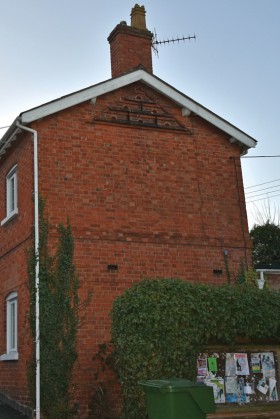
Guess the close-up (No. 5): ANSWER

Answer

Did you guess correctly?

The close-up pictured here showed what are thought to be old dovecotes on a property on Bear Hill.

Look out for more in a future issue!

School bus with a difference

Bus launch

Pupils at St Andrew’s First School in Barnt Green now have extra space for their lessons, thanks to the addition of an unusual classroom – “Buster” the double-decker bus.

Donated by National Express and refitted with money raised by the PTA, the bus provides room for smaller teaching groups, music lessons and one-to-one sessions.

Above: Sajid Javid MP (centre), whose father was a bus driver, performs the official opening, helped by Harry Carter, Jacob Day, governor Kate Foster, headmistress Kay Cholmondeley, governor Steve Bond, PTA members Janette Day, Matt Challinor and Denise Carter (PTA), and Amber Day.

‘Wake up’ call on closure

A group of Blackwell residents have organised a campaign against Network Rail’s decision to close a popular railway crossing point and replace it with a diversion.

Network Rail ordered the temporary closure of the “yellow brick road” crossing from Fairways Drive to the public footpath across Blackwell golf course in May, citing safety reasons, with walkers diverted via Linthurst Newtown and Blackwell Road.

Residents and parish councillors have raised concerns over the safety of this route, which Network Rail says is the only viable alternative to the crossing.

“Network Rail says the crossing is too dangerous, but it’s far more dangerous to cross that road,” says Lisa Winterbourn, who founded the campaign group along with Wendy McClure.

“There was a serious car accident there recently, but there have never been any accidents on the crossing.”

The group, which numbers about 45 residents, has support from Lickey & Blackwell Parish Council and county councillor Kit Taylor, who attended a recent meeting at The Wheel.

“Tutnall & Cobley Parish Council were there too – part of the diversion runs through their parish but they hadn’t been informed,” Lisa says.

“A lot of residents were also unaware of the closure, but we’ve all woken up now!”

The group’s initial aim is to get the temporary closure lifted, though they admit this is unlikely.

They will also concentrate on ensuring that any diversion is as safe as possible, including asking Blackwell Golf Club to reconsider allowing walkers to cross part of the course.

“Ideally we would like to get the crossing open again, perhaps with a bridge over it,” adds Lisa, who will take over as clerk to Lickey & Blackwell parish council this month.

“Network Rail has dismissed this and other options, so we would like to get an independent review.”

Coun Taylor told campaigners that the county council meeting on November 14 will be the final chance to lodge an objection before Network Rail seeks to make the closure permanent – so the group is encouraging villagers to write to him or to Richard Jones of the county council’s Local Access Forum.

“If enough people write, we can put pressure on the county council to act on our behalf,” says Lisa.