Home Blog Page 150

Brownfield homes ‘yes’

Plans for nine new canal-side homes on a brownfield site within the Alvechurch Green Belt have been approved.

They will be built on the site of the former Mumberson transporter depot, accessed off Scarfield Hill, close to The Weighbridge public house.

There are currently a number of buildings with storage use on the site, which will be demolished.

The decision was taken by council officers at Bromsgrove rather than being put before the planning committee.

In the decision, the officers say the application satisfied the “very special circumstances” required to build in the Green Belt on a number of grounds.

These included: “The opportunity to significantly enhance the visual appearance of the site which is visible from the public footpath on the opposite side of the canal.”

The development will bring into focus the potential use of the rest of former brickworks site to its rear.

Bridging the age gap at club

Committee

Silver Threads, the Alvechurch social group for the over-60s, celebrated its 11th anniversary with a sing-song led by village musician John Dale.

Since forming at the Tanyard Centre, membership has expanded to around 60, becoming one of the most popular clubs in the area for the more “mature”.

Now meeting monthly in Alvechurch Village Hall from 1.30–4.30pm, the club offers bingo, refreshments, craft sessions, regular day trips and occasional treats – this year they have been to West Midlands Safari Park and Weston Super Mare and look forward to a trip to the Royal Albert Hall.

However, the committee – many of whom have been on board since day one – are seeking help from younger members of the community to help with the running of the club.

This could involve helping with the monthly social (setting up the room, making tea/coffee, calling the bingo, selling raffle tickets, tidying up) and/or joining the committee to help organise the club and its activities.

The commitment would only be a few hours a month but would greatly help towards ensuring the continued success of the club. If you think you could get on board then contact chairperson Patricia Riley on 0121 447 8630 or treasurer Jayne Wisniewski on 0121 445 3222.

Above: Committee members Margaret Gardiner, Patrick Riley, Irene Timms, Jayne Wisniewski, Pat Robinson, Patricia Riley, Phyllis Hastilow, Pauline Martin.

Carving out a pumpkin show

Badge

Villagers are being reminded to get their entry forms in by October 21 if they want to take part in Alvechurch’s first-ever Pumpkin Festival.

Taking place on Saturday October 28 at Alvechurch Village Hall, the family event gives villagers the chance to show off their pumpkins.

You might be growing one in your garden, or you may want to carve a design into a shop-bought one.

However, it doesn’t have to be a “real” pumpkin – so why not get crafty and enter some pumpkin-themed art such as a painting, a sculpture or even a crochet pumpkin?

More than 100 pupils at Alvechurch Middle School submitted ideas for the festival’s logo, with the winning design (right) to be turned into a badge and given out to all entrants at the festival.

To display a pumpkin of any sort at the festival, download an entry form at www.alvechurchvillagehall.co.uk or pick one up at The Lounge.

There’s a £1 entry fee, with all proceeds in aid of the Village Hall and Papyrus (a charity for young suicide prevention). 

The festival runs from 11am–4pm and pumpkin-related refreshments will be available to buy.

Delight after the deluge

Belly dancers

Despite monsoon-like rain at the start, the annual Tardebigge Fair & Show offered a great day out thanks to the community spirit of organisers and visitors alike.

Pictured: Bellyssimo Belly Dancers ‘The Severn Sirens’  (Photo/ Keith Woolford)

See more photos on our Facebook page.

Golfers wanted

Golfers are wanted to help raise money for a defibrillator in Barnt Green Social Club. 

If you are interested in participating in a charity golf day at a local golf course in aid of this great cause, please email Robert.

He is looking to get enough players of all standards together to help raise money at this event, along with a number of other activities the social club are planning.

Once enough interest is assured, the event will be arranged for late October/early November. Email your interest to .(JavaScript must be enabled to view this email address)

Green fingers

Winners

Winners of Lickey & Blackwell Parish Council’s annual Best Front Garden Awards celebrated with councillors at Holy Trinity Church, Lickey.

Judging took place during the first two weeks of July by the parish councillors together with last year’s winners and invited guests.

The award ceremony also included an update on the local WWI Project by Jill Harvey of The Lickey Hills Society, and a short talk and a film entitled Spring Walk, set in the country park, by Keith Woolford.

Crafty quilt up for grabs

Quilt

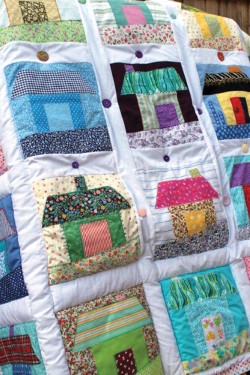
The Crafty Ladies group who meet at Alvechurch Library have made a double patchwork quilt with a “houses” design, which will be first prize in the raffle at their Christmas sale at the library on Mon Nov 13, from 10–1pm and 2–4.30pm.

A variety of hand-crafted Christmas items and cakes will be on sale, raising money for the library and village charities.

Raffle tickets can be bought beforehand by calling at the library (£1 per strip), or from the Crafty Ladies on Monday mornings.

House of healing

House

Hannah Genders visits a historic house and garden.

When Kevin and Elizabeth Rolph decided they would like to leave their jobs in Cambridge and have a lifestyle change by running a bed and breakfast, they had two major requirements at the top of their list.

Somewhere that had hills (after 27 years of living in the flat landscape around Cambridge) and a garden to develop.

Initially they were looking in Derbyshire as they didn’t know Worcestershire at all, but a chance encounter made them visit the Malvern Hills and then begin to look in that area.

They came across a wonderful old property called The Dell House in Malvern Wells.

The Dell House sits just under the Malvern Hills above the Three Counties Showground, so this has fulfilled the hills and walking requirements, and the garden – although overgrown and neglected – had enormous potential. It is about two acres in total and has a wonderful history.

The house was built around 1820, and the church next door which looks down upon it was built shortly after, in 1826, by the Reverend Peter Boissier.

The house is a beautiful, classic Regency design but it needed lots of work. Kevin and Elizabeth have had it re-roofed, and new windows put in.

What is fascinating, in reading up on the history of the house and garden, is how often the word “sanctuary” comes up. This is a garden that for decades has been used by people as a retreat space, healing space or sanctuary.

It seems to have started in the early 1900s when the house had changed hands and was opened as a “nature cure” home.

During this time the Dell House had been renamed The Dell Hydro (I’m guessing they made use of the famous Malvern Spa water). It was owned during this period by a Mrs Gladys Evans, who was a member of the Naturopath Association.

In its simplest terms, this is the belief that a person can be healed through rest, diet and hydrotherapy.

We then jump forward to 1950 and it was again renamed, this time as Lucidor House, and described as a “House of Healing”. It’s difficult to find out what kind of healings went on there during this period, but the gardens and woods are mentioned as a vital part of the healing process.

I found all this interesting when reading about the house, but I’ve jumped a bit too far ahead for the garden. After Reverend Boissier retired, a second reverend came to Dell House and took up the post at St Peter’s Church next door.

According to the 1841 census, this was Reverend Francis Hopkinson and he was living there with his wife Ellen, five servants, a cook, a lady’s maid, a housemaid and a footman.

It was during the ten years of Hopkinson’s time that the garden saw extensive renovations. Hopkinson had numerous influential friends in the horticultural world – Charles Darwin lived nearby for a short time, as well as Joseph Hesker, who was the director of Kew Gardens and sponsored various plant hunting expeditions.

It is probably as a result of these connections that Dell House boasts some special trees; notably a Wellingtonia Redwood, two strawberry trees (Arbutus) and a large Acer, along with a tulip tree that has since died but been replanted elsewhere.

It is the Wellingtonia that really stands out as you enter the driveway of Dell House.

As well as the plantings, Hopkinson built a wonderful summerhouse and hand painted it on the inside with a display of the names and coats of arms of the 28 Worcestershire landholders mentioned in the Doomsday Book, the 25 signatories of the Magna Carta, and of many of the local landed families from more recent times, making a total of nearly 100 references.

All meticulously painted, it is a piece of artistic history. The ceiling is also hand-painted with a map of the surrounding area.

With the summerhouse as a starting point near the front drive, the pathway leads off to the rest of the garden. It winds behind the Wellingtonia specimen and you see where Kevin and Elizabeth have cut back large amounts of laurel to regrow and form a denser hedge to obscure the neighbouring houses.

Continuing on this path you plunge more deeply into the trees; the tulip tree I mentioned earlier that has not survived has been artistically carved by Steve Elsby, so a green man carving pops out at you from the trunk and on the reverse a little owl peers out.

As the path winds on through on old wall (all discovered by Kevin and Elizabeth as it was totally hidden by brambles) you come into the lower garden, where there is a Wendy house, stone-built in the 1900s and complete with its own fireplace! Something I thought my granddaughters would love.

From here you need to look up to the tall stump of a sweet chestnut tree and another striking dragon carving looks down at you. Along another discovered path and there is more playful carving in the form of a chair and chaise longue complete with bookcase and firepit.

From this point the path winds back up the terrace at the back of the house, and here Kevin and Elizabeth had some professional help with the design and layout from a local landscape architect.

The main dining room spills out onto this terrace with wonderful views out to the Worcestershire countryside. The planting here they have completed themselves, and as this garden is only a few years old in its renovation it was all looking really mature.

This garden is special, it is playful, but also definitely has a sanctuary feel surrounded by all the trees and places to sit and take it in, and there are a number of ways in which you can enjoy it.

It’s open as part of the National Gardens Scheme for a donation, or you can visit the garden on retreat as part of the Quiet Garden Movement, which is where people offer their gardens for quiet reflection – I am planning to lead some reflective days in the garden there next year. The website is https://www.quietgarden.org 

All these options are available on their website https://www.thedellhouse.co.uk

I want to finish with a quote from Kevin and Elizabeth that I think say it all about the spirit of this place.

“We stand before you all today and make a declaration of our commitment to be guardians and stewards of the Dell House and its grounds.

We will continue to bring them back to life and find the beauty and tranquillity within them. We also commit to sharing the peace and glory of these surroundings with all those who pass through our gates.”

Red October

Rose hips

Mary Green points out the month’s colours.

It’s really autumn now, though we often have a warm spell in early October. This used to be called St Luke’s Little Summer, and it’s surprising how often you can still enjoy sitting out in the sun at this time. It’s also called an Indian summer, a term borrowed from America.

Whatever the weather, the leaves are turning and by this time the predominant colours include red and orange on top of September’s gold. There are no more new flowers starting, though the ivy is in full flower as I mentioned last month.

However, in a mild year quite a few of the summer flowers are still blooming, so you can still see late bees and butterflies hovering over them.

Most of the summer-visiting birds have gone, including swallows, martins and chiffchaffs. Some of the song birds which are resident here also migrate between countries in winter and summer.

Most of the birds staying have gone quiet by now. You still hear songs from the robins, woodpigeons and collared doves, and thrushes are known for occasionally starting up out of season. The water-fowl can still be quite noisy too, especially ducks and geese.

The drakes have their bright plumage back now, so what birds you see are bright and varied in colour at this time of year.

I was interested to see several swans coming to our canal at the end of summer. The resident pair and their remaining cygnets are up at Jacob’s Cut again, but these others must have arrived from somewhere else.

They are not a this-year’s family – this year’s cygnets are still in their brown plumage, and these are all fully white.

Usually the young leave their parents in mid-winter when they are getting their white plumage. So it’s quite unusual to see a group of adults moving around together like this. I wonder if they’ll settle here.

Canada geese are very different. Their goslings, born in May, start to get adult plumage in June and are fully adult-looking in July.

I wonder if this is because geese are usually migratory – most of our native geese are, and are only in one place for parts of the year.

Canada geese don’t migrate, though I wonder if they originally did before they moved here. Here they stay put most of their lives in one place, though some vestige of the migrant instinct makes them wheel around in great flocks in early autumn.

Maybe the rapid maturing of their young is also part of this history.

By now the ash trees will probably be bare and the field maples will be yellow. We will already have had a flush of red from the non-native maples in Alvechurch.

Many people don’t recognise our native acer, the field maple. It has a small five-pointed hand-shaped leaf. It’s quite common in hedges here and grows to a medium sized tree. In October it turns a beautiful golden colour.

Occasionally you can find one that turns reddish-brown instead. There is a red one I can see on the hill-top opposite my house.

Another tree that turns a gorgeous red-brown at this time is the wild service tree. These are quite common here in Withybed, and used to be a very common sight throughout the Midlands, but are now quite rare.

Their leaves are a complicated shape, a bit like the maples or sycamores but with more points. They have small brown fruits hanging in bunches.

These don’t look very prepossessing, but are edible once they are really ripe and soft. They used to be called chequers, and were picked and sold like sweets.

The wild cherry has beautiful long red leaves, which often last until October and then carpet the ground. They are common in hedges round here and grow in several churchyards too.

But the trees that really make October’s colours are the beech and the oak. Beech leaves turn a beautiful golden-red, and because the trees are an elegant shape they look stunning.

There are particularly good ones in Shortwood, along the canal, but they are scattered about everywhere in our villages and old hedge-lines.

They have hard brown fruits called mast, not edible as they are but capable of producing an edible oil. This year they have plenty of mast. Beech has smooth bark, and with this and its beautiful shape, leaves which are lime green in spring and red-gold in autumn, has led it to be called the Queen of the Woods.

Oak is of course really plentiful around here. Trees grow slowly and start to bear acorns when they are about 20 years old. This year every mature tree round here is really laden with acorns – what’s known as a “mast year”.

Oaks do this every few years, in a way that doesn’t seem to relate to any specific weather in the earlier part of the year. Scientists have found that oaks are able to communicate with other oaks, though they aren’t sure how.

The trees seem to use the mast year to ensure the continuation of their species. If they all have masses of fruit together, the animals and birds that feed on them won’t be able to eat them all, so many will be successful and grow.

Oaks are essential to many other species. In obvious ways, their acorns are food for birds and mammals – especially squirrels and mice. (I have been lucky enough in past years at this time to see red squirrels – not around here but in Cumbria and on the Mull of Kintyre in Scotland.)

Less obviously, the crannies in their bark are home to dozens of different kinds of insect and other small creatures. These in turn are food for other birds, especially woodpeckers, tree-creepers, jays and nuthatches – the birds of the woods. 

Oak leaves turn brown slowly, some trees going before others. They are not spectacularly glossy like beech, but become a consistent matt brown and hang on for a long time. This means oak trees, especially when free-standing in fields, are strong and beautiful presences throughout October and November.

Under the trees, and sometimes on them, October is the time for woodland fungi. They are often later than the open-field ones which come in September.

The one which most strongly echoes the colours of the leaves is of course the iconic fly agaric. This is the large red fungus with white spots, highly poisonous.

But the brown bolete (also known as the cep or penny-bun) growing in the same habitat is lovely to eat. The strange-looking reddish jelly-ear, which grows on elder trees, is also edible though it doesn’t look very attractive.

Of course, you shouldn’t eat fungi without taking expert advice!

Fungi are everywhere, though most of their structure is underground. The part we see is the fruiting body which carries the spores – the reproductive part. Fungi feed on all kinds of decaying vegetable matter, including wood, and form part of the intricate habitat of our plant and animal life.

Perhaps the most striking colourful element of this month is the berries. Hawthorn berries are really thick and red now, and show up even more as the bushes lose their golden-brown leaves.

How long the berries stay there depends on the weather: if it is cold the migratory birds will strip them quite early, if mild they will last till Christmas.

From now on, look out for the flocks of redwings – thrush-like birds with a flash of red under their wings. They come in gangs when it is too cold for them up north.

Our more common blackbirds and thrushes also feed on hawthorn. The berries have a pleasant taste like tiny apples, and are a good addition to hedgerow jam.

Rose hips (pictured above) are the other prominent red berry, a more orange-red and longer. They are so full of vitamins that they were picked in wartime for rose-hip syrup, and again are good in jam.

But with these you need to carefully get rid of the seeds, which are inedible and itchy. Hips and haws are from the same family, the lovely rose family all of which is edible. 

And at last the sloes, another from this family, from the blackthorn tree, are ready for picking. They should be ripe and soft to the touch, though they will still be bitter. As well as sloe gin, they can make another addition to hedgerow jam.

Birds do eat them, though they are often on the trees very late in the year till they really soften.

Apples are in this family too. Though the early ones have long ago dropped, the later varieties of orchard apples are just right now. It’s worth remembering that they feed birds, insects and invertebrates as well as us.

Other colourful berries and trees include spindle and guelder rose, both of which have pink/red berries and red leaves, and dogwood with red leaves and black berries.

Something I can’t catch in the photos is the smell of this time of year. It’s sweet and fruity but also has notes of rotting vegetation and fungus – a lovely rich scent of the movement of life.

At the end of October is the fire-festival of Hallowe’en, the day before All Hallows. In Alvechurch this year there is a pumpkin festival around that time.

Below is a poem I wrote last year.

Halloween
Sun breaks up the mist and lights the cobwebs
Warm on my back and firing up the trees
Ash, oak, maple and beech together this year
Harmonious as a choir, dripping leaves
Into drifts and piles around me like notes
Echoing round a room. Nothing is dying
Everything is shedding to allow new life.
Pumpkins are more of a marvel
Children’s carvings are more spiritual
Than the ghosts they are created for.
In the churchyard I wonder why we need
Explanations of the supernatural
When the webs of the natural shine so
Complicated, intricate, beautiful, good.