Home Blog Page 112

Till May be out

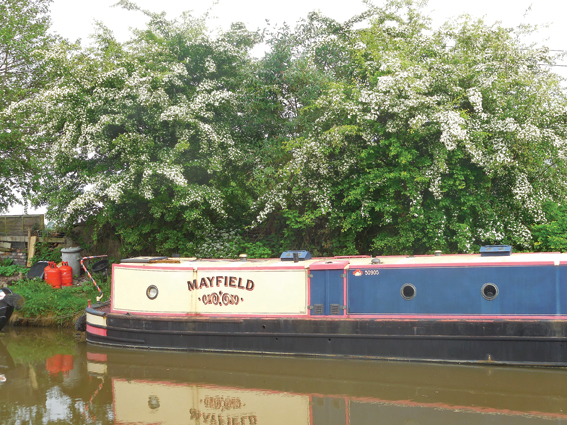
Aptly-named boat
Aptly-named boat

Mary Green continues her series on trees in the Celtic calendar.

Usually the start of May brings the hawthorn blossom, though I suspect this year it may be a bit late. When I was young it usually flowered mid-to-late May, and 50 years later it usually flowers in early May, or even late April in a mild year – a signal of the warming climate. However, this year it may go back to the old days.

Hawthorn is of course also called may and is very much the tree of this month. It’s my tree, as my birthday is in May. It’s also the tree of the Celtic female spirit in her mature form, and later of the Virgin Mary in many Catholic countries.

There’s a poem by the 19th century priest Gerard Manley Hopkins which begins:

May is Mary’s month, and I
Muse at that and wonder why

The reason is that it follows a common pattern: a tree important to the pagans was “taken over” into Christianity, and Brigid’s traditions become Mary’s – just as Imbolc became Candlemas.

Like ash, hawthorn gives its name to one of the letters of the Celtic and Anglo-Saxon alphabet, called “thorn” – the one we now spell “th”.

Hawthorn in blossom was associated with sex and childbirth, partly because of its musky smell. It was part of the celebration of Beltane, the May spring festival. It continued to be gathered as part of May Day festivities when boughs were gathered and brought into houses.

However, its pagan overtones led to it being banned from churches and even from the house as “unlucky,” until they thought of re-aligning it with Mary. This didn’t affect protestant areas where it is often still not accepted to have hawthorn blossom in church. Ironically it often grows around churchyards and there is a lovely one at the main gate to St Laurence in Alvechurch.

There are many legends which include the magical powers of hawthorn, or whitethorn as it is often called. The best known is the Glastonbury thorn, said to have sprung from the staff of Joseph of Arimathea which he stuck into the ground. This variety, called Praecox, flowers very early, even sometimes in winter.

The legends around St Kenelm of Romsley are a more local example. He was an early ninth-century Mercian boy-king, murdered while hunting near Clent. The legend says that the previous night he had dreamt of his death, his dream including a tree decorated by flowers and lanterns.

His body was hurriedly buried nearby but was discovered by miraculous means (a white dove flew to Rome carrying the message that he was buried under a white thorn in Worcestershire) and a group came from Rome to re-inter it.

When the delegation came to look for him, they found a hawthorn tree which had been visited by a miraculous white cow, which ate nothing but produced milk every night under the tree. There was the body. When they dug him up, a spring burst forth and produced health-giving waters. There is still a spring, and people still decorate the trees there.

The real story of hawthorn is as good as the legends. The old English variety is called the midland hawthorn and was a woodland-edge and stand-alone tree before the days of hedges. There are still some around here. Some were important boundary trees.

The more modern variety is the common hawthorn, which flowers slightly later and has less glossy leaves. This was the favourite tree for hedging. Hawthorn is dense and prickly, grows quite fast, and can be laid to make a stock-proof hedge.

From the 16th century on, landowners started dividing off their fields and making them animal-proof. Before this time, most animals had been grazed on common land which had no internal boundaries.

When wool became big business, sheep fields were sealed off and the commoners’ rights taken away. This led to serious poverty and in some areas like Scotland, depopulation. A rhyme at the time said you could be hanged for stealing a goose from the common, but the rich could steal the common off the goose with impunity.

Hawthorn flourished over the next centuries as the hedging tree of preference. It is still very common in all our hedges. It is now common on motorways, where a European variety is often planted, which flowers even earlier. In more remote areas, and in open pasture fields that haven’t been “improved,” you will find stand-alone trees, often growing to quite a height.

It has contributed hugely to our biodiversity. Because it is planted in long lines, has lots of insect-attracting flowers and bird-feeding berries, it is the perfect wildlife corridor. Our rather traditional farming area here is full of hawthorn hedges, along roads, fields, paths and the canal.

In May, hawthorn with its masses of creamy blossom is obvious, but it’s useful at other times of year too. The first green leaves appear quite early, in February in a mild year and in March this year. They are edible and delicious, and were commonly called “bread-and-cheese” because they were a staple food for country people.

The flowers are edible too – use them to decorate fruit salads or make a wonderful musky liqueur with gin or brandy! The berries, known as haws, are plentiful and can feed us as well as birds. They taste like little apples – you can pick and eat them like sweets in autumn or add them to a hedgerow jam.

Like apple, hawthorn is part of the rose family, all of which are edible for us and wonderful for insects and birds. The thrush family especially feed on hawthorn berries – thrushes, redwings, fieldfares, blackbirds. West Bromwich Albion has a ground called The Hawthorns and its symbol is a thrush.

My second tree this month is hornbeam, which doesn’t feature on the Celtic calendar but is quite common in England. It is little-known and not often recognised, though. It looks a bit like beech, with similar silky lime-green serrated leaves in spring. But the flowers are totally different – it is another catkin-bearing tree.

The best place to see it here is the hedge that runs alongside the path from Alvechurch village to the churchyard. This is a beautifully-laid hedge and shows one of the common uses of hornbeam – hedging. It grows well when clipped and trained so is often an ornamental tree in gardens.

In the 18th and 19th centuries it was popular for the hedging of mazes and the kind of garden compartments that formal grounds were laid out in. It grows so closely that the branches often grow into each other and it can form dense tunnels.

You can find hornbeam growing naturally in quite a lot of woodlands around here. The ones I especially noticed were in Abberley woods, on the slopes of that distinctive hill you can see from the high ground around here. They were obviously planted at one time for use.

Hornbeam is a very hard wood, so much so that it wasn’t used much for ordinary objects, but was made into working parts like cog-wheels, and used for the yokes of oxen.

There are some fine clipped hornbeam features at Hewell Grange. The prison grounds are usually open to the public for a day in May under the National Gardens Scheme and are well worth a visit.

Personally, I don’t like these clipped trees and formal lawns, with few flowers and very little habitat for wildlife, and these big hedges need extensive maintenance, but they are very popular!

Laid hedges are another matter, as they serve a useful purpose and allow the trees to keep growing and flowering. Hawthorn makes a superb laid hedge too, often covered with blossom. There are several of these along the fields and lanes around Withybed, and a lovely one near Grange Lane bridge on the canal. May wouldn’t be May without the may!

I wrote this poem last May.

May
May sun is the best sun. It has no threat
And the fine gold leaves still let it through.
You may find me by the canal, watching ducks
Herding their little unruly ducklings in the sedge
Or chasing an orange-tip along the lady’s smock,
Checking the nesting goose, who tries again
In the same place where she failed last year,
Looking out for the swans, which I know
Have six cygnets hatched, and may come down.
I may be standing in the field, sun on my back,
Feeling the thrust of green winged orchids
Breaking into summer under my feet.
I may be on a boat, close to the moorhen
Which is sitting pretty on a blackthorn branch
Or driving the lanes, my breath catching
At a sudden pool of bluebells in a copse.
At night I may be walking the towpath
The moon in the cow-parsley lighting my way.
I may be singing in the noisy outdoors
Our songs of praise for all humanity
Or listening to the thrush, heart-breaking
Above the daily drumming of the woodpecker.
You may see me standing, transfixed
Hand cupped to my ear as I ask myself
Was that really the cuckoo? And he calls again.
I may not be indoors, doing all the things
I should be doing, responsibly
There is too much hawthorn in my blood for that.

We’re almost there!

Action
Action from the home win over Stocksbridge Park Steels (Photo/ Ian Macvie)

Alvechurch FC close in on promotion and hope for cup success.

As we went to press, Alvechurch FC were still on course for promotion with just three league games left to play.

If indeed they are promoted to the Southern League Central Division, the club’s ground is all ready to go, having passed its Grade D Ground Grading inspection. The club would like to thank chairman Richard Thorndike, Steve Patton, Neil Tomlin, Craig Nicholls, Rob Waldron, Paul Weaver and Wayne Clarke.

Meanwhile, AFC are still defending the JW Hunt Cup after overcoming Heath Hayes 4-2 in their much-postponed fixture – the reward is a home tie against Wolverhampton Casuals, due to take place on Tuesday May 1.

Sadly, the Birmingham Senior Cup will be missing from the trophy cabinet – in their quarter-final match against West Bromwich Albion, ’Church twice battled back from a goal down, but fell victim to a soft stoppage-time penalty decision.

Despite making seven changes due to a looming league clash with Spalding United, AFC gave a very good account of themselves against West Brom’s normal-strength under-23 side.

The game was played at a ferocious pace, with Albion taking the lead on 29 minutes. ’Church chalked up a deserved equaliser on the stroke of half time when Nathaniel Waite pounced from six yards.

Alvechurch continued brightly after the break, but WBA scrambled a second goal on 67 minutes. ’Church got right back in it with four minutes remaining when a free kick was lofted into the box, and Waite was on hand to steer a free kick in through a crowded six-yard box.

They were now pressing for what appeared an unlikely winner, but as the clock ticked into stoppage time, Leko won a penalty just inside the box. Hearts sank as the referee pointed to the spot, and Morton stroked the ball in to put WBA ahead for the third and final time.

*  Congratulations to Ash Carter and Tom Turton, who have been named in the EvoStik Northern League South Division’s team of the season in recognition of their performances for Alvechurch FC.

Congratulations also go to forward Luke Yates, who has secured a two-week trial at West Bromwich Albion.

The 18-year-old has impressed everyone at Lye Meadow this season after moving from West Midland Regional League Premier Division side Wednesfield FC at the end of last season.

*  As part of its policy to engage the local community, AFC is hosting a Family Fun Day on Saturday May 19 from 1– 5pm (you can also arrive early and watch the Royal Wedding, and stay later and watch the FA Cup Final).

There will be 5-a-side competitions, races, a penalty shoot-out competition, crossbar challenge, bouncy castle, stalls, face painting, music and food. Admission is free. The club is also offering any local charity or group the chance to have a stall on the day, free of charge – please contact Fred Evans on 07970 824986.

*  ’Church manager Ian Long is asking for support in aid of Birmingham City Mission, a Christian charity that works with homeless people in Birmingham.

The charity is collecting old adult trainers (as long as they have laces and are not split), so if you have any pairs of size 7 or above, please box them up and take them to The Hayes Sports Field, Redditch Road, West Heath, B38 8LP or Alvechurch FC, Lye Meadow, 53 Redditch Road, Alvechurch, B48 7RS.

Jogging bottoms and back packs are also being collected. If you need your items to be picked up, call Richard Thorndike on 07834 351696.

*  For more info or sponsorship enquiries, please contact Trevor Ball at saintsarehot2@btinternet.com or visit https://www.pitchero.com/clubs/alvechurch
Follow the club on Twitter @Alvechurch1st

HOME FIXTURES
League games unless stated

Sat April 28  3pm  Loughboro Dynamo

Tues May 1  7.45pm  Wolverhampton Casuals  (JW Hunt Cup)

Fashion for a good cause

Models

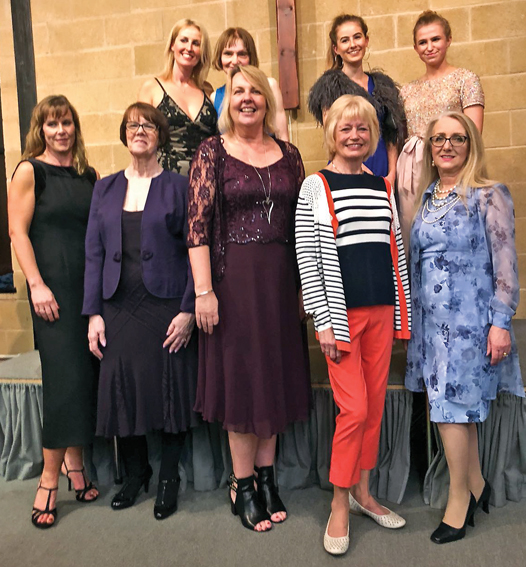
A charity fashion show in Barnt Green has raised £2,500 for Acorns Children’s Hospice.

The event at Barnt Green Baptist Church, held to celebrate the hospice’s 30th birthday, was organised by volunteers and managers at the village’s Acorns shop, along with Barnt Green WI.

More than 120 people watched the “Preloved Parade”, with models wearing clothing donated to the shop. There was also a prize draw with great prizes donated from about a dozen local businesses, plus lots of laughter and eating of cakes made by the Acorns team.

Where Next’s new era

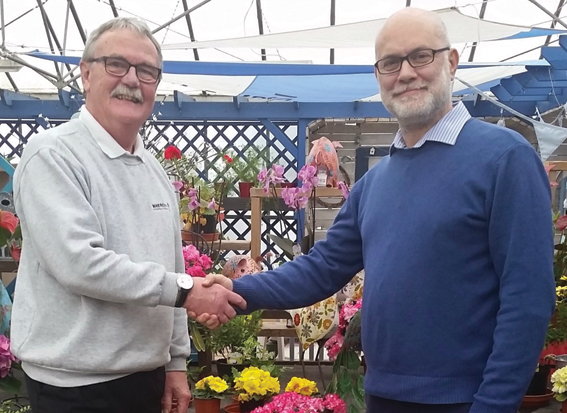
Graham and Mathew
Graham and Mathew

John Williams, president of charity Where Next, explains why its work is still so important.

After nearly two decades of managing Where Next, one of Redditch’s most successful charities, Alvechurch resident Graham Clark has handed over the reins to new CEO Mathew Gilbert.

Established in 1984, Where Next Association is a charity providing work experience and training for people with learning disabilities or those disadvantaged in some way.

Graham said: “I am very proud to have been able to help Where Next over the time I have been there. I originally only came for a month but ended up staying for 17 years!

“The work the charity does makes such a difference to so many people that I had to stay. I’m sorry to go, but I leave a great team who, with the help and backing of the community, will continue to support our friends and colleagues who are less able.”

So, who are Where Next and why are we here?

If you have a learning disability, you are much more likely to be isolated from your community and be presented with barriers to employment and services. Where Next exists to bridge this gap by nurturing social, life and vocational skills for those with a learning disability, helping them to have greater opportunities and become active members of their family, community and society.

It is a charity of which we can be justly proud and one with its beginnings here in Alvechurch over 30 years ago, when a group of local parents were determined to find a way to tackle the problem.

Growing plants and flowers was known to be very therapeutic and when a derelict horticultural nursery next to Redditch fire station was spotted, an idea grew. The site belonged to the borough council, who agreed that it could be used for the charity as long as those involved were prepared to do the renovations.

It took a lot of hard work and support to put the greenhouses back together, but we got there. A place where people with learning disabilities could gain work experience and be able to contribute to a successful business and to society.

As the plants grew, so did the numbers attending Where Next. Soon there was a flourishing business operation that included training and involvement in the community. With this came respect – respect for the organisation, but much more importantly, respect for those with learning disabilities.

Over the years we have developed three new sites, two in the heart of Redditch and one in Studley, increasing the range of opportunities to include carpentry, light assembly and packing, and landscape gardening.

With the successes there are also challenges, such as Increased pressure on funding for adult services through local authorities. But we are innovative, optimistic and determined, and with your support we will continue to be part of your community for as long as we are needed.

Graham Clark has helped to lead Where Next through so much, and leaves us in a stronger position than when he started. His dedication to the organisation has been unfailing. Mathew Gilbert, as the new CEO, will continue this and help to guide us through the challenging times.

Mathew brings a wealth of experience including 16 years in charities, culminating in nine years as Chief Executive of Signal, a charity working with people with hearing loss in the UK and overseas.

He says: “What attracted me to Where Next was the amazing sense of being part of a family. It’s clearly immensely supportive, encouraging and enabling both for the people with learning disabilities and for the staff, and so I jumped at the chance to be part of it.”

More information at https://www.where-next.org

Mark Meads: Equity Release Specialist

MarkADVERTISEMENT FEATURE

As another busy month goes by, I thought it would be useful to show you how some of my clients are using the equity in their property:

• Helping family

It can take a long time to save up sufficient funds to be able to buy a first home and for many young people, this seems like an impossible dream. There is no greater satisfaction than being able to help your children or grandchildren, and a common use of equity release is enabling them to get a foothold on the property ladder, by helping with a deposit to fast-track their first home purchase.

Sunset

• Enjoying retirement

At retirement you have more spare time to travel and do the things that your working life would not normally allow – and having funds to supplement pension income allows you to realise those dreams: long holidays abroad, that cruise you’ve always wanted, golfing breaks at top courses…Many people think you can only raise money in one lump sum via equity release; however, you are able to release funds at any time and when you need them. This allows you to stay in control of how you manage an equity release drawdown facility.

It gives me a great deal of satisfaction to help clients fulfil their dreams and solve their financial problems. If you would like to talk in confidence about your financial needs and future financial planning, please contact me directly on 07730 011897, for an initial discussion to see how I can help you and your family.

Village Financial Solutions Ltd
The Coppice, Rowney Green Lane,
Rowney Green, Worcestershire. B48 7QF
Mob : 07730 011897 Email : mark.meads@villagefinancial.co.uk

Village Financial Solutions Ltd is an Appointed Representative of Personal Touch Financial Services Limited which is authorised and regulated by the Financial Conduct Authority.

AN EQUITY RELEASE PRODUCT WILL REDUCE THE VALUE OF YOUR ESTATE, WILL NOT BE SUITABLE  FOR EVERYONE AND MAY AFFECT YOUR ENTITLEMENT TO STATE BENEFITS. TO UNDERSTAND THE  FEATURES AND RISKS PLEASE ASK FOR A PERSONALISED ILLUSTRATION CHECK THAT THIS MORTGAGE WILL MEET YOUR NEEDS IF YOU WANT TO MOVE OR SELL YOUR HOME  OR YOU WANT YOUR FAMILY TO INHERIT IT.  IF YOU ARE IN ANY DOUBT, SEEK INDEPENDENT ADVICE

Our typical fee for equity release services is £650, which is payable upon completion. 

Happy new tax year!

Martin

ADVERTISEMENT FEATURE

This month I thought it would be useful to provide you with some of the important tax thresholds for 2018/2019, writes Martin Pryor.

If you would like a copy of our comprehensive tax guide for 2018/19 then please drop us a line.

Table

Contact Pryor Portfolio for more information and advice. 
Tel: 07961 162818
martinpryor@ppm-ifa.co.uk
https://www.ppm-ifa.co.uk

Birthday bash to remember

Party

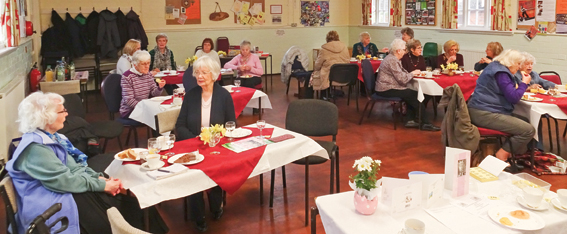
Finstall and Cofton Hackett WI held their 81st Birthday Party at Finstall Village Hall, writes Jessica Wilson.

The tables were attractively set out with red and white tablecloths, each with a vase of daffodils. Everyone was greeted with a glass of wine or fruit juice when they arrived.

Business was kept to a minimum so that we could get on with enjoying music of singer Nigel Strong, ably assisted by roadies Bill and Cedric who set up the equipment and provided backing music.

Nigel has a magnificent voice and sang many songs made famous by singers from the 60s and 70s such as Matt Monro, Perry Como, Neil Diamond and Andy Williams. He began with Born Free and The Way You Look Tonight, and we sang along with Catch a Falling Star. A wonderful trip down memory lane.

We finished the afternoon with a delicious buffet provided by the members and drew the raffle, with most people getting a prize. Everyone agreed that it had been a party to remember!

Oakalls local keeps it real

Sarah Rees Sarah Rees reports from the Oakalls and Parklands.
The Cross Inn is back in business as a public house thanks to efforts by beer-lovers five years ago to have it designated as an “Asset of Community Value”.

Bromsgrove District Council agreed with the nomination by local Campaign for Real Ales members in 2013, which meant there was a moratorium on the sale of the “asset” after it closed for business last autumn.

New barIt is thought the designation kept away potential residential developers until it was acquired by new owners Black Country Ales, who have a micro-brewery in Dudley.

Angus McMeeking, director of Black Country Ales, said: “We’re looking forward to running a traditional British pub which we hope the local community will enjoy using.”

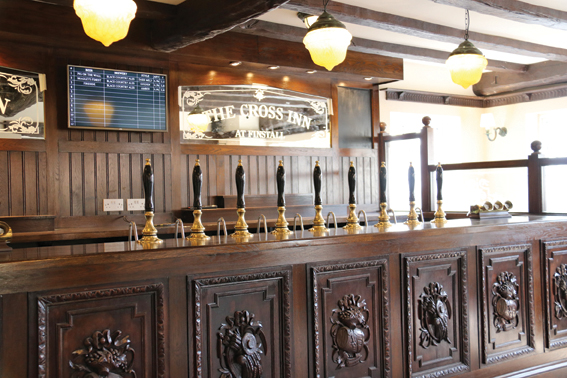
The company has spent a six-figure sum refurbishing the pub, in Finstall, including installing a new bar (above). It was due to open on April 26.

NOTICE THE BOARD?
Did you know that the Oakalls notice board is available for residents who wish to advertise an event or their business?

The board is on the grassed area by Trianon Road. Coun Caroline Spencer has posted her contact details on the board for residents to get in touch if they would like to communicate with the local community.

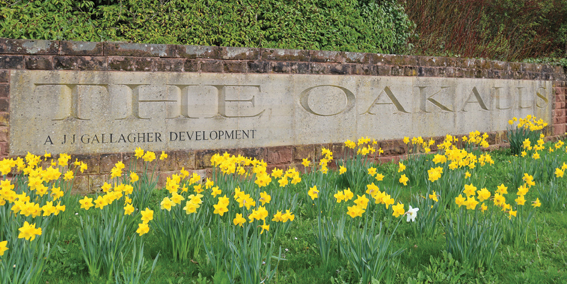
A HOST OF GOLDEN DAFFODILS
Despite being a little later than usual due to a harsh winter, the estate’s daffodils were in full bloom by early April.

Daffodils

Please contact me with your news, views and concerns about any aspect of life on the estate. Email: oakalls@villageonline.co.uk

Doing good with wood

Team
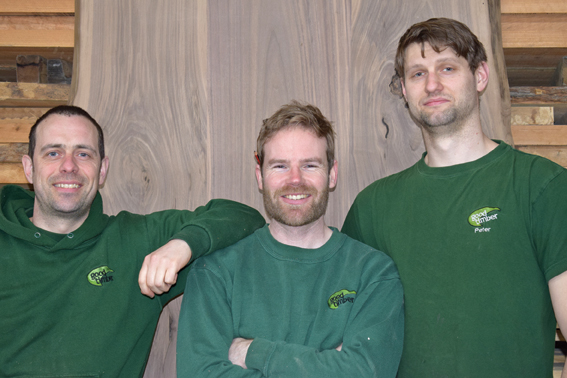
Chris, Dave, Pete

ADVERTISEMENT FEATURE

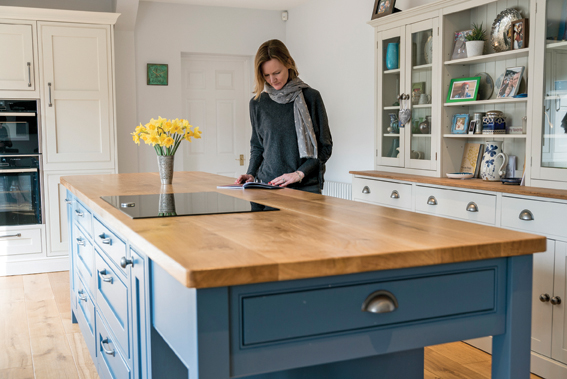
Real wood worktops are a great way to give your kitchen a new look – and as they can be a big investment, they need to stand the test of time.

Worcestershire firm Good Timber creates bespoke hardwood worktops made to extremely high standards – predominantly using prime oak and character oak, but also a range of other quality hardwoods including ash, beech, cherry and walnut.

Timber machinist Chris Needham explains that all worktops are made from wide staves or planks that run the full length of the worktop, starting at 120mm wide.

“This is how worktops ought to be made, rather than the cheaper method of manufacturing which uses smaller bits of wood glued together into one piece. Our products are top quality, so they are particularly durable and long-lasting.”

The experienced team at Good Timber can make worktops to any thickness, width and length, while additional options are available for adaptations such as sink cut outs, drainage grooves and profiled edges.

Customers generally provide the required dimensions and sometimes drawings or diagrams of their requirements, before Good Timber creates a worktop to their exact specification. The team are also happy to carry out installations in the local area, providing clients with a complete service.

Kitchen
An example of the kitchen worktops

Originally based in Northamptonshire, Good Timber’s business was built largely on internet sales, with orders from as far afield as Dubai. After 10 years, their success has enabled them to expand into local sales from their new location at Rushock Trading Estate near Droitwich, increasing in size, capacity and stock.

There’s something else that makes Good Timber stand out from the crowd – it’s actually owned by the Church, as part of a Christian co-operative group called House of Goodness.

Chris explains that all the businesses under its umbrella operate on an ethical basis, with part of the profits going to charitable causes such as caring for homeless people and helping refugees and economic migrants settle into society.

“We’re all friends and church members, so it makes sense for us to do business together – it means there’s a lot of trust.”

As you might expect, the team also work hard to make sure that their timbers are bought from reputable suppliers with their own ethical sourcing policies.

As well as worktops, Good Timber offers planed or rough-sawn timber for woodworking, furniture making and joinery projects. Carving blanks and spindle blanks are also available.

If you would like to visit the premises in person, ring to make an appointment to ensure there is someone on site to meet you.

Unit 4 Building 326
Rushock Trading Estate
Near Droitwich, WR9 0NR
Tel: 01299 251127 or 07599 028604
info@goodtimber.com
https://www.goodtimber.com

Perfect for all occasions

Potting Shed

ADVERTISEMENT FEATURE

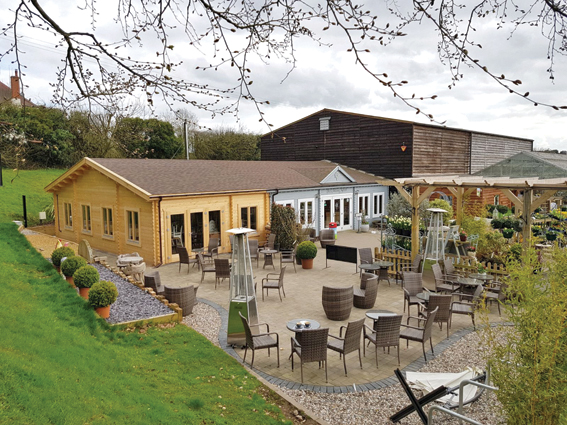
In the two years since it opened, The Potting Shed café and restaurant at Singletons Nurseries has proved a hit with its tasty homemade food and relaxed atmosphere.

Such is its success that the business has been able to expand, with the addition of an extension called The Garden Room and an increase in the outdoor seating space.

As well as enjoying breakfast, lunch and afternoon tea, customers can also book the rooms for exclusive private hire as a venue for occasions such as baby showers, birthday parties or social gatherings.

The Potting Shed has now extended its opening hours to serve food until 4pm, and is also open until 5.30pm on Thursdays. Sunday roasts are very popular, as are the afternoon teas with all components baked in house.

The café is now taking bookings for Father’s Day Breakfast and Lunch on Sunday June 17, and there are regular theme nights.

“The tea room and restaurant has been a great addition to the nursery as it has brought more local customers to discover our hidden gem,” says owner Claire Singleton.

Based at Lydiate Ash, Singletons Nurseries has been supplying top quality home-grown plants and produce for more than 70 years. The nursery is currently selling summer bedding plants, shrubs and perennials and bespoke hanging baskets made to order.

As well as plants and gardening accessories, Singletons also offers a huge range of giftware in a cosy shop adjoining the restaurant. You’ll find kitchenware, ornaments, jewellery, local jams and chutneys, greetings cards and giftwrap.

For the latest offers and more details on all upcoming events, just call in or keep an eye on the website.

600 Birmingham Rd, Lydiate Ash, Bromsgrove B61 0HT
Tel: 0121 453 1562
https://www.thepottingshed.cafe