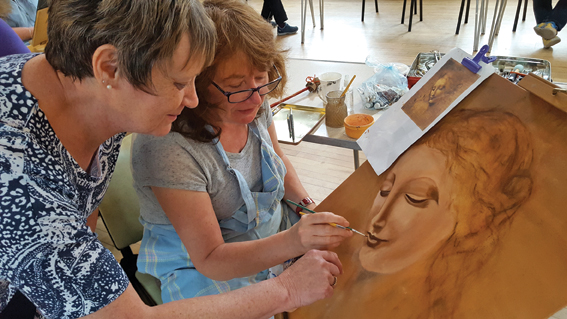
Pam McGregor advises Barnt Green-born artist Alison Collis.
Dave Morgan looks forward to a display of paintings in three very different styles.
Regular viewers of the BBC programme The Great Painting Challenge will know that the amateur artists who take part are set a challenge each week by the programme presenters, and each week one of them has to leave the series.
The Great Painting Challenge in Alvechurch has some similarities in that a group of amateur artists are set a particular task – but the main difference is that the challenges are annual rather than weekly, much to the relief of the artists, and no one is asked to leave!
For the past few years, members of Pam’s Art Groups (which meet in Alvechurch on Thursdays and Droitwich on Wednesdays), have been given a challenge by Kamal Khan, owner of Grosvenor House nursing home in Alvechurch and Tutnall Hall near Bromsgrove.
Last year the task was to create Georgian-style paintings, but this year Kamal has laid down three totally different challenges.
The first was to emulate the Impressionists, started by Monet and other Paris-based artists in the early 1860s. Impressionism was based on painting “en plein air” (in the open air) rather than in a studio based on sketches, although the paintings that will be on show in July have all been painted indoors!
A second option was to produce a painting in the style of Leonardo da Vinci. One of the local artists, Di Morgan, who has already created a large painting of an angel in that style, shares her birthday with the great artist – albeit nearly 500 years apart!
The third option, which was a more difficult concept, was to produce a work of art representing Mozart, using musical instruments within the picture.
Art tutor Pam McGregor commented, “When we first heard the three options we were not sure if anyone would have the courage to attempt to emulate such great artists but, as in previous years, many of them have, and we have provided Kamal with plenty of entries for him, his staff and clients to judge.”
The winners of this year’s challenge will be announced and displayed at Tutnall Hall’s Summer Fete on July 21, and Kamal has invited Bromsgrove MP and Home Secretary Sajid Javid to award the prizes.
The challenge entries, together with up to 100 other original images, will then be on view in Alvechurch Village Hall for the annual Art Exhibition from July 26 to 28. Many will be for sale at prices that should make them attractive investments, especially as purchasers will be able to buy a work of art that no-one else owns.
Previous exhibitions have received excellent reviews by visitors and the intention is always to improve on the standard of work. So all pictures in the main exhibition will be art that has not previously been exhibited and that has been created during the last 12 months.
The exhibition will be open from 10am to 6pm (10am–5pm on the Saturday). Entry is free and refreshments will also be available. More details about the art classes can be found at www.pamsartclasses.co.uk
Philip Aubury, organiser of Alvechurch Open Gardens, offers expert tips on growing veg and salad.
There is nothing quite like growing your own great-tasting produce: the freshness of what you harvest, not to mention the satisfaction of having grown it, along with getting a bit of healthy exercise thrown in.
We are lucky enough to have a greenhouse so we are already picking tomatoes and cucumbers. A greenhouse or conservatory means you can plant at the end of March or early April. In a sheltered position outside, it would be the end of May or early June before you can plant.
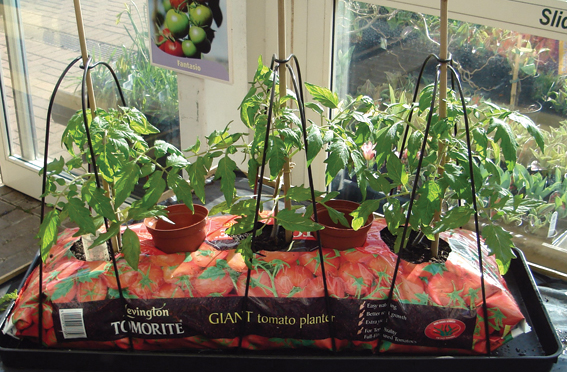
Although it is too late for this year, perhaps a photo of home-grown tomatoes can inspire you for next year. Using a good-quality growbag is the easiest way and in the picture you can see that I use metal supports for the canes and put in two empty pots between the plants to make watering and feeding so much easier.
Note also that you can buy growbag-sized trays so that if you are growing in a conservatory you won’t get water running across the floor. There are now available reusable growbags in a woven material that can be washed and refilled each year.
For success you must ensure the compost does not become waterlogged, so make a few slits in the bag about an inch up from the floor. I prefer to grow climbing plants rather than bush varieties and this means you regularly have to remove side shoots and tie the stems to the canes. Also, once the first fruits have set, in addition to regular watering, do give a liquid tomato feed every week.
If you don’t have room for a growbag, how about a trailing tomato in a hanging basket? The variety ‘Tumbling Tom’ is great but there’s also one called ‘Peardrop’ which has a pear-shaped yellow fruit with a lovely sharp flavour.
If you are already growing tomatoes in a growbag you will be picking fruits till the end of September, possibly October in a greenhouse or conservatory. You could just add the contents of the bag to the garden, but why not reuse it?
I cut out the tomato roots, remove the polythene top to the bag, add some chicken pellet fertilizer and plant up with winter hardy lettuce. You can raise you own plants from seed sown at the end of August.
Last month we started harvesting new potatoes. A few “seed” of an early variety (I use Rocket) were purchased just after Christmas and placed in egg trays until they had half-inch shoots. While you can buy reusable woven potato sacks, I just use an old compost bag with some holes punched in the bottom.
Five sprouted seeds were placed on four inches of compost in the bottom and covered with another four inches of compost. The bag was then placed in a frost-free greenhouse but a conservatory or porch would be fine. As the shoots came up through the compost, I kept re-covering with more compost until the bag was nearly full. By May it was safe to move the bag outside.
Do you fancy some nice fresh finger carrots for Christmas dinner? An old plastic pot, 12 to 18 inches in diameter, is ideal. Make sure that there are some drainage holes in the bottom. We always used to put crock (broken clay pots) over the drainage hole but broken-up polystyrene packing will do fine.
During August, fill with compost to within an inch of the top, level up and firm gently. Sow carrot seed thinly over the surface. I used the variety ‘Ideal’ and covered with a sprinkle of sifted compost.
The pot was left outside, being careful to make sure it was not allowed to dry out. As it is a late sowing and the seedlings are raised in a pot they don’t get attacked by carrot root fly.
In July there is still time to grow some French beans in pots. Prepare a pot as for sowing carrots but this time the seeds need to be pushed into the compost by about half an inch. By the autumn you will be harvesting handfuls of lovely fresh beans.
If you would like fresh salad leaves throughout the winter, it’s really easy if you have a conservatory, porch or unheated greenhouse. All you need is a couple of washing-up bowls. Drill some holes in the bottom of these for drainage. Again, put a layer of gravel or broken-up polystyrene across the bottom.
Fill the bowl to within two inches of the top with a multipurpose compost and sow with your choice of salad leaves. Garden centres and seed firms offer several different seed mixes. If you sow bowls at six to eight-week intervals this will keep you supplied with fresh leaves.
In a similar way to the mixed leaves, spring onions are really easy. I use an eight or nine-inch pot and sow a pot every two months. In the winter I keep them in an unheated greenhouse but if you use a winter hardy variety you can keep the pot in a sunny sheltered spot outside.
If you have a little more space you can always build a raised bed or two and increase your productivity, but that’s another story.
Do give container growing a try.
Philip Aubury, M. Hort., retired director of Birmingham Botanical Gardens.
Amateur astronomer Brian Watkiss peers into the Village night sky.
July, and just when we are at the height of summer, I bring some bad news for keen satellite-spotters out there. The wonderful Iridium satellites are being replaced with more modern ones and we will lose one of the most amazing spectacles in the evening sky.
OK, let’s start at the beginning. The very short nights of midsummer don’t allow for much in the way of stargazing but it’s the perfect time for observing some of the thousands of man-made objects that orbit our planet. You just need to wait until the sky starts to get fairly dark, get yourselves seated comfortably, perhaps with a few friends and something to keep the cold out and stare skywards.
As your eyes adjust, you’ll soon spot the occasional bright dot crossing the sky, at about the speed of a passing aircraft but without any flashing lights. These are satellites or, more commonly, the spent rockets used to launch them. These tend to tumble, as they are uncontrolled, and so vary in brightness.
You can even find out exactly what they are by checking on www.heavens-above.com but don’t spoil it by spending more time looking down than up! One thing the website is good for is to find out when the ISS is visible. This can be done in advance and is well worth it as the Space Station is astonishing to see.
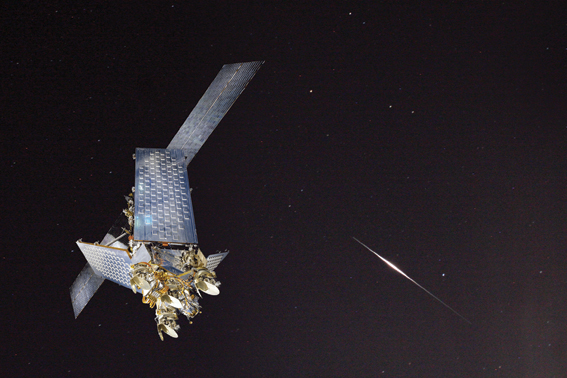
So why the excitement over Iridium? Well, this is a global phone satellite system, used by explorers everywhere to phone home, and the huge aerials needed reflect sunlight very well indeed. This shows up as an extremely bright flash of light in the sky, seemingly from nowhere.
These flashes are also predicted and are well worth looking for but you need to know exactly where to look. Fortunately this, too, is shown on the website by clicking on the date. The replacement satellites don’t use these aerials so won’t produce the same effect – so get Iridium-spotting now while you still can.
One of the best ways to locate the position of a flare is to gauge it against a bright planet. We have the two brightest with us all month and they appear as soon as the sky starts to darken. Venus appears in the west in the glow of the setting Sun and is very obvious. For the first week or so, Mercury is between it and the Sun but will be a challenge to spot, being so close to the horizon.
Well worth giving it a go though, especially on the 14th when an extremely slim crescent Moon is close by, itself difficult to see. On the following two nights, the Moon gets a little thicker and is either side of Venus so this presents a better viewing opportunity. Higher towards the south is Jupiter, easier to see because it sets later and is better placed in the sky.
An even bigger Moon visits on the 20th. Full Moon is on the 27th and will be very interesting as it will be totally eclipsed as it appears. Look out for it from nine-thirty.
Mary Green continues her series on trees in the Celtic calendar.
Now we are properly into summer, but we had some lovely early summer spells with plenty of sunshine and some good “growing” rain! It’s been a good year for all the blossom and flowers, and the fruit looks to be setting well, though maybe not as heavily as last year.
By the time you read this, you will see the young apples and pears, damsons and plums, and the cherry plums will be ripe. Wild cherries may have come and gone – you have to pick them quickly once they’re ripe or the blackbirds will get them!
The Celtic tree for July is the holly, which seems odd to us because we associate it so much with December. It wasn’t a plant particularly associated with the old midwinter festival, only the later Christian one. It had certainly been associated with Christmas since the middle ages.
Holly doesn’t even flower in July, but much earlier in the year, in May. The flowers are pretty, small and white in clusters at the base of the leaves – easily missed. In really mild winters they sometimes blossom in winter, as they did a couple of years ago.
The blossoms attract a special butterfly, the holly blue. In the autumn this appears again to lay a second brood, and this time it feeds on ivy. Unfortunately, a lot of holly hedges are cut hard back so they don’t flower or have berries. But if they flower well, and they did this year, we should get good berries in the winter.
Holly has male and female flowers separately; sometimes on different trees, though, so you need a female flower to bear the berries and a male to fertilise. The berries are loved by birds, who will strip them in a cold winter.
Despite the female having the red berries, holly is treated in folklore as a very male tree, a bit like the oak. And like the oak, it is sometimes called the king of the woods (“Of all the trees that grow in the wood/ The holly tree bears the crown”).
This is mostly because of its association with heroes and gods in folklore, the hero that overcomes the darker forces of the ivy, or the female power of the ivy in some legends.
Many traditions have a battle in winter between the forces of fire and light, symbolised by holly, and the forces of darkness. You get it in stories about the fight between the robin and wren too, and it persists in the mummers’ plays where St George with his red cross defeats the powers of darkness. So, holly is a kind of burning bush of blood, light and life.
In more prosaic real life, holly was encouraged to grow and prized as a fodder crop. This seems strange, as the lower leaves of holly bushes are so prickly animals can’t eat them – that’s the point of the prickles!
But if you look further up the tree, the leaves are free of prickles and relatively soft, above the reach of grazing animals. With a little help from people, the higher branches were picked and fed to animals during the winter when grass was scarce.
It is one of only a few native evergreens, and the only edible one for animals, so you can see how valuable it must have been in winter.
Holly grows to quite a big bush in the open, and clumps of holly were often called Hollins, a word that survives in place names and people’s names (The Hollins, Hollingsworth and so on). There are Holly Cottages and Hollybush Roads round here – and of course Hollywood.
Sometimes the trees were used as boundary markers, like the oak. And there are pubs named after the holly bush. It also grows profusely as an understory in woods, where it is sometimes seen as a nuisance, but it is a good protective tree which doesn’t need much sunlight to grow.
Holly of course is THE Christmas plant and was brought into churches even in medieval times, leading to its being sometimes called the holy bush or just “Christmas”. The kingly nature of red berries became associated with Christ, and the leaves with the crown of thorns.
There is a funny old tradition about bringing holly in for Christmas. If the smooth leaves come in first, then the wife rules the household: if the prickly ones come in first it is the husband!
Holly wood is small and hard – an interesting traditional use was for wooden handles for teapots, and it was also used for riding crops. The story that a profuse crop of berries on holly means a hard winter to come is not true. The berry crop depends on the flowers that year, the weather and the size of the previous year’s crop!
My second tree this month is the field maple. It isn’t one of the Celtic calendar trees, but is common around here, if unrecognised. It doesn’t grow much in the Celtic countries. It’s our native member of the Acer family, along with sycamore which was introduced but is now naturalised.
Many people know the foreign, especially Japanese, Acers which are a feature of ornamental gardens, especially for autumn colour. Our own field maple is a very pretty tree too. Like all maples, it has five-pointed leaves, in this case small and rounded.
They are lovely when in light spring green, and in the autumn go a gorgeous bright yellow. The tree is common in hedges along roads and the canal. It’s relatively small and doesn’t seem to grow to a great age.
The leaves and wood are full of sugars and the leaves used to be stripped for cattle feed, like the holly. You could get maple syrup from the tree, though the maple used in the US and Canada for this is slightly different. The wood is too small for most uses but is beautifully marked and stripy, so is much in demand for ornaments.
The spring flowers are very pretty, in little upward growing clusters, and have male and female parts on the same flower. In the autumn, like many trees, they have “keys” or winged seeds.
Related trees include the sycamore, a rather maligned tree as it grows everywhere and isn’t especially pretty. But is has been very useful in growing where other trees can’t, even in cold and salt sea-winds, and is much planted as a shelter belt around houses in bleak areas.
The flowers are very pretty, dangling masses of tiny golden florets, full of nectar and buzzing with early bees. The leaves are lovely when they first appear too, often reddish and coming quite early in spring.
Another tree that looks similar with five-pointed leaves, but isn’t related, is the plane. This is the favourite city street tree, because it absorbs pollution and seems to thrive on it! There was one outside my window when I worked in Handsworth, lovely in spring when the first leaves came out and comical in autumn with its odd balls of seeds. Trees have so many uses!
My poem this month is about a recent very Alvechurch event.
A Whitsun wedding Today we are speaking in tongues. We claim
Back the worn phrase Wedding Breakfast with real
Bacon and egg butties in the early morning sun
Outside the resurrected Crown, warming with talk.
The spirit of fire is on us as we dress in red to sing
Elvis and Robbie Williams songs in the cool church
Where Sue and Roger fill the aisle with grandchildren
In colours of cow parsley and bluebells, red campion
Burning among them with the flames of love.
It is all about love, stepping gaily out of the winter cold
Out of the lives of strife and responsibility
Into a time of sun, of white may and green oak
Warm enough to move your bones to laughter.
The spirit among us is a green spirit, the seed of growth,
A red spirit, of passion and blood, unquenchable life.
We are gentle people, holding each other carefully
But fierce with the knowledge of the dark waiting
As we sing and dance to keep the sun alive.
Alvechurch prepare to compete in a new league for 2018/19.
In the wake of Alvechurch FC’s promotion-winning season, midfielder Babucar Sauane has been selected to attend the prestigious V9 academy this summer.
The V9 academy is the brainchild of England and Leicester City striker Jamie Vardy, with the aim of discovering non-league talent and promoting players to the professional game.
The five-day residential programme takes place at City Football Academy, the training complex of Manchester City FC, and will also be filmed as a Sky Sports documentary.
Meanwhile, the club has been celebrating last season’s success with the Player Awards 2017-18. The winners were: Players’ Player – Ashley Carter; Manager’s Player – Zac Foster; Supporters’ Player – Tom Turton; Chairman’s Player – Yusifu Ceesay; Young Player – Luke Yates; Top Scorer – Josh March; Goal of the season – Daniel Dubidat.
* As Alvechurch prepare to play in the new Southern League Central Division next season, the club has made a number of new signings.
Kieran Cook follows Luke Yates to AFC from Wednesfield FC and will add extra pace to the side as an attack-minded player.
Danny O’Callaghan, who can play in defence or midfield, has played for both Coleshill Town and Sutton Coldfield Town so brings plenty of experience to the squad.
Mamoke Akauna, a strong forward with plenty of pace, actually scored against Alvechurch in the league last season when playing for Carlton Town.
Dominant defender Kyle Morrison has returned to Lye Meadow where he started his career. For the past three seasons he has been ever-present in the Halesowen Town defence, and brings plenty of experience playing at step 3 level.
Midfield powerhouse Mitch Botfield, whose strength and tackling ability played a significant role in last season’s success, will be staying at the club, along with Nathan Waite. Nathan’s goals were vital last season and his goals per minutes played ratio were the best in the entire squad.
However, right back Jamie Ashmore has decided to leave the club to seek pastures new. Also leaving is goalkeeper Lewis Gwilliams, who played 15 matches for Alvechurch last season. Lewis has decided to join Midland football league side Worcester City, who ground-share at Bromsgrove Sporting.
* The club is offering fans the opportunity to sponsor their favourite Church player in the new season. All sponsorships will contribute to the player budget, so the more you can contribute the better!
Players can be multi-sponsored so it doesn’t matter if someone else has sponsored them already. It’s entirely up to you who you sponsor and for how much. For example: 38 weeks @ £5 per week is £190, or £10 per week is £380. However, every contribution helps.
You can pay per week by standing order or up front in advance. Payments can be made direct to the club’s account (sort code 30-96-97, account 01860704; Reference: Player Sponsorship – Name).
* AFC has announced its admission prices for the new season: (League/League Cup/FA Comps) Adults £10; Over 65s £7; Juniors (13-17) /Students (with ISIC Card) £5; Under 13s FREE (with a paying adult).
Season Tickets (League games only): Adults £150 (saving of £60); Over 65s £100 (saving of £47); Juniors (13-17) / Students (with ISIC Card) £75 (saving of £30). Note: Season tickets will NOT include cup games, but holders will receive discounts for cup matches.
Pay for your season ticket online by clicking on Website Payments.
* For more info or sponsorship enquiries, please contact Trevor Ball at saintsarehot2@btinternet.com or visit https://www.pitchero.com/clubs/alvechurch
Follow the club on Twitter @Alvechurch1st
Martin Pryor points out the pitfalls of impulsive decision-making.
JD Rockefeller once said, “The way to make money is to buy when blood is running in the streets.”
Warren Buffett echoed this sentiment when he said, “Be fearful when others are greedy, and be greedy when others are fearful.”
When things are great, we feel that nothing can stop us. And when things go bad, we look to take drastic action. Because emotions can be such a threat to an investor’s financial health, it is important to be aware of them. This awareness can then protect you from the negative consequences of impulsive and irrational reactions to these emotions.
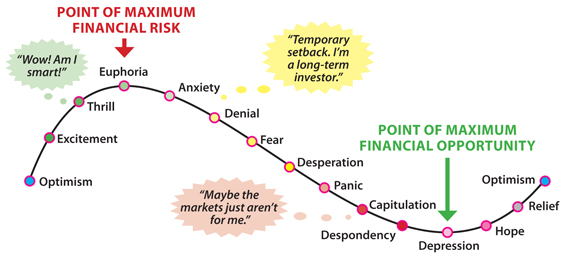
Stage 1: Optimism, thrill and euphoria
Investors all start with optimism. We commonly expect things to go our way, or we tend to expect a return for the risk of investing.
As expectations are met, it is common to get excited about the possibility of even greater returns and the excitement becomes thrilling as the returns exceed expectations.
At the top of the cycle is when investors experience euphoria. But it is here where investors are at the point of maximum financial risk. When we believe everything we touch turns to gold, we fool ourselves into believing we can beat the market, that we cannot make mistakes, that excessive returns are commonplace and that we can tolerate higher levels of risk.
Stage 2: Complacency, denial, hope
The second phase of the cycle occurs when the market stops meeting our new lofty expectations and begins to turn. At first, we anxiously watch the market for any signs of direction. Anxiety turns to denial and then quickly to fear, as the value of the investments decline.
Many people will then start to act defensively and may think about switching out of riskier assets to more defensive shares or other asset classes such as bonds.
Stage 3: Panic, capitulation, despondency
In the third phase of the cycle, the realities of a bear market come to the fore and an investor may become desperate. Many panic and withdraw from the market altogether – afraid of further losses. Those who persevere become despondent and wonder whether the markets are ever going to recover and whether they should be there at all.
Ironically, at these times, an investor will commonly fail to recognize they are actually at the point of maximum financial opportunity.
Stage 4: Scepticism, caution, worry
In the fourth stage of the cycle, investors may experience some scepticism when markets start to rise. They often have a sense of caution or worry, wondering if market growth will last – and may be reluctant to invest money in the market at a point when prices are still relatively low and opportunities are attractive.
What are the consequences of this emotional roller-coaster?
Emotions turn rational investors into irrational investors. So it is important to remember that markets move and investments will always go in and out of favour.
Developed, diversified long-term financial plans are placed in jeopardy when investors are confronted by extraordinary events because we are guided by our emotions.
This is where the role of the financial advisor is of utmost importance – your advisor can help you separate your emotions from reality and endeavour to steer you on the path of rational investing.
You can also help to avoid the emotional roller coaster by being aware of the emotions you are likely to experience. The five most common behavioural pitfalls are:
Overconfidence – when investors over-rate their ability to select winning shares or investment managers
Loss aversion – A loss causes about twice as much pain as a gain causes pleasure. During periods of market volatility investors experience the sense of loss more acutely
Chasing past performance – we see this time and time again, but unfortunately, individual investors who abandon a well-diversified portfolio for bonds, or even cash, may be jeopardising their future financial security
Timing the market – it is difficult to correctly predict the market’s movements
Failure to rebalance – the risk/return characteristics of an investor’s portfolio should be independent of what’s happening in the market and this means selling high and buying low.
The temptation to fall into one of these traps can be resisted by developing and committing to a well defined, long-term investment plan. This may be the best way to protect yourself from your emotions.
Sarah Rees reports from the Oakalls and Parklands.
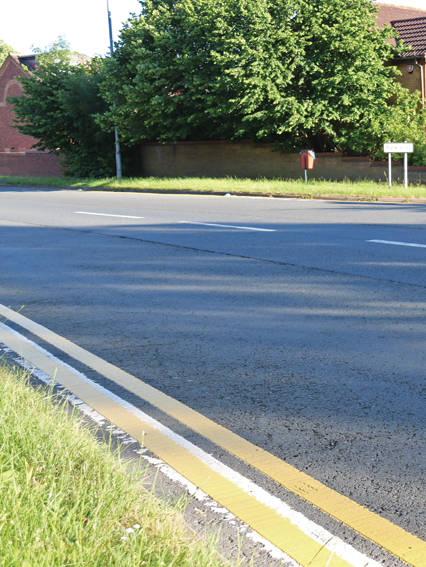
Vehicles will no longer be allowed to park along sections of Regents Park Road after drivers expressed concerns that parked cars were obstructing their vision.
Coun Caroline Spencer told The Village that Worcestershire County Council has made an Order to prohibit waiting at any time on lengths of Regents Park Road and its junctions with Abbey Close, Green Park Road and the Slideslow roundabout.
This Order came into operation on June 7 and contains exemptions to allow parking/access for certain purposes and limited waiting by disabled people’s vehicles.
“This has been a long-standing concern for drivers and I’m pleased that it has finally been addressed by Worcestershire County Council,” said Coun Spencer.
A copy of the Order, relevant map and Statement of Reasons for making the Order may be inspected at Bromsgrove District Council, Customer Service Centre, Parkside, Market Street, Bromsgrove, B61 8DA, and County Hall, Spetchley Road, Worcester, WR5 2NP, during normal office hours.
SPEED-CHECK UPDATE
Following concerns raised by local residents and parents of children using school coaches which pick up and drop off on Regents Park Road, the Local Policing Team carried out speed checks at 10.40am on May 10.
One hundred vehicles were monitored over the duration of one hour. The highest speed was 39mph and the lowest was 17mph, making the average speed recorded 28.8mph.
BOATERS TO DEFEND TITLE
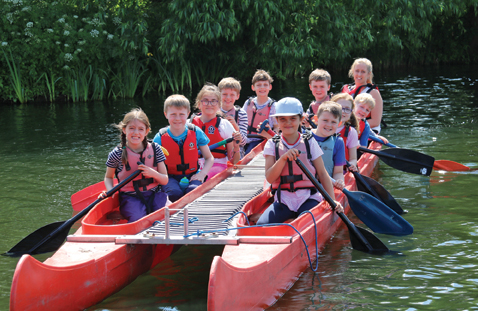
Children from Finstall First School took part in an after-school Bell-Boating club at Upton Warren, following their Bell-Boating journey along the canal from Droitwich to Worcester.
The Year 4 pupils developed their paddle skills and improved their stamina, with the help of head
teacher Mr Evans and class teacher and PE subject leader Miss James. They also learned a lot about the lake environment, showing particular interest in a grebe that was seen sitting on her eggs in her nest.
Some of these children will represent the school at the Bromsgrove and District Bell-Boating Regatta at Upton Warren on July 11, competing against 37 other teams from schools across Bromsgrove and beyond.
In 2017 the two Finstall First School teams won 1st and 2nd place in the Regatta – the first time that two crews from the same school had finished in the top positions.
Mr Evans said: “The children hope to defend their title at what has become one of the largest inter-school regattas to take place in the country. However, regardless of the outcome, all the children who have taken part in the club have had a very enjoyable time developing new skills and growing in confidence as they worked together as a team.”
Please contact me with your news, views and concerns about any aspect of life on the estate. Email: oakalls@villageonline.co.uk
It’s been 10 years since Bliss Hair Therapy in Alvechurch welcomed its first clients, and the salon continues to attract plenty of custom with its blend of friendly service and expert styling techniques.
The Bliss team work hard to keep up with the latest trends, and owner Zoë is able to bring cutting-edge style to the salon as she’s part of the prestigious Affinage Colour Rebels Art Team.
Luxury haircare brand Affinage held a competition last year to select its first-ever artistic team, and their first collection, “Rebelution”, was published in leading trade press UK and worldwide.
The Colour Rebels’ new collection of looks will launch at Salon International in October, and Zoë is taking part in lots of shows and events throughout Europe and the UK. On a recent trip to Abu Dhabi, she used her expertise to train staff at a new Affinage salon.
Zoë and her team love being able to use their knowledge at Bliss, to give clients the best experience possible.
With a re-design of the salon and a re-launch party coming soon to thank all clients for their support, there’s lots to look forward to at Bliss!
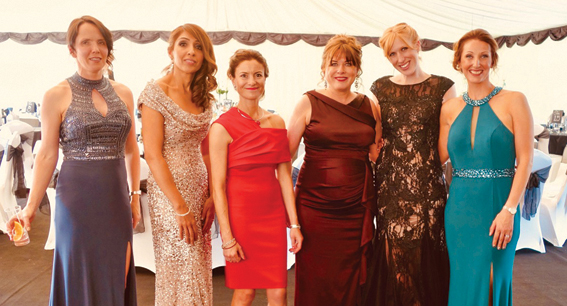
A Masquerade Ball held in Barnt Green raised more than £20,000, to be shared between St Andrew’s CofE First School and Barnt Green Sports Club – with the final total announced in pictures by the Ball Committee’s children.
The annual event, held at the Sports Club, featured a live auction with prizes including signed sports paraphernalia, a “signed by the PM” bottle of champagne and a glamping holiday.
There was also a silent auction, which included a four-ball at Blackwell Golf Course, a dining experience at the Vic, Jaguar/Land Rover off-road experience, tennis coaching, music lessons, signed football shirts and many more.
The 318 guests enjoyed a three-course meal, live music from 2 Weeks’ Notice, and a silent disco. Paul Phillips of Seamless Chauffeurs provided a free shuttle service to take guests home at the end of the evening. Any donations for this service went to the Fiona Edwards Scanner appeal at Birmingham Children’s Hospital.
Committee members Janette Day, Ragan Mathews, Kiran Kularia, Sarah Adcock, Denise Carter and Lucy Challinor would like to thank all sponsors, people and companies who donated prizes to the auction and raffle.
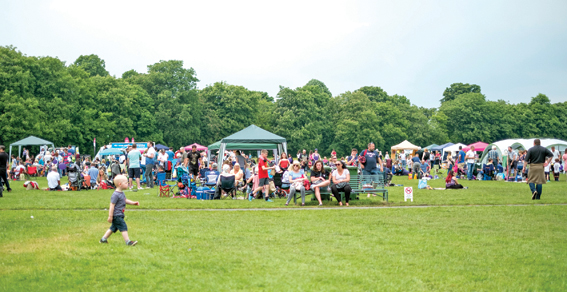
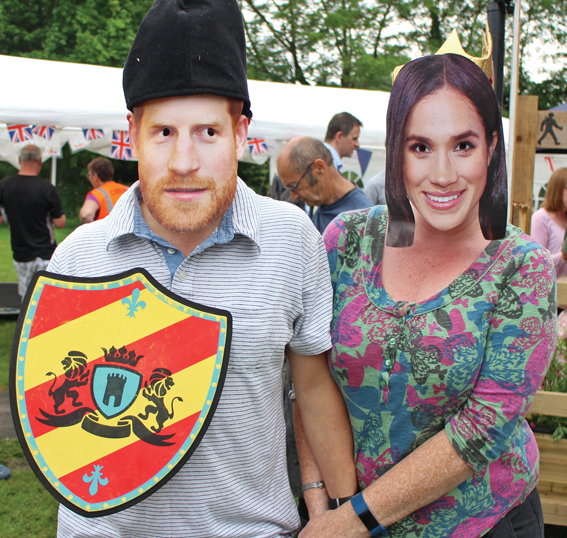
Taking place a week after the Royal Wedding, this year’s Alvechurch Picnic in the Park was themed around Princes and Princesses – and even ‘Harry’ and ‘Meghan’ (below) popped in to share the fun!
Despite the thunder rumbling around, the rain stayed away, and huge numbers of picnic-goers enjoyed a day of family fun and entertainment on The Meadows – including the Dog Show, the Go-Kart Challenge, live music from community groups, and stalls selling refreshments and promoting local businesses and organisations.
At 5pm, the party moved over to the cricket club for the evening session of more music, food and drink.