
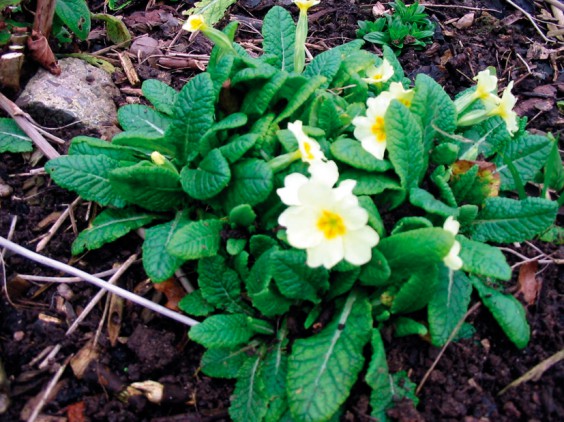
Hannah Genders looks for the first flowers of the season breaking through after the winter gloom.
After those long, dark days of winter, isn’t it great when the first signs of spring are beginning to show? For those of you who followed my advice in the autumn issues of The Village, you will now be enjoying all the bulbs you planted then.
The beautiful Iris reticulata with its lovely purple flowers that almost look hand-painted, and the small daffodils like Narcissus “February Gold”, will have given you early spring shows of colour in the garden and this is particularly useful in perennial borders where most of the plants have died down for winter.
The other big favourite that lifts our spirits in January is the little snowdrop. We all know the common snowdrop Galanthus nivalis with its recognisable white nodding flowers, but did you know that there are actually several hundred varieties of snowdrop?
For example Galanthus nivalis “Flore Pleno” has double flowers and Galanthus Elwesii is taller and flowers a little earlier.
As any botanical enthusiast will inform you, distinguishing between the varieties comes down to intricate details like whether the inner petals have one, two or three green markings.
Yes, it really is that precise, and although it may seem to many the horticultural equivalent of train-spotting (and I might agree), it is worth gently turning up a single flower and looking at the astounding beauty of the petal details.
If you forgot to plant snowdrops in the autumn, all is not lost. Snowdrops are one of the few bulbs that take better when planted “in the green”; this means planting them with some leaf growth still on just after they have finished flowering.
They are usually supplied like this from mid-February to mid-April and although this is more expensive than buying the bulbs in the autumn, the success rate is much higher.
Whether buying them (details of suppliers at the end of the article) or scrounging a few clumps from a friend, plant them close together and don’t separate out the little bulbs; they like to be close together and hate to dry out.
Snowdrops will grow in any cool and partially shaded position. They prefer a humus-rich soil, which means one that has plenty of organic matter in it. In essence, as with all plants, you are trying to recreate their natural habitat for them to thrive.
The light shade is usually under shrubs or trees, as snowdrops would normally be woodland flora and in their natural habitat the humus would be made up of all the rotting leaves and debris found on the woodland floor.
As well as bulbs, I love the little primulas that are now so abundant and seem to flower for months in the garden.
I have a number of pale yellow primulas growing under my raspberry canes in the front garden and although occasionally they may need digging up and dividing when they become too cramped, what could be an easier or more rewarding plant to grow as an indicator that nature won’t let us down, and that those fabulous days of spring and summer are just around the corner?
Snowdrop suppliers: https://www.cambosnowdrops.com – holders of the national collection https://www.eurobulbs.co.uk
