
Growing your own soft fruit is a berry good idea, explains Hannah Genders.
As you know, I am a keen vegetable gardener and often sing the praises of home-grown produce in these articles.
I am also a keen fruit grower, particularly of soft fruits, and thought I would encourage you to have a go at this if you have never tried growing fruit before. Autumn is the ideal time to plan and plant your fruit garden.
I have an odd-shaped garden at the front of my house with a corner plot that most sensible people would turn into a garage, but I decided to make into a fruit garden.
It is an ideal plot as it gets full sun and is sheltered from severe winds by privet hedging – these are the first factors to consider if you want to start a fruit area.
I built raised beds and laid membrane and gravel paths between. If you want to try growing raspberries you will also need to add support for the bushes, and this is best done with strong upright poles into the ground (a four-inch rustic round looks good) and wire pulled tight between them.
The reason for this is that with raspberries, the fruit grows on this year’s growth and the new growth holding the fruit needs to be tied in each season.
Once you have your bed marked out and the poles in place, buy your raspberry plants from a good nursery either in pots or bare root from October onwards. Do try some of the older varieties and put in some autumn fruiting ones to extend the season – about half a dozen bushes will give you plenty of fruit.
Apart from choosing a sunny, sheltered site, make sure the plants have a good feed each year with well-rotted manure or compost and cut the old stems to the ground each autumn, then tie in the new growth that will produce your crop.
Raspberries are one of the easiest soft fruits to grow and are always expensive in the shops and local markets.
You can’t go too far wrong with a few currant bushes either – choose from redcurrants, whitecurrants or blackcurrants.
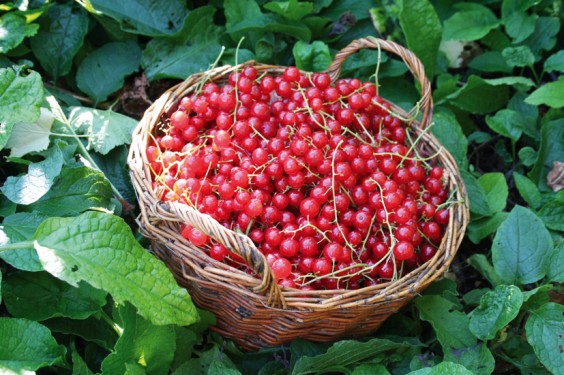
I have two redcurrant bushes and one blackcurrant and these produce pounds of fruit each year; their needs are the same as raspberries apart from the pruning.
White and redcurrants are the same with a winter pruning involving shortening the side stems, but blackcurrants are the odd ones out as they require a hard prune – one third of the stems need removing to ground level. Most good gardening books will show you diagrams on this procedure.
I use my redcurrants for making redcurrant and mint jelly which is excellent with chicken dishes and quiches. The blackcurrants I use in jam, and a trick learnt from my mum is to add a little brown sugar when making the jam, which gives it a lovely caramel flavour.
Some people cage their fruit to stop the birds helping themselves – I don’t, because my garden always seems to produce enough for us, the birds and a few friends to share.
The other important ingredient in a fruit garden is the insect life. You can encourage this, as I do, by allowing flowers like honeysuckle and foxgloves to grow in the borders and putting in a home for solitary bees.
It provides a habitat for the Red Mason bee which is becoming increasingly rare.
I have already made about ten pounds of redcurrant jelly and this year we had our first crop of gooseberries from plants put in last autumn.
My husband Mike made an excellent gooseberry and ginger jam with those – he really is a “new man”! I was very impressed.
* Nurseries supplying fruit bushes:
https://www.keepers-nursery.co.uk
https://www.trees-for-life.com
* Pruning information:
https://www.bbc.co.uk/gardening/basics/pruning
https://www.rhs.org
