
For about 20 years, until the late 1990s, BBC Radio 4 had a weekly programme called Does He Take Sugar?, which looked at all aspects of disability including the rights of disabled people and how we treat them, writes Dave Morgan.
The title came from the fact that so many people, faced with a person in a wheelchair, would ask their carer whether they wanted sugar in their tea or coffee, rather than ask the person themselves.
The person with the disability was talked about as if they weren’t present, rather than talked to as if they were an equal human being that just happened to be in a wheelchair or had some other disability.
Certainly the “Does he take sugar?” syndrome became recognised and in the main has been driven out of society, and we are much better at treating both the person with the disability and the carer as two equal individual people – which is of course exactly what they are.
But in some cases, especially where the caring is done so from a purely voluntary, loving basis, the carer can actually be treated worse than the person with the disability.
True, the person with the disability has to live with their problem 24 hours a day and seven days a week, but often the carer is also caring in that same time frame, frequently with no respite – especially when they live together.
So there are times when the carer needs a break – a brief period of calm when there are absolutely no calls on their time or energy to do something for someone else – almost someone to care for them for a few minutes. But the question is – where can they get that? Who cares for the carer?
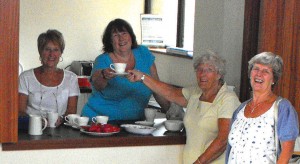
Well, one place is at a new “Caring for the Carers” group now running at the Catshill Methodist Church Centre on the last Tuesday of every month.
This is an opportunity for carers to be able to relax in a friendly atmosphere, enjoy some quality time for themselves and have a chat over a cuppa and some cake!
The group started after Mary, a long-time carer for her disabled husband, made a passing remark that “Carers need time for themselves” and if possible, time away from the person they care for.
Sheila and Di, two friends who are or have been carers for elderly relatives, agreed and started a group to give Mary, and others like her, the chance for that quality time for themselves.
All carers are very welcome and the next meeting is on September 30 from 2.30 to 4pm.
To learn more, contact Sheila on 0121 445 2813 or Di on 0121 445 3595.
