
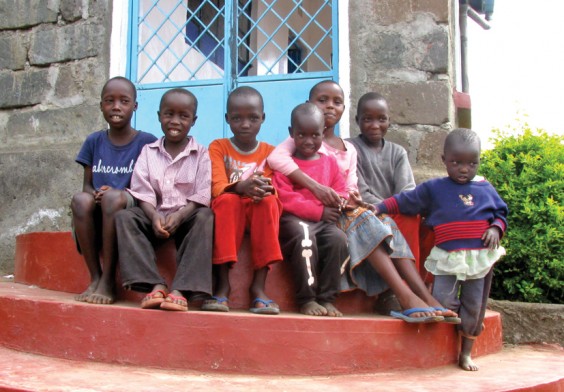
A former Bromsgrove resident is making a big difference to children and communities in Kenya.
When Billy Jones left his Oakalls home for Kenya in July 2012, little did he know that just over a year later he would be at the helm of a community project that’s making a huge difference to vulnerable children and families.
Billy is the co-founder and managing director of Our Home Nakuru, a children’s home and community support network with a difference.
The home cares for children who have been neglected or abused in their own homes and guarantees them education, food and safety – but the project is also about helping the poorest citizens work together to empower their whole community.
“It’s all well and good to elevate children out of poverty, but you’re ignoring the source of the problem – and I feel that a children’s home should never be a permanent setting for a child,” says Billy, aged 23.
And so, when children come to OHN, the team work with the family (with assistance from a social worker) to help rehabilitate and educate them so that eventually the children can be reintegrated into the family.
The parents or guardians are given training and skills to enable them to care for the children, for instance financial skills for running a business, or a piece of land or farm machinery that they can use to support themselves.
“It’s a one-off investment, and then they can be self sufficient – it’s about empowerment, not handouts.”
Billy, who attended South Bromsgrove High School before studies at Nottingham and Geneva, originally wanted to work in charity fundraising, but realised he needed some real in situ experience and packed his bags for Africa: “You can read about third world conditions all you like, but it’s not the same as being there.”
He began work as director of a children’s home in Kenya, but there were various political and economic problems and he very soon decided it wasn’t for him.
One of his colleagues there – Farah Mushtaq, now a director of Our Home Nakuru – felt the same, and the pair decided to branch out on their own.
After much hard work and determination in the face of many obstacles, they finally found a suitable building for the project, met with potential sponsors and started to look for staff members who would be instrumental in making it a home from home for the children in their care.
As well as Billy and Farah, there are two “house mamas” who look after the children.
“They are both single mums and their own daughters live in the home too, which is a big incentive – it’s not just a workplace, it’s their home,” says Billy.
OHN also has its own security guard – a Masai warrior, no less – and a caretaker who is also responsible for the home’s small farm.
A kitchen garden and chicken coop provide income for the home as well as an education for the children in traditional agricultural methods.
Seven children now live happily at the homestead and the project can be judged a success – although Billy would be the first to admit that there is much more still to be done.
It’s extremely important to Billy and the team that the home is part of the wider community, and so local amenities are used where possible – the children attend the local school, although they also have a private tutor twice a week, and OHN has its own educational director.
There’s a sports programme which also benefits children who live at the nearby town dump, while OHN is also involved in educating locals about HIV/AIDS, drug addiction and climate change.
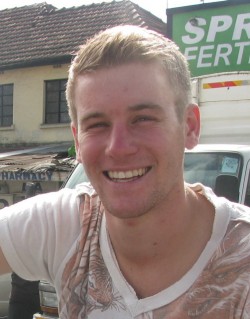
Although there are innumerable children living in poverty in Kenya, Billy recognises that he can only help a few at a time.
“The maximum number of children we could have at the home is 10, to ensure they receive the highest quality care, and we don’t take in babies as they need more attention than we’re able to give.
“The oldest child we have at the moment is 12, and I think 14 or 15 would be the limit, otherwise they would be returning to their family as an adult.”
The children usually come via referrals, perhaps from a family Billy has heard about through friends. The first step is to find out more about the family – and the village chief also has to be consulted.
“We get to know them, and ask if they would like the children to live at OHN for a while – they are never forcibly removed, and we have full permission from the family and the chief,” says Billy.
“The family also have to be willing to work with us so that the children can return in the future, and of course if the kids really don’t want to leave home, no-one will force them.”
The children visit their families at every possible opportunity, giving them invaluable bonding time: “Coming from remote rural backgrounds, it can be easy for them to detach from their roots when they spend all their time in a comfortable urban setting, so we ensure that the family ties are kept strong.”
Because it takes time for this gradual reintegration to happen, the first intake of children – who arrived last November – are still in residence, but have regular contact with their families.
Billy hopes that eventually the concept of OHN will spread through the region and perhaps the whole country: “There’s not really any help from the government or authorities, due to apathy, corruption and lack of infrastructure, so we have to make things happen ourselves,” Billy remarks.
Therefore fundraising is extremely important, and Billy’s family and friends back in Bromsgrove are more than happy to help.
Last Christmas his Oakalls neighbours held a fancy dress fun run on Boxing Day and raised £600, and Billy’s sister Polly organised a quiz in Finstall earlier this year – this proved so successful that a second quiz is being held on November 3.
And when Billy visited the UK in May, he launched the ‘Fill Your Boots’ campaign at Sidemoor First School, asking pupils to donate old school shoes filled with stationery items much needed in Kenya.
These were given to local children for whom school shoes are very expensive – almost half a month’s income.
In Kenya itself, a fundraising bike race also took place, helping to encourage the community to be proactive in caring for its vulnerable members.
“We’ve had an incredible year and I’d like to think we’ve made a definite, albeit modest, contribution to empowering the lives of a number of people,” says Billy, who has plenty more fundraising ideas on the agenda.
* If you would like to make a donation, you can do so at https://www.ourhomenakuru.org – where you can also keep up to date via the weekly blog.
